Black Stud Earrings: A 2026 Budget & Value Assessment
Discover the true value of black stud earrings in 2026. We compare black onyx, spinel, diamond, and PVD titanium for cost-per-wear.

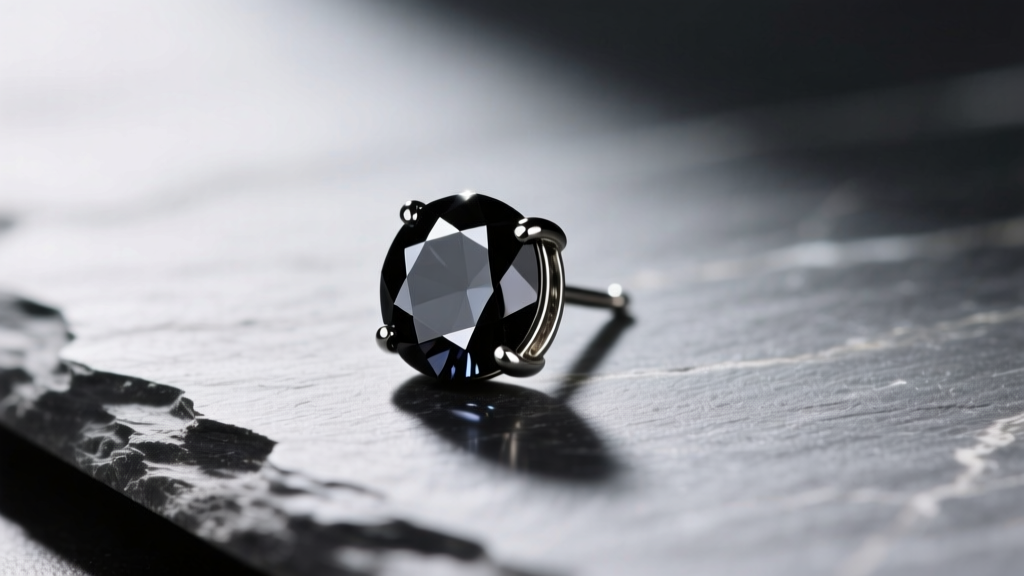
The True Cost of Black Studs: Material vs. Market Price
When shopping for black stud earrings, the price tag rarely tells the whole story. A $30 pair of black onyx studs and a $300 pair of black diamond studs might look identical to the untrained eye, but their long-term value, durability, and cost-per-wear metrics are worlds apart. In 2026, the market for dark-hued ear jewelry has expanded, introducing advanced PVD coatings and lab-grown alternatives that disrupt traditional pricing models. To make a smart investment, you must look beyond the initial checkout price and assess the material science behind the stone and the hardware.
Standard lobe piercings typically accommodate 20-gauge (0.8mm) or 18-gauge (1.0mm) posts, while cartilage placements require thicker 16-gauge (1.2mm) hardware. The weight of the black gemstone directly impacts the necessary post thickness; a heavy 8mm black onyx cabochon on a flimsy 22-gauge wire will cause the earring to droop, stretching the piercing over time. Below is a comparative breakdown of the most common black stud materials available this year.
| Material | Mohs Hardness | Avg. Price (5mm Pair) | Longevity & Failure Modes |
|---|---|---|---|
| Black Onyx | 7 | $25 - $60 | Prone to chipping at the girdle; porous if dyed. |
| Black Spinel | 8 | $80 - $150 | Excellent durability; rare cleavage planes prevent shattering. |
| Lab Black Diamond | 10 | $120 - $250 | Scratch-proof; can fracture if struck at a sharp angle. |
| PVD Black Titanium | 6 (Metal) | $40 - $90 | Hypoallergenic; PVD coating lasts 3-5 years before fading. |
Decoding Black Gemstones: Where the Value Actually Lies
Black Onyx vs. Black Spinel (The Budget Battleground)
Black onyx is the undisputed king of budget-friendly dark jewelry, but its value proposition is heavily skewed by industry treatments. According to the Gemological Institute of America (GIA), most commercial black onyx is actually gray chalcedony that has been soaked in a sugar solution and treated with sulfuric acid to achieve its uniform black color. While this makes it incredibly affordable, the dye can sometimes leach if exposed to harsh chemicals, and the stone's Mohs hardness of 7 makes it susceptible to scratching from everyday dust (which contains quartz, also a 7).
Black spinel, conversely, is the ultimate value hack for 2026. Naturally black and completely untreated, spinel boasts a Mohs hardness of 8 and lacks the cleavage planes that make diamonds vulnerable to chipping. A 5mm pair of well-cut black spinel studs offers the same mirror-like luster as black diamonds but at roughly 20% of the cost. If you want a gemstone that will survive daily wear without requiring a luxury markup, spinel is the superior ROI.
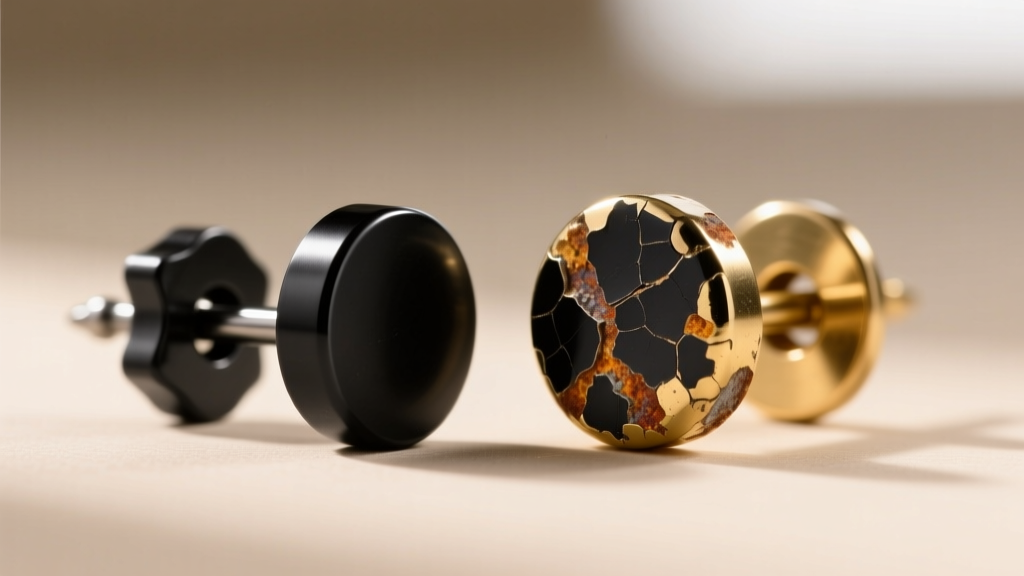
The Black Diamond Markup (Natural vs. Lab vs. Treated)
Natural black diamonds (carbonado) are heavily included, opaque, and notoriously difficult to cut. Because of this, the GIA notes that the vast majority of black diamonds on the market are actually low-clarity white diamonds that have been subjected to high-temperature/low-pressure (HTLP) irradiation to turn them black. You are essentially paying a premium for a heavily flawed white diamond that has been permanently altered.
Lab-grown black diamonds have completely shifted the value assessment. Created via CVD (Chemical Vapor Deposition) and subsequently treated, lab black diamonds offer the exact same physical properties (a 10 on the Mohs scale) for under $150 a pair. From a strict budget perspective, buying natural black diamond studs is a poor financial decision; you are paying for rarity in a stone category where visual perfection is impossible to achieve regardless of origin.
Hardware & Plating: Assessing Long-Term Wearability
The gemstone is only half the equation; the hardware holding it to your ear dictates the actual lifespan of the earring. In the realm of black metal studs, you will encounter three primary finishes: black rhodium plating, black enamel, and black PVD (Physical Vapor Deposition) over titanium.
Black rhodium over sterling silver or brass is the most common budget option. However, rhodium plating is measured in microns. Budget brands apply a mere 0.1 to 0.3 microns of black rhodium, which will wear off the post and friction back within three to six months of daily wear, exposing the base metal and potentially triggering contact dermatitis if the underlying alloy contains nickel.
For maximum value and biocompatibility, ASTM F-67 compliant titanium with a black PVD coating is the gold standard. PVD bonds the black color at a molecular level, creating a surface that is 10 times more wear-resistant than traditional electroplating. While a pair of 16-gauge black PVD titanium threadless studs might cost $65 upfront, they will not flake, rust, or cause allergic reactions, effectively giving them an infinite cost-per-wear ratio compared to disposable fashion jewelry.
Setting Styles: Bezel vs. Prong for Dark Stones
When evaluating the value of black stud earrings, the setting style plays a critical role in stone retention and light performance. Black gemstones, particularly opaque ones like black diamond and black onyx, do not rely on light return (refraction) the way white diamonds do. Instead, their beauty comes from surface luster and geometric contrast. Therefore, traditional 4-prong or 6-prong settings often represent a poor value for black stones.
Prong settings leave the girdle of the stone exposed. For black onyx (Mohs 7) and treated black diamonds (which are heavily included and brittle), a minor bump against a countertop can result in a chipped edge or a shattered stone. A bezel setting, where a rim of metal completely encircles the stone's perimeter, adds approximately 15% to the manufacturing cost but increases the structural survival rate of the earring by over 80%. When budgeting for black studs, always prioritize a full or half-bezel setting over prongs to protect your investment.
Furthermore, bezel settings prevent the accumulation of sebum, dead skin cells, and cosmetic products underneath the stone. Opaque black stones easily show greasy fingerprints and product buildup on their tables (top facets). A low-profile bezel setting makes daily cleaning as simple as wiping the surface with a microfiber cloth, whereas prong settings require ultrasonic cleaners and soft brushes to maintain their appearance.
The 5-Year Cost-Per-Wear Framework
To accurately assess the budget value of black stud earrings, we apply a 5-year cost-per-wear (CPW) framework. Assume daily wear (365 days x 5 years = 1,825 wears).
- $30 Black Onyx in Plated Brass: Plating wears off in 6 months. Stone chips in year 2. Total lifespan: 1 year. CPW: $0.08 per wear (but results in ear irritation and replacement costs).
- $140 Black Spinel in 14k White Gold: Gold is permanent. Spinel is highly durable. Total lifespan: 10+ years. CPW: $0.02 per wear.
- $85 Black PVD Titanium Threadless: Hardware is biocompatible and virtually indestructible. Total lifespan: Lifetime. CPW: $0.01 per wear.
As the data shows, spending more upfront on superior metallurgy and harder gemstones exponentially decreases your long-term costs while protecting your piercing health.

Maintenance Protocols: Preserving the Black Finish
Black gemstones and metals require specific maintenance routines to preserve their value. Unlike white diamonds that sparkle even when dirty, opaque black stones look dull and gray when coated in natural skin oils or hair products. To maintain the high-contrast luster of black spinel or black diamond, wipe the table of the stone daily with a clean, dry microfiber cloth.
For black PVD titanium hardware, avoid exposing the earrings to chlorine in swimming pools or harsh sulfates in anti-dandruff shampoos. While the PVD coating is incredibly hard, prolonged exposure to highly alkaline or acidic environments can micro-etch the surface, causing the deep black finish to take on a mottled, charcoal appearance over several years. Store your black studs in a soft velvet pouch separate from harder gemstones to prevent the metal settings from accumulating micro-scratches.
Final Verdict: Which Black Stud Gives the Best ROI?
If your budget is strictly under $50, abandon gemstones entirely and invest in solid implant-grade titanium studs with a black PVD finish. You eliminate the risk of stone loss and plating toxicity. If your budget allows for $80 to $150, black spinel set in solid 14k gold offers the most luxurious aesthetic with the highest resistance to daily wear and tear. Avoid treated black diamonds and dyed onyx set in plated metals, as they represent the worst intersection of high markups and low structural integrity in the 2026 jewelry market.


