Black Tourmaline Earrings: The Ultimate Buying Guide
Discover what to look for when buying black tourmaline earrings. Learn about cuts, metal pairings, durability, and pricing in our expert gemstone guide.

The Rise of Moody Gemstones in 2026
As we navigate the jewelry trends of 2026, the shift toward 'dark academia' and moody, alternative aesthetics has pushed opaque gemstones into the spotlight. Among these, black tourmaline earrings have emerged as a definitive staple for those seeking grounded, edgy, and sophisticated accessories. Known in mineralogy as schorl, this iron-rich gemstone offers a striking, light-absorbing depth that pairs beautifully with both vintage and contemporary designs. However, buying black tourmaline requires a different evaluative approach than purchasing transparent stones like diamonds or sapphires. This comprehensive buying guide will walk you through the exact specifications, durability metrics, and styling frameworks you need to make an informed purchase.
Understanding Schorl: The Mineralogy of Black Tourmaline
Black tourmaline, scientifically classified as schorl, is the most abundant variety of the tourmaline mineral group. According to the Gemological Institute of America (GIA), tourmaline is a complex borosilicate mineral, and the deep black coloration in schorl is primarily caused by high concentrations of iron and titanium. Unlike its colorful cousins (such as rubellite or Paraíba tourmaline), schorl is completely opaque. This opacity means that light does not pass through the stone; instead, it reflects off the surface. This fundamental optical property dictates how the stone should be cut, polished, and set in jewelry.
One fascinating E-E-A-T detail often overlooked by casual buyers is that tourmaline possesses pyroelectric and piezoelectric properties. This means the stone can develop a slight electrical charge when heated or subjected to pressure, a trait that historically made it useful for scientific instruments but today simply adds to its mystique as a 'grounding' crystal in metaphysical circles.
Black Tourmaline vs. Black Onyx vs. Black Spinel
A common pitfall for buyers is confusing black tourmaline with other dark gemstones. Unscrupulous sellers may pass off dyed onyx or cheap black glass as tourmaline. Here is a technical breakdown to help you identify what you are actually buying.
| Gemstone | Mohs Hardness | Optical Property | Luster | Average Price (per carat) |
|---|---|---|---|---|
| Black Tourmaline (Schorl) | 7.0 - 7.5 | Opaque | Vitreous to Resinous | $2 - $10 |
| Black Onyx (Chalcedony) | 6.5 - 7.0 | Opaque (often dyed) | Waxy to Vitreous | $1 - $5 |
| Black Spinel | 8.0 | Transparent to Opaque | Brilliant Vitreous | $50 - $300+ |
As noted by lapidary experts at the International Gem Society, black spinel is significantly more expensive and brilliant, while onyx has a distinct waxy luster. Genuine black tourmaline will exhibit a sharp, glass-like (vitreous) polish and may show subtle vertical striations or grooves along the crystal edges if cut in a way that preserves its natural habit.
Evaluating Cut and Surface Finish
Because schorl is opaque, traditional brilliant faceting (designed to maximize internal light return) is entirely useless. Instead, gem cutters rely on specific techniques to give the stone life and prevent it from looking like a flat piece of black plastic.
The Rose Cut Advantage
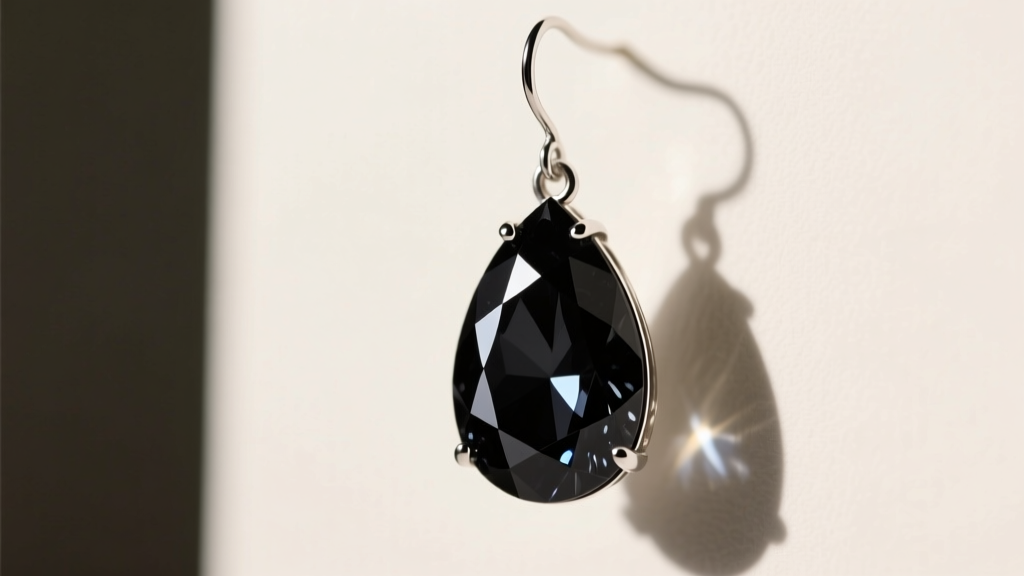
The rose cut is arguably the best faceting style for black tourmaline. Featuring a flat base and a domed top covered in triangular facets, the rose cut creates a geometric, mirrored surface that catches ambient light. When shopping for faceted black tourmaline earrings, look for crisp, symmetrical facet junctions. Muddy or asymmetrical facets indicate poor lapidary work, which will make the dark stone appear dull and lifeless.
Cabochons and Carved Styles
Highly polished cabochons (smooth, domed, unfaceted stones) are a classic choice. When evaluating a cabochon, the dome should be perfectly symmetrical, and the polish must be mirror-like. Black tourmaline is heavily included internally, and while these inclusions don't affect the opacity, they can cause surface pitting if the stone is not cut carefully. Run your fingernail gently over the surface; it should feel flawlessly smooth. Any grit or pitting is a sign of a low-quality cut.
Best Metal Pairings for Dark Gemstones
The deep, light-absorbing nature of black tourmaline requires thoughtful metal pairing to ensure the earrings don't get lost against the wearer's hair or skin tone. Contrast is your primary design tool.
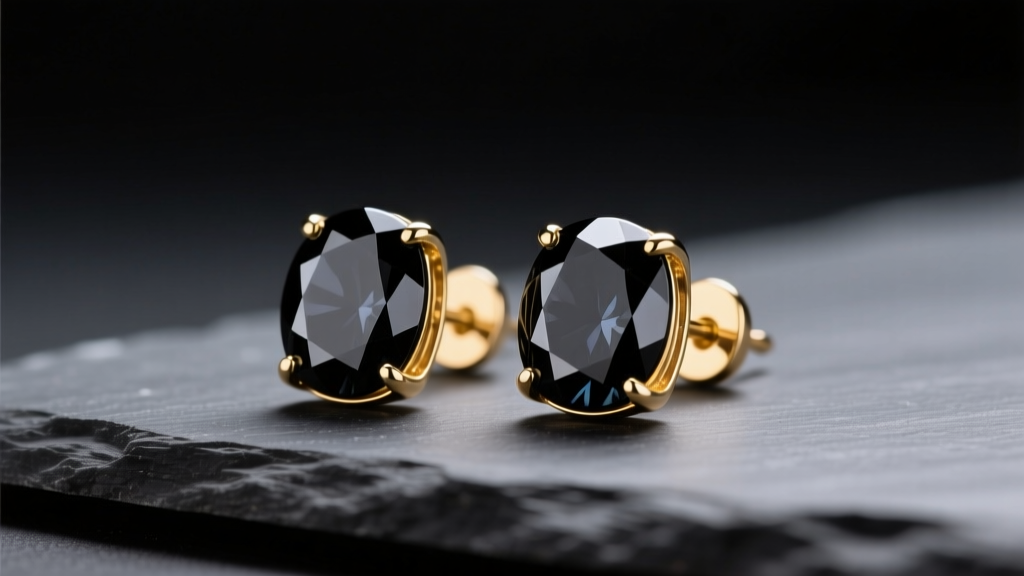
- 14k or 18k Yellow Gold: The ultimate high-contrast pairing. The warmth of yellow gold creates a striking, luxurious boundary against the cold, dark stone. This is highly recommended for vintage or Art Deco-inspired designs.
- Sterling Silver / White Gold: Offers a sleek, modern, and slightly gothic aesthetic. Rhodium-plated white gold will provide a brighter, more durable reflective edge than silver, which can tarnish and dull the overall look over time.
- Rose Gold: A softer contrast that leans into romantic, moody aesthetics. The coppery red undertones of rose gold complement the subtle brownish undertones that some schorl specimens exhibit under direct sunlight.
Durability, Cleavage, and Setting Mechanics
While black tourmaline registers a respectable 7 to 7.5 on the Mohs hardness scale, making it suitable for everyday earrings, it possesses a critical vulnerability: distinct cleavage. Cleavage refers to the tendency of a crystal to break along specific structural planes when struck.
Expert Tip: Avoid traditional four-prong settings for black tourmaline if you plan to wear the earrings daily. A hard knock against a doorframe can cause a prong-set tourmaline to cleave or chip. Always opt for bezel or half-bezel settings, which wrap the metal securely around the stone's girdle, protecting the vulnerable edges.
Furthermore, tourmaline is sensitive to sudden temperature changes. Never use an ultrasonic cleaner or a steam cleaner on black tourmaline earrings, as the thermal shock can cause internal fractures to expand, shattering the stone. Stick to warm water, mild dish soap, and a soft baby toothbrush for cleaning.
Pricing Expectations and Market Value
One of the most appealing aspects of black tourmaline is its affordability. Because schorl is abundant and rarely treated (unlike blue or pink tourmaline, which may be irradiated or heated), you are primarily paying for the metal weight and the artisan's labor.
- Budget Tier ($30 - $80): Sterling silver studs or small hoops with simple cabochon cuts. Often mass-produced.
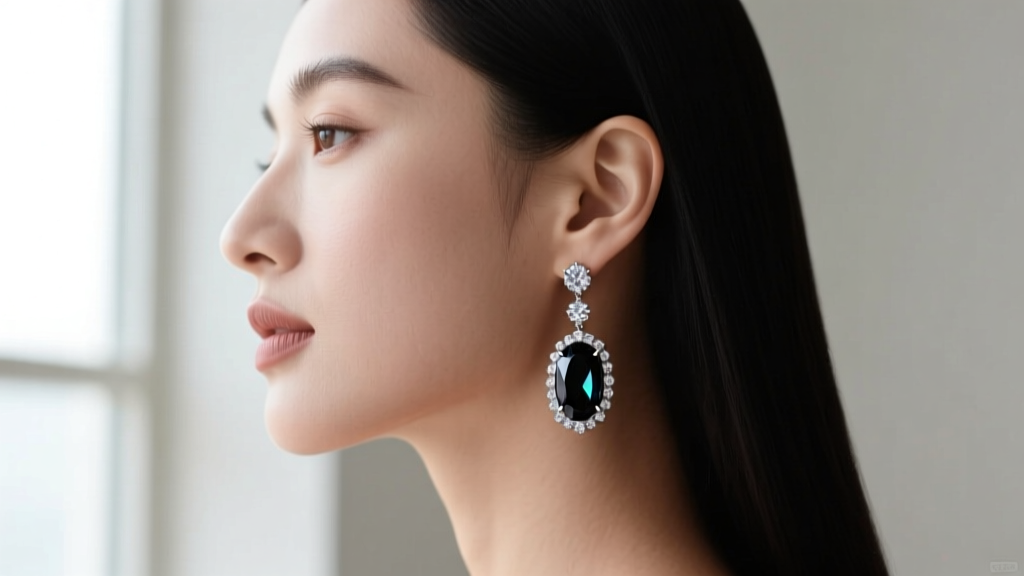
- Mid-Range ($100 - $350): 14k gold settings, intricate rose cuts, or designer huggies featuring melee diamond accents. This is the sweet spot for quality and longevity.
- High-End ($400 - $1,000+): Custom artisan pieces, heavy 18k gold wire-wrapping, or avant-garde ear cuffs featuring raw, uncut schorl crystals paired with high-clarity diamonds.
Styling Framework: Face Shapes and Proportions
Black is a visually 'heavy' color. In jewelry design, dark stones draw the eye and create visual weight. How you leverage this depends on your face shape:
Round and Square Faces
Opt for long, linear black tourmaline drop earrings or dangles. The vertical line of the dark stone will elongate the face and draw the eye downward, softening strong jawlines or wide cheekbones. Avoid large, round black studs, which will exaggerate the roundness of the face.
Oval and Heart-Shaped Faces
You have the versatility to pull off almost any style. Geometric black tourmaline studs, hexagonal huggies, or wide ear cuffs will add striking horizontal structure that balances a narrow chin or elongated profile.
Final Verdict: Is Black Tourmaline Right for You?
Black tourmaline earrings are an exceptional investment for the modern jewelry collector. They offer the dramatic, moody aesthetic of black spinel or black diamonds at a fraction of the cost, provided you prioritize structural integrity in the setting. By insisting on bezel settings, verifying the vitreous luster to avoid dyed onyx imitations, and choosing high-contrast metals like 14k yellow gold, you will secure a pair of earrings that are as durable as they are visually captivating. For further mineralogical data on tourmaline varieties, consult the Mindat mineral database to deepen your gemological knowledge before your next purchase.


