Black and White Flower Earrings: The Ultimate Buying Guide
Discover how to choose the perfect black and white flower earrings. Our expert guide covers enamel grades, stone inlays, gauge sizes, and pricing tiers.

The Timeless Allure of Monochrome Botanicals
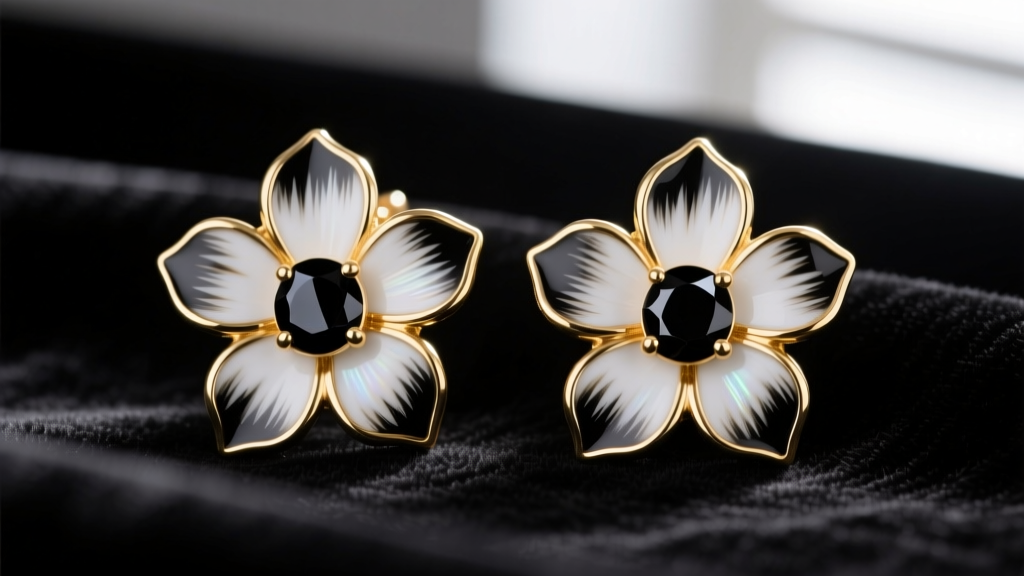
Black and white flower earrings occupy a unique space in jewelry design, bridging the gap between stark modernism and romantic organic forms. The high-contrast monochrome palette strips away the distraction of color, forcing the eye to focus entirely on silhouette, texture, and craftsmanship. Whether you are looking for a pair of delicate daisy studs for everyday wear or dramatic Art Deco-inspired camellia drops for evening events, understanding the material science and structural integrity behind these pieces is crucial. This comprehensive buying guide will walk you through the exact specifications, material grades, and quality markers you need to evaluate before making a purchase in 2026.
Decoding the Materials: Enamel, Stone, and Resin
The visual impact of black and white floral earrings relies heavily on the materials used to create the contrast. However, not all "black and white" materials are created equal. The most common techniques involve vitreous enamel, cold enamel (epoxy resin), and natural stone inlays like black onyx and mother-of-pearl (MOP).
Vitreous enamel is the gold standard for fine jewelry. It involves fusing powdered glass to a metal substrate at temperatures exceeding 1,400°F. The result is a glossy, scratch-resistant finish that will not yellow over time. Cold enamel, conversely, is a two-part epoxy resin. While it allows for intricate, multi-layered floral gradients at a lower price point, it is highly susceptible to UV degradation and will eventually yellow or chip upon impact. For stone inlays, the Gemological Institute of America (GIA) notes that black onyx is a dyed chalcedony, meaning its deep black color is permanent and highly stable, making it an excellent pairing with the natural iridescence of white MOP.
| Material | Durability & Failure Modes | Price Range | Best Application |
|---|---|---|---|
| Vitreous Enamel | High. Fails only under extreme blunt force (shattering). | $120 - $600+ | Heirloom studs, huggies, and fine hoops. |
| Cold Enamel (Resin) | Medium. Prone to surface scratching, UV yellowing, and peeling. | $25 - $95 | Trendy dangles, oversized statement petals. |
| Onyx & MOP Inlay | High, but brittle. Glue degradation can cause stones to pop out. | $150 - $850+ | Art Deco motifs, geometric floral mosaics. |
Hardware Integrity: Posts, Gauges, and Alloys
The most beautiful floral motif is useless if the hardware causes contact dermatitis or bends under the weight of the earring. When evaluating black and white flower earrings, always check the metal alloy and the gauge thickness of the post.
For sensitive ears, the benchmark is ASTM F136 implant-grade titanium. Unlike standard "surgical steel" (which can contain up to 10% nickel), ASTM F136 titanium is entirely nickel-free and biocompatible. If you prefer gold, ensure the earrings are solid 14k or 18k, or at minimum, feature a thick vermeil plating (2.5 microns of gold over sterling silver) rather than cheap flash plating that will wear off in weeks.
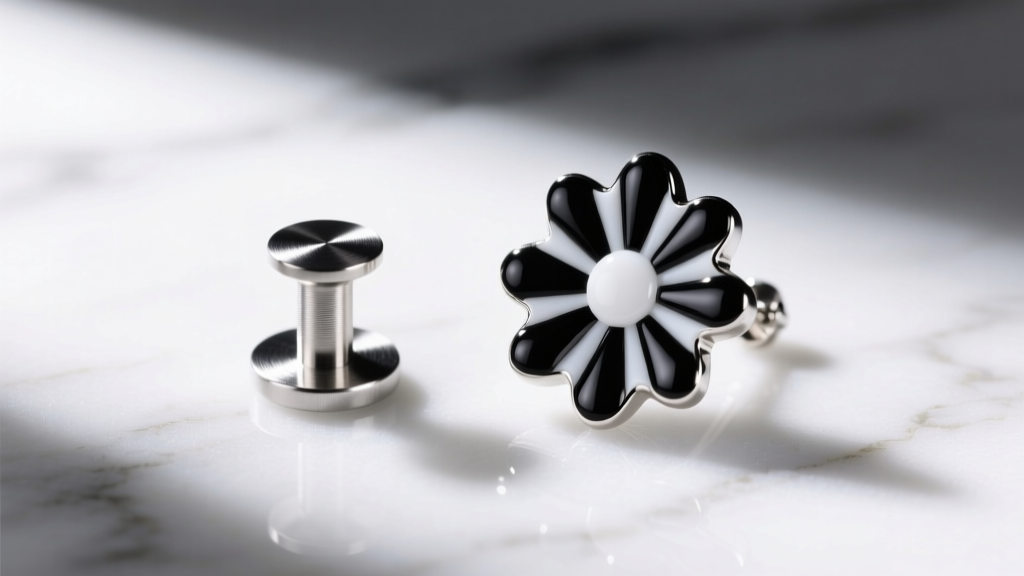
Gauge size is equally critical, especially for larger floral drops. Standard lobe piercings are typically 20G (0.81mm) or 18G (1.02mm). If you are buying a heavy, multi-petal onyx drop earring, an 18G post is mandatory to prevent the metal from bending and stretching your piercing. For floral huggies or cartilage pieces designed for the helix, look for 16G (1.29mm) wire to ensure structural stability and prevent the "cheese-cutter effect" that thin wires can cause in cartilage.
Sizing and Proportions: Matching Florals to Face Shapes
Floral earrings come in vastly different silhouettes, from tight, symmetrical rosettes to elongated, asymmetrical orchid drops. Matching the geometry of the flower to your face shape ensures the earrings complement rather than overwhelm your features.
- Round Faces: Avoid perfectly circular, symmetrical flowers like large daisies or peonies, which will emphasize facial roundness. Instead, opt for elongated floral drops, such as a teardrop-shaped lily or a cascading vine of black and white jasmine, to create a lengthening vertical line.
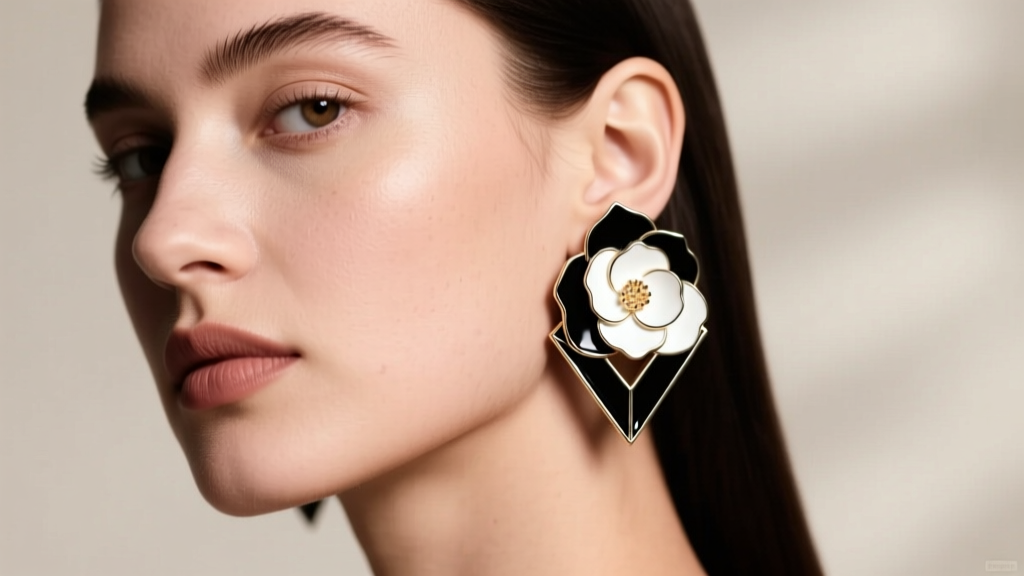
- Square Faces: Soften a strong jawline with rounded, voluminous floral motifs. A clustered camellia or a soft-petaled rose in black enamel and white MOP will add curves and balance angular features.
- Heart-Shaped Faces: Look for floral chandeliers or dangles that are wider at the bottom than the top. A lotus flower drop earring adds visual weight to the lower half of the face, balancing a narrower chin.
- Oval Faces: Virtually any floral silhouette works. You can easily pull off oversized, avant-garde botanical cuffs or tight, geometric Art Deco flower studs.
The Quality Control Checklist: Spotting Poor Craftsmanship
When shopping online or inspecting pieces in-store, use this expert checklist to identify manufacturing defects common in monochrome floral jewelry:
1. The Inlay Gap Test
If the design features black onyx or white MOP set into metal channels, run your fingernail lightly over the seams. There should be zero gaps. Visible epoxy overflow or recessed stones indicate poor lapidary work and will trap cosmetics and dead skin, eventually turning black and ruining the high-contrast aesthetic.
2. Enamel Pooling and Bubbling
Inspect the edges of the enamel petals under good lighting. Cheap cold enamel often pools at the lowest points of the metal casting, creating uneven, thick ridges. Vitreous enamel should be perfectly smooth and level with the metal cloisons (wire dividers). Pinpoint bubbles in the enamel are a sign of improper kiln-firing temperatures.
3. The Friction Back Tension
For heavy floral studs, standard push-backs are a liability. Look for earrings that feature a secure locking mechanism, such as a screw-back, a hinged lever-back, or a jumbo friction back with a deep groove on the post. According to the Jewelers of America, ensuring secure backings is the first line of defense against losing fine jewelry.
Pricing Tiers: What Should You Expect to Pay?
Understanding the market tiers will protect you from overpaying for mass-produced resin pieces disguised as artisan craft.
- Fashion & Fast Jewelry ($15 - $45): Expect cold enamel (resin), brass or copper bases with flash gold plating, and standard 20G steel posts. The floral designs are usually cast in one piece with painted details. Lifespan is typically 1-2 years before plating wears off.
- Mid-Tier Artisan ($60 - $180): Sterling silver bases, thick gold vermeil, and high-quality UV-resistant resins or semi-precious stone slices. You will find unique, hand-carved floral motifs and secure lever-backs in this tier.
- Fine & Heirloom ($250 - $1,500+): Solid 14k/18k gold, kiln-fired vitreous enamel, precision-cut black onyx, and white MOP. These pieces feature hand-engraved metalwork on the reverse side and are designed to last generations.
Care and Maintenance for Monochrome Botanicals
High-contrast jewelry shows dirt, oils, and degradation much faster than solid metals. To maintain the stark brilliance of your black and white flower earrings, avoid ultrasonic cleaners entirely. The high-frequency vibrations can easily shatter brittle onyx inlays and shake loose the epoxy holding MOP tiles in place.
Instead, clean your earrings weekly using a soft, lint-free microfiber cloth dampened with a solution of warm water and a single drop of mild, phosphate-free dish soap. Use a soft-bristled baby toothbrush to gently sweep debris from the metal cloisons and the back of the post. Always apply hairspray, perfumes, and lotions before putting on your earrings, as the alcohol and chemicals in cosmetics will rapidly degrade cold enamel and strip the polish from natural stones.
By prioritizing material integrity, precise gauge sizing, and structural craftsmanship, you can invest in a pair of black and white flower earrings that serves as a striking, sophisticated anchor for your jewelry collection for years to come.


