Blue and Green Earrings: A Material & Gemstone Guide
Discover the best materials for blue and green earrings. Compare gemstone hardness, metal settings, gauge sizes, and pricing for lasting wear.

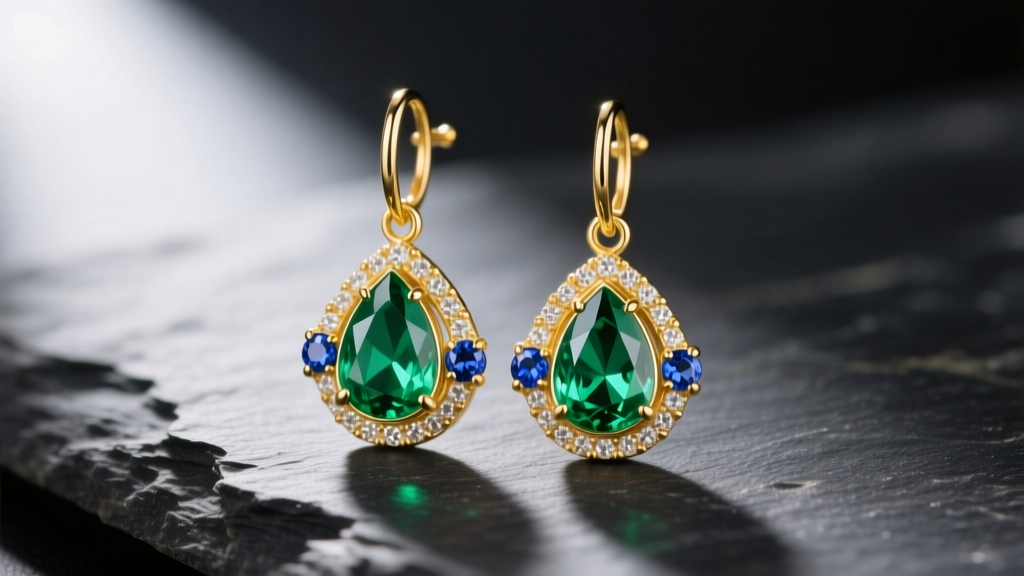
When curating a fine jewelry collection, blue and green earrings offer unparalleled versatility, bridging the gap between cool, oceanic tones and warm, earthy vibrancy. However, the aesthetic appeal of these colors is only half the equation. As a domain expert in jewelry materials, I cannot stress enough that the longevity, comfort, and ultimate value of your earrings depend entirely on their underlying material properties and structural engineering.
Whether you are investing in deep blue sapphires, vibrant green emeralds, or porous turquoise cabochons, understanding the gemological and metallurgical science behind these stones is critical. This guide breaks down the exact material properties, setting requirements, and structural specifications you need to know before purchasing blue and green earrings in 2026.
The Mohs Scale vs. Toughness: A Gemological Reality Check
A common mistake buyers make is conflating hardness with toughness. The Mohs scale measures scratch resistance, but it does not indicate how well a gemstone will survive an accidental drop against a granite countertop. When selecting materials for daily-wear earrings, both metrics dictate the stone's survival rate.
Blue Gemstones: Sapphire vs. Aquamarine vs. Topaz
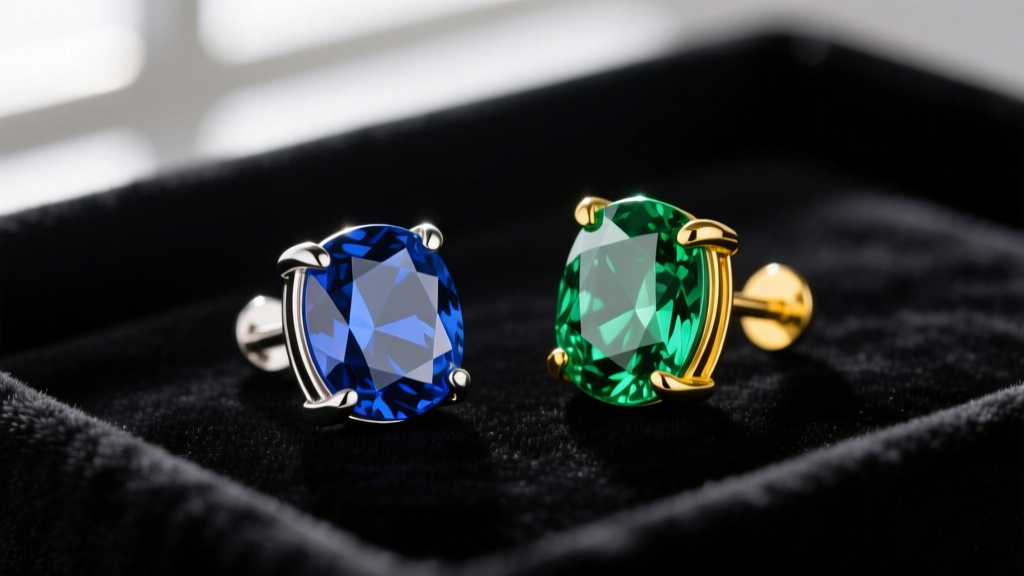
- Blue Sapphire (Corundum): With a Mohs hardness of 9 and excellent toughness, sapphire is the undisputed king of blue gemstones. It lacks cleavage planes, meaning it rarely splits when struck. It is the ideal material for exposed prong-set studs and active lifestyles.
- Aquamarine (Beryl): Ranking at 7.5 to 8 on the Mohs scale, aquamarine is harder than quartz but possesses distinct basal cleavage. A sharp blow to the girdle of an aquamarine drop earring can cause it to fracture cleanly.
- London Blue Topaz: While an 8 on the Mohs scale, topaz has perfect basal cleavage. It is highly susceptible to chipping if the earring is dropped on a hard surface, requiring protective bezel or halo settings.
Green Gemstones: Emerald vs. Tsavorite vs. Peridot
- Emerald (Beryl): Despite a Mohs rating of 7.5 to 8, emerald has notoriously poor toughness. Almost all natural emeralds contain jardin (internal fractures and inclusions). According to the Gemological Institute of America (GIA), emeralds are classified as Type III clarity gems, meaning they are almost always heavily included and require careful, protective settings.
- Tsavorite Garnet: A vibrant green alternative to emerald, tsavorite ranks 7 to 7.5 in hardness but boasts significantly better toughness due to its lack of cleavage and typical eye-clean clarity.
- Peridot: At 6.5 to 7, peridot is relatively soft and sensitive to thermal shock. It should never be cleaned in an ultrasonic jewelry cleaner, as the vibrations can shatter the stone.
Metallurgy and Color Theory: Selecting the Right Alloy
The metal alloy used in your earrings does more than hold the stone; it acts as a reflector that can drastically alter the perceived body color of the gemstone. Furthermore, the metallurgical composition determines the earring's hypoallergenic properties and structural memory.
Enhancing Blue Stones with White Metals
Blue gemstones, particularly sapphires and aquamarines, are traditionally set in white metals to amplify their cool undertones. However, not all white metals are created equal:
- Platinum (950 Grade): Composed of 95% platinum and 5% ruthenium or iridium. It is dense, hypoallergenic, and develops a patina rather than losing metal when scratched. It is the premier choice for securing high-value blue sapphires.
- 18k White Gold (Palladium Alloy): Standard white gold is often alloyed with nickel, which causes contact dermatitis in roughly 15% of the population. For sensitive earlobes, always specify nickel-free white gold alloyed with palladium. Note that it requires rhodium plating every 12 to 18 months to maintain its stark white color.
Warming Green Stones with Yellow and Rose Gold
Green stones like emeralds, peridot, and chrysoprase benefit immensely from the warm reflectivity of yellow gold.
An 18k yellow gold alloy (75% pure gold, 12.5% silver, 12.5% copper) provides the ideal thermal warmth to make the green spectrum pop, while maintaining enough structural rigidity for earring posts and clasps.For a more modern, earthy aesthetic, rose gold (alloyed with a higher copper content) pairs exceptionally well with deep green tourmalines and malachite.
Structural Engineering: Post Gauges and Weight Distribution
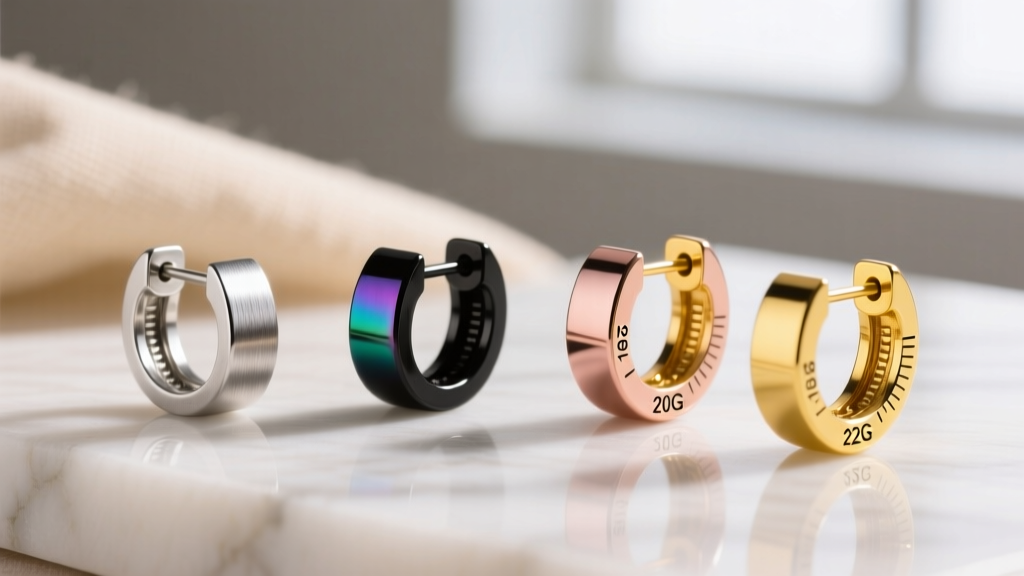
The most frequent point of failure in heavy blue and green drop earrings is the post or the wire. Standard earring posts are manufactured at 20-gauge (0.81mm). While this is perfectly adequate for a 1-carat sapphire stud, it is structurally insufficient for heavy cabochons or large cluster drops.
When an earring exceeds 4 grams in total weight, a 20-gauge post will gradually bend under the leverage of the earlobe's movement, eventually causing the backing to slip off and the earring to be lost. Furthermore, thin wires can cause 'cheese-cutter' syndrome, slowly migrating through the earlobe tissue.
Gauge Recommendations by Earring Weight
| Earring Weight | Recommended Post/Wire Gauge | Millimeter Diameter | Best For |
|---|---|---|---|
| Under 3g | 20-Gauge | 0.81mm | Standard studs, lightweight huggies |
| 3g to 6g | 18-Gauge | 1.02mm | Medium drops, gemstone clusters |
| Over 6g | 16-Gauge or 14-Gauge | 1.29mm / 1.63mm | Heavy turquoise drops, large chandeliers |
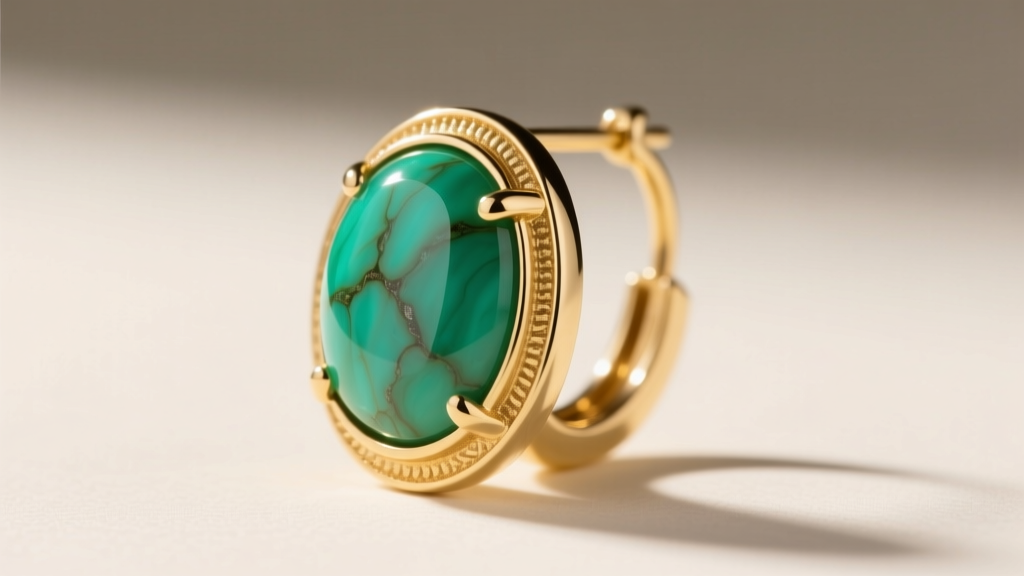
For heavy green stones like large malachite or chrysocolla cabochons, opting for a 16-gauge French wire or a specialized omega-back clip-on is essential for both security and lobe comfort.
Natural vs. Lab-Created: The 2026 Market Landscape
The market for blue and green earrings has shifted dramatically with the maturation of lab-created gemstones. Understanding the growth methods is vital for assessing value and durability.
Lab-Created Sapphires and Emeralds
Lab-created blue sapphires are typically grown using the Verneuil (flame fusion) process, making them incredibly affordable but sometimes exhibiting curved striae visible under magnification. For higher-end earrings, flux-grown lab sapphires are preferred as they mimic the natural crystal habit and offer superior optical properties.
Lab-created emeralds are grown via the hydrothermal method. According to the Swiss Gemmological Institute (SSEF), hydrothermal synthetic emeralds often have higher clarity and better toughness than their natural counterparts because they lack the extensive natural fracturing (jardin) that makes natural emeralds so brittle. For everyday wear earrings, a lab-created hydrothermal emerald in a prong setting is often a safer, more durable choice than a heavily included natural emerald.
Care Protocols for Porous vs. Non-Porous Materials
Not all blue and green materials are crystalline gemstones. Opaque, porous materials require entirely different maintenance protocols to prevent irreversible damage.
Porous Materials: Turquoise, Chrysocolla, and Malachite
These green and blue copper-based minerals are highly porous and relatively soft (Mohs 3 to 6). They will absorb skin oils, lotions, and perfumes, which can alter their color over time, turning vibrant sky-blue turquoise into a dull green. Care Rule: Never use ultrasonic cleaners, steamers, or chemical jewelry dips on these materials. Clean them only with a damp, lint-free microfiber cloth and mild, pH-neutral soap. Always store them in a low-humidity environment to prevent dehydration and surface cracking.
Non-Porous Materials: Sapphire, Spinel, and Tourmaline
Crystalline blue and green gems are non-porous and highly resistant to chemicals. They can be safely cleaned in ultrasonic baths (with the exception of fracture-filled emeralds or heavily included tourmalines). For routine maintenance, a soft-bristled toothbrush with warm water and a drop of dish detergent is sufficient to remove the sebum and dead skin cells that accumulate behind the earring setting, restoring the stone's light return.
Final Verdict: Engineering Your Perfect Pair
Choosing the perfect pair of blue and green earrings requires looking past the initial sparkle. By matching the gemstone's toughness to the correct protective setting, selecting a hypoallergenic metal alloy that enhances the stone's body color, and ensuring the post gauge is thick enough to support the physical weight of the piece, you guarantee that your earrings will remain secure, comfortable, and breathtaking for decades.