2026 Gift Guide: Choosing the Perfect Blue Green Earrings
Discover the perfect blue green earrings for every occasion in our 2026 gift guide. Expert tips on teal sapphires, apatite, and metal pairings.

The Shift Toward Teal: Why Blue-Green is the Defining Jewelry Trend
In the landscape of 2026 fine jewelry gifting, the monochromatic dominance of pure blue or pure green has given way to the complex, mesmerizing spectrum of blue-green. Often referred to as teal, cyan, or aqua, this intermediate hue captures the depth of the ocean and the vibrancy of tropical shallows. For gift-givers, blue green earrings represent a highly sophisticated choice that bridges the gap between classic elegance and modern individuality. Whether you are shopping for a milestone anniversary, a graduation gift, or a holiday surprise, understanding the gemological nuances, structural requirements, and stylistic pairings of these stones is critical to selecting a piece that will be cherished for a lifetime.
Gemstone Matrix: Decoding the Blue-Green Spectrum
Not all blue-green gemstones are created equal. The market is currently saturated with various minerals that exhibit this color, but their durability, price points, and optical properties vary wildly. According to the Gemological Institute of America (GIA), trace elements like iron and titanium dictate the color zoning in corundum, while copper and manganese play pivotal roles in tourmaline. Here is a breakdown of the primary contenders for your gift.
| Gemstone | Mohs Hardness | Avg. Price per Carat | Best Setting Style | Color Profile |
|---|---|---|---|---|
| Teal Sapphire | 9.0 | $800 - $3,500+ | Prong, Halo, Pavé | Deep, saturated cyan-green |
| Indicolite Tourmaline | 7.0 - 7.5 | $300 - $900 | Bezel, Channel | Dark, inky blue-green |
| Paraíba Tourmaline | 7.0 - 7.5 | $10,000 - $30,000+ | Halo, Protective Prong | Neon, electric cyan |
| Apatite | 5.0 | $20 - $60 | Bezel, Ear Cuff (Non-pierced) | Bright, neon aqua-blue |
Expert Insight: If your recipient leads an active lifestyle or plans to wear the earrings daily, teal sapphire is the only logical choice due to its 9.0 Mohs hardness. Apatite, while stunningly vibrant and budget-friendly, is highly susceptible to scratching and chipping and should be reserved for occasional wear or ear cuffs that don't endure friction.
Occasion Matching: Gifting by Milestone
Matching the specific shade and style of blue green earrings to the occasion elevates the emotional resonance of the gift.
Anniversaries and Romantic Milestones
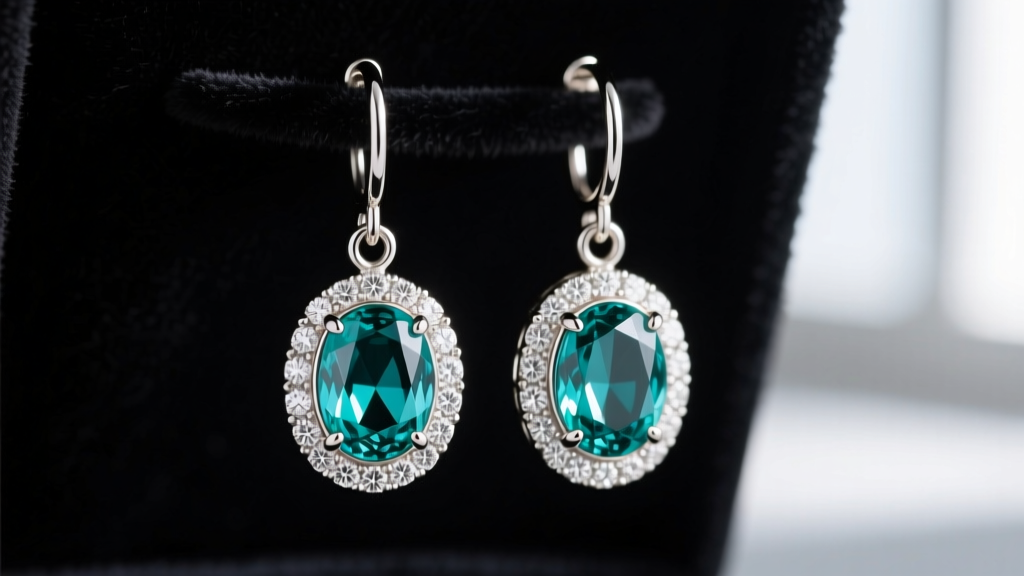
For significant anniversaries (such as the 5th or 10th), opt for teal sapphire drop earrings set in platinum. The cool, icy undertones of platinum enhance the sophisticated cyan hues of the sapphire. A 2-carat total weight (1 carat per ear) oval-cut teal sapphire with a micro-pavé diamond halo offers a luxurious, red-carpet-ready aesthetic that symbolizes enduring commitment.
Graduations and Career Achievements
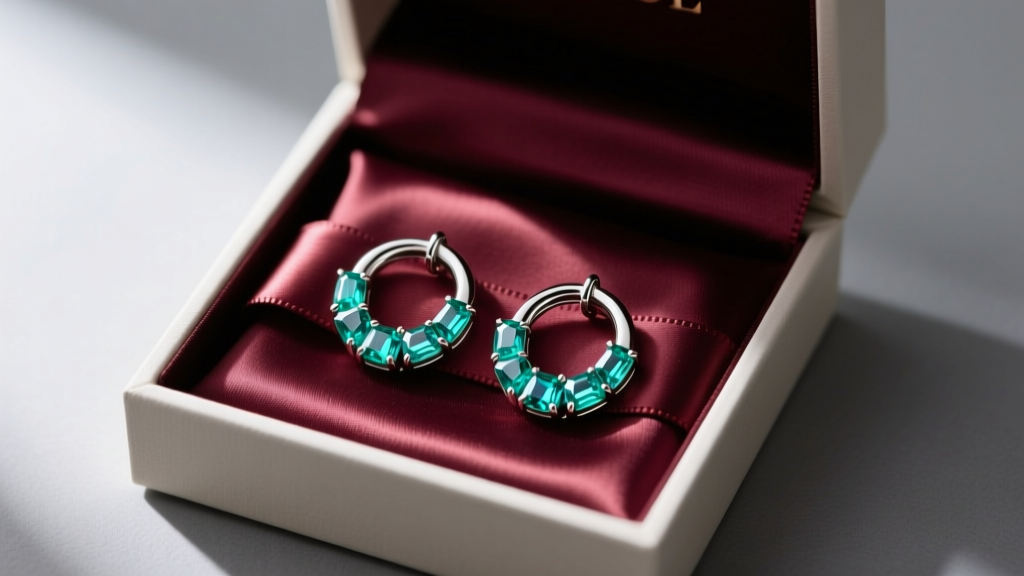
Celebrating a new chapter calls for versatility. Indicolite tourmaline huggies or small hoop earrings are perfect for the modern professional. They provide a subtle flash of blue-green that transitions seamlessly from boardroom presentations to evening networking events. Look for 14k or 18k yellow gold settings, which warm up the dark, inky tones of the indicolite.

Holiday and Birthday Gifting
For birthdays or holiday exchanges where budget might be a consideration but visual impact is paramount, neon apatite studs are a phenomenal choice. Because apatite is abundant, you can gift a massive 10mm cabochon or geometric step-cut stone for under $200. Ensure they are set in a bezel to protect the brittle edges of the stone.
Metallurgy and Color Theory: Pairing Metals with Teal
The metal you choose fundamentally alters the perception of the blue-green gemstone. Understanding color theory is essential for a curated gift.
- White Gold & Platinum: These white metals emphasize the blue and icy cyan undertones. They create a crisp, modern, and high-contrast look. Ideal for recipients with cool skin undertones.
- Yellow Gold (14k or 18k): Yellow gold draws out the green and golden secondary hues in teal sapphires and tourmalines, creating a warm, vintage, and earthy aesthetic. Perfect for those who favor bohemian or retro styles.
- Rose Gold: Rose gold sits opposite blue-green on the color wheel, creating a striking complementary contrast. The peach-pink tones of the metal make the neon glow of Paraíba tourmaline or the deep cyan of apatite visually vibrate.
Structural Integrity: Gauge Sizes and Earring Mechanics
A common failure point in jewelry gifting is ignoring the structural mechanics of the earring, leading to discomfort or loss. As detailed in GIA's Tourmaline Overview, dense stones require secure mounting, but the earring post and backing are equally vital.
Gauge Sizing: Standard lobe piercings are typically 20-gauge (0.81mm) or 18-gauge (1.02mm). If you are gifting cartilage pieces, ear cuffs, or huggies, verify the recipient's piercing gauge. Cartilage is often pierced at 16-gauge (1.29mm) or 14-gauge (1.60mm). Forcing an 18g post into a 16g hole can cause micro-tears and irritation.
Backing Mechanics: If you are gifting heavy blue green earrings—such as 4-carat teal sapphire chandelier drops—standard butterfly friction backs will fail. The weight will cause the earring to droop forward, pressing the post into the back of the earlobe. For heavy stones, you must select earrings with screw-backs or Omega clips, which distribute the weight across the lobe and lock the earring securely in an upright position.
The Buyer’s Red Flag Checklist
When shopping for blue-green gemstones, the market is rife with undisclosed treatments. Protect your investment by watching for these red flags:
Expert Warning: Always ask the jeweler if a teal sapphire has undergone beryllium diffusion. This is a high-heat treatment that introduces beryllium to artificially enhance the blue-green color. While legal, it drastically reduces the stone's value compared to standard heat treatment or unheated stones, and it must be explicitly disclosed on the invoice.
Additionally, be wary of 'glass-filled' tourmalines. Because indicolite and Paraíba tourmalines frequently have surface-reaching inclusions, some vendors fill them with lead-glass to improve clarity. These stones are highly fragile and can be destroyed by standard ultrasonic jewelry cleaners or even a splash of lemon juice. Always demand a lab report from a reputable institution like the GIA, AGS, or AGL for any blue-green gemstone purchase exceeding $1,000.
Conclusion: Curating the Perfect Gift
Gifting blue green earrings in 2026 is an exercise in personalized luxury. By moving beyond generic jewelry choices and focusing on the specific gemological properties, occasion-appropriate styles, and structural mechanics of the piece, you provide a gift that is both visually stunning and built to last. Whether you choose the enduring hardness of a teal sapphire, the electric neon of a Paraíba tourmaline, or the accessible vibrancy of apatite, your attention to detail will ensure your gift becomes an immediate heirloom.


