Blue Topaz and Gold Earrings: 2026 Value & Pricing Guide
Discover the true market value of blue topaz and gold earrings in 2026. Compare London, Swiss, and Sky blue pricing, gold karats, and buying tips.

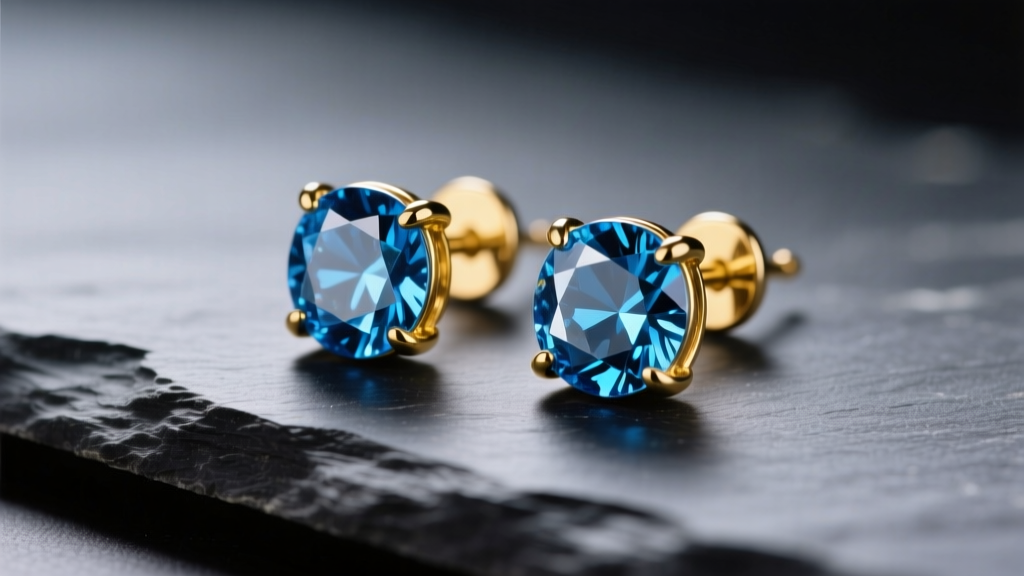
The 2026 Market Landscape for Blue Topaz and Gold Earrings
Navigating the colored gemstone market requires a sharp eye for both geological reality and retail markup. When assessing the true value of blue topaz and gold earrings in 2026, buyers must understand a fundamental shift in the jewelry economy: with precious metal prices hovering near historic highs, the gold setting often commands a larger percentage of the retail price than the gemstone itself. Blue topaz, while breathtaking, is an abundant material that undergoes routine laboratory enhancement. Therefore, a budget and value assessment must heavily weigh the karat purity, gram weight, and structural integrity of the gold against the specific hue and cut quality of the topaz.
Unlike diamonds, where the gemstone dictates 80% of the cost, blue topaz and gold earrings represent a unique value proposition. You are primarily paying for the craftsmanship, the gold alloy, and the precision of the lapidary work. According to the Gemological Institute of America (GIA), virtually all blue topaz on the market begins as colorless or pale material that is irradiated and heated to achieve its blue hues. Understanding this treatment pipeline is the first step in ensuring you do not overpay for what is essentially a semi-precious, treated stone set in precious metal.
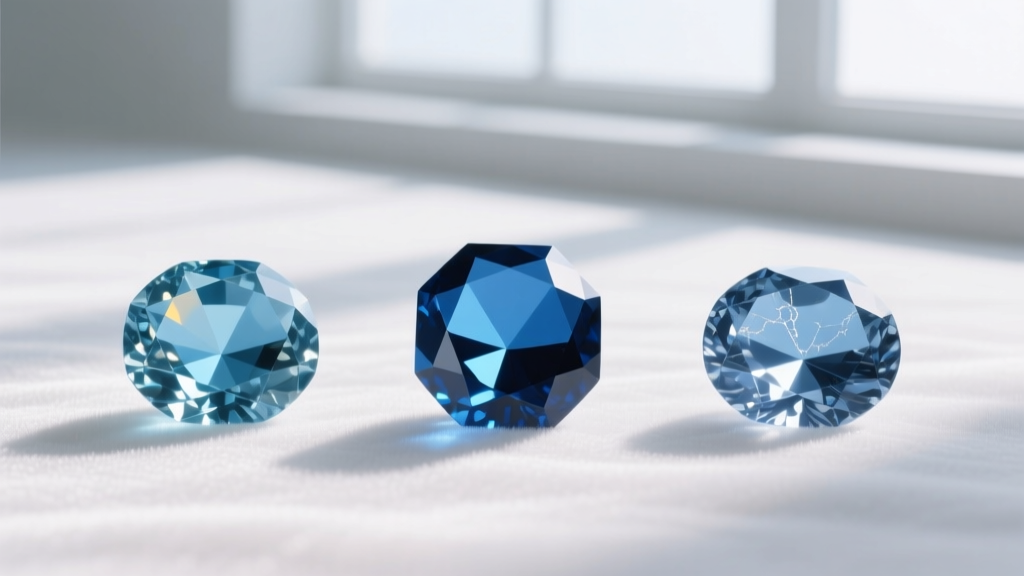
Decoding the Blue: Sky, Swiss, and London Topaz Valuations
The trade categorizes blue topaz into three primary tiers based on color saturation. The deeper the blue, the more intensive the irradiation process required, which directly impacts the wholesale cost. However, at the retail level, the price gap between these varieties is often artificially inflated by brands marketing 'rarity' that does not exist in nature.
| Topaz Variety | Color Profile | Treatment Method | 2026 Wholesale Value (Per Carat) | Retail Markup Expectation |
|---|---|---|---|---|
| Sky Blue | Light, pastel blue | Gamma rays (Cobalt-60) | $1.00 - $4.00 | 3x - 5x |
| Swiss Blue | Vivid, medium blue | Electron accelerator | $5.00 - $12.00 | 4x - 6x |
| London Blue | Deep, inky blue with gray/green undertones | Nuclear reactor (Neutron bombardment) | $15.00 - $35.00 | 5x - 8x |
Note: London Blue topaz requires a 'cooling off' period post-irradiation to ensure residual radioactivity meets safety standards set by nuclear regulatory bodies. This holding time adds marginal overhead to the wholesale cost, justifying its premium position.
Gold Karat Breakdown: Where Does Your Budget Go?
When purchasing blue topaz and gold earrings, the gold alloy is your true store of value. The American Gem Society (AGS) outlines strict standards for gold purity, but in earring manufacturing, durability often trumps pure karat weight.
10k Gold (41.7% Pure)
Often found in budget-friendly, mass-market stud earrings. While highly durable and resistant to bending, 10k gold lacks the rich yellow luster of higher karats and can cause contact dermatitis in wearers with nickel or copper sensitivities. Value Verdict: Avoid unless your budget is strictly under $150.
14k Gold (58.3% Pure)
The undisputed champion for earring posts and structural hoops. The alloy mix (typically incorporating silver, copper, and zinc) provides the exact tensile strength needed to prevent earring posts from bending when inserting friction backs. Value Verdict: The optimal balance of intrinsic melt value, skin safety, and structural longevity.
18k Gold (75% Pure)
Prized for its rich color and hypoallergenic properties, 18k gold is softer. It is highly recommended for bezel settings or heavy drop earrings where the post is reinforced with steel or platinum. However, using 18k gold for thin, 20-gauge friction posts is a structural failure waiting to happen. Value Verdict: Pay the premium only for substantial, well-engineered designs.
The Hidden Costs: Treatments and Coatings
A critical value trap in the 2026 market is the 'Mystic' or coated topaz earring disguised as a rare color variant. Some manufacturers apply a thin titanium film to the pavilion (bottom) of the stone to enhance color reflection. While beautiful, this coating can scratch or wear off over time, rendering the stone virtually worthless. Always demand a disclosure of coatings. True London Blue derives its color entirely from lattice-level radiation alteration, not surface films.
Price Tier Matrix: What to Expect in 2026
To conduct a proper budget assessment, use this pricing matrix as a baseline for fair retail value. These ranges assume standard commercial cuts (e.g., oval, cushion, or round brilliant) and standard gram weights (1.5g to 3.0g per pair).
- Entry-Level Studs (14k Gold, 1.00 CTW Sky Blue): $120 - $180. (You are paying primarily for the 1.5 grams of 14k gold and basic labor).
- Mid-Tier Huggies (14k Gold, 0.50 CTW Swiss Blue Melee): $250 - $400. (Labor-intensive pave or channel settings drive the price up, not the gemstone material).
- Premium Drops (18k Gold, 4.00 CTW London Blue): $600 - $950. (The higher gold weight, premium 18k alloy, and larger calibrated gemstones justify this tier).
- Designer/Artisan Pieces (22k/18k mixed, Custom Cut): $1,200+. (At this level, you are paying for the lapidary artist's custom faceting and the brand's design intellectual property).
Red Flags and Value Traps to Avoid
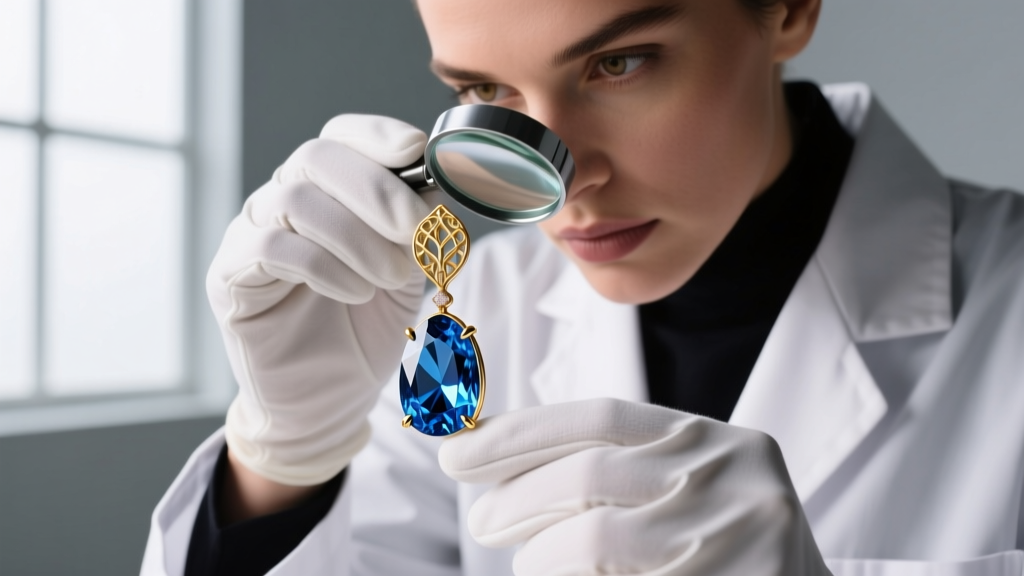
When evaluating high-end blue topaz and gold earrings, structural and gemological red flags can instantly destroy the resale and wearable value of the piece.
Expert Warning: Topaz has perfect basal cleavage. This means it can split cleanly along one specific plane if struck or subjected to uneven pressure. If a jeweler sets a topaz stone with overly tight prongs directly over its cleavage plane, the stone will eventually crack. Always inspect the prong tension under a 10x loupe.
Furthermore, beware of 'hollowed' gold earrings. To keep retail prices low while advertising '18k Gold,' some manufacturers cast the earring bodies with hollow interiors. These are prone to denting upon minor impact and cannot be easily resized or repaired by a bench jeweler. Always check the gram weight; a pair of substantial 18k gold drop earrings weighing less than 2.5 grams total is almost certainly hollowed or heavily alloyed with base metals.
Finally, ensure the earrings comply with the Federal Trade Commission (FTC) Jewelry Guides, which mandate accurate karat stamping and full disclosure of any gemstone treatments that are not permanent or require special care. If a retailer cannot provide a written breakdown of the gold weight and topaz treatment, walk away.
Final Verdict: Maximizing Your Investment
Ultimately, blue topaz and gold earrings should be viewed as an investment in wearable art and precious metal, rather than a speculative gemstone asset. To maximize your budget in 2026, prioritize 14k or 18k solid gold settings with secure, well-engineered clasps (such as screw-backs for heavy drops or hinged snap-backs for hoops). Choose Swiss or London blue topaz for their superior color saturation and light return, and always verify that the stones are eye-clean with precise facet alignment. By focusing on the metallurgical quality and the precision of the cut, you secure a pair of earrings that will retain both their structural integrity and their aesthetic brilliance for decades.


