Cow Earrings Troubleshooting: Fix Sag, Tarnish, and Snags
Solve common cow earring problems. Learn how to fix lobe sag from heavy cowbell charms, prevent cow print enamel chipping, and stop snagging.

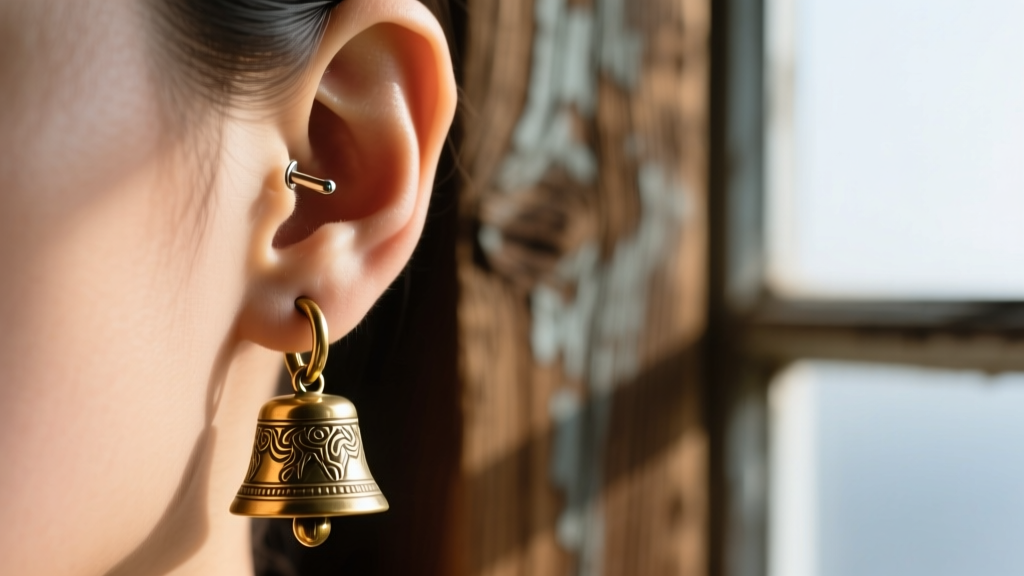
The resurgence of western-core and farm-inspired aesthetics has pushed cow earrings into the mainstream jewelry spotlight for 2026. From intricate bovine charms and 3D cow horn cuffs to classic black-and-white cow print studs, these playful pieces are everywhere. However, beneath the charming exterior lies a minefield of biomechanical and metallurgical design flaws. Heavy cowbell dangles cause severe lobe sagging, cheap enamel coatings trigger contact dermatitis, and elaborate lasso or horn shapes constantly snag on knitwear.
As jewelry specialists, we see the fallout from poorly engineered novelty earrings daily. This comprehensive troubleshooting guide addresses the specific failure modes of cow-themed ear wear and provides actionable, professional-grade solutions to salvage your favorite pieces without sacrificing your ear health.
The Biomechanics of Lobe Sag: Managing Heavy Cowbell Charms
The most frequent complaint we receive regarding western-style cow earrings involves the "cheese-cutter effect." A standard 20-gauge (0.81mm) butterfly stud weighs approximately 0.8 grams. In contrast, a cast-alloy cowbell dangle or a solid brass longhorn charm can easily weigh between 12 and 18 grams. When this concentrated mass hangs from a thin wire post, it restricts blood flow to the fistula (the piercing channel), leading to tissue thinning, elongation, and eventual tearing.
Weight Thresholds and Gauge Upgrades
According to the Association of Professional Piercers (APP), the earlobe can comfortably support everyday jewelry up to 4 grams without long-term tissue distortion. To safely wear heavier cowbell earrings, you must increase the surface area distributing the weight.
| Earring Style | Average Weight | Standard Gauge | Lobe Impact | Required Fix |
|---|---|---|---|---|
| Cow Print Studs | 1.5 - 3g | 20g (0.81mm) | Minimal | Standard silicone backs |
| Medium Cowbell Dangles | 6 - 9g | 18g (1.02mm) | Moderate Sagging | Support patches + 18g post |
| Heavy Longhorn Charms | 12 - 18g | 16g (1.29mm) | Severe Tissue Thinning | 14g/16g flat-back labret conversion |
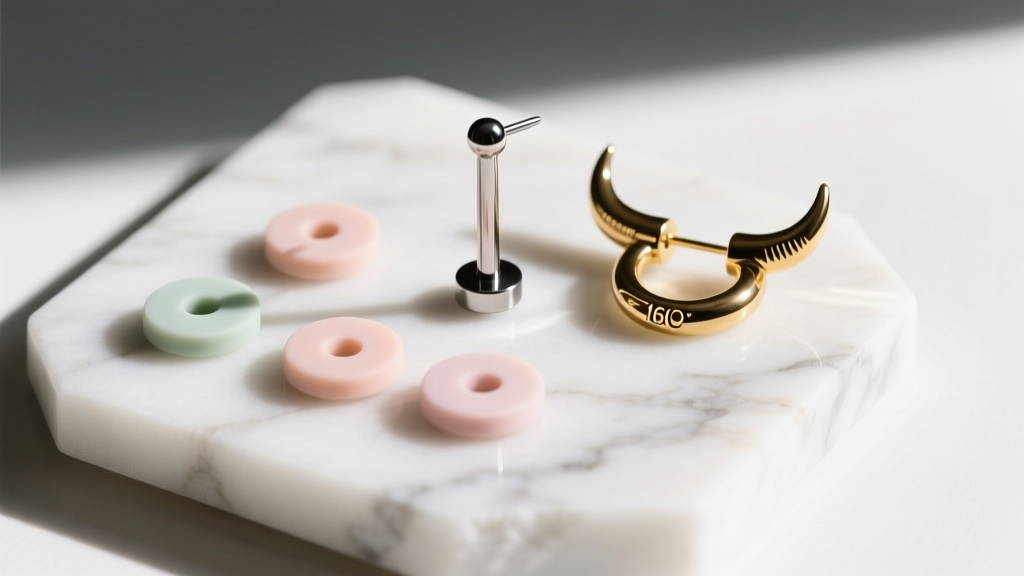
The Fix: If your cowbell earrings have removable hooks, swap them for 16-gauge or 14-gauge titanium flat-back labrets. The flat disc rests flush against the back of the earlobe, distributing the 15-gram load across a 4mm surface area rather than a microscopic wire point. For pieces that cannot be modified, apply polyurethane foam earring support patches (like LobeWonder) directly to the back of the earlobe before inserting the post.
Metallurgy and Allergies: The Cow Print Enamel Trap
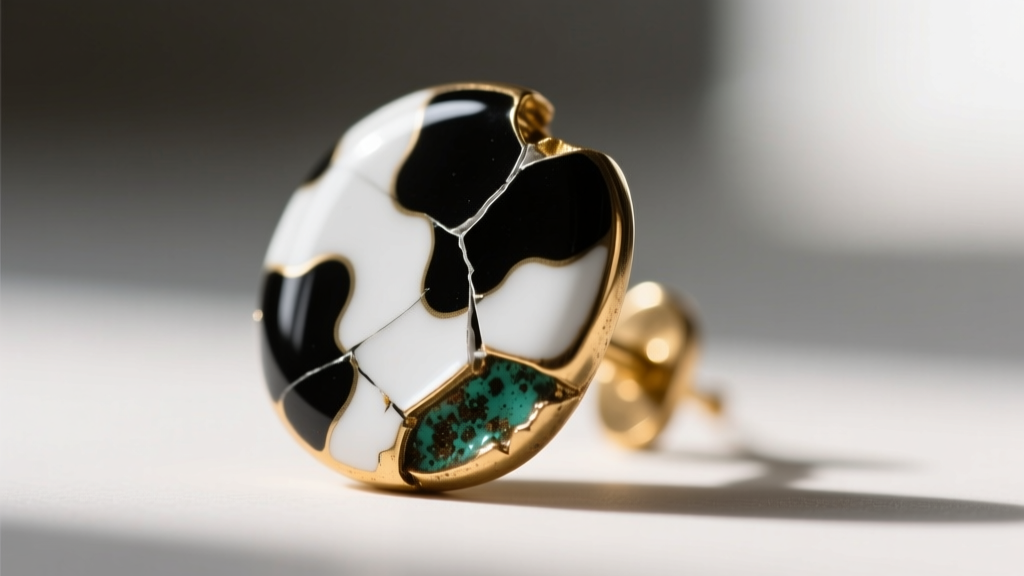
Cow print requires stark contrasts, typically achieved through black and white enamel applications. The problem arises in the manufacturing of budget-friendly novelty jewelry. Most mass-produced cow print earrings use a zinc-alloy or brass base that contains nickel solder. The "enamel" used is often a cold-cured epoxy resin rather than true vitreous (glass) enamel.
Identifying and Preventing Contact Dermatitis
Within weeks of daily wear, cold epoxy enamel micro-chips at the edges, exposing the underlying nickel-laced alloy to your skin. The American Academy of Dermatology notes that nickel allergy is one of the most common causes of allergic contact dermatitis, resulting in the itchy, weeping, and crusting earlobes frequently reported by wearers of painted novelty earrings.
- The 48-Hour Emergency Barrier: If your earlobes are already reacting to a favorite pair of cow print studs, coat the earring posts and the back of the enamel face with a layer of clear, hypoallergenic nail polish. This creates a temporary physical barrier against nickel leaching. Reapply every 48 hours.
- The Permanent Upgrade: When shopping for replacement cow print earrings, look specifically for ASTM F136 implant-grade titanium bases featuring PVD (Physical Vapor Deposition) black coatings or high-fired vitreous enamel. PVD coating bonds at a molecular level and will not chip or flake into the piercing channel.
- Cartilage Considerations: Never wear chipping enamel or unverified alloys in upper cartilage piercings (like the helix or conch). Cartilage lacks the robust blood supply of the earlobe, making it highly susceptible to severe perichondritis if an allergic reaction or bacterial infection sets in.
Acoustic and Mechanical Nuisances: Snags and Rattles
Beyond weight and allergies, the physical geometry of cow earrings presents unique mechanical challenges. 3D cow horn shapes, lasso hoops, and literal cowbells introduce snagging hazards and acoustic disruptions that are unsuitable for professional or active environments.
Silencing the Cowbell
Authentic cowbell earrings contain a small metal clapper. While charming at a rodeo, the constant clacking in a quiet office or during a commute is highly disruptive. Do not remove the clapper entirely, as this ruins the aesthetic balance of the charm. Instead, use a toothpick to apply a microscopic drop of clear UV-curing resin or 100% silicone sealant inside the bell, gluing the clapper to the inner wall. This preserves the visual authenticity of the jewelry while entirely neutralizing the acoustic resonance.
Eliminating the Snag Factor
Outward-facing cow horns and rigid wire lassos act as grappling hooks for loose hair, winter scarves, and knit sweaters. Repeated snagging doesn't just ruin your clothing; it causes micro-trauma to the piercing fistula, leading to irritation bumps (hypertrophic scarring).
Pro-Tip: Transition your bovine aesthetic from dangle hooks to huggie hoops or ear cuffs. A continuous huggie hoop featuring a flush-set cow print pattern or a small, inward-facing cow horn charm eliminates the lever-arm effect that causes snagging, keeping the jewelry securely tucked against the anatomy of the ear.
Quick Troubleshooting Matrix
Keep this diagnostic chart handy to quickly resolve issues with your western and farmcore jewelry collection:
- Issue: Earlobe feels hot and stretched by midday.
Diagnosis: Post gauge is too thin for the charm weight.
Action: Switch to a 16g flat-back post or use adhesive lobe support patches. - Issue: Green/black discoloration on the skin behind the ear.
Diagnosis: Copper/brass base metal oxidizing from skin acidity.
Action: Clean with a jewelry polishing cloth; coat the post in clear nail polish or upgrade to 316L surgical steel. - Issue: Earring constantly spins, causing the cow print design to face backward.
Diagnosis: Friction back (butterfly clutch) is too loose on a thin post.
Action: Replace the metal clutch with a high-grip silicone O-ring back, which provides superior rotational friction. - Issue: Irritation bump forming on the back of the lobe.
Diagnosis: Sharp post ends or heavy swinging motion causing localized trauma.
Action: File the post tip gently with an emery board, or swap to a labret stud with a smooth, rounded back disc.
Final Thoughts on Bovine Bling
Cow earrings are a fantastic way to express personal style, embrace the 2026 western revival, and add a touch of whimsy to your jewelry rotation. However, treating novelty earrings with the same biomechanical respect as fine jewelry is crucial for the longevity of your piercings. By upgrading your post gauges, demanding higher-quality enamel or PVD coatings, and modifying the physical geometry of the charms to suit your lifestyle, you can enjoy your favorite bovine accessories without the sag, tarnish, or snags. Always prioritize implant-grade materials where possible, and listen to your tissue when it signals that a piece is simply too heavy for a standard lobe piercing.


