The Sculptural Gold Dangle Earring: 2026 Trend & Style Guide
Discover 2026's top gold dangle earring trends, from kinetic architectural shapes to fluid molten metals. Expert styling and buying guide inside.

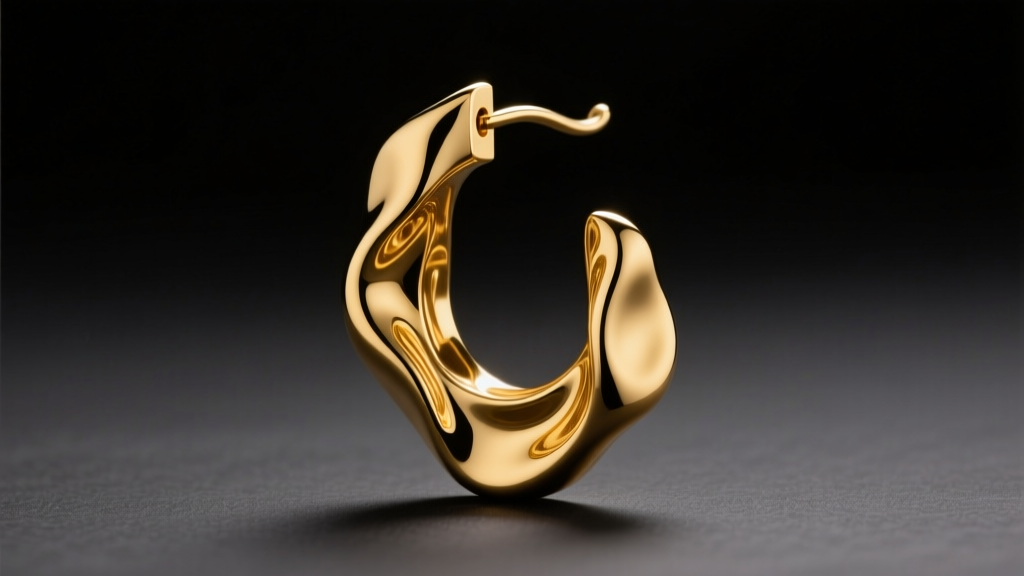
The evolution of ear styling has officially crossed the threshold from quiet luxury into expressive, architectural territory. As we navigate the 2026 jewelry landscape, the gold dangle earring has reclaimed its position as the ultimate focal point of personal style. No longer confined to simple teardrops or static hoops, today's leading designs prioritize kinetic movement, mixed-metal inlays, and sculptural volumes that interact with the wearer's natural anatomy.
Whether you are curating a high-impact evening look or seeking an elevated everyday signature piece, understanding the nuances of modern dangle construction, alloy durability, and proportion is essential. This comprehensive guide breaks down the technical and aesthetic shifts defining the gold dangle earring market this year.
The 2026 Shift: From Static to Kinetic Sculpture
According to recent trend forecasting by Vogue, the dominant theme in fine jewelry for 2026 is 'kinetic expression.' Designers are moving away from rigid, heavy casts and instead engineering articulated joints, hidden hinges, and counter-balanced weights. A modern gold dangle earring is designed to move fluidly with the wearer, catching light from multiple angles as the head turns.
'The ear is no longer just a canvas for static adornment; it is a stage for movement. The most sought-after pieces this year feature micro-hinges that allow the gold to ripple like liquid or pivot like modern architecture.' — Jewel Style Radar Editorial Team
This shift requires advanced manufacturing techniques, such as 3D wax printing combined with traditional lost-wax casting, allowing for impossibly thin yet structurally sound gold lattice work that maintains the dangle's momentum without weighing down the lobe.
Material Science: Choosing the Right Gold Alloy
When investing in a statement dangle, the karat weight dictates not only the color and price but, crucially, the structural integrity of the piece. Because dangles are subject to swinging, catching, and gravitational pull, selecting the correct alloy is a matter of both aesthetics and engineering.
| Gold Alloy | Vickers Hardness (HV) | Tensile Strength | Best Use Case for Dangles | 2026 Avg. Price Range |
|---|---|---|---|---|
| 24k (Pure) | 25-30 HV | Very Low | Decorative inlays only; too soft for hooks or structural drops. | $$$$ |
| 22k | 60-70 HV | Low-Medium | Short, thick hammered drops; requires secure leverback closures. | $$$ |
| 18k (Yellow/White) | 120-140 HV | High | The luxury standard; ideal for intricate kinetic hinges and thin wires. | $$$ |
| 14k | 140-160 HV | Very High | Long, architectural dangles; highly resistant to bending and warping. | $$ |
For structural elements like the ear wire or the connecting jump rings, jewelers almost exclusively use 14k or 18k gold. As noted by the Gemological Institute of America (GIA), alloying gold with metals like copper, silver, and zinc dramatically increases its durability, which is non-negotiable for dangling silhouettes that act as levers against the earlobe.

Three Dominant Silhouettes Defining the Market
1. The Asymmetric Molten Drop
Embracing the 'raw luxury' aesthetic, molten gold designs mimic the look of metal caught mid-melt. These dangles feature organic, uneven surfaces that diffuse light beautifully. The trend for 2026 pairs a highly polished, mirror-finished front with a matte, brushed-oxidized back, creating depth. Because the shape is naturally bottom-heavy, these are best executed in hollow electroformed 18k gold to keep the weight under the critical 7-gram threshold.
2. The Geometric Kinetic Hinge
Art Deco meets modern engineering. These dangles feature distinct geometric shapes—hexagons, elongated baguettes, or concentric circles—connected by micro-pins that allow each segment to swing independently. This articulation prevents the earring from acting as a rigid pendulum, which can cause lobe tearing. Instead, the kinetic energy is absorbed by the hinges, making it a highly practical choice for all-day wear.
3. The Ear-Jacket Hybrid Dangle
The traditional dangle has been reimagined through the lens of the ear jacket. In this hybrid design, the stud component wraps around the back or front of the lobe, distributing the visual weight, while a delicate chain or articulated gold bar drops down from the base. This creates the illusion of a massive, heavy piece without the associated physical strain on the piercing.
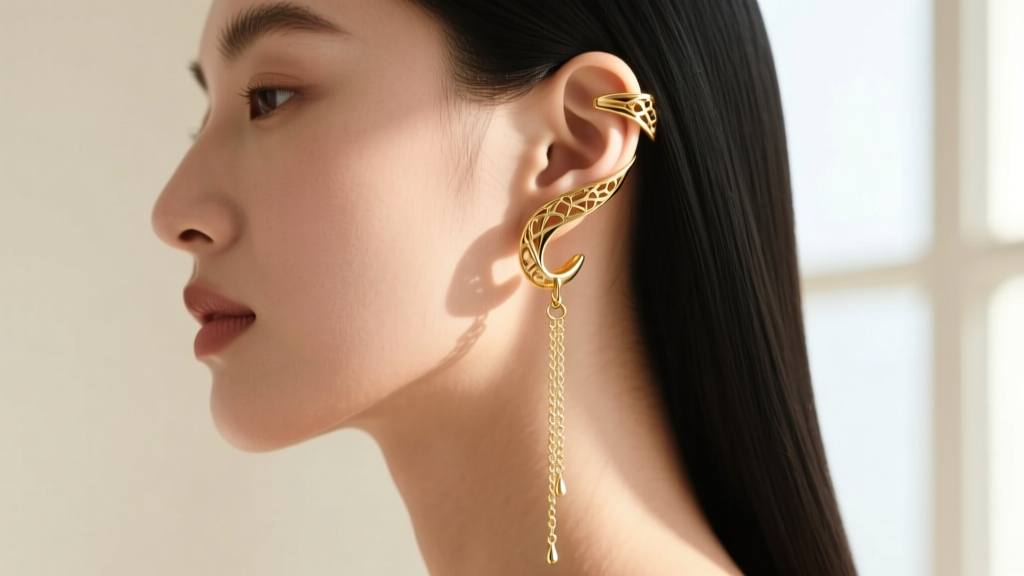
Proportion & Face Shape Matrix
Styling a gold dangle earring requires an understanding of facial geometry and visual balance. Use this matrix to select the optimal length and volume for your features:
- Round Faces: Opt for elongated, linear dangles (1.5 to 2.5 inches) with sharp geometric edges. Avoid circular or wide teardrop shapes, which emphasize facial width. The goal is to create a vertical line that visually lengthens the jawline.
- Square Faces: Choose dangles with soft, curved silhouettes, such as molten drops or rounded hoops with a dangling charm. The organic curves soften a strong jawline and prominent cheekbones.
- Heart-Shaped Faces: Look for chandelier or triangular dangles that are wider at the bottom than the top. This adds visual weight to the lower half of the face, balancing a narrower chin.
- Oval Faces: The universal canvas. Almost any dangle works, but 2026 trends favor bold, oversized architectural pieces that sit right at the jawline to highlight the natural symmetry of the face.
Technical Buying Guide: Gauges, Closures, and Lobe Health
A beautiful design is useless if it compromises your ear health. When shopping for a gold dangle earring, pay strict attention to the technical specifications of the ear wire and closure mechanism.
The Gauge Factor
Standard lobe piercings are typically 20-gauge (0.81mm) or 18-gauge (1.02mm). However, heavy dangles should ideally feature an 18-gauge or even 16-gauge (1.29mm) ear wire. A thinner wire on a heavy dangle creates a 'cheese cutter effect,' where the concentrated weight slices through the delicate tissue of the healing or stretched lobe. If you purchase a heavy 20G dangle, consider using a silicone support patch behind the lobe to distribute the pressure.
Closure Mechanics
Never trust a standard French wire (shepherd's hook) for a dangle exceeding 5 grams. The forward momentum of a swinging dangle will easily dislodge a smooth hook. For security, demand one of the following:
- Leverback: Features a hinged clasp that snaps securely into a catch. The gold standard for medium-weight dangles.
- Locking Omega Back: Combines the comfort of a clip-on with the security of a post. Ideal for heavy, statement-making 18k gold pieces.
- Threaded Screw-Back: Rare for dangles, but used in high-end luxury pieces to ensure the earring cannot be lost during active movement.
The 8-Gram Rule
Dermatologists and master jewelers generally agree that an earlobe can comfortably support up to 8 grams of static weight before long-term stretching becomes a significant risk. When evaluating a gold dangle earring, always check the product specifications for its gram weight. If a solid 18k gold piece exceeds this limit, inquire if the designer utilized hollow-forming techniques or titanium backing plates to reduce the physical load.
Final Verdict
The gold dangle earring of 2026 is a masterclass in balancing artistic expression with biomechanical reality. By prioritizing kinetic designs, understanding the structural limits of gold alloys, and respecting the physical boundaries of the earlobe, you can invest in pieces that are not only visually arresting but engineered for a lifetime of wear. Whether you lean toward the fluid unpredictability of molten drops or the precise engineering of articulated hinges, the modern dangle is an essential tool in the contemporary style arsenal.


