The Ultimate Care Guide for Gold Skinny Hoop Earrings
Learn expert cleaning and maintenance tips for gold skinny hoop earrings. Prevent bending, tarnish, and clasp failure with our comprehensive care guide.

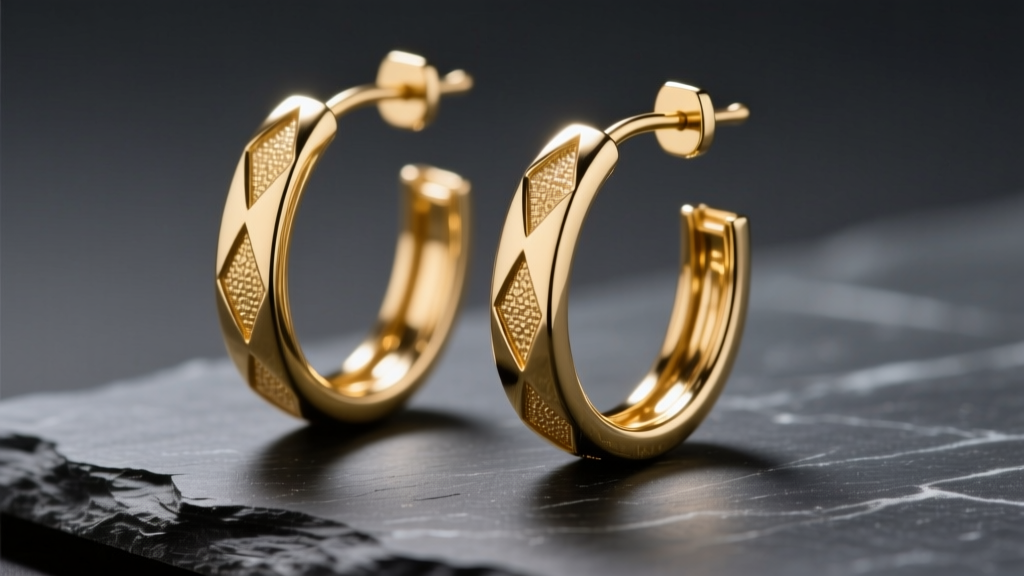
Gold skinny hoop earrings have cemented their status as a modern jewelry staple, offering a minimalist, effortless aesthetic that transitions seamlessly from casual daywear to elegant evening attire. However, their defining feature—a remarkably thin, delicate wire profile—is also their greatest vulnerability. Unlike chunky huggies or solid gold studs, skinny hoops lack the structural mass to easily withstand daily physical stress, making them highly susceptible to warping, clasp failure, and surface abrasion.
If you want your delicate hoops to maintain their perfect circular geometry and high-polish luster for years to come, standard jewelry care simply won't suffice. This comprehensive guide dives deep into the metallurgy, structural risks, and precise maintenance protocols required to protect your gold skinny hoop earrings.
The Metallurgy and Gauge of Skinny Hoops
To properly care for skinny hoops, you must first understand the physical limitations of their construction. The term "skinny" generally refers to the wire thickness (gauge) used to form the hoop. Most delicate hoops range between 22-gauge (0.64mm) and 20-gauge (0.81mm), with some ultra-fine designs dipping to 24-gauge (0.51mm). For context, a standard paperclip is roughly 1.0mm thick. When you are wearing a 0.64mm wire, the metal acts as a lever arm; if the bottom of the hoop catches on a sweater, that minimal thickness transfers immense torsional stress directly to the clasp hinge or the earlobe piercing itself.
The karat of the gold also dictates your care strategy. According to the Gemological Institute of America (GIA), pure 24k gold is far too malleable for functional jewelry. Therefore, skinny hoops are typically crafted in 14k (58.5% gold) or 18k (75% gold). While 18k gold offers a richer, warmer yellow hue, its higher pure gold content makes it noticeably softer and more prone to bending than 14k gold, which is alloyed with harder metals like copper, silver, and zinc for structural integrity. If your skinny hoops are 18k or higher, you must handle them with heightened caution.
Daily Wear and Tear: Identifying the Risks
The most common cause of death for a skinny hoop is not chemical tarnish, but mechanical deformation. Because the wire is so thin, it cannot absorb impact or tension without bending. Understanding your daily friction points is the first line of defense.
The Hair-Brushing Hazard
Brushing or vigorously towel-drying your hair while wearing thin hoops is a primary cause of warping. The bristles of a brush or the loops of a terry-cloth towel can easily snag the bottom curve of the hoop. Because the earring is anchored in your earlobe, the sudden pull will stretch the wire into an oval or teardrop shape, or worse, rip the earring post entirely off the hoop's solder joint.
Sleeping in Your Hoops
While some jewelry is marketed as "sleep-safe," skinny gold hoops are not. The pressure of your head against a pillow creates unpredictable lateral forces. Even if the hoop doesn't snap, the friction against cotton pillowcases will gradually create microscopic scratches along the outer edge of the wire, dulling the mirror finish over time. Furthermore, the post can bend, making future insertions painful and damaging to your piercing tract.
Step-by-Step Cleaning Protocol
Because skinny hoops have a small surface area and often feature seamless or hidden clasps, dirt, sebum, and hair products accumulate rapidly at the hinge and the interior curve. This buildup not only dulls the gold but can also degrade the mechanical function of the clasp. Follow this precise cleaning protocol every two to three weeks.
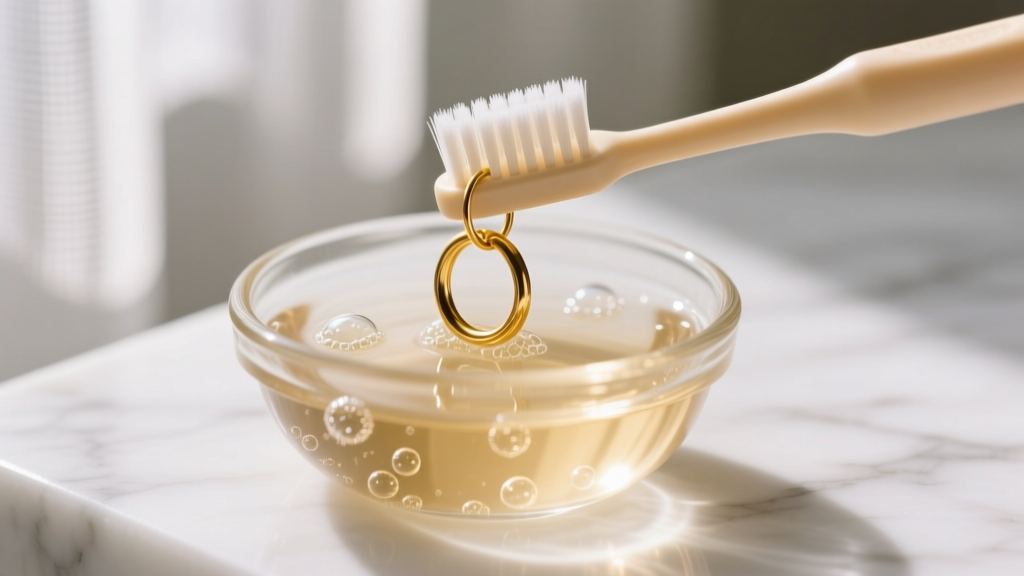
- Prepare the Solution: In a small glass bowl, mix one cup of lukewarm distilled water with three drops of mild, phosphate-free dish soap (such as original Dawn). Avoid hot water, which can expand microscopic fissures in the metal or damage any tension-set stones.
- Soak: Submerge the hoops in the solution for exactly 10 to 15 minutes. This softens hardened sebum and cosmetic residues without requiring aggressive scrubbing.
- Agitate Gently: Using an ultra-soft baby toothbrush (never a standard adult toothbrush, as the bristles are too stiff and will leave micro-scratches on high-polish gold), gently brush the interior curve of the hoop and the clasp mechanism. Use light, circular motions.
- Rinse and Dry: Rinse the earrings under a gentle stream of lukewarm distilled water. Pat them completely dry with a lint-free microfiber cloth. Ensure the clasp hinge is entirely dry before closing it to prevent internal moisture buildup.
Safe vs. Unsafe Cleaning Solutions
Not all jewelry cleaners are created equal, and the thin profile of skinny hoops makes them particularly vulnerable to harsh chemicals. The Jewelers of America strongly advises against using abrasive pastes or unverified chemical dips on delicate karat gold. Below is a quick reference guide for cleaning agents.
| Cleaning Agent | Safety Rating | Impact on Skinny Gold Hoops |
|---|---|---|
| Mild Dish Soap & Water | Highly Safe | Effectively removes oils without damaging the alloy or finish. |
| Baking Soda Paste | Unsafe | Highly abrasive; will permanently scratch and dull the mirror polish. |
| Ultrasonic Cleaners | Use with Caution | Safe for solid wire, but can shake loose solder joints on thin clasps. |
| Ammonia-Based Cleaners | Unsafe | Can cause surface pitting and weaken the structural integrity over time. |
| Chlorine / Bleach | Extremely Dangerous | Causes stress corrosion cracking, leading to sudden, catastrophic snapping. |
Expert Warning: Never wear your gold skinny hoops in a chlorinated swimming pool or while cleaning with bleach. Chlorine reacts aggressively with the copper and silver alloys in 14k and 18k gold, causing a phenomenon known as "stress corrosion cracking." This microscopic degradation compromises the wire, meaning your hoop could spontaneously snap weeks after the initial exposure.
Proper Storage to Prevent Warping and Tangling
How you store your skinny hoops is just as critical as how you clean them. Tossing them loosely into a jewelry box guarantees they will tangle with heavier chains or larger pieces. When you attempt to untangle a 20-gauge gold wire from a steel chain, the sheer force required will almost certainly bend the hoop beyond repair.
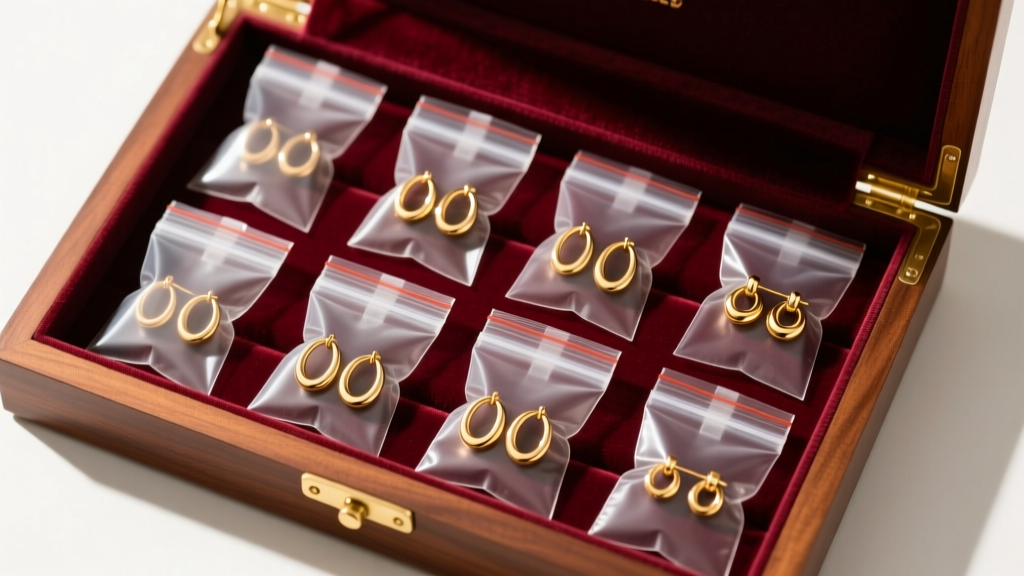
Always store your skinny hoops individually. The most effective and economical method is to place each pair in its own small, clear polyethylene ziplock bag, pressing the air out before sealing. This not only prevents physical tangling but also limits exposure to ambient humidity and sulfur in the air, which can slowly tarnish the alloyed metals in 14k gold. If you prefer a traditional jewelry box, utilize dedicated slotted inserts or hang them on individual padded hooks to ensure they do not touch one another.
Troubleshooting: How to Reshape a Bent Hoop
Despite your best efforts, a skinny hoop may eventually lose its perfect circular shape. If your hoop has become slightly oval or warped, do not attempt to bend it back into shape using your bare fingers, as this will create sharp, uneven kinks in the wire. Furthermore, never use metal pliers, which will crush the wire and permanently mar the surface finish.
Instead, use the wooden dowel method. Find a wooden dowel, a smooth wooden spoon handle, or a conical steel ring mandrel that closely matches the inner diameter of your hoop. Gently slide the warped hoop onto the dowel. Using the palm of your hand or a soft microfiber cloth to protect the gold, apply light, even pressure and roll the hoop along the curved surface of the dowel. Work your way around the circumference multiple times, gradually coaxing the metal back into a true circle. This technique distributes the pressure evenly, restoring the hoop's geometry without introducing weak points or surface scratches.
Maintaining the Clasp and Hinge
The clasp is the most complex and fragile component of a skinny hoop. Over time, the friction of opening and closing can wear down the internal tension of a "clicker" hinge or loosen a friction post. If your hoop feels loose or fails to click securely into place, do not force it. Apply a microscopic drop of lightweight synthetic watch oil to the hinge pin using a toothpick, then open and close the clasp several times to work the lubricant into the joint. Wipe away any excess oil with a microfiber cloth. If the closure mechanism is physically bent or failing to catch, take the piece to a professional jeweler for a micro-soldering repair rather than risking a total breakage by adjusting it yourself.
By respecting the delicate metallurgy of gold skinny hoop earrings and adhering to a disciplined, gentle maintenance routine, you can ensure these elegant accessories remain a flawless, enduring part of your daily wardrobe.


