Best Earring Materials for Bald Men With Earrings
Discover the best earring materials for bald men with earrings. Compare titanium, platinum, and tungsten for style, contrast, and skin safety.

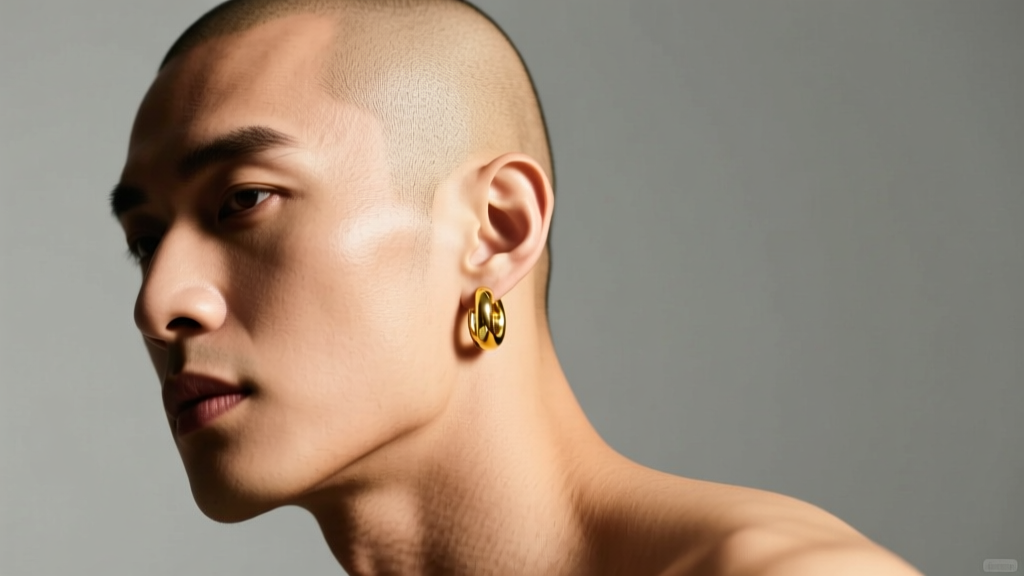
The aesthetic of bald men with earrings has evolved significantly over the last decade, shifting from a niche counter-culture statement to a hallmark of refined, intentional grooming. When you remove hair from the equation, the ear and the surrounding jawline become a primary canvas for facial framing. Without the visual buffer of hair, the jewelry you choose acts as a stark, high-contrast focal point. This means that the material properties of your earrings—ranging from their optical reflectivity to their chemical reactivity with your skin's natural oils—matter far more than they would for someone with a full head of hair.
Choosing the right metal isn't just about avoiding allergic reactions; it is about managing visual weight, preventing lobe fatigue, and ensuring the piece complements your specific skin undertones. In this comprehensive material guide, we break down the exact metallurgical properties, gauge recommendations, and styling frameworks for bald men looking to optimize their earring game.
The Visual Weight: Why Material Dictates the Look
When styling bald men with earrings, contrast is your most powerful tool. Hair naturally diffuses light and softens the transition between the face, the ear, and the neck. A bare scalp and exposed jawline create sharp, continuous planes of skin. The metal you select will either blend seamlessly with your skin's undertones or create a striking, deliberate interruption.
High-polish metals like platinum and white gold reflect ambient light aggressively, drawing the eye immediately to the ear. This is highly effective for creating a sharp, modern, and slightly aggressive aesthetic. Conversely, brushed or matte finishes in metals like niobium or oxidized titanium absorb light, offering a more subdued, tactical, or understated appearance. The density of the metal also dictates how it sits on the ear; heavier metals pull the lobe downward, altering the silhouette of the ear itself, which is entirely exposed when bald.
The Definitive Metal Comparison Chart
To make an informed decision, you must understand the physical properties of the metals commonly used in men's body jewelry. Below is a comparative analysis of the top-tier materials based on density, hardness, and biocompatibility.
| Material | Density (g/cm³) | Vickers Hardness | Biocompatibility | Best Use Case |
|---|---|---|---|---|
| Implant-Grade Titanium (ASTM F136) | 4.43 | 334 | Exceptional (Nickel-Free) | Daily wear, active lifestyles, sensitive skin |
| Platinum (950 Pt) | 21.45 | 125 | Excellent (Hypoallergenic) | High-end studs, luxury contrast, heirloom pieces |
| Tungsten Carbide | 19.25 | 2600 | Good (Requires Cobalt/Nickel binders) | Small, scratch-resistant huggies or minimalist bands |
| Niobium | 8.57 | 132 | Exceptional (Highly inert) | Anodized black/stealth looks, cartilage hoops |
| 14k Yellow Gold | 12.90 | 135 | Very Good (Check alloy mix) | Warm skin undertones, classic aesthetic |
Sebum, Sweat, and Skin pH: The Chemical Reality
One of the most overlooked factors for bald men with earrings is the micro-environment of the skin. The scalp and face produce a continuous layer of sebum and sweat that travels downward, pooling around the ears and neck. The average pH of human skin is slightly acidic, ranging from 4.7 to 5.75, according to the American Academy of Dermatology. This acidic mantle is highly corrosive to reactive base metals.
The Nickel Trap and White Gold Rhodium Plating
Many men opt for white gold for its sleek, silvery appearance. However, standard 14k or 18k white gold is alloyed with nickel to achieve its color and is then plated with rhodium. Over time, the friction from putting on headphones, wiping sweat, or simply sleeping will wear away the rhodium plating. Once the nickel-rich alloy is exposed to the acidic sweat on your neck and jawline, it triggers contact dermatitis and leaves unsightly green or black oxidation stains on the skin. For a bald man, these stains on the neck and jaw are highly visible and difficult to conceal.
Why Implant-Grade Titanium Reigns Supreme
To avoid chemical reactions, you must look beyond standard "surgical steel" (316L), which still contains trace amounts of nickel. The gold standard is ASTM F136 implant-grade titanium. As defined by ASTM International, this specific alloy (Ti-6Al-4V) is entirely nickel-free and possesses a passive oxide layer that renders it completely inert to human sebum and sweat. It will not tarnish, oxidize, or leave marks on your skin, regardless of how heavily you perspire during a workout or on a hot day.
Gauge Sizing and Lobe Preservation
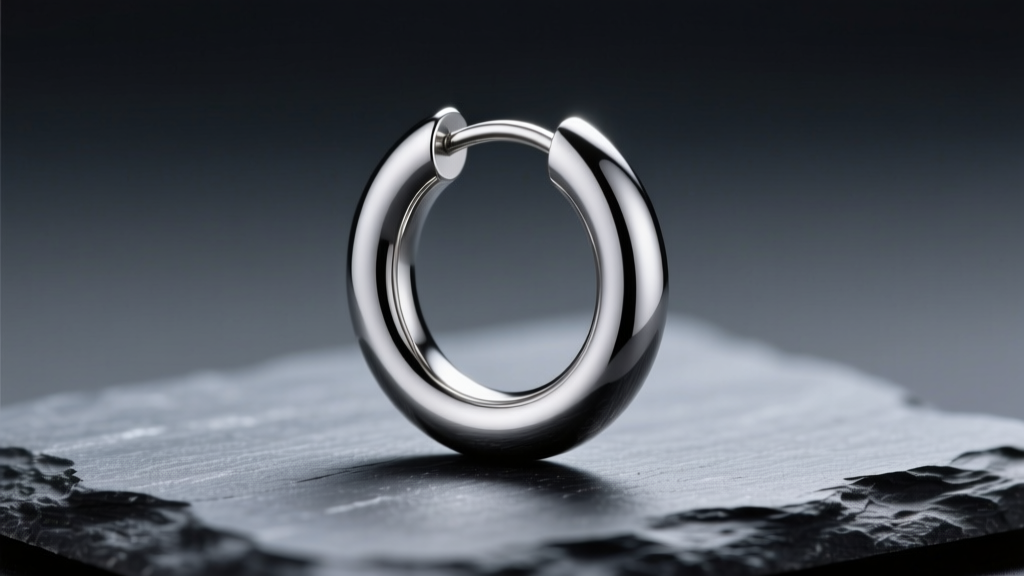
Because hair does not obscure the ears, any structural changes to the earlobe—such as sagging, thinning, or stretching—are immediately apparent. The density of your chosen metal directly impacts the gravitational stress placed on your piercing fistula.
- The Tungsten Warning: Tungsten carbide is incredibly dense (19.25 g/cm³). A seemingly small 10mm tungsten hoop can weigh as much as a much larger titanium hoop. Wearing heavy tungsten earrings daily will accelerate lobe sagging. Restrict tungsten to small, lightweight studs or thin huggies.
- The Platinum Factor: Platinum is even denser than tungsten (21.45 g/cm³), as noted by the Gemological Institute of America. However, because platinum is a premium metal, it is typically cast into small, solid, and compact stud designs rather than large, sweeping dangles, mitigating the weight issue.
- Optimal Gauge Sizing: For standard lobe piercings, an 18-gauge (1.0mm) wire is standard for lightweight metals like titanium and gold. However, if you prefer a slightly more masculine, substantial look without increasing the weight, opt for a 16-gauge (1.2mm) wire in titanium. The thicker gauge provides structural rigidity and a bolder visual profile without the mass that causes tissue fatigue.
Matching Metal Tones to Skin Undertones
Without hair to frame the face, your skin's undertone becomes the dominant backdrop for your jewelry. Identifying your undertone is critical for selecting the right metal.
Cool Undertones (Pink, Red, or Blue hints): Platinum, white gold (if rhodium-plated and maintained), and polished titanium will harmonize beautifully with cool skin. These metals enhance the natural crispness of the complexion. If you want contrast, a deep, anodized black niobium hoop creates a striking, modern edge.
Warm Undertones (Yellow, Peach, or Golden hints): 14k or 18k yellow gold is the undisputed champion here. The warmth of the gold amplifies the golden hues in the skin, creating a cohesive, sun-kissed look. Rose gold (alloyed with copper) can also work well, but be cautious of copper reactivity if you have highly acidic sweat.
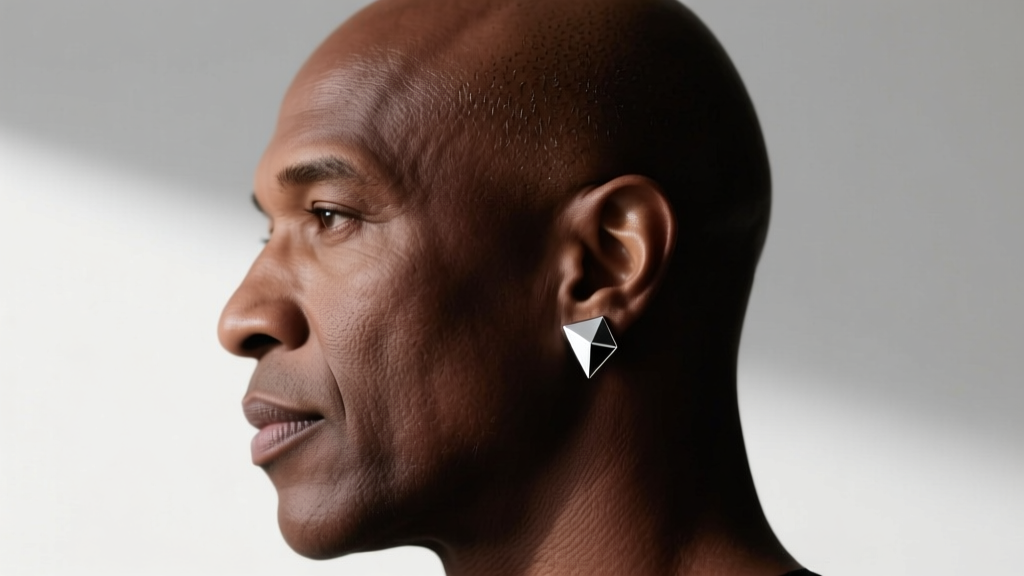
Neutral or Darker Complexions: Rich, dark skin tones provide the ultimate high-contrast canvas for bright, reflective metals. Platinum and high-polish yellow gold pop incredibly well against deeper melanin levels. For a more understated, stealthy approach, matte-finished black niobium or dark grey titanium offers a sophisticated, low-key aesthetic that doesn't scream for attention but rewards a closer look.
Maintenance and Patina: Keeping the Focus Sharp
The final consideration for bald men with earrings is maintenance. A bald head requires regular grooming and skincare, and your earrings should reflect that same level of meticulous care. Metals like platinum develop a natural "patina" over time—a satin-like finish caused by microscopic scratches. While some appreciate this lived-in look, it reduces the metal's light-reflective properties. To maintain a sharp, mirror-like contrast against your skin, platinum and gold should be polished with a microfiber cloth weekly.
Titanium and niobium, on the other hand, are virtually maintenance-free. They do not scratch easily and will not lose their luster. However, if you wear anodized titanium or niobium (where the color is created via an electrical oxide layer), avoid cleaning them with harsh chemicals, ultrasonic cleaners, or abrasive toothpaste, as this can strip the anodized color and reveal the raw, silvery-grey metal beneath.
Ultimately, the best earring materials for bald men with earrings are those that respect the chemistry of your skin, complement your natural undertones, and provide the right visual weight to frame your face. By prioritizing implant-grade titanium for active days and platinum or high-karat gold for refined contrast, you ensure your jewelry remains an asset to your overall aesthetic, rather than a source of irritation or visual clutter.


