How to Wear Heavy Earrings Without Stretching Your Lobes
Learn how to wear heavy earrings comfortably without stretching your lobes. Discover support hacks, gauge limits, and the best backing mechanisms.

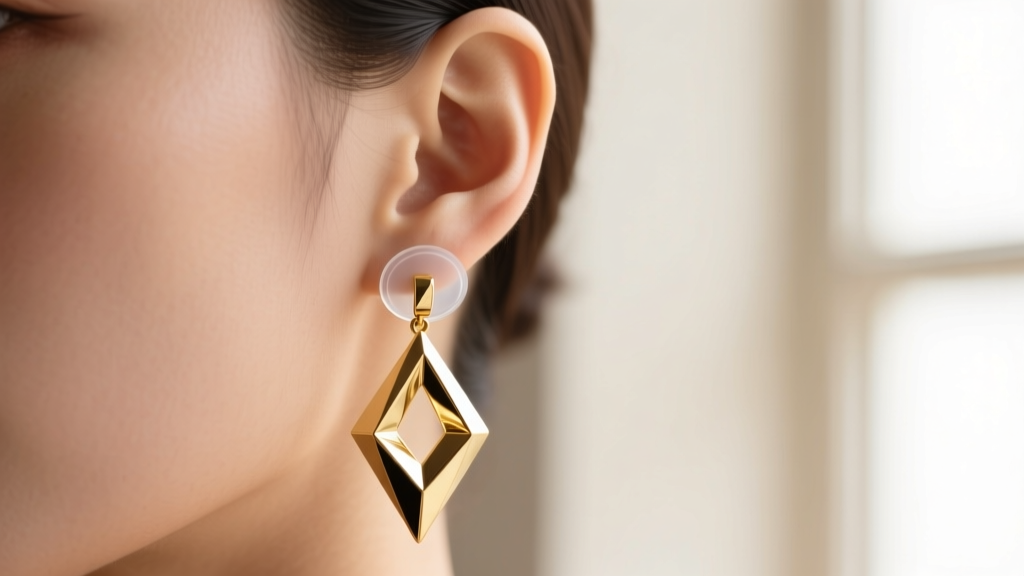
The Physics of Heavy Earrings: Why Lobes Sag
Statement earrings are a cornerstone of bold personal style, but gravity is the undisputed enemy of earlobe tissue. To understand how to wear heavy earrings safely, you first need to understand the anatomy of the lobe. Unlike the upper ear, which is reinforced by rigid cartilage, the earlobe is composed entirely of areolar connective tissue and adipose (fat). It lacks a structural scaffolding. When a 25-gram brass geometric dangle pulls on a standard 20-gauge (0.81mm) piercing hole, the localized pressure per square millimeter causes micro-tears in the collagen and elastin matrix. Over time, this cumulative trauma leads to irreversible sagging, thinning, and the dreaded 'cheese-cutter' effect, where the earring slowly migrates downward through the tissue.
However, you do not have to sacrifice oversized, dramatic jewelry to preserve your piercing health. By combining structural support mechanisms, strategic gauge selection, and invisible lifting hacks, you can comfortably wear substantial pieces for hours without causing long-term damage to your lobes.
Step 1: Assess Your Piercing Gauge and Tissue Health
The standard lobe piercing performed at most mall kiosks and studios is 20-gauge (0.81mm) or 18-gauge (1.0mm). While perfectly adequate for lightweight studs and small hoops, these thin diameters concentrate the weight of heavy earrings into a microscopic surface area. According to guidelines from the Association of Professional Piercers, distributing weight across a wider surface area is the most effective way to prevent tissue migration.
Gauge Limits and Weight Thresholds
If you frequently wear statement pieces exceeding 15 grams per ear, you should consider having your lobes professionally stretched to a 16-gauge (1.2mm) or 14-gauge (1.6mm). A 14-gauge post increases the surface area bearing the weight by nearly 400% compared to a 20-gauge post, drastically reducing the downward shear force on the collagen fibers. When stretching, always use implant-grade titanium (ASTM F136) to prevent contact dermatitis and ensure smooth tissue adaptation.
| Earring Weight | Minimum Recommended Gauge | Ideal Backing Type | Max Wear Time |
|---|---|---|---|
| 1 - 10 grams | 20G (0.81mm) | Standard Friction / Push Back | 12+ Hours |
| 11 - 20 grams | 18G (1.0mm) | La Pousette / Silicone Lifter | 6 - 8 Hours |
| 21 - 35 grams | 16G (1.2mm) | Locking Back + OTOs Pad | 4 - 5 Hours |
| 35+ grams | 14G (1.6mm) or higher | Custom Leverback / Harness | 2 - 3 Hours |
Step 2: Choose the Right Support Mechanisms
The most common point of failure when wearing heavy earrings is the backing. Standard 'butterfly' friction backs rely on a tiny metal clutch gripping a notched post. Under the pendulum-like swinging motion of a heavy dangle, these clutches loosen, slip, and ultimately fail, pulling the earring downward and stretching the hole.
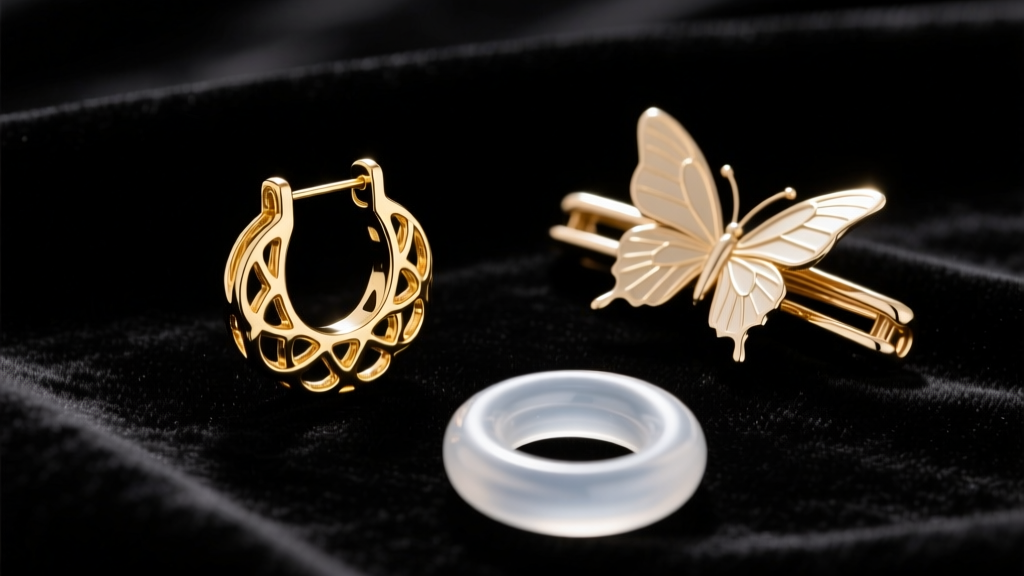
Upgrade Your Backings
- La Pousette Locking Backs: Originally designed for high-value diamond studs, these backs feature a mechanical locking mechanism that snaps securely into a groove on the earring post. They will not slide down the post, providing a rigid anchor point that keeps the earring flush against the lobe.
- Screw Backs: These feature a threaded post and a backing that screws on. While highly secure, they can be tedious to put on and require perfectly matched threading from the jeweler.
- Silicone O-Rings for Hooks: If you are wearing heavy French wire hooks, never leave them bare. Slide a 2mm clear silicone o-ring stopper onto the wire after it passes through the lobe. This prevents the earring from sliding forward and shifting the center of gravity away from the piercing hole.
Step 3: Apply Invisible Support Hacks
Even with the correct gauge and a secure backing, a 30-gram earring will eventually cause the lobe to tilt forward. To counteract this, you must change the fulcrum point of the earring, shifting the burden from the fragile piercing hole to the broader, sturdier surface of the back of the earlobe.
OTOs Pads and Silicone Lifters
The most effective commercial solution is the OTOs pad (or generic silicone earring lifters). These are hypoallergenic, adhesive-backed silicone patches that stick to the back of your earlobe. When you insert the earring, the post passes through the thick silicone pad. This accomplishes two things: it creates a wider cushion that distributes the earring's weight across the entire back of the lobe, and it acts as a wedge, physically pushing the earring face upward so it sits perfectly straight rather than drooping.
For a DIY alternative, you can use small circles of medical-grade paper tape or moleskin padding. Cut a tiny slit in the center, apply it to the back of the lobe, and push the earring post through. While less aesthetically pleasing than clear silicone, it provides excellent structural reinforcement for an evening out.
Step 4: Time Management and Lobe Recovery
No support hack can defy gravity indefinitely. The American Academy of Dermatology notes that prolonged mechanical stress on the skin compromises elastin fibers, leading to permanent laxity. Therefore, managing your wear time is just as critical as the hardware you choose.
The 4-Hour Rule: Never wear earrings exceeding 20 grams for more than four consecutive hours. If you are attending an all-day event, bring a pair of lightweight, implant-grade titanium studs in your bag. Swap the heavy statement pieces for the lightweight studs during dinner or the latter half of the event to give your collagen matrix time to rebound.
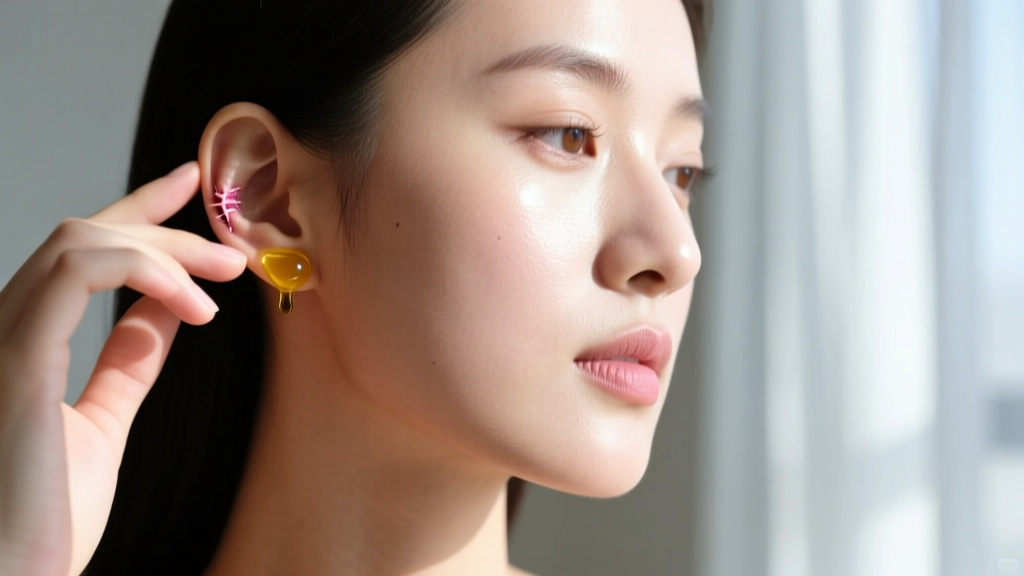
Post-Wear Lobe Massage
After removing heavy earrings, your lobes will likely feel tender, warm, or slightly elongated. Immediately after removal, wash your hands and apply a drop of pure Vitamin E oil or a peptide-rich serum to the lobe. Gently massage the tissue in circular motions for 60 seconds per ear. This stimulates local blood flow, delivering oxygen and nutrients to the stressed fibroblasts, and encourages the collagen fibers to contract and recover their natural elasticity.
Long-Term Lobe Care and Prevention
If you are a serial heavy-earring wearer, incorporate lobe care into your weekly routine. Once a week, practice 'earlobe fasting'—wearing absolutely no earrings for 24 to 48 hours to allow the fistula (the piercing tunnel) to rest and the surrounding tissue to regenerate. Avoid sleeping in any earrings, even lightweight ones, as the lateral pressure of a pillow against an earring post can cause micro-trauma to the healing tissue.
Finally, when shopping for heavy statement pieces, scrutinize the construction. Opt for hollowed-out metals, resin, or lightweight acetate over solid brass or dense glass. A masterfully crafted 10-gram hollow resin earring will look identical to a 35-gram solid metal piece, allowing you to achieve the dramatic aesthetic you crave while entirely bypassing the need for extreme support measures.


