The Best Earring Solution for Sensitive and Sagging Lobes
Discover the ultimate earring solution for metal allergies and stretched piercings, covering titanium grades, gauge sizing, and lobe repair.

The Dual Dilemma: Contact Dermatitis and Mechanical Lobe Stretching
For millions of jewelry enthusiasts, the pursuit of the perfect ear curation is abruptly halted by two pervasive issues: severe metal allergies and mechanical lobe stretching. When your earlobes become red, itchy, or begin to droop under the weight of your favorite drops, standard jewelry hacks simply fall short. Finding a reliable earring solution requires moving beyond generic advice and diving into the metallurgy of body jewelry, the physics of gauge thickness, and the structural integrity of earlobe tissue.
According to the American Academy of Dermatology, nickel allergy is the most common cause of allergic contact dermatitis, affecting roughly 18% of adults. Simultaneously, the mechanical burden of heavy statement earrings leads to micro-tears in the collagen matrix of the earlobe, resulting in irreversible sagging. This comprehensive guide provides a clinical and structural earring solution for both sensitive skin and compromised lobes, ensuring you can wear your collection comfortably and safely.
Diagnosing Your Earlobe Distress: Allergy vs. Mechanical Failure
Before applying an earring solution, you must accurately diagnose the root cause of your discomfort. Many wearers mistake the early stages of mechanical stretching for an allergic reaction due to the localized inflammation. Use the diagnostic matrix below to identify your primary issue.
| Symptom Profile | Nickel Allergic Contact Dermatitis (NACD) | Mechanical Lobe Stretching & Sagging |
|---|---|---|
| Onset | 12 to 48 hours after wearing non-compliant metals. | Gradual over months/years; acute pain during heavy wear. |
| Visual Indicators | Erythema (redness), flaking skin, clear fluid weeping. | Elongated piercing hole, forward-tilting earring posture, thinning lower lobe tissue. |
| Sensation | Intense pruritus (itching), burning, localized heat. | Dull aching, tenderness to the touch, feeling of 'pulling'. |
| Primary Earring Solution | Upgrade to ASTM F136 Titanium or Niobium. | Upsize post gauge, use silicone stabilizers, or pursue lobuloplasty. |
The Metal Allergy Earring Solution: Decoding Material Grades
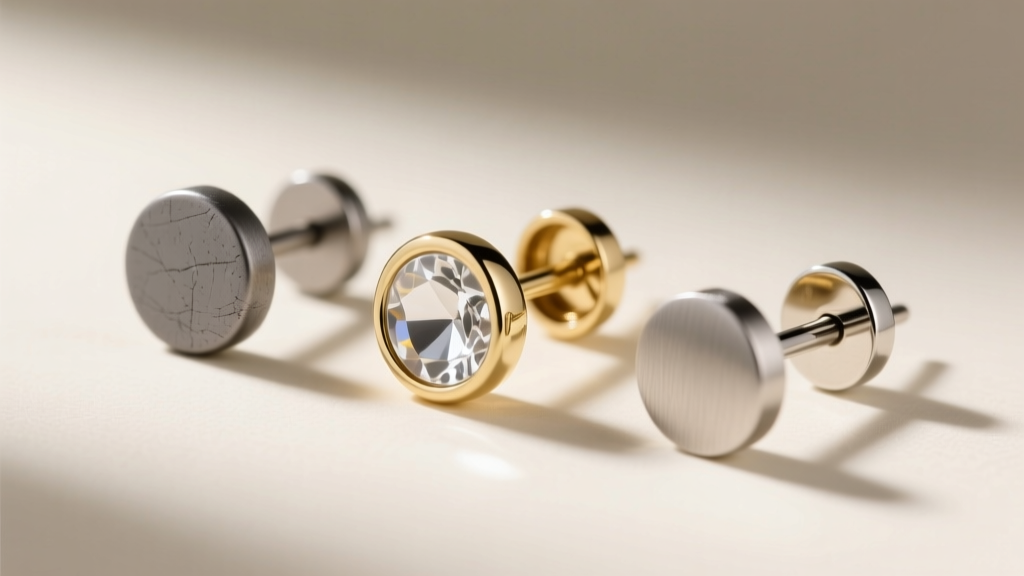
The most common failure in hypoallergenic jewelry is the reliance on the marketing term 'surgical steel.' Standard 316L stainless steel contains between 8% and 12% nickel. While the nickel is theoretically bound within the alloy, surface polishing and exposure to acidic skin pH can cause nickel ions to leach, triggering a reaction. The definitive earring solution for hyper-sensitive ears requires strict adherence to implant-grade materials.
1. ASTM F136 Implant-Grade Titanium
This is the gold standard for reactive ears. Unlike commercial-grade titanium, ASTM F136 is certified for surgical implants, meaning it contains zero nickel and features a mirror-polished surface that prevents bacterial adhesion. Brands specializing in body jewelry, such as BVLA or Anatometal, machine their posts from this exact alloy. Expect to pay between $40 and $85 for a single, high-quality titanium stud with a bezel-set gemstone.
2. Niobium (Element 41)
Niobium is a highly unreactive transition metal that is completely nickel-free. Unlike titanium, niobium cannot be alloyed to increase hardness, making it slightly softer and more malleable. This makes it an exceptional earring solution for custom-bent ear cuffs or seamless hoops that need to be adjusted to fit unique cartilage geometries without snapping.
3. Palladium White Gold (14k or 18k)
If you prefer the aesthetic of silver metals but require gold's intrinsic value, you must avoid standard white gold, which is typically alloyed with nickel for whiteness. The earring solution here is palladium-alloyed white gold. Palladium is a platinum-group metal that provides a naturally white, hypoallergenic alternative to nickel, though it commands a 20-30% price premium over standard gold alloys.
When treating contact dermatitis, the Mayo Clinic emphasizes that the only definitive treatment is complete avoidance of the offending metal. Topical corticosteroids will fail if the patient continues to wear 316L steel or brass-based jewelry plated with thin layers of gold.
The Sagging Lobe Earring Solution: Physics, Gauges, and Backings
When a heavy drop earring pulls the lobe downward, it creates a 'cheese-wire' effect. The standard earring post is 20-gauge (0.81mm thick). When a 15-gram brass statement earring hangs from a 0.81mm post, all that downward force is concentrated on a microscopic surface area of your earlobe tissue, rapidly degrading the collagen network.
Upsizing Your Gauge for Load Distribution
The structural earring solution is to increase the surface area of the post. By transitioning to an 18-gauge (1.02mm) or 16-gauge (1.29mm) post, you increase the load-bearing surface area by up to 150%. This drastically reduces the pounds-per-square-inch (PSI) exerted on the lower rim of the piercing. Many bespoke jewelers will solder thicker 18k gold posts onto heavy vintage clips or drops upon request, typically charging $50 to $120 for the modification.
Advanced Backing Systems
Standard butterfly friction backs are inadequate for heavy earrings because they rely on weak tension springs that slip down the post, shifting the center of gravity forward and exacerbating the droop. Implement one of the following backing systems:
- La Pousette Locking Clutches: These operate like a miniature camera shutter, mechanically locking onto the post's groove. They prevent the earring from sliding forward, keeping the weight centered directly over the piercing hole.
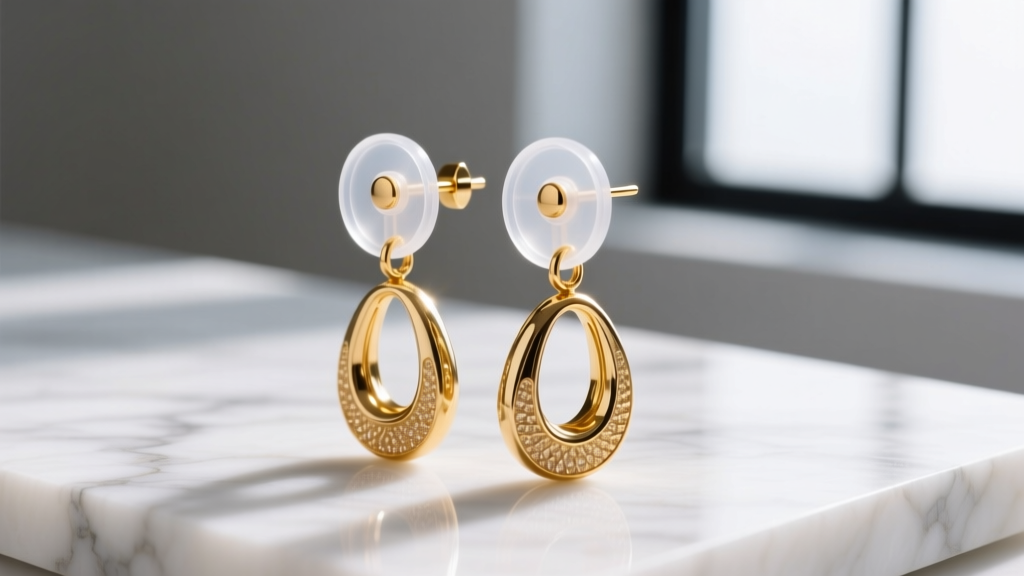
- Silicone O-Ring Stabilizers: Products like Lobe Wonder or generic silicone support patches distribute the weight of the earring across a 15mm wide area on the back of the earlobe, acting as a structural splint for thinning tissue.
- Leverback Conversions: For dangles, having a jeweler swap a standard post for a heavy-duty leverback wire (minimum 1.2mm thickness) ensures the earring hinges securely and rests closer to the natural center of gravity of the ear.
DIY vs. Professional Earlobe Repair: When to See a Surgeon
If your lobe has already stretched to the point of a 'slit' (where the piercing has torn through the bottom edge of the lobe), no earring solution involving backing patches will suffice. The tissue is permanently compromised and requires surgical intervention, known as a lobuloplasty.
While online markets sell 'earlobe repair glue' and DIY stitching kits, board-certified plastic surgeons universally warn against these. Cyanoacrylate-based glues trap bacteria inside the fistula (the piercing tunnel), leading to severe staphylococcal infections and necrotic scarring.
What to Expect from a Professional Lobuloplasty
- Procedure: Performed in-office under local anesthesia (lidocaine). The surgeon excises the epithelialized skin inside the torn tract and sutures the fresh edges together using 5-0 or 6-0 nylon sutures.
- Pricing: Typically ranges from $350 to $800 per lobe, depending on the complexity of the tear and geographic location. It is almost never covered by insurance as it is deemed cosmetic.
- Recovery & Re-piercing: Sutures are removed after 5 to 7 days. You must wait a minimum of 3 to 6 months for the scar tissue to mature before re-piercing. When re-piercing, the earring solution is to have the new hole placed slightly adjacent to the scar line, as scar tissue lacks the tensile strength of native collagen and is prone to re-tearing.
Preventative Maintenance Routine for Ear Health
To ensure your lobes remain healthy and capable of supporting your jewelry collection, adopt this weekly maintenance protocol:
- The Saline Flush: Once a week, flush the piercing channel with sterile 0.9% sodium chloride wound wash. This removes sebum, dead skin cells, and trapped environmental allergens that can mimic contact dermatitis.
- The Tension Check: Inspect your earring posts under a magnifying mirror. Look for micro-bends in the metal. A bent 20-gauge post creates asymmetric friction, which slowly elongates the piercing hole over time.
- The Nightly Removal: Never sleep in heavy drop earrings or large hoops. The lateral pressure of a pillow against a hoop acts as a lever, applying immense torque to the lobe while you sleep, which is a primary catalyst for asymptomatic lobe stretching.
By understanding the intersection of dermatology, metallurgy, and structural physics, you can curate an ear wardrobe that is as comfortable as it is beautiful. Whether your earring solution involves upgrading to ASTM F136 titanium, upsizing to a 16-gauge post, or utilizing silicone load-distributors, taking a clinical approach to jewelry wear ensures your piercings remain pristine for a lifetime.


