YSL Earrings: Authentication Guide & Hardware Troubleshooting
Learn how to authenticate vintage and modern YSL earrings, troubleshoot omega-back clasps, and safely restore gold-plated brass without damaging the finish.

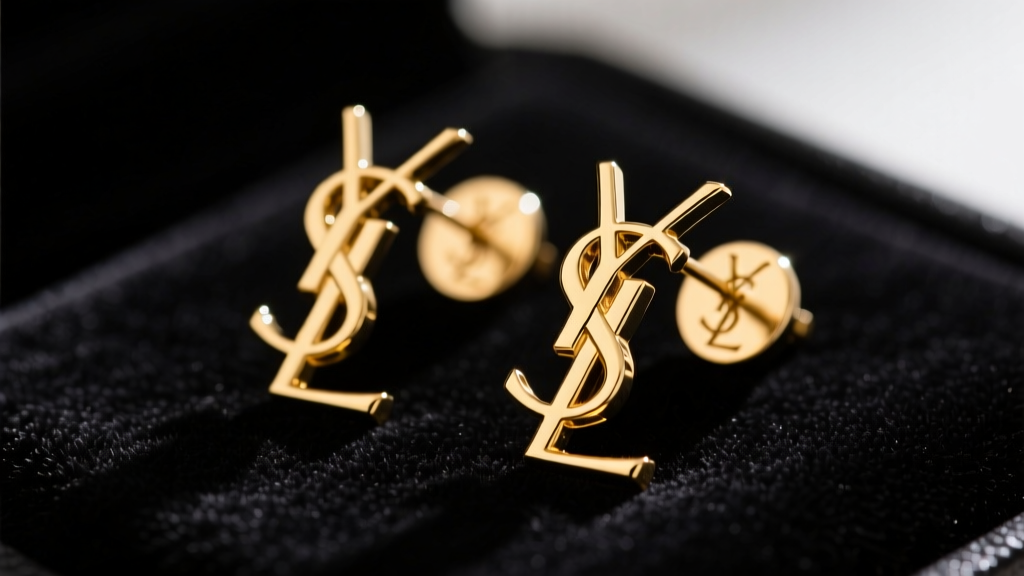
The Resale Boom: Why Authenticating YSL Earrings is Critical
The secondary market for luxury fashion jewelry has exploded in recent years. According to market analysis by Bain & Company, the pre-owned luxury sector continues to grow at double-digit rates, driven by collectors seeking archival pieces from the 1980s and 1990s. Among the most coveted items are vintage YSL earrings, particularly the oversized gold-tone monogram clips and glass-paste chandelier designs championed by Loulou de la Falaise. However, this high demand has spawned a sophisticated counterfeit market. For collectors and everyday wearers alike, knowing how to authenticate these pieces and troubleshoot their unique hardware failures is essential to protecting your investment and ensuring comfortable wear.
Decoding the Hallmarks: Vintage vs. Counterfeit
Authenticating YSL earrings requires a meticulous examination of the hallmark stamps, typically located on the flat metal plate of the clip mechanism or the back of the earring post base.
- Font and Kerning: Authentic vintage pieces feature a deeply cast, serif "YSL" logo. The kerning (spacing between the letters) is precise, with the 'Y' and 'S' slightly overlapping. Counterfeits often use laser-etched stamps that appear shallow, or feature incorrect sans-serif fonts.
- The Copyright Symbol: On pieces from the 1980s, look for the © symbol. On authentic pairs, it is usually tucked neatly near the bottom right of the logo block. Fakes often place the symbol randomly or omit it entirely.
- Origin Stamps: "Made in France" should be cleanly stamped. Note that some authentic 1990s transitional pieces may lack the country of origin stamp but will still feature the crisp YSL logo and a model number.
Weight and Material Density
The most immediate tactile test for YSL earrings is weight. Vintage YSL pieces were cast in solid, heavy brass before being plated. A single large monogram clip-on can weigh between 18 and 25 grams. Counterfeiters typically use hollow zinc alloys or lightweight pot metal to save on manufacturing costs, resulting in earrings that weigh under 10 grams. If the earring feels surprisingly light or produces a high-pitched "tink" rather than a dull thud when tapped against glass, it is likely a fake.
Troubleshooting Common Hardware Failures
Vintage designer jewelry was built for aesthetics first, and decades of wear inevitably take a toll on the mechanical components. Here is how to troubleshoot the most frequent issues.
Omega Back Tension Loss
Many vintage YSL pierced earrings utilize an omega back—a hinged, sprung wire loop that clamps against the earlobe for security. Over time, the metal fatigues and the omega wire bends outward, causing the earring to droop forward or slip off the ear entirely.
The Fix: You must use nylon-jaw pliers to adjust the tension. Never use standard steel jewelry pliers, as they will permanently scratch and mar the soft gold plating. Grip the omega wire at its base and apply gentle, millimeter-level inward pressure until the tension is restored against the earring post. If the wire is severely deformed, a professional jeweler will need to replace the entire omega clutch mechanism, usually upgrading it to a modern 18k gold-filled wire for better spring memory.
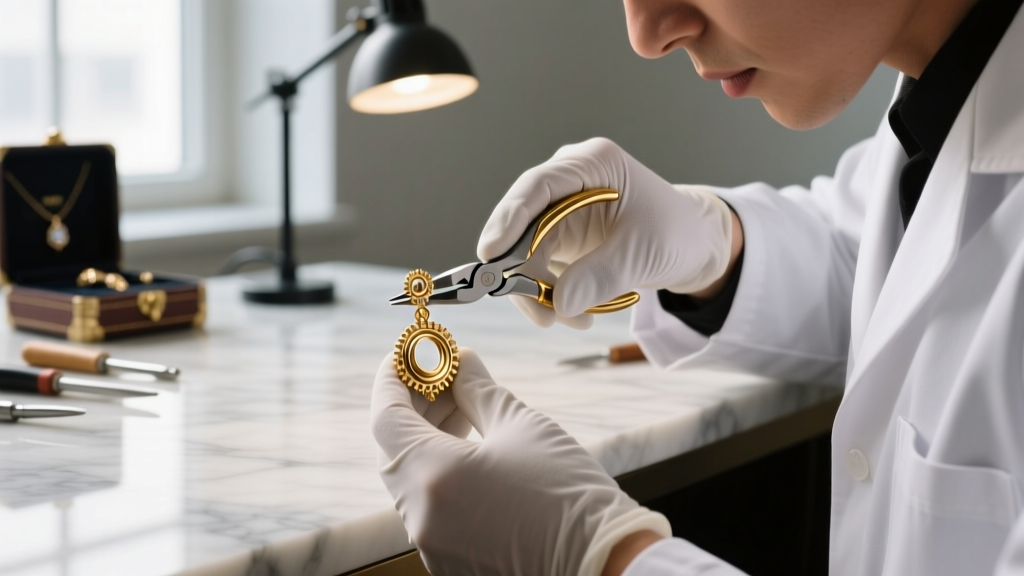
Clip-On Hinge Fatigue and Paddle Wear
For non-pierced ears, YSL frequently used a hinged clip mechanism with a metal or silicone paddle. When the hinge pin loosens, the earring loses its grip, leading to painful pinching or sudden drops.
The Fix: If the hinge is loose, the rivet pin needs to be peened (gently hammered) to expand the metal and tighten the joint. If the silicone comfort paddle has degraded and turned sticky—a common issue with 30-year-old polymers—it must be carefully scraped off with a wooden toothpick and replaced with a modern 10mm silicone clip-on pad, secured with a tiny drop of cyanoacrylate (jeweler's super glue).
Post Bending and Soldering Snaps
Vintage YSL posts are notably thick, often measuring around 18-gauge (1.02mm), which provides durability but makes them rigid. If an 18-gauge post bends, do not attempt to bend it back into shape with your fingers; the repeated stress will cause a stress fracture at the solder joint where the post meets the brass backing.
The Fix: If the post snaps off at the base, it requires laser welding. Standard torch soldering generates too much heat and will instantly blister or melt the micron-thin gold plating on the surrounding brass. A professional laser welder can reattach a new 18-gauge brass or steel post in milliseconds without transferring heat to the visible face of the earring.
Material Degradation: Managing Brass Oxidation
YSL fashion jewelry is predominantly gold-plated or rhodium-plated brass. Brass is an alloy of copper and zinc. When the outer plating wears thin from friction and skin acids, the exposed copper oxidizes, creating the dreaded "green skin" effect and causing the jewelry to look dull and patchy.
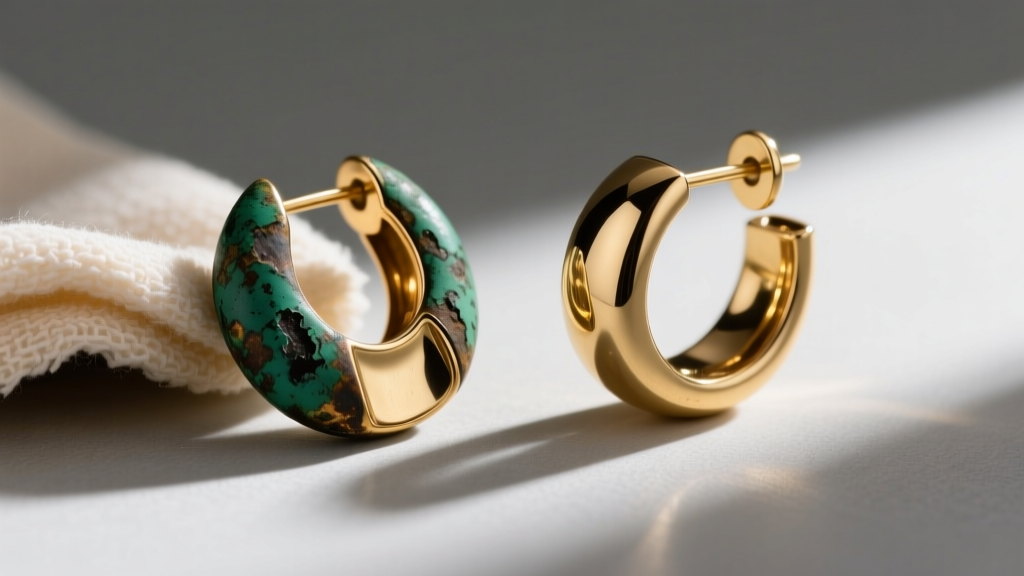
Safe Cleaning Protocols: According to metal conservation guidelines referenced by institutions like the Gemological Institute of America (GIA), plated brass requires extreme care. Never place YSL earrings in an ultrasonic cleaner; the high-frequency vibrations will strip the gold plating off in minutes. Avoid chemical dips like Tarn-X, which contain harsh thiourea that will permanently discolor the plating. Instead, use a solution of distilled water and pH-neutral dish soap, gently agitating the surface with a baby toothbrush, and pat dry immediately with a lint-free microfiber cloth.
Preventing Green Skin: To create a barrier between your skin and exposed brass, apply a micro-thin layer of Renaissance Wax (a museum-grade microcrystalline wax) to the back of the earring and the clip paddle. This provides a breathable, invisible shield that prevents copper oxidation without altering the look of the metal.
YSL Earring Authentication & Repair Data Matrix
Understanding the evolution of YSL manufacturing helps pinpoint both authenticity and expected maintenance needs. Refer to the matrix below when evaluating a pair:
| Era | Hallmark Style | Primary Material | Common Failure Point |
|---|---|---|---|
| Vintage (1980s-1990s) | Serif YSL, ©, Made in France | Heavy cast brass, thick gold plating | Omega back tension loss, heavy weight causing stretched lobes |
| Transitional (2000s) | Block YSL, varying origin stamps | Lighter brass alloys, crystal pavé | Adhesive failure on rhinestones, hinge pin loosening |
| Modern (2010s-Present) | SAINT LAURENT PARIS, serial numbers | Brass, sterling silver, palladium finishes | Post bending (thinner gauges), rhodium plating wear |
Professional Repair vs. DIY: Cost Expectations
Knowing when to intervene yourself and when to hand your YSL earrings to a master jeweler will save you from catastrophic damage. Here is a realistic pricing framework for professional services in the current market:
- Authentication Appraisal: $30 - $50 (Essential for archival pieces lacking original packaging).
- Omega Back Replacement: $45 - $65 per pair (Upgrading to 18k gold-filled wire).
- Laser Welding a Broken Post: $60 - $90 (The only safe method for plated brass).
- Full Gold Re-plating: $120 - $180 (Required when the base brass is heavily pitted or exposed across more than 20% of the surface area).
Expert Insight: Never attempt to polish vintage YSL gold-plated earrings with standard silver polishing cloths. These cloths are impregnated with mild abrasives designed to remove heavy tarnish from solid sterling silver. On micron-thin gold plating, these abrasives will act like sandpaper, stripping the gold layer down to the bare brass in just a few swipes.
Conclusion
Owning a pair of YSL earrings is an investment in fashion history. Whether you are rocking a pair of heavyweight 1980s monogram clips or a sleek, modern Saint Laurent drop earring, understanding the metallurgy and mechanics of your jewelry ensures they remain in pristine condition. By mastering the tactile weight tests, utilizing the correct nylon-jaw tools for hardware adjustments, and strictly avoiding ultrasonic cleaners, you can troubleshoot common issues and preserve the iconic YSL silhouette for decades to come.


