Blue Topaz Hoop Earrings: 2026 Trends & Styling Guide
Discover 2026 trends for blue topaz hoop earrings. Explore Swiss vs. London blue hues, hoop architectures, gauge sizes, and styling tips.

The 2026 Shift: Maximalist Gemstone Architecture
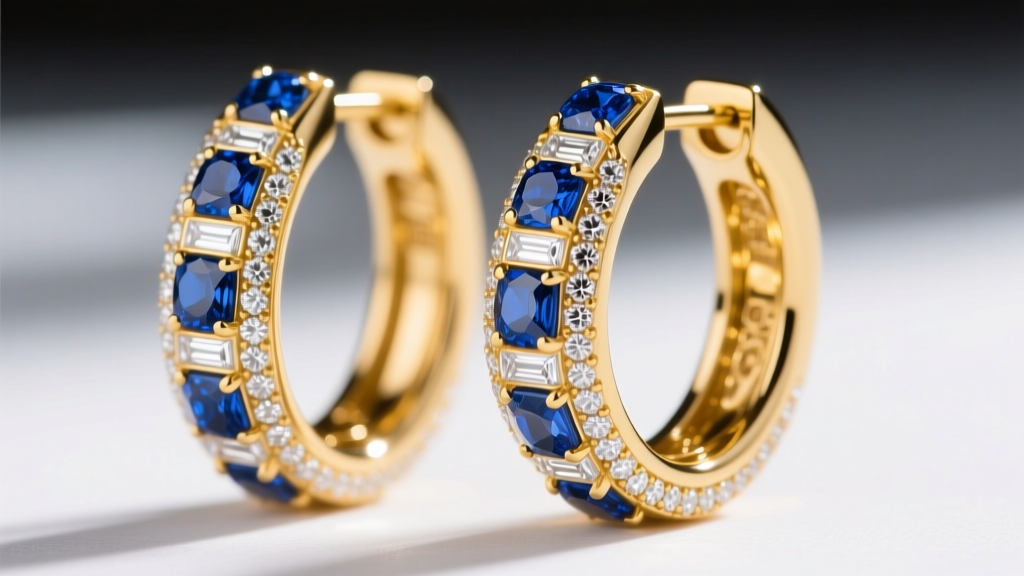
The jewelry landscape in 2026 has decisively pivoted away from the ultra-minimalist, plain-metal silhouettes that dominated the early 2020s. Today, the focus is on maximalist gemstone architecture, and blue topaz hoop earrings have emerged as the undisputed leaders of this movement. Unlike sapphires or tanzanites, which restrict designers to smaller carat weights due to exponential pricing curves, blue topaz offers exceptional clarity and size at accessible price points. This allows jewelers to create bold, high-carat hoop designs that make a visceral visual impact without compromising structural integrity or requiring a five-figure investment.
However, designing with topaz requires a deep understanding of its gemological properties. With a specific gravity of 3.53, topaz is significantly heavier than quartz (2.65) or beryl (2.70). This density means that a pair of 25mm inside-out hoops set with 4.00 carats of topaz will exert substantial downward force on the earlobe. Consequently, 2026's premier designs are defined not just by their aesthetic brilliance, but by their advanced metallurgical engineering, ensuring that the earrings sit flush against the ear without causing lobe fatigue or wire warping.
The Color Matrix: Swiss vs. London Blue in Modern Lighting
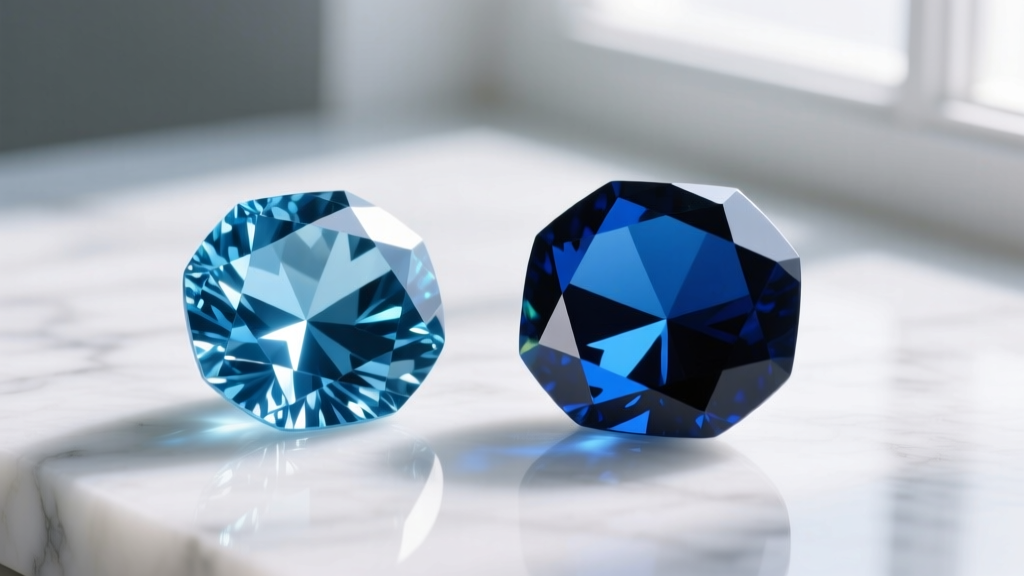
When sourcing or styling blue topaz hoop earrings, understanding the distinction between the two dominant market hues—Swiss Blue and London Blue—is critical. Both colors are the result of treating colorless or pale topaz, but the methodologies and final visual outputs differ drastically.
Swiss Blue is achieved through gamma ray irradiation (typically using Cobalt-60), followed by a gentle heat treatment. The result is a bright, vibrant, sky-blue hue with a slightly greenish undertone in certain lighting conditions. It possesses a crisp, electric quality that pairs exceptionally well with white metals and daylight environments.
London Blue, conversely, undergoes a much more complex and time-consuming electron beam irradiation process, often taking several months to complete. According to the Gemological Institute of America (GIA), this treatment yields a deep, inky blue with distinct gray and subtle green secondary modifiers. London Blue is highly prized for its moody, sophisticated depth, making it the preferred choice for evening wear and high-contrast yellow gold settings.
Hoop Architectures: 2026 Setting Innovations
Topaz ranks an 8 on the Mohs hardness scale, making it highly resistant to scratching. However, it possesses perfect basal cleavage, meaning it can split or chip if struck sharply along its crystallographic planes. This physical reality has driven a massive shift in how topaz is set within hoop earrings. Traditional high-prong settings are being phased out in favor of protective, low-profile architectures.
The Inside-Out Bezel Hoop
Inside-out hoops feature gemstones set on both the front and back of the earlobe, catching light from every angle. In 2026, jewelers are utilizing micro-bezel settings for these designs. By wrapping a thin ribbon of metal around the girdle of each topaz stone, the culet and vulnerable cleavage planes are completely protected from impact, while maximizing the stone's refractive index (1.619–1.627).
The Huggie with an Articulated Drop
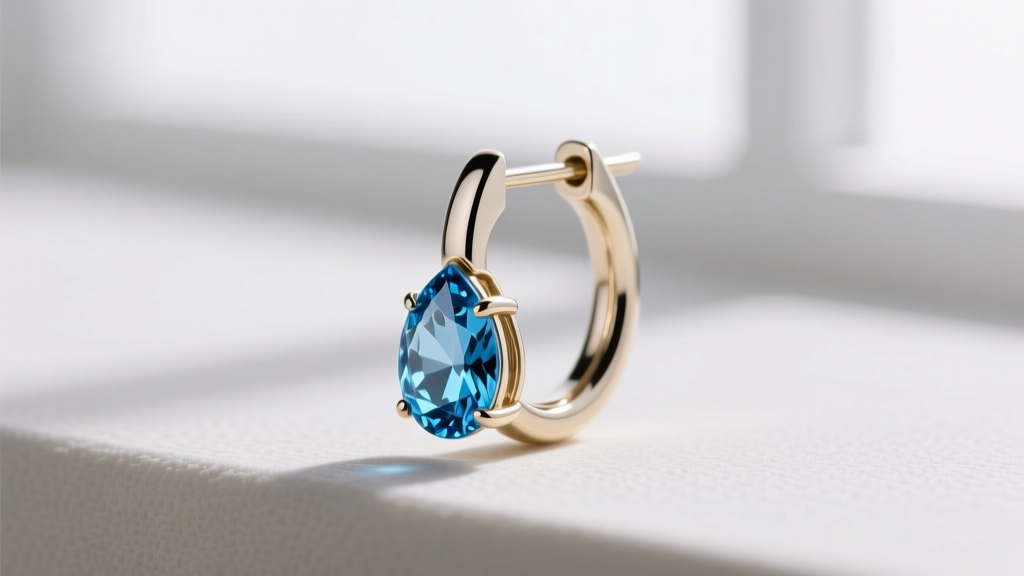
For those who prefer smaller silhouettes, the huggie hoop with an articulated topaz drop is trending heavily. The huggie hugs the earlobe tightly, distributing the weight of the earring across the cartilage and lobe, while the drop provides the kinetic movement and light refraction of a traditional dangle.
| Hoop Style | Average Diameter | Total Carat Weight | Wire Gauge / Post | Estimated Price Range |
|---|---|---|---|---|
| Inside-Out Micro-Bezel | 25mm - 30mm | 3.5ct - 5.5ct | 18G (1.0mm) Wire | $1,400 - $2,800 |
| Huggie w/ Articulated Drop | 12mm - 15mm | 2.0ct - 3.0ct | 16G (1.2mm) Post | $850 - $1,600 |
| Continuous Bezel Station | 20mm - 22mm | 1.5ct - 2.5ct | 14G (1.6mm) Wire | $1,100 - $2,100 |
| Oval Drop Hoop | 30mm x 40mm | 4.0ct - 6.0ct | 16G (1.2mm) Wire | $1,800 - $3,200 |
Metallurgical Pairings & Structural Integrity
The choice of metal in blue topaz hoop earrings is not merely an aesthetic decision; it is a structural necessity. Because of topaz's high specific gravity, the metal must possess adequate tensile strength to prevent the hoop from ovaling out or the clasp from popping open under the weight of the stones.
14k Gold (Yellow, White, or Rose): The industry standard for structural integrity. 14k gold contains 58.3% pure gold, alloyed with metals like copper, silver, and zinc. This higher alloy content provides the rigidity required for continuous hoops and secure clasp mechanisms. Yellow gold creates a striking, warm contrast against the cool, inky tones of London Blue topaz, a pairing that has dominated high-end editorial jewelry spreads this year.
18k White Gold: While slightly softer than 14k, 18k white gold is heavily favored for Swiss Blue topaz. The rhodium plating standard on 18k white gold mirrors the electric, icy tones of Swiss Blue, creating a seamless, monochromatic light return. However, for heavy inside-out hoops, jewelers will often use an 18k white gold front face but reinforce the internal wire core with platinum or high-strength spring steel to maintain the hoop's perfect circular geometry.
Face Shape & Proportion Matrix
Styling blue topaz hoop earrings effectively requires balancing the geometric lines of the jewelry against the natural contours of the face. The refractive brilliance of blue topaz naturally draws the eye, making proportion and placement critical.
- Round Faces: Avoid perfectly circular, small-diameter hoops, which can exaggerate facial roundness. Instead, opt for elongated oval hoops (e.g., 30mm x 45mm) or huggies with long, teardrop-shaped London Blue topaz drops. The vertical lines create an illusion of length and structure.
- Square Faces: Soften a strong, angular jawline with medium-to-large continuous circular hoops (25mm to 35mm). The curved geometry of the hoop contrasts beautifully with sharp facial angles. Inside-out settings are ideal here, as the continuous sparkle softens the overall look.
- Heart-Shaped Faces: Balance a wider forehead and narrower chin with bottom-heavy designs. Huggie hoops featuring a pear-cut or briolette Swiss Blue topaz drop add visual weight to the lower half of the face, creating harmonious symmetry.
- Oval Faces: The most versatile canvas. Oval faces can pull off almost any silhouette, from chunky, gem-encrusted statement hoops to minimalist, single-station bezel hoops. Experiment with asymmetric styling, such as a large London Blue hoop in one ear and a matching huggie in the other.
Sourcing, Authenticity, and the 'Windowing' Effect
As demand for blue topaz hoop earrings surges in 2026, so does the market saturation of poorly cut stones and synthetic imitations. When evaluating high-carat hoop earrings, the most common cutting flaw to look out for is 'windowing.'
Windowing occurs when a gemstone is cut too shallow in an attempt to maximize its carat weight and spread. Instead of reflecting light back to the viewer's eye through total internal reflection, the light leaks out of the bottom of the stone, creating a dead, transparent 'window' in the center of the gem. In a hoop earring, where the stones are constantly moving and catching light from dynamic angles, windowing is incredibly obvious and severely diminishes the piece's brilliance.
To ensure authenticity and quality, always request a gemological report or purchase from vendors adhering to the strict disclosure guidelines set forth by the American Gem Society (AGS). Furthermore, be wary of 'mystic topaz' or coated stones masquerading as natural London Blue. True London Blue derives its color from lattice alterations via irradiation, not surface coatings that can wear off over time against the friction of hair and clothing.
Final Styling Verdict
Blue topaz hoop earrings represent the perfect intersection of bold gemological presence and everyday wearability. By prioritizing structural gauge thickness, protective bezel architectures, and precise color-metal pairings, you can curate a collection that not only aligns with the maximalist trends of 2026 but also stands the test of time as a durable, light-catching staple in your jewelry wardrobe.


