Bow Earring Trends 2026: Elevating the Coquette Aesthetic
Discover the 2026 bow earring trend. Explore material grades, gauge sizes, and styling tips to master the modern coquette aesthetic with elegance.

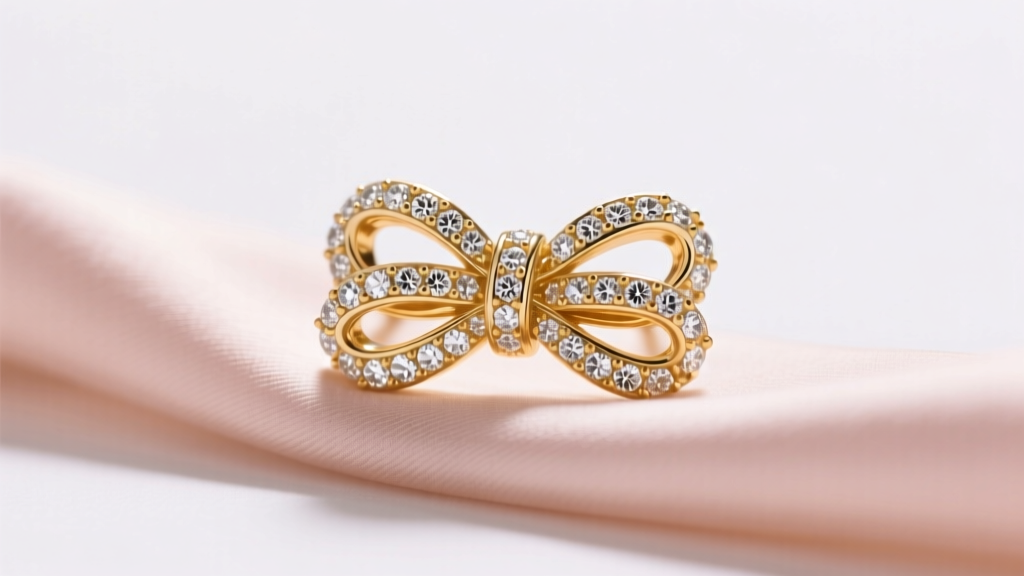
The Evolution of the Bow Earring: From Balletcore to 2026 Haute Couture
The transition from the early-2020s 'coquette' craze to the refined 2026 fine jewelry landscape has completely redefined the bow earring. No longer confined to novelty acrylics, pastel resins, or fast-fashion alloys, the modern bow earring is now a masterclass in micro-sculpting and metallurgical precision. In 2026, the trend has matured into what industry insiders call 'architectural femininity.' Designers are moving away from literal, flat ribbon representations and instead utilizing fluid, asymmetric metal draping that mimics the physics of silk in motion. This shift demands a higher level of craftsmanship, pushing the boundaries of traditional lost-wax casting and micro-pavé stone setting.
According to trend forecasters at Vogue, the 2026 approach to hyper-feminine motifs relies heavily on juxtaposition. The bow is no longer worn in matching, symmetrical pairs. Instead, it is deployed as a singular, high-impact statement piece or integrated into curated, multi-piercing ear stacks that balance delicate ribbon motifs with industrial, minimalist hardware.
Material & Gauge Specifications for Comfort and Durability
When evaluating high-end bow earrings, the alloy composition and structural engineering are critical to both aesthetics and longevity. According to the Gemological Institute of America (GIA), 18-karat gold contains 75% pure gold, offering a rich, warm hue that is highly prized in luxury jewelry. However, for the structural integrity of the 'ribbon tails' on a bow earring, 14k gold is often preferred by master jewelers. Because 14k gold is alloyed with a higher percentage of copper, silver, or zinc, it possesses greater tensile strength. An 18k gold ribbon tail cast at under 1.5mm thick is highly susceptible to metal fatigue and permanent bending if snagged on clothing or hair.
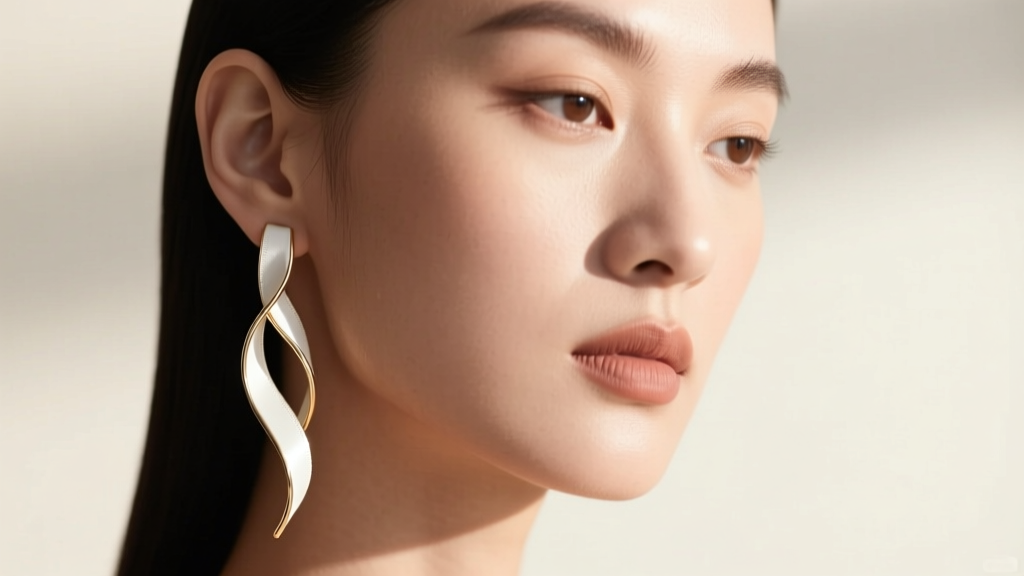
Gauge sizing is another frequently overlooked factor that dictates how a bow earring sits on the ear. A standard lobe piercing sits at 20-gauge (0.81mm) or 18-gauge (1.02mm). If a bow earring features a heavy, three-dimensional 18k gold knot and long drop tails, a standard 20-gauge post with a basic butterfly friction back will fail. The weight will cause the earring to droop forward, pressing the post against the side of the piercing fistula and causing irritation. For heavy bow drops, experts mandate a thicker 18-gauge or 16-gauge (1.29mm) post paired with a specialized locking clutch, such as a La Pousette or a silicone O-ring-backed flat disc, to distribute the weight evenly and keep the ribbon silhouette perfectly vertical.
Enamel Techniques: Guilloché vs. Cold Epoxy
For bow earrings featuring colored ribbons, the enameling technique defines the piece's lifespan. Mass-market brands use cold epoxy resin, which sits on top of the metal. Epoxy is prone to yellowing from UV exposure and will inevitably chip on the high-relief edges of a bow's folds. In contrast, 2026's luxury tier utilizes vitreous enamel or guilloché techniques, where glass powder is fused to the metal at over 1,400°F. This creates a permanent, scratch-resistant bond that maintains its optical depth and structural integrity for generations.
2026 Bow Earring Style Matrix: Finding Your Silhouette
Selecting the right bow earring requires an understanding of facial geometry and piercing placement. The table below outlines the dominant 2026 silhouettes, their ideal placements, and their corresponding price ranges in the fine jewelry market.
| Silhouette | Best Placement | Metal / Finish | Price Range (USD) | Face Shape Pairing |
|---|---|---|---|---|
| Micro Pavé Knot Stud | Primary Lobe | 14k Yellow Gold / VS Diamonds | $450 - $800 | Square or Heart (softens angles) |
| Asymmetric Ribbon Drop | Primary Lobe (Threader) | 18k White Gold / High Polish | $1,200 - $2,500 | Round (elongates the jawline) |
| Cartilage Cuff with Bow Motif | Helix or Snug | Platinum / Matte Satin | $900 - $1,800 | Oval (adds lateral visual interest) |
| Guilloché Enamel Huggie | Secondary Lobe or Tragus | Rose Gold / Black Enamel | $600 - $1,100 | Diamond or Long (adds width) |
Anatomy of a High-Quality Bow Earring: Spotting Failure Modes
Not all bow earrings are created equal. The transition from a CAD rendering to a physical casting introduces several potential failure modes that consumers must learn to identify. The 'knot' center of the bow is the primary stress point and the most common area for structural compromise in mass-produced jewelry.
- The Knot Setting: In premium pieces, the center stone or diamond accentuating the knot is secured with a micro-prong or bezel setting. If the stone is simply glued into a recessed cavity (a common cost-cutting measure in mid-tier jewelry), the adhesive will degrade upon contact with cosmetics, perfumes, and natural skin oils, leading to stone loss within months.
- Inner Radius Smoothing: The loops of the bow must be cast with a smooth, continuous inner radius. If the jeweler uses die-stamping rather than lost-wax casting, the inner edges of the ribbon loops will be sharp and flat. These sharp edges act like microscopic blades, catching and severing fine hair strands while also scratching the skin behind the ear.
- Under-Gallery Depth: A well-crafted bow earring will have a hollowed or scooped under-gallery (the back side of the metal facing the skin). This reduces the overall gold weight, making the earring more comfortable for all-day wear, while also allowing light to enter if the piece features translucent enamel or open-work filigree.
Styling Framework: Integrating Bows into Modern Ear Curations
The golden rule of styling the bow earring in 2026 is the 'Rule of Contrast.' To prevent the coquette aesthetic from veering into costumey or juvenile territory, the hyper-feminine bow must be anchored by structural, minimalist, or slightly edgy hardware.
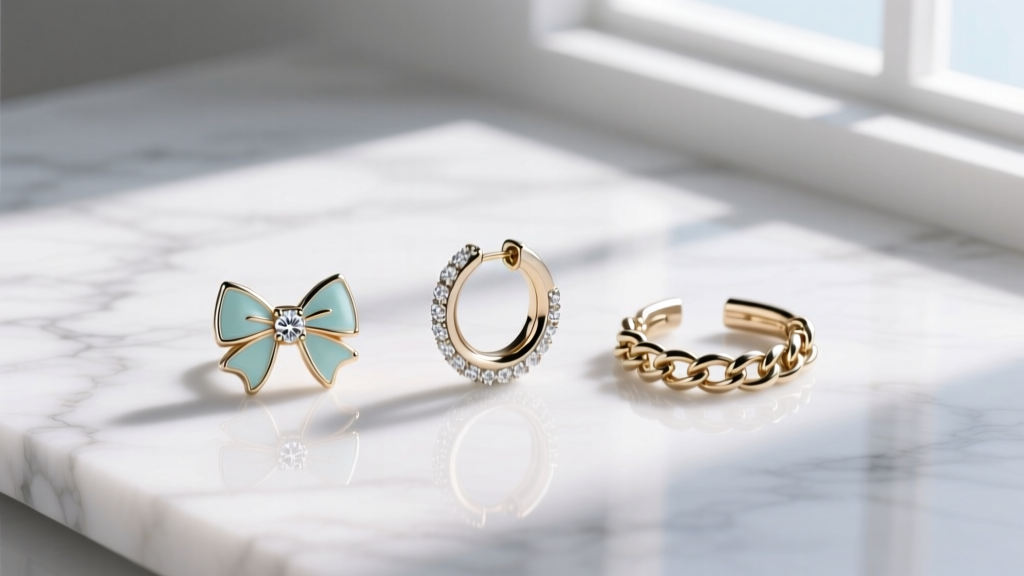
For a curated three-piercing lobe stack, anchor the primary piercing with a substantial, 16-gauge titanium or 14k gold seamless hoop. In the second hole, place the micro enamel bow stud. In the third, use a simple, unadorned flat-back labret stud with a single bezel-set diamond. This arrangement creates a visual triangle that balances the ornate, organic curves of the bow with the rigid, geometric lines of the hoop and labret.
For cartilage piercings, such as the helix or flat, a bow-themed ear cuff or flat-back stud pairs exceptionally well with an industrial barbell or a delicate chain linking the helix to the lobe. The chain introduces a utilitarian, almost brutalist element that sharply contrasts the softness of the ribbon motif, resulting in a highly modern, editorial look that aligns perfectly with current haute couture styling.
Care and Maintenance for Delicate Ribbon Castings
The intricate folds and under-galleries of a cast bow earring are natural traps for sebum, dead skin cells, and cosmetic residue. Over time, this buildup will dull the metal's polish and obscure any pavé diamonds set within the knot.
Avoid ultrasonic cleaners for bow earrings featuring enamel, fracture-filled diamonds, or delicate micro-prong settings. The high-frequency vibrations can shake loose stones or cause micro-fractures in vitreous enamel. Instead, prepare a lukewarm bath of distilled water and a few drops of pH-neutral dish soap. Submerge the earrings for five minutes to soften debris. Use a soft-bristled baby toothbrush to gently agitate the inner loops and the back of the knot. Rinse thoroughly under distilled water and dry immediately with a lint-free microfiber cloth. Store your bow earrings in a dedicated compartment lined with anti-tarnish treated flannel to prevent the ribbon tails from becoming tangled or crushed by heavier jewelry pieces.


