Boy With Earring Persona 1: Metals & Material Guide
Explore the boy with earring persona 1 material guide. Compare titanium, gold, and niobium properties, gauges, and pricing for men's studs and hoops.

Defining the Aesthetic: The Foundational Build
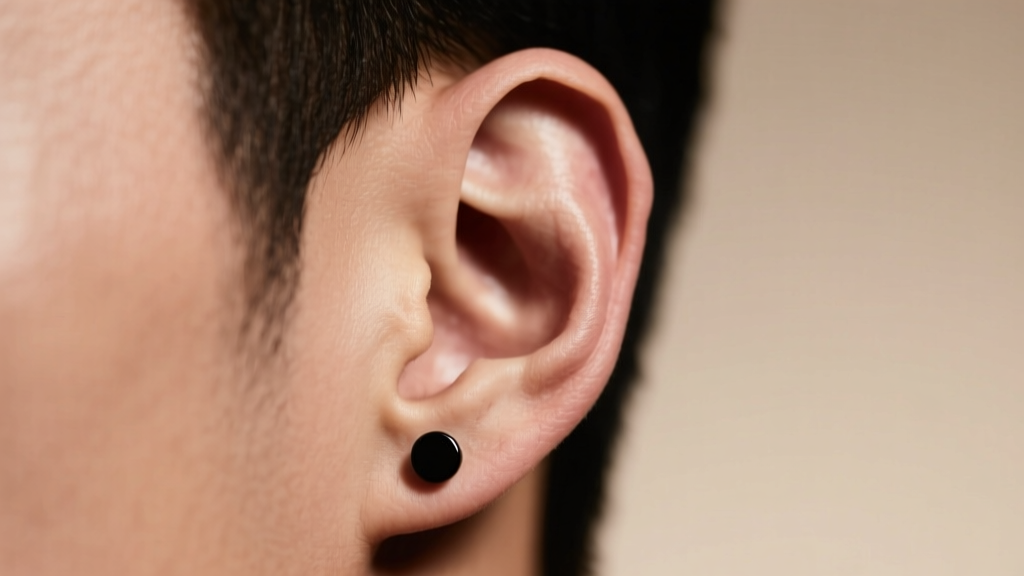
When curating the boy with earring persona 1, the objective is to establish a foundational, everyday aesthetic that balances masculine edge with refined subtlety. This specific style archetype relies heavily on minimalist studs, seamless huggies, and small-diameter hoops that sit flush against the earlobe or cartilage. However, the visual impact and longevity of these pieces are entirely dependent on the metallurgical properties of the jewelry. Cheap alloys lead to green skin, contact dermatitis, and tarnished finishes that instantly ruin the aesthetic. To achieve a premium, enduring look, you must understand material science and biocompatibility.
In 2026, the standard for men's body jewelry has shifted dramatically away from mall-kiosk surgical steel toward high-end, implant-grade materials. This guide breaks down the exact metallurgical properties, gauge requirements, and pricing tiers you need to know to build a flawless, skin-safe earring rotation.
The Material Hierarchy for Men's Ear Jewelry
Not all metals are created equal. The environment of a piercing—warm, slightly moist, and in constant contact with the body's immune system—demands materials that are inert and highly polished. Here is the definitive hierarchy for the core persona build.
Implant-Grade Titanium (ASTM F136)
If there is a gold standard for fresh piercings and highly reactive skin, it is implant-grade titanium. Specifically, you want Ti-6Al-4V ELI (Extra Low Interstitial) alloy, which complies with ASTM F136 standards. Unlike commercial-grade titanium, F136 titanium contains virtually no nickel, making it completely hypoallergenic. It is also 45% lighter than stainless steel, reducing the risk of migration or lobe tearing in heavier gauge hoops. Brands like Anatometal and Industrial Strength utilize this metal, offering mirror-finish polishes that resist bacterial adhesion.
Niobium and Anodized Reactive Metals
Niobium is a highly reactive, hypoallergenic metal that shares many biocompatible traits with titanium. Its unique advantage lies in its anodizing capabilities. By applying an electrical current, the surface oxide layer thickens, refracting light to produce vibrant, permanent colors without the use of toxic dyes or plating. For the boy with earring persona 1, anodized black or gunmetal niobium studs offer a stealthy, matte-black aesthetic that pairs perfectly with streetwear and minimalist wardrobes. According to the Association of Professional Piercers, niobium is universally accepted for initial piercings due to its exceptional inertness.
14k and 18k Solid Gold
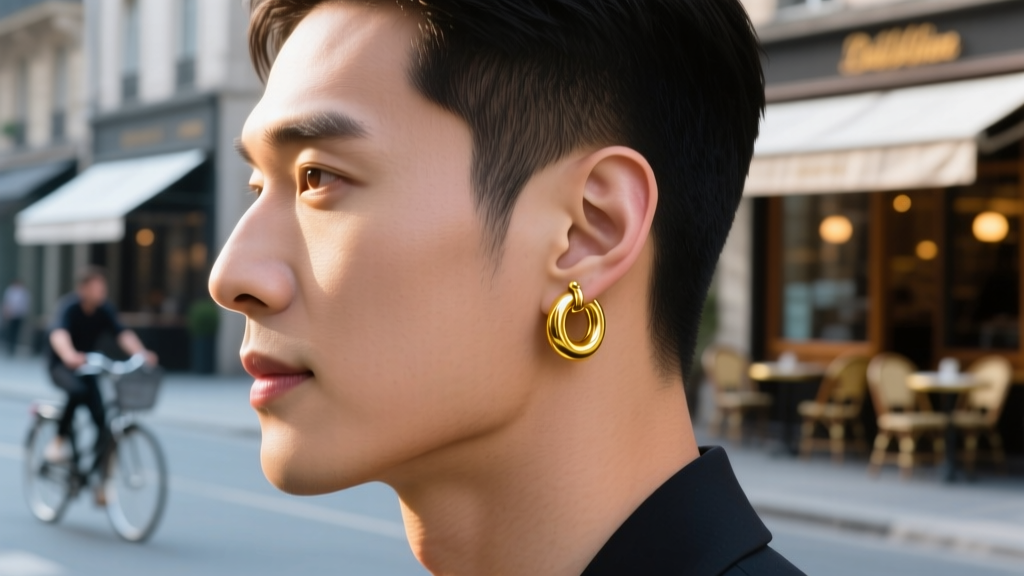
Gold remains the ultimate status material, but purity matters. 24k gold is too soft for body jewelry; it scratches easily and loses its shape. Therefore, 14k (58.5% gold) and 18k (75% gold) are the ideal benchmarks. The critical factor is the alloy mix. High-quality body jewelry brands like BVLA and Maria Tash use palladium or silver to create white gold, entirely avoiding the nickel alloys found in cheap commercial jewelry. Yellow gold offers a classic, warm contrast against the skin, while rose gold (alloyed with copper) provides a modern, understated tone. Expect to pay between $80 and $250+ per piece for genuine, nickel-free solid gold body jewelry.
The Problem with 316L Surgical Steel
Many entry-level jewelry brands market 'Surgical Steel' as a premium material, but it is a metallurgical trap. 316L stainless steel contains between 8% and 10% nickel. While the chromium oxide layer on the surface usually traps the nickel, microscopic scratches from daily wear can expose the underlying alloy, leading to allergic contact dermatitis. The American Academy of Dermatology frequently cites nickel as the number one cause of metal allergies. For a foundational persona build meant for 24/7 wear, avoiding surgical steel is a mandatory rule to prevent chronic inflammation and hyperpigmentation around the piercing site.
Material Comparison Matrix
Use the following data table to evaluate which metal best suits your specific lifestyle, budget, and skin sensitivity.
| Material | Biocompatibility | Weight | Price Range (USD) | Best Application |
|---|---|---|---|---|
| ASTM F136 Titanium | Excellent (Nickel-Free) | Ultra-Light | $25 - $60 | Fresh piercings, heavy hoops |
| Niobium | Excellent (Nickel-Free) | Medium | $20 - $50 | Anodized dark colors, studs |
| 14k Solid Gold | Very Good (If Alloyed Safely) | Heavy | $80 - $250+ | Healed lobes, luxury huggies |
| 316L Surgical Steel | Poor (Contains Nickel) | Heavy | $10 - $25 | Not recommended for daily wear |
| Tungsten Carbide | Good (Inert, but brittle) | Very Heavy | $30 - $70 | Scratch-resistant masculine bands |
Threading and Fit Mechanics
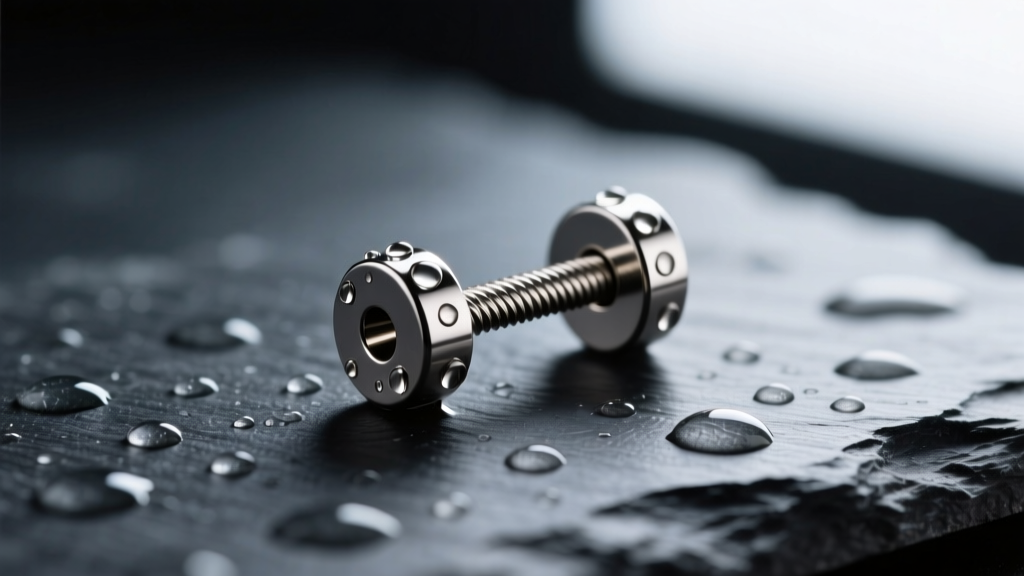
The material of the post is only half the equation; how the jewelry secures to the ear is equally vital for comfort and safety. As of 2026, external threading (where the screw is on the post) is considered obsolete for high-end body jewelry, as the sharp threads can tear the delicate fistula tissue during insertion.
- Internal Threading: The screw mechanism is located inside the decorative end. The post itself is smooth, gliding effortlessly through the piercing. This is the standard for premium titanium and gold barbells.
- Threadless (Push-Pin): Utilizing the tension of a slightly bent pin that inserts into a hollow post. This mechanism offers superior security—threadless ends rarely fall out, making them ideal for active lifestyles and sleepwear.
- Seamless Huggies: For hoops, look for continuous or segment rings that lack a harsh clicking hinge. Hinge mechanisms often trap sebum and dead skin cells, leading to odor and irritation.
Gauge Sizing and Proportions
Getting the correct gauge (thickness) and diameter is critical for the boy with earring persona 1 aesthetic. Wearing jewelry that is too thin can cause the 'cheese-cutter effect,' where the metal slowly migrates through the tissue. Conversely, jewelry that is too thick will stretch the piercing unintentionally.
Standard Lobe Piercings
Most standard lobe piercings done with a needle are 18-gauge (1.02mm) or 16-gauge (1.29mm). If you were pierced with a gun, the jewelry is likely 20-gauge (0.81mm). For a masculine, substantial look, upgrading your healed lobes to 16-gauge or even 14-gauge (1.6mm) studs provides a bolder visual weight that aligns perfectly with the core persona.
Cartilage and Helix Piercings
Cartilage piercings are almost universally pierced at 16-gauge. When selecting hoops or huggies for the upper ear, the inner diameter is crucial. A standard helix hoop requires an 8mm (5/16') or 10mm (3/8') inner diameter to accommodate the natural swelling and curvature of the ear without squeezing the tissue.
Maintenance and Tarnish Prevention
Even the highest quality metals require basic maintenance to retain their optical properties. While titanium and niobium will not tarnish, gold can accumulate soap scum, skin oils, and environmental pollutants, dulling its shine.
Pro-Tip: Avoid ultrasonic cleaners for jewelry featuring soft gemstones like opals or turquoise, as the high-frequency vibrations can fracture the stone. For plain metal studs and hoops, a 3-minute soak in warm water with a drop of mild, fragrance-free dish soap, followed by a gentle brush with a baby toothbrush, will restore the mirror finish.
Furthermore, always remove your jewelry before swimming in chlorinated pools or entering hot tubs. Chlorine is highly reactive and can permanently discolor lower-karat gold alloys and degrade the polish on titanium.
Final Verdict for Your Build
Executing the boy with earring persona 1 requires a disciplined approach to material selection. By anchoring your collection in ASTM F136 titanium for structural pieces and upgrading to 14k or 18k solid gold for statement huggies, you ensure that your jewelry remains a seamless, irritation-free extension of your personal style. Avoid the false economy of surgical steel, prioritize internal or threadless mechanics, and respect the precise gauge requirements of your anatomy. The result is a refined, enduring aesthetic that looks intentional, premium, and effortlessly sharp.


