Brandy Earrings Buying Guide: Stones, Settings & Fit
Discover how to choose the perfect brandy earrings. Our expert buying guide covers brandy quartz grading, ideal gold pairings, and weight distribution.

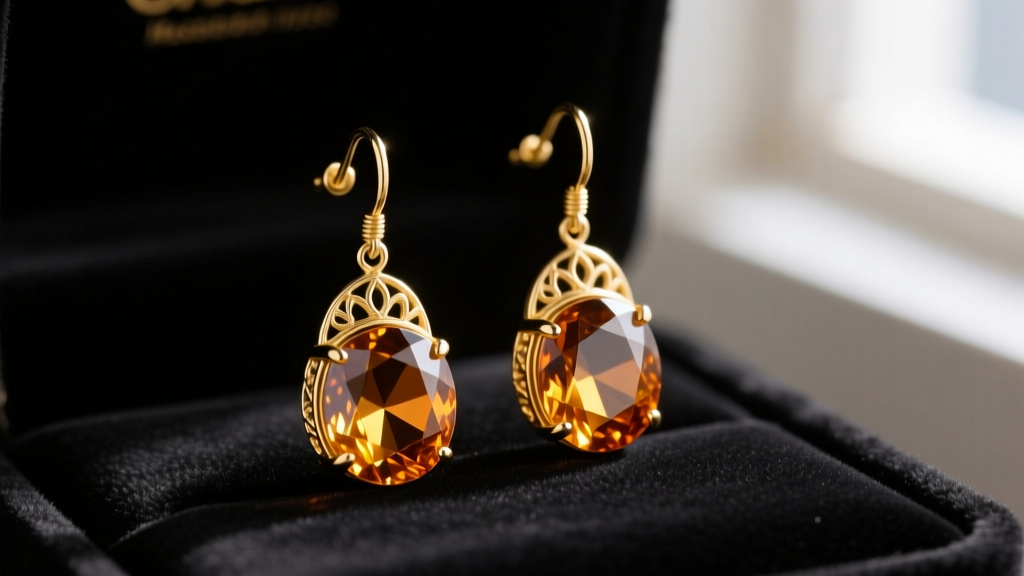
The Allure of Brandy Earrings: Defining the Category
When jewelry enthusiasts and collectors search for brandy earrings, they are rarely looking for a specific brand. Instead, they are seeking a highly coveted aesthetic category defined by warm, liquor-hued gemstones. Think of the rich, amber-brown tones of aged cognac, the deep golden-orange of whiskey, or the translucent rust of a fine sherry. These earrings typically feature stones like brandy quartz, cognac citrine, natural amber, or fire opal, cut into elegant teardrops, emerald steps, or cushion shapes to maximize light refraction through the warm-toned crystal.
Historically, brandy-toned jewelry saw massive surges in popularity during the late Victorian era and the Art Deco period, prized for their autumnal warmth and ability to complement a wide array of skin undertones. Today, in 2026, brandy earrings remain a staple for those looking to add a touch of vintage-inspired luxury to their everyday rotation without relying on traditional clear diamonds or cool-toned sapphires. However, buying these earrings requires a keen eye for gemological treatments, metal pairings, and structural engineering to support heavier stone cuts.
Gemological Deep Dive: Grading Brandy Stones
The term 'brandy' is a trade color, not a specific mineral. The most common stone used to achieve this look is brandy quartz. According to the Gemological Institute of America (GIA), the rich brownish-orange hue of brandy quartz is rarely found in this saturation in nature. It is typically achieved by irradiating and then heating amethyst or smoky quartz to temperatures between 400°C and 500°C. This treatment is permanent, stable, and widely accepted in the fine jewelry market, provided it is properly disclosed by the retailer.
The 'Liquor Test' for Color Saturation
When evaluating brandy earrings, hold the stones up to a natural light source. High-quality brandy quartz should exhibit 'pleochroism'—meaning the color shifts slightly depending on the angle. You want a stone that mimics the translucency of actual liquor. If the stone looks completely opaque or muddy, it has likely been overheated during treatment or contains excessive internal inclusions that scatter light poorly. The ideal brandy stone has a VVS (Very Very Slightly Included) clarity grade, allowing the warm light to pass through and create a glowing, internal fire.
Metal Pairings: Enhancing the Warm Hue
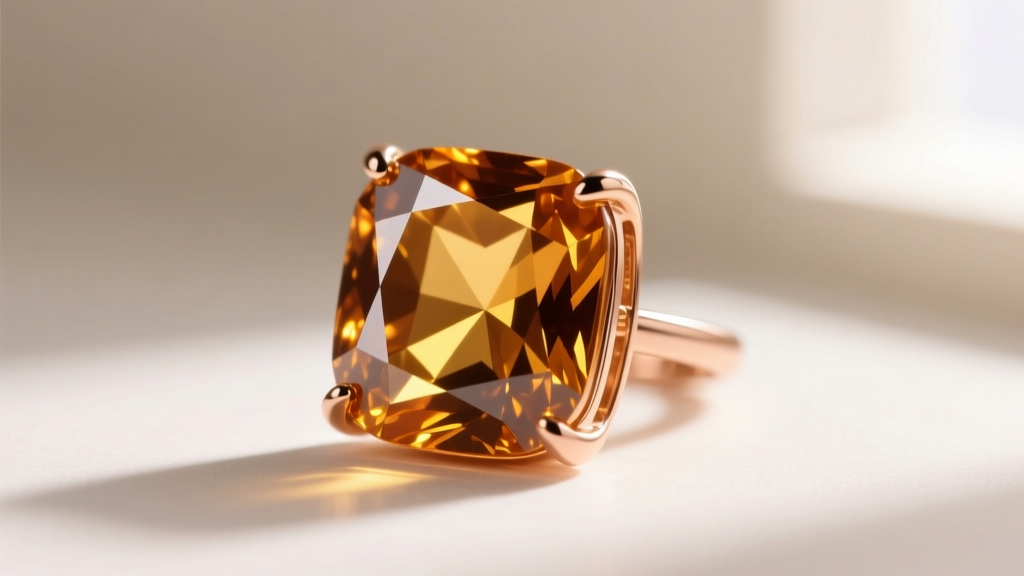
The metal you choose for your brandy earrings will drastically alter the visual temperature of the gemstone. Because brandy stones sit on the warm end of the color spectrum, pairing them with the wrong metal can make them look dull or overly brassy. Below is a structural and aesthetic breakdown of how different precious metals interact with brandy gemstones.
| Metal Type | Karat / Purity | Visual Effect on Brandy Stones | Durability & Best Use Case |
|---|---|---|---|
| Yellow Gold | 14k or 18k | Amplifies warmth; creates a seamless, monochromatic vintage glow. | Excellent for intricate prong settings; 14k offers better prong strength. |
| Rose Gold | 14k | Adds a pinkish-copper undertone; softens the 'liquor' look into a sunset hue. | Highly durable due to copper alloy; ideal for heavy bezel settings. |
| White Gold / Platinum | 18k / 950 | Creates high contrast; makes the stone pop but can expose muddy undertones. | Platinum is best for heavy drops due to superior tensile strength. |
Structural Integrity: Weight, Gauges, and Ear Health
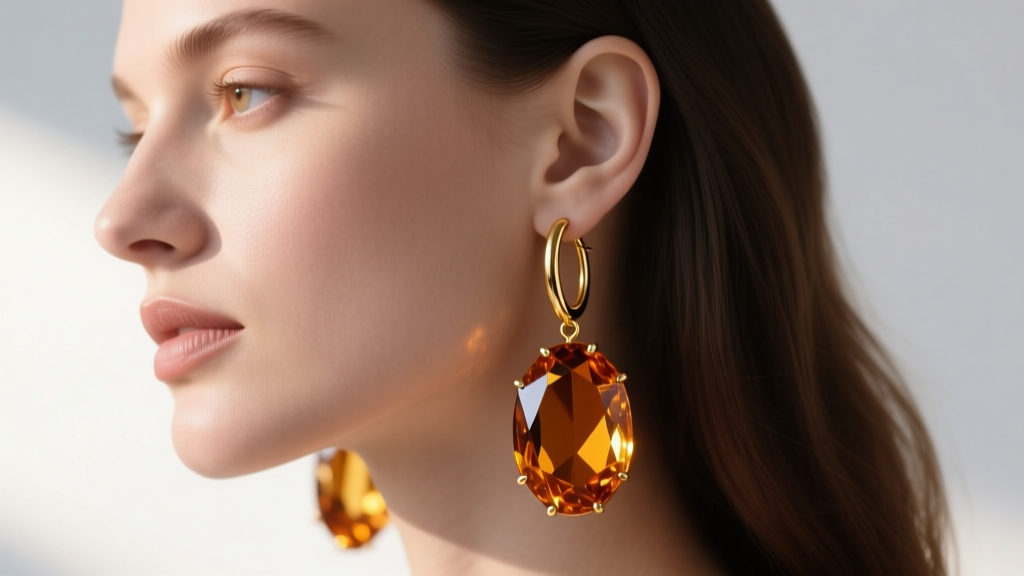
The most overlooked aspect of buying brandy earrings is weight distribution. To achieve the deep, saturated color characteristic of brandy quartz or cognac citrine, lapidaries must cut the stones with significant depth and pavilion thickness. A standard 15x10mm faceted brandy teardrop can easily weigh 6 to 8 carats (1.2 to 1.6 grams) per stone. Once set in a solid gold basket with a reinforced bail, a single earring can exceed 4 grams.
Post Gauge and Wire Thickness
Standard lobe earrings are manufactured with 20-gauge (0.81mm) posts. If you hang a 4-gram brandy drop from a 20-gauge wire, gravity will pull the earring forward, causing the post to bend and the 'cheese-cutter' effect to slowly stretch your earlobe piercing over time. When shopping for heavy brandy dangles, you must inspect the wire thickness. Look for 18-gauge (1.02mm) or even 16-gauge (1.29mm) French wires or leverbacks. If the design uses a standard post, ensure the manufacturer includes jumbo friction backs or wide silicone disc backers (minimum 12mm diameter) to distribute the weight across a wider surface area of the earlobe.
Setting Styles for Heavy Drops
For brandy stones over 5 carats, avoid delicate four-prong settings. The thermal expansion and contraction of the stone, combined with the leverage of a heavy drop, can loosen thin prongs over time. Opt for bezel settings or half-bezel designs with reinforced galleries. The Federal Trade Commission (FTC) Jewelry Guides mandate that precious metal settings must be properly stamped and structurally sound for the gemstones they hold; a reputable jeweler will ensure the basket is cast with adequate porosity-free gold to support the stone's mass.
Pricing Tiers: What to Expect in the Current Market
Understanding the pricing architecture of brandy earrings will protect you from overpaying for treated stones marketed as 'rare natural finds.' Here is a realistic breakdown of what you should expect to pay based on materials and craftsmanship:
- Commercial Grade ($45 - $150): Features mass-produced, heavily treated brandy quartz set in gold vermeil or 10k gold. Stones may have visible windowing (where light leaks out the bottom) and standard 20-gauge posts.
- Fine Jewelry Tier ($300 - $850): Custom-cut brandy quartz or natural cognac citrine with excellent clarity, set in solid 14k or 18k gold. Includes structural reinforcements like 18-gauge wires, secure bezel settings, and proper gemological treatment disclosures.
- High Jewelry & Antique ($1,500 - $5,000+): Features rare, untreated brandy-colored stones like natural fire opals, cognac diamonds, or imperial topaz. Settings are often hand-fabricated in platinum or 22k gold, featuring pavé diamond halos and museum-quality craftsmanship.
Final Verdict: The Pre-Purchase Inspection Checklist
Before finalizing your purchase of brandy earrings, run through this expert checklist to ensure you are investing in a piece that will last a lifetime:
- Check the Disclosure: Does the retailer explicitly state if the brandy quartz or citrine has been heat-treated or irradiated?
- Test the Light: View the stone in both natural daylight and warm indoor lighting to ensure the color doesn't turn muddy or gray in low light.
- Measure the Gauge: Confirm the post or wire is at least 18-gauge if the total weight of the earring exceeds 3 grams.
- Inspect the Backer: Ensure the earring comes with a supportive backer (like a 12mm silicone disc or a secure leverback mechanism) to protect your earlobe from stretching.
- Evaluate the Prongs/Bezel: Run a silk cloth over the setting. If it snags, the prongs are poorly finished and pose a risk to both your clothing and the security of the stone.
By prioritizing structural integrity and understanding the gemological origins of the 'brandy' color, you can confidently select a pair of earrings that offer both vintage romance and modern durability.


