DIY Earring Display Ideas That Prevent Tarnish & Damage
Learn how to build a DIY earring display that prevents tarnish, tangling, and post-bending. Expert tips on jewelry-safe materials and maintenance.

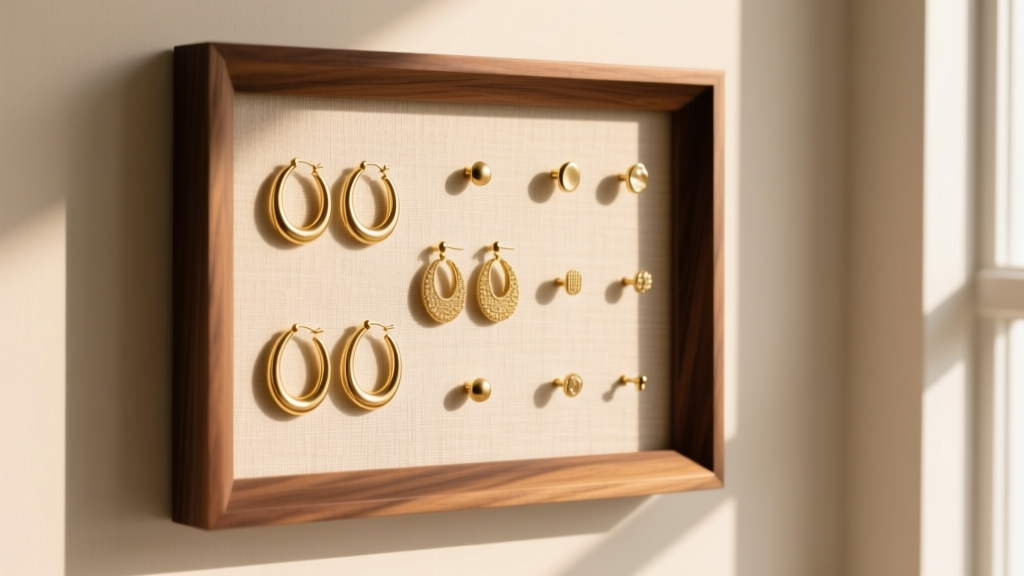
Building a diy earring display is often treated as a purely aesthetic craft project, but from a jewelry care perspective, it is a critical exercise in preventive conservation. Improper storage is the leading cause of bent posts, oxidized metals, and stress-fractured chains. When you design a display with material science and structural integrity in mind, you actively extend the lifespan of your collection. In this guide, we will explore how to engineer a DIY earring display that safeguards your jewelry against environmental and physical damage.
The Hidden Cost of Poor Earring Storage
Many commercial and DIY displays are constructed from materials that actively degrade jewelry. The two most common culprits are chemical off-gassing and improper physical support. Standard 20-gauge (0.81mm) and 18-gauge (1.02mm) earring posts are remarkably soft, especially when crafted from high-karat gold, pure silver, or fine platinum. Forcing these posts into holes that are too small, or leaving heavy dangles lying flat, results in micro-bends that weaken the metal's crystalline structure over time.
Furthermore, airborne hydrogen sulfide and high humidity accelerate tarnishing, particularly in sterling silver and copper alloys. According to the Gemological Institute of America (GIA), storing jewelry in environments with fluctuating temperatures or acidic materials can cause irreversible surface pitting. A well-designed DIY display must act as a micro-climate buffer, not a catalyst for oxidation.
Material Science: What to Use (and Avoid)
The foundation of a maintenance-focused diy earring display lies in selecting chemically inert materials. Many popular crafting supplies contain hidden acids and sulfur compounds that will ruin fine jewelry.
Materials to Strictly Avoid
- Raw Oak and Mahogany: These woods naturally emit acetic acid and formaldehyde vapors, which will rapidly corrode silver and copper.
- PVC (Polyvinyl Chloride): PVC off-gasses hydrogen chloride, creating a highly acidic micro-environment that strips rhodium plating and tarnishes gold alloys.
- Standard Cardboard and Wood Pulp: These contain high levels of sulfur and lignins, which transfer directly to earring posts.
- Rubber Bands and Elastic: The vulcanization process uses sulfur, guaranteeing immediate blackening of silver earrings.
Jewelry-Safe Alternatives
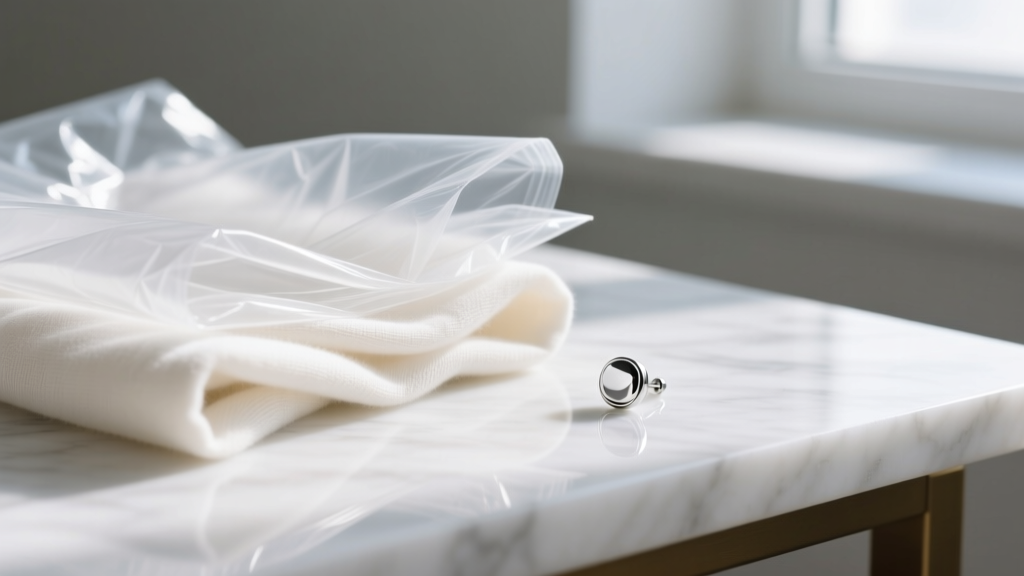
- Polyethylene (PE) and Polypropylene (PP): These plastics are chemically inert and safe for long-term jewelry contact.
- Acid-Free Linen and Unbleached Cotton: Natural fibers that have not been treated with sulfur-based dyes or acidic sizing agents.
- Sealed Woods: Walnut or maple sealed with a fully cured, water-based polyurethane creates a safe, non-porous barrier.
- Pacific Silvercloth: A specialized flannel embedded with microscopic silver particles that absorb hydrogen sulfide before it reaches your earrings.
Step-by-Step: Building a Maintenance-Focused Linen Board
This specific DIY build accommodates everything from delicate 20G lobe studs to thicker 14G (1.63mm) cartilage pieces without bending the posts.
- Prepare the Base: Cut a 12x12 inch piece of sealed maple wood. Ensure the water-based polyurethane has cured for at least 14 days to eliminate any residual off-gassing.
- Apply the Barrier: Adhere a layer of acid-free, unbuffered tissue paper to the wood using a water-based, pH-neutral glue stick. This prevents any potential wood tannins from migrating to the fabric.
- Stretch the Fabric: Wrap the board in 100% unbleached linen or anti-tarnish flannel. Pull it taut and secure it at the back with rust-proof stainless steel staples (avoid standard galvanized staples, which can rust and stain).
- Punch Precision Holes: Do not use a standard needle. Use a 1.5mm steel awl to punch your display holes. This exact diameter allows a 14G cartilage post (1.6mm) to slide in with gentle friction, while providing enough support so a 20G stud (0.8mm) does not droop or bend under its own weight.
Structural Support: Matching Earring Types to Display Methods
Gravity and weight distribution dictate how earrings should be stored. The National Park Service Museum Handbook emphasizes that heavy objects must be fully supported to prevent stress on their weakest structural points. For earrings, the weakest point is almost always the post or the jump ring.
| Earring Type | Typical Gauge / Weight | Ideal DIY Display Method | Maintenance Benefit |
|---|---|---|---|
| Studs (Diamond/Gem) | 18G - 20G / Light | Flush-mounted into linen board | Protects prongs from snagging; keeps posts perfectly straight. |
| Hoops & Huggies | 16G - 20G / Medium | Slotted velvet rolls or individual PE bags | Prevents scratching of high-polish surfaces and maintains hoop tension. |
| Heavy Dangles | 16G - 14G / Heavy | Hanging from slotted wooden dowels | Allows chains to hang plumb, preventing knotting and jump-ring stress. |
| Ear Cuffs & Threaders | N/A - 20G / Delicate | Flat lay in partitioned, acid-free boxes | Prevents the delicate C-curves of cuffs from being bent out of shape. |
Hanging Heavy Dangles: The Dowel Method
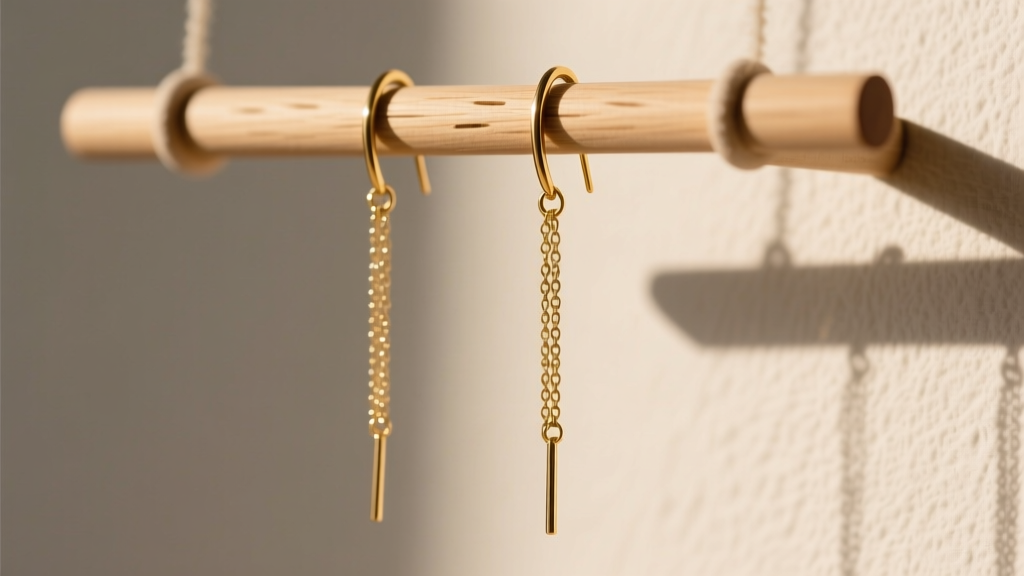
For heavy chandelier or drop earrings, a flat board is detrimental. The chains will tangle, and the weight of the earring will rest entirely on the jump ring, eventually pulling it open. To solve this, integrate a hanging dowel into your DIY display.
Mount a 1/2-inch diameter wooden dowel (sealed with polyurethane) horizontally about 4 inches above your main display board. Use a fine-tooth saw to cut 2mm wide slots into the top of the dowel, spaced 1 inch apart. Slide the earring post into the slot so the earring head rests on the wood, and the chain dangles freely in the air below. This completely removes tension from the jump ring and ensures chains remain untangled and knot-free.
Cleaning and Maintaining Your DIY Display
A display board is only effective if it remains clean. Over time, the fabric will absorb skin oils, lotions, and ambient dust, which can then transfer back onto your clean earrings, creating a film that attracts more moisture and accelerates tarnish.
- Monthly Vacuuming: Use a handheld vacuum with a soft upholstery brush attachment to gently lift dust and dead skin cells from the linen or flannel.
- Spot Cleaning: If the fabric becomes soiled, do not use commercial stain removers, as they contain harsh chemicals and optical brighteners. Instead, lightly dab the area with a microfiber cloth dampened with distilled water and a drop of pH-neutral castile soap. Allow it to air dry completely before replacing any jewelry.
- Replacing Anti-Tarnish Strips: If you place 3M anti-tarnish strips behind your display board or inside the display drawer, replace them every 6 months. They become saturated with sulfur compounds and lose their efficacy.
Expert Troubleshooting: Fixing Common Storage Mistakes
Problem: "My sterling silver studs are developing a yellowish-black film on the posts after sitting on my DIY corkboard for just a few weeks."
Expert Diagnosis & Fix: Standard craft cork is highly porous and often treated with sulfur-based fungicides or bound with acidic adhesives. Furthermore, cork traps ambient humidity. The Fix: Remove the cork immediately. Clean your earrings with a specialized silver dip or a gentle baking soda paste to remove the sulfide layer. Rebuild your display using a sealed hardwood base and acid-free linen, and store the board in a room with a stable humidity level (ideally between 40-50% RH) to prevent future oxidation.
By treating your diy earring display as a vital piece of jewelry care equipment rather than just a decorative accessory, you protect the structural integrity and brilliant finish of your collection. Investing the extra time to source chemically inert materials and engineer proper weight distribution will save you countless hours of polishing, untangling, and repairing bent posts in the future.


