Golden Earring Twilight Zone Lyrics & Rock Hoop Earrings Guide
Explore the edgy Twilight Zone aesthetic in jewelry. Our guide covers black niobium hoops, gauge sizes, and rock-inspired ear styling for 2026.

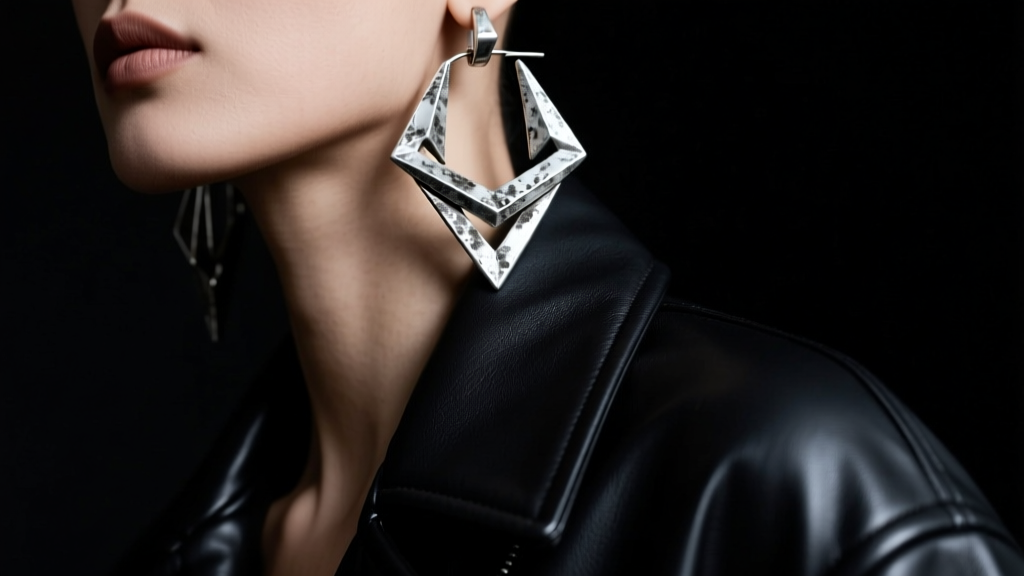
The Intersection of 80s Rock and Avant-Garde Ear Styling
When it comes to alternative jewelry styling, few eras evoke the same sense of mystery, rebellion, and architectural boldness as the new wave and hard rock scenes of the early 1980s. Interestingly, our site analytics reveal a fascinating cultural crossover: users searching for the lyrics to twilight zone by golden earring frequently end up browsing our alternative, gothic, and rock-inspired hoop earring collections. The song’s themes of disorientation, shadows, and sudden shifts perfectly mirror the 'Twilight Zone' aesthetic in modern body jewelry—asymmetric, bold, and unapologetically dark.
If you are looking to channel this enigmatic, rock-and-roll energy into your ear curation, standard delicate gold hoops will not suffice. You need structural integrity, dark metallurgy, and avant-garde silhouettes. This comprehensive 2026 buying guide breaks down exactly what to look for when purchasing heavy-gauge, rock-inspired hoop earrings and ear cuffs, ensuring your jewelry is as resilient and striking as the anthems that inspire it.
Decoding the 'Twilight Zone' Ear Aesthetic
The 'Twilight Zone' aesthetic in ear styling relies heavily on contrast, negative space, and unconventional materials. Rather than traditional high-polish yellow gold, this style embraces oxidized metals, matte black finishes, and jagged geometric shapes. In 2026, the trend has moved beyond simple oversized circles into segmented huggies, hexagonal continuous hoops, and ear cuffs that mimic the look of industrial hardware or shrapnel.
When shopping for this specific vibe, look for hoops that feature uneven textures or mixed-metal inlays. A popular technique is the 'brushed and blackened' finish, where the recesses of a textured hoop are oxidized to pitch black, while the raised edges are lightly polished to catch the light. This creates a moody, three-dimensional effect that pairs perfectly with leather, denim, and dark streetwear.
Metallurgy of the Macabre: Choosing Your Alloys
Dark, edgy jewelry requires specific metal treatments. Standard gold plating will eventually wear off, revealing the brass or copper beneath, which ruins the aesthetic and can cause severe contact dermatitis. For a permanent, safe, and truly dark finish, you must look for specific implant-grade materials. According to the Gemological Institute of America (GIA), understanding metal alloys is critical for preventing allergic reactions, especially with heavy earrings that put stress on the piercing fistula.
1. Anodized Niobium
Niobium is a highly reactive, hypoallergenic element that can be anodized using electricity to create a permanent, pitch-black surface layer without the use of dyes or plating. It is slightly heavier than titanium, giving rock-style hoops a satisfying, premium weight. Expect to pay between $35 and $85 for high-quality, black-anodized niobium seamless hoops.
2. ASTM F-136 Implant-Grade Titanium
For those with severe nickel allergies, titanium is the gold standard. While naturally silver-grey, titanium can also be anodized to a dark gunmetal or deep purple-black. It is incredibly strong and lightweight, making it ideal for oversized hoops that might otherwise drag down the earlobe. The Association of Professional Piercers (APP) strictly recommends ASTM F-136 titanium for all sensitive and healing piercings.
3. Oxidized Sterling Silver
While sterling silver (.925) contains copper and can tarnish, intentional oxidation (often called 'blackening') is a staple of gothic and rock jewelry. However, silver is soft. If you are buying heavy silver hoops, ensure they feature a reinforced steel core or are cast exceptionally thick to prevent bending.
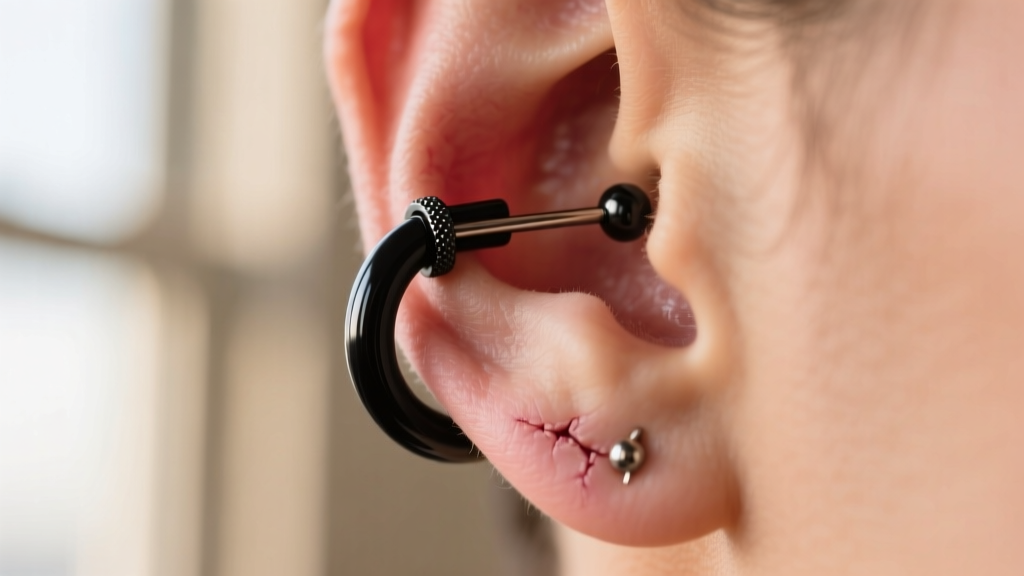
Wire Gauge & Weight Distribution
One of the most common mistakes buyers make when purchasing bold, rock-style hoops is ignoring the wire gauge (thickness). A hoop that is too thin will bend out of shape when put on or taken off, while a hoop that is too thick can cause migration or tearing in standard lobe piercings. Below is a structural guide to help you choose the right gauge for your specific piercing and styling needs.
| Wire Gauge | Thickness (mm) | Best Application | Structural Notes & Pricing |
|---|---|---|---|
| 18g | 1.0mm | Standard earlobes, delicate helix | Prone to bending if the hoop diameter exceeds 20mm. ($15 - $30) |
| 16g | 1.2mm | Healed lobes, upper lobe, tragus | The most versatile gauge; offers good structural memory. ($25 - $50) |
| 14g | 1.6mm | Conch, daith, industrial, stretched lobes | Highly rigid; requires a clicker or threaded end for installation. ($45 - $90) |
| 12g | 2.0mm | Heavy cartilage, stretched earlobes | Extremely heavy; requires reinforced piercing fistulas. ($70 - $150+) |
Clasp Mechanics for Heavy & Edgy Hoops
The closure mechanism dictates both the security and the silhouette of your earring. In the 'Twilight Zone' aesthetic, visible clasps can either be hidden for a seamless, mysterious look, or highlighted as an industrial feature.
- Seamless / Continuous Hoops: These feature a thin pin that slides into a hollow tube. They offer the cleanest, most unbroken circle, perfect for a minimalist dark aesthetic. However, they are notoriously difficult to open and close, and the thin pin can bend if forced.
- Hinged Clickers: The absolute best choice for 14g and 12g cartilage hoops. A hinged segment swings open and snaps shut with an audible 'click.' They are secure, easy to operate, and the visible hinge line can mimic industrial hardware.
- Threaded / Internally Threaded Ends: Common in high-end body jewelry (like BVLA or Maria Tash), the hoop is a partial circle with a threaded post that screws into a receiving tube on the other side. This provides maximum security for heavy, expensive pieces.
Cartilage vs. Lobe: Structural Considerations
Styling the 'Twilight Zone' look requires an understanding of ear anatomy and gravity. Cartilage piercings (like the helix, conch, or daith) do not have the elasticity of earlobes. If you place a heavy, oversized 14g steel hoop in a standard helix piercing, the weight will pull the jewelry downward, causing the fistula to heal at an awkward angle—a phenomenon known as the 'cheese-cutter effect.'
To combat this, always match the inner diameter of the hoop to the specific anatomy of your ear. A conch piercing typically requires a large inner diameter (14mm to 22mm) to hug the ear's contours without pressing into the anti-helix. Conversely, a daith piercing requires a smaller, tighter hoop (usually 10mm or 11mm) to sit flush within the innermost cartilage fold.
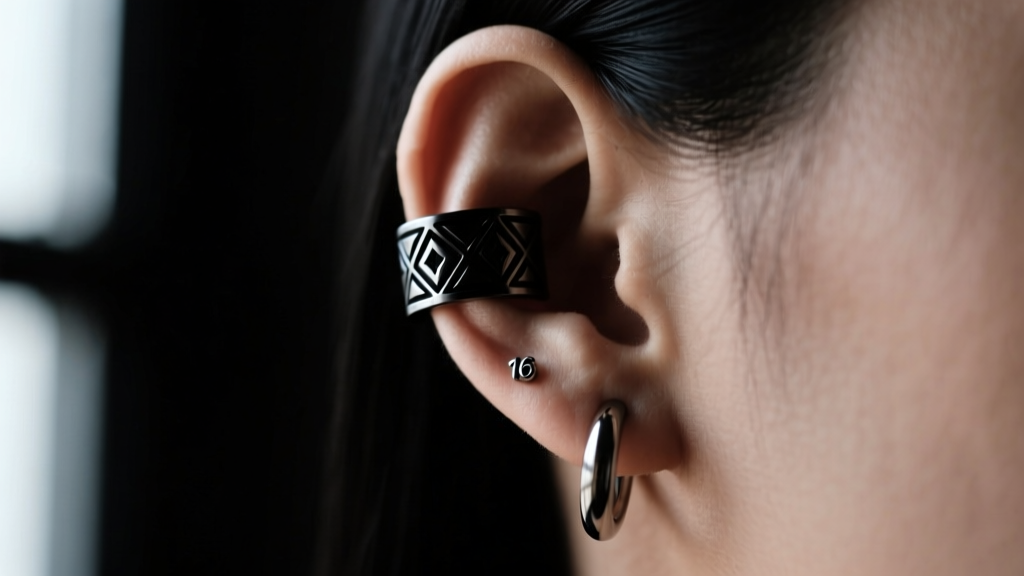
Non-Pierced Alternatives: Ear Cuffs and Tension Rings
If you want to achieve this avant-garde, rock-inspired look without committing to new cartilage piercings, modern ear cuffs have evolved significantly. Forget the flimsy, easily lost wire wraps of the past. Today's high-end ear cuffs utilize adjustable tension bands lined with medical-grade silicone grips. These allow you to securely clamp a heavy, oxidized silver cuff onto the mid-helix or auricle, creating the illusion of a complex, multi-piercing setup. When shopping for cuffs, look for those with a screw-adjustment mechanism rather than simple bendable metal, as they provide a custom, secure fit that won't slip off during a crowded concert or active day.
Final Thoughts on Curating Your Dark Aesthetic
Whether you are drawn to the moody, mysterious energy of classic rock anthems or simply appreciate the architectural brilliance of dark, heavy-gauge jewelry, the 'Twilight Zone' ear aesthetic is all about intentionality. By prioritizing implant-grade materials like anodized niobium and titanium, respecting the structural limits of your piercings through proper gauge selection, and choosing secure clicker mechanisms, you can build an ear curation that is as enduring and legendary as the music that inspired it. Always consult with a professional, APP-certified piercer when transitioning to heavier gauges or complex cartilage setups to ensure your styling remains safe, healthy, and fiercely unique.


