Material Properties Guide for Brick Stitch Beaded Earrings
Discover the best beads, threads, and backings for brick stitch beaded earrings. Compare material properties for optimal drape, weight, and durability.

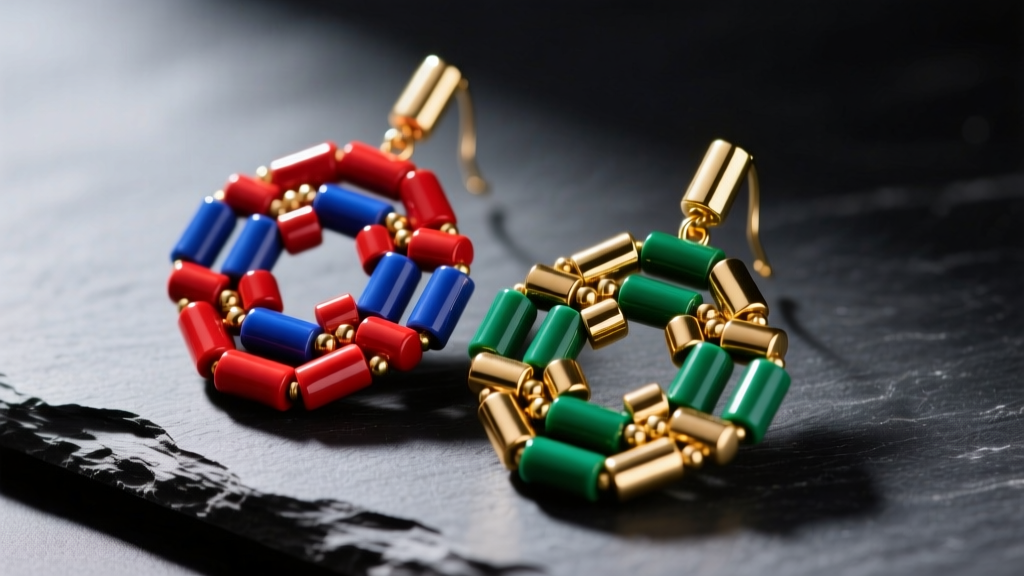
The Architecture of Brick Stitch: Why Material Physics Matter
Brick stitch is a foundational off-loom beadweaving technique that creates a flexible, fabric-like structure by anchoring new beads to the thread bridges of the previous row, rather than passing directly through the beads themselves. When designing brick stitch beaded earrings, the structural integrity, drape, and overall weight distribution are entirely dictated by your material choices. As we navigate the jewelry landscape in 2026, beaders are moving away from heavy, rigid designs in favor of micro-tension weaving that mimics the fluid drape of fine textiles. Understanding the exact physical properties of your beads, threads, and backing materials is the difference between an earring that lays flat against the jawline and one that curls, warps, or snaps under its own weight.
Bead Selection: Cylinder vs. Round vs. Glass
The success of traditional brick stitch relies heavily on bead uniformity. Because the beads stack vertically and lock together side-by-side, any variance in diameter will cause the beadwork to pucker or flare. According to the technical guidelines published by Miyuki, cylinder beads are the undisputed standard for this technique.
Miyuki Delica vs. Toho Treasures
Both Miyuki Delicas and Toho Treasures are precision-manufactured Japanese cylinder beads, but their microscopic differences drastically alter the final earring. Size 11/0 is the industry standard for brick stitch earrings, offering the perfect balance between intricate detail and manageable weaving time.
- Miyuki Delica (11/0): Measures 1.6mm in length, 1.3mm in width, with a 0.8mm hole. They have slightly sharper edges, resulting in a crisper, more geometric finish. The smaller hole size restricts the number of thread passes, which is critical to remember when executing the tight turnaround stitches at the earring's edge.
- Toho Treasures (11/0): Measures 1.6mm in length, 1.5mm in width, with a slightly larger 0.9mm hole. The larger hole accommodates multiple thread passes more easily, making them ideal for complex fringe work or multi-layered brick stitch bases where the needle must pass through edge beads four or five times.
- Czech Glass (Charlotte Cut 11/0): Unlike cylinders, these round beads have a single flat cut facet. Using them in brick stitch creates a highly textured, vintage aesthetic, but the irregular shape requires constant tension adjustments to prevent the beadwork from warping into a bowl shape.
Material Comparison Matrix
| Bead Type | Dimensions (11/0) | Hole Size | Best Earring Application | Weight per 100 Beads |
|---|---|---|---|---|
| Miyuki Delica | 1.6mm x 1.3mm | 0.8mm | Geometric studs, structured dangles | ~1.8 grams |
| Toho Treasures | 1.6mm x 1.5mm | 0.9mm | Fringe-heavy dangles, multi-pass edges | ~2.0 grams |
| Czech Charlotte | ~1.5mm x 1.5mm | 0.7mm | Textured hoops, organic drop shapes | ~2.4 grams |
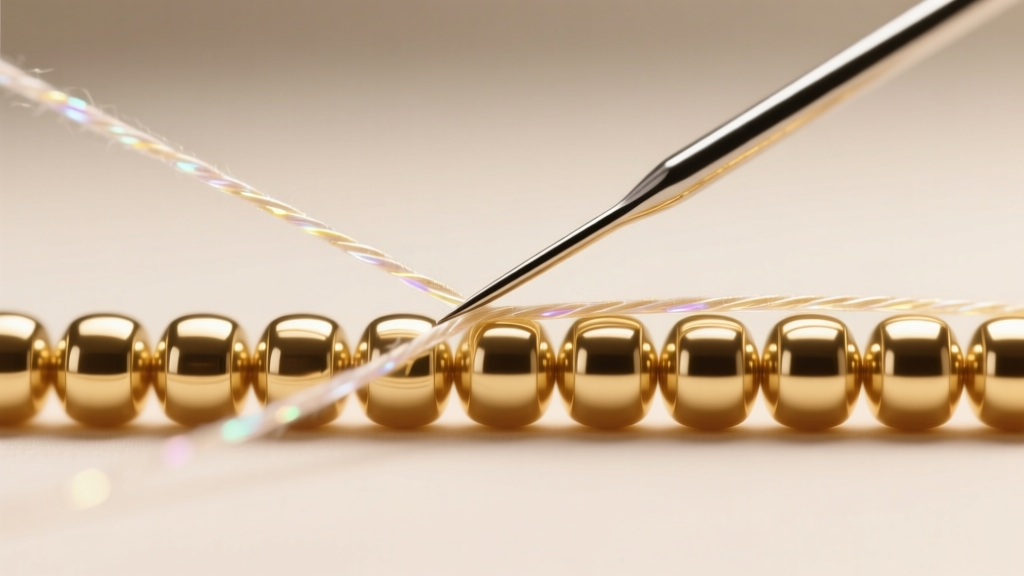
Thread Tension and Durability: The Hidden Backbone
In brick stitch, the thread is the actual structural skeleton. The beadwork is only as strong as the thread's tensile strength and its resistance to UV degradation and friction. Choosing the wrong thread will result in earrings that lose their shape or snap when the flexible beadwork is bent.
Gel-Spun Polyethylene vs. Thermally Bonded Polyethylene
Berkley Fireline (6lb Test): This braided gel-spun polyethylene thread has a diameter of 0.008 inches. It possesses virtually zero stretch, making it the premier choice for the rigid base rows of a brick stitch earring. Because it does not stretch, it forces the cylinder beads to lock tightly together, creating a stiff, self-supporting plane. However, its lack of memory makes it a poor choice for long, flowing fringe, as it tends to kink.
Wildfire (0.006 inch): A thermally bonded polyethylene thread that offers a softer drape and excellent memory. It is the superior choice for the fringe elements of a brick stitch drop earring. The thermal coating prevents fraying when passing through the sharp edges of metallic or opaque cylinder beads, a common failure point in beaded earwear.
Nymo (Size D): A traditional nylon thread that requires conditioning with beeswax or Thread Heaven. While historically popular, nylon stretches under the weight of glass beads and degrades faster when exposed to the natural oils and acidity of human skin. For modern, high-durability brick stitch earrings, synthetic polyethylenes have largely rendered nylon obsolete.
Stabilizers and Backings: Managing the 2D Plane
Brick stitch naturally wants to curl along its vertical axis due to the slight tension differential between the front and back of the weave. To create a polished, professional earring, the beadwork must be backed and stabilized.
Lacy's Stiff Stuff: A dense, non-woven nylon stabilizer that provides a rigid foundation. It is punched or stitched through directly. For large statement brick stitch dangles (over 2.5 inches in length), a double layer of Lacy's Stiff Stuff prevents the earring from folding in half when stored.
Ultra-Suede: Used as the final backing layer to hide the thread paths and stiffener. A 0.5mm thickness of Ultra-Suede provides a soft, skin-friendly finish that prevents the abrasive thread bridges from scratching the wearer's neck or jawline. When cutting the backing, use a flush-cut micro-scissor to leave exactly a 0.5mm border around the beadwork, creating a clean, framed edge.
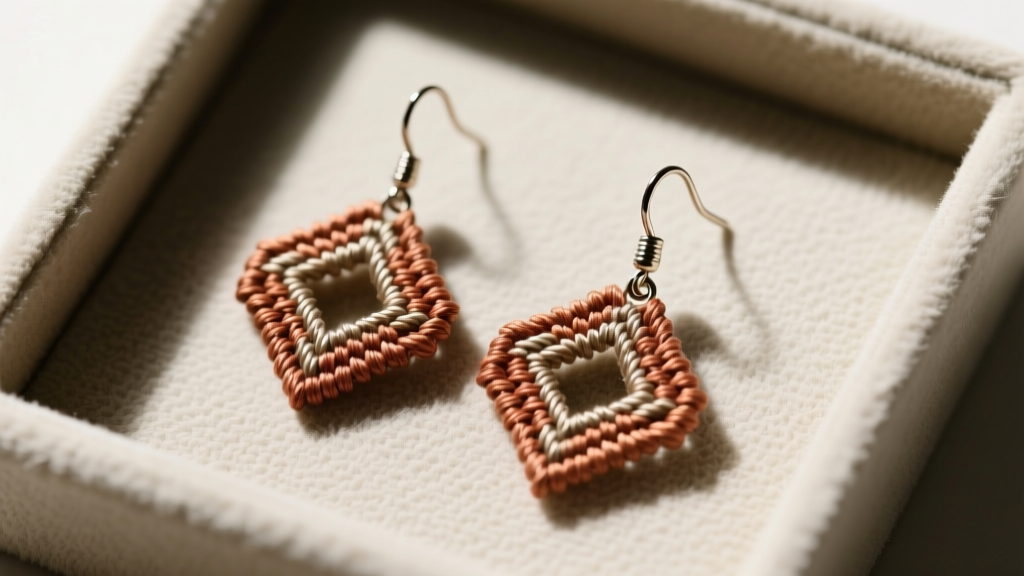
Earring Findings: Weight Distribution and Hypoallergenic Needs
The physical weight of a fully beaded brick stitch earring can easily reach 8 to 12 grams. Standard 22-gauge or 24-gauge earring wires will bend and warp under this load, causing the earring to droop forward. Furthermore, the porous nature of beading thread can trap skin oils and bacteria, making hypoallergenic findings a medical necessity for sensitive ears.
Leverback vs. Flat Pad Posts
For drop and dangle styles, 20-gauge (0.81mm) ASTM F136 Titanium leverbacks are the gold standard. The 20-gauge thickness supports the 10+ gram weight without bending, while the leverback closure ensures the heavy earring cannot accidentally slip out of the lobe. Titanium is completely inert and will not react with the dyes used in metallic or opaque cylinder beads.
For stud-style brick stitch earrings, flat pad posts (8mm or 10mm diameter) made from surgical steel or niobium are required. The beadwork is stitched directly through the holes in the flat pad, and a piece of Ultra-Suede is glued to the back using a flexible jewelers adhesive like E6000 Fabri-Fuse, which withstands the flexing of the beadwork without cracking.
Expert Insight: Never use standard butterfly friction backs for heavy brick stitch studs. The concentrated weight will cause the post to tilt downward, stretching the earlobe piercing. Always pair heavy beaded studs with secure screw-backs or heavy-duty silicone jumbo clutches to distribute the load across a wider surface area of the earlobe.
Step-by-Step Material Pairing Framework
To eliminate guesswork, use this decision matrix when planning your next pair of brick stitch beaded earrings:
- Determine the Drape: If the design requires a rigid, geometric shape, pair Miyuki Delicas with 6lb Fireline and a Lacy's Stiff Stuff core.
- Determine the Fringe: If the design features long, flowing movement, transition to Wildfire thread for the bottom three rows and the fringe strands to allow gravity to pull the beads into a smooth cascade.
- Calculate the Weight: Weigh your finished beadwork on a digital jewelry scale before attaching findings. If the piece exceeds 6 grams per earring, mandate a 20-gauge titanium leverback.
- Seal the Edges: Apply a micro-drop of clear, flexible jewelry glue to the final thread knot hidden between the backing and the beadwork to prevent unraveling from the friction of hair and clothing.
By treating brick stitch not just as an art form, but as an exercise in material engineering, you elevate your beaded earrings from fragile crafts to durable, high-end wearable art. For further reading on advanced off-loom tension techniques, the archives at Interweave Beading offer masterclasses in structural beadwork that perfectly complement these material guidelines.


