Fixing Snags & Lobe Tears From Heavy Grunge Earrings
Stop grunge earrings from tearing your lobes or snagging your hair. Expert fixes for heavy chains, safety pins, and oxidized metal allergies.

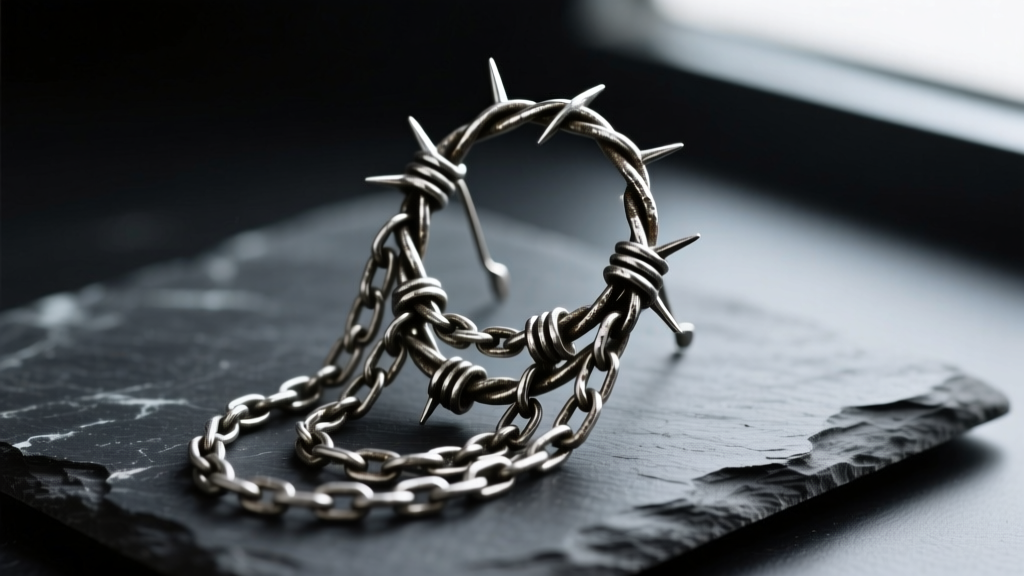
The Hidden Structural Dangers of Grunge Jewelry
The resurgence of grunge aesthetics—blending 90s riot grrrl staples with modern 2026 cyber-grunge elements—has brought heavy chains, oversized safety pins, and distressed metal spikes back into mainstream rotation. However, the chaotic, DIY-inspired nature of grunge earrings often masks severe structural flaws. Unlike precision-engineered fine jewelry, many grunge pieces prioritize aggressive silhouettes over ergonomic weight distribution. This leads to a host of physical problems: torn earlobes, severe contact dermatitis, and constant snagging on clothing.
As a domain expert in alternative jewelry mechanics, I have seen countless lobes ruined by the "cheese cutter effect" and skin damaged by cheap pot metals masquerading as oxidized silver. This troubleshooting guide provides actionable, technical solutions to fix, reinforce, and safely wear heavy grunge earrings without sacrificing the distressed aesthetic.
Troubleshooting the "Cheese Cutter" Effect on Earlobes
The most common injury associated with heavy grunge dangles and chain earrings is the "cheese cutter effect." This occurs when a thin wire hook supports a disproportionately heavy focal piece (like a solid metal spike or a cluster of chain links). Gravity pulls the heavy focal piece downward, forcing the thin wire to slice through the delicate tissue of the earlobe, causing migration, thinning, and eventually a complete tear.
Gauge Sizing and Weight Thresholds
Standard commercial earrings typically use 22-gauge (0.64mm) or 20-gauge (0.81mm) wire. For grunge pieces exceeding 15 grams in weight, these gauges are structurally unsafe. To prevent tissue damage, you must upgrade the ear wire.
- Under 10 grams: 18-gauge (1.02mm) wire is sufficient.
- 10 to 25 grams: Upgrade to 16-gauge (1.29mm) wire.
- Over 25 grams: Use 14-gauge (1.63mm) wire or switch to a specialized ear scaffold.
The Fix: Carefully unloop the heavy grunge charm from the cheap factory wire using chain-nose pliers. Replace it with an 18G or 16G ASTM F138 implant-grade titanium fishhook wire. Titanium is crucial here; it possesses a higher tensile strength than standard sterling silver, meaning it will not bend or warp under the swinging momentum of heavy chains. If your piercing hole is too small for a 16G wire, use a silicone earring support patch (like LobeWonder) behind the ear to distribute the downward pressure across a wider surface area of the lobe.
Solving the Safety Pin Snagging Nightmare
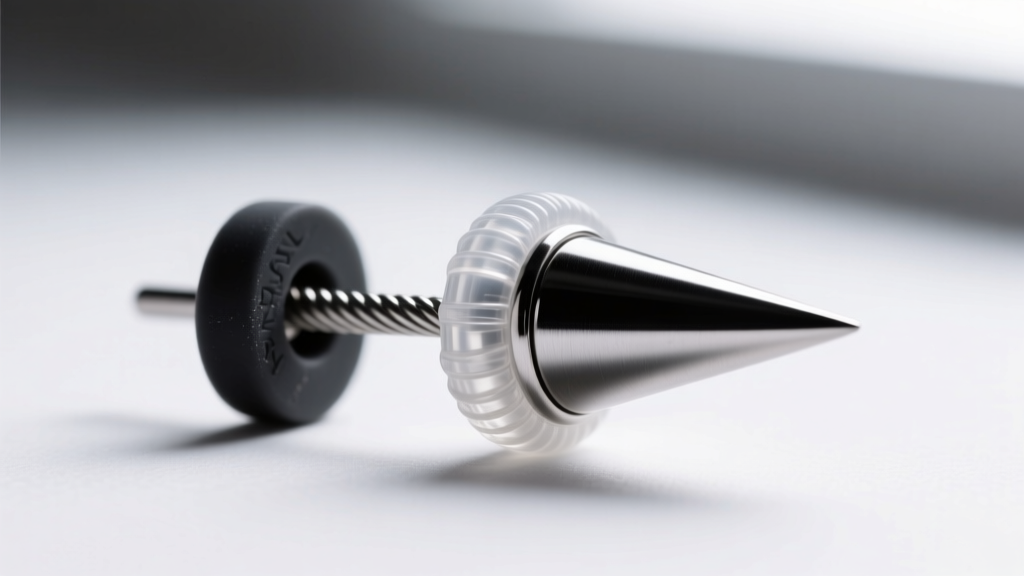
The safety pin is the quintessential grunge earring motif. Yet, wearing them as earrings presents two massive functional failures: the hinge barrel loosens over time, and the clasp easily pops open when caught on a hoodie or hair, leading to lost jewelry or scratched skin.
Tightening a Loose Hinge Barrel
When a safety pin earring droops and fails to sit flush against the clasp, the hinge barrel has expanded. Do not try to bend the pin wire itself. Instead, use flat-nose pliers to gently squeeze the metal barrel of the hinge. Apply pressure in quarter-turn increments until the tension returns to the pin mechanism.
Locking the Clasp Permanently vs. Temporarily
If you are tired of the pin slipping out of the catch, you have two troubleshooting options based on how you wear the piece:
- The Temporary Friction Lock: Thread a 2mm EPDM rubber O-ring onto the sharp point of the pin before snapping it into the clasp. The rubber O-ring acts as a physical wedge, preventing the clasp from slipping off the point while absorbing impact shocks if the earring gets snagged.
- The Permanent Adhesive Lock: If the earring is strictly for display and you do not need to open the pin, apply a micro-drop of E6000 flexible jewelry adhesive to the inside of the clasp catch before snapping it shut. E6000 dries into a shock-absorbing rubber, meaning it will hold the pin securely but can be peeled out with a needle if you ever need to reverse the modification.
Metal Allergies vs. Intentional Oxidation
Grunge jewelry relies heavily on dark, blackened, or rusted aesthetics. However, consumers frequently confuse intentional chemical patinas with the toxic off-gassing and oxidation of cheap base metals. If your grunge earrings are leaving a green or black smudge on your neck, or causing an itchy, weeping rash on your lobes, you are dealing with a metallurgy failure.
According to the American Academy of Dermatology, nickel is the leading cause of contact dermatitis in jewelry. Many mass-produced "mall goth" or fast-fashion grunge earrings are cast from zinc alloys heavily plated with nickel and copper to achieve a dark, gunmetal look. When your skin's natural acids break through this micro-thin plating, the copper oxidizes (turning skin green) and the nickel triggers an allergic response.
| Material | Pros for Grunge Style | Cons & Risks | Verdict |
|---|---|---|---|
| Zinc Alloy / Pot Metal | Extremely cheap; easily cast into complex barbed wire or skull shapes. | High nickel content; rapid degradation; turns skin green/black. | Avoid entirely for pierced ears. |
| Oxidized .925 Sterling Silver | Authentic blackened patina; hypoallergenic; high resale value. | Expensive; patina can rub off on light clothing. | Best for heirloom-quality grunge pieces. |
| PVD-Coated 316L Steel | Permanent black coating; highly scratch-resistant; very strong. | Cannot be easily resized or re-wired by hand. | Excellent for heavy chain links and spikes. |
| Anodized Niobium | 100% hypoallergenic; can be anodized to a deep, dark gunmetal black. | Softer metal; heavy gauges can bend if snagged. | The ultimate choice for safety pins and ear wires. |
The Fix for Cheap Alloys: If you already own zinc alloy grunge earrings and cannot replace them, you must create a biocompatible barrier. Coat the earring posts and any metal touching the skin with a hydrolyzed protein nail barrier (often sold as blister bandages for nickel allergies). For a more permanent seal, use a clear coat of polyurethane-based jewelry sealant. Note that the Association of Professional Piercers (APP) strongly advises against wearing uncoated base metals in fresh or irritated piercings, as the porous nature of cheap alloys harbors bacteria.
Distributing Weight in Asymmetrical Ear Curations
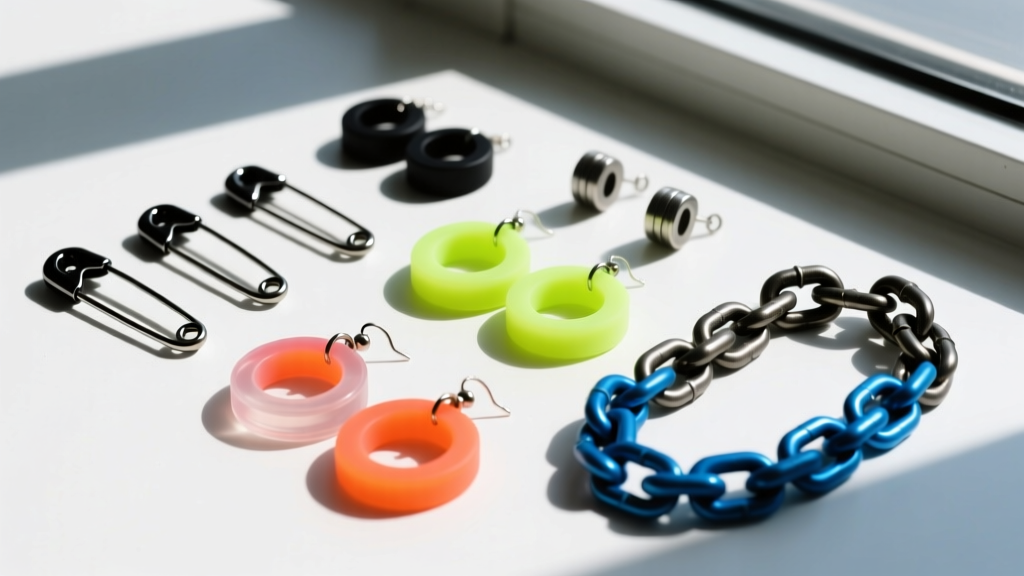
A hallmark of the modern grunge aesthetic is asymmetry—wearing a massive, multi-chain ear cuff on one side and a simple stud on the other. The problem arises when heavy ear cuffs rely solely on friction against the cartilage to stay in place. The weight of the dangling chains pulls the cuff downward, causing it to slide off or painfully pinch the helix.
Troubleshooting Ear Cuff Slippage: Do not rely on squeezing the cuff tighter, as this will cut off circulation to the cartilage and cause necrosis or severe soreness. Instead, utilize a chain stabilizer. Attach a lightweight, 2mm curb chain from the top of the ear cuff to a secondary piercing (like a mid-helix stud or a lobe earring). This transfers the gravitational load from the fragile outer cartilage rim to the fully healed, structurally sound lobe piercing. You can oxidize the stabilizing chain with a liver of sulfur solution so it seamlessly blends into the grunge aesthetic while providing vital structural support.
Cleaning Grunge Patina Without Ruining It
Grunge earrings require a delicate approach to cleaning. Standard silver dips and ultrasonic cleaners will strip away the intentional black oxidation (patina) that gives barbed wire and skull motifs their depth and gritty texture, leaving them looking like shiny, cheap costume jewelry.
The Targeted Q-Tip Method
To remove skin oils, sebum, and environmental dirt without destroying the dark recesses of your grunge earrings, use a targeted dry-brush and paste method.
- Mix a small amount of baking soda and water to form a thick, abrasive paste.
- Apply the paste strictly to the raised high points of the earring using a cotton swab or a soft-bristled toothbrush.
- Avoid the recessed, blackened areas entirely.
- Wipe away the paste with a damp microfiber cloth, then dry immediately with a hair dryer on a cool setting to prevent water spots.
By maintaining the structural integrity of the wires, locking the hinges of your safety pins, and respecting the metallurgy of dark metals, you can wear heavy, aggressive grunge earrings daily without the pain of torn lobes or allergic reactions.


