Best Budget Ear Earrings for Sensitive Piercings 2026
Discover the best budget ear earrings for sensitive piercings in 2026. We compare ASTM F136 titanium, niobium, and gold vermeil under $50.

The Hidden Costs of 'Cheap' Jewelry: Contact Dermatitis & Rejection
When shopping for everyday ear earrings, budget-conscious buyers often face a frustrating dilemma: affordable options frequently trigger allergic reactions, while hypoallergenic alternatives seem to demand luxury price tags. In 2026, the market for budget-friendly body jewelry has evolved significantly, but navigating the metallurgical realities of cheap manufacturing remains critical for anyone with sensitive piercings. The true cost of 'cheap' jewelry is rarely reflected in the initial purchase price. Instead, it manifests in the form of contact dermatitis, localized infections, and in severe cases, piercing rejection.
According to the American Academy of Dermatology, nickel allergy is the most common cause of allergic contact dermatitis, affecting roughly 18% of adults in North America. Many budget earrings found in mall kiosks and fast-fashion retailers are crafted from 316L stainless steel. While often deceptively marketed as 'surgical steel,' 316L contains between 8% and 10.5% nickel. When exposed to the slightly acidic environment of human sweat, these alloys can leach nickel ions at rates that far exceed the safe thresholds established by international health standards, leading to itchy, flaky, and swollen earlobes.
Material Grade Breakdown: What to Look For Under $50
To maximize value without sacrificing biocompatibility, you must look beyond marketing buzzwords and focus on exact metallurgical grades. Here is the definitive breakdown of budget-safe materials for sensitive ear earrings.
ASTM F136 Implant-Grade Titanium
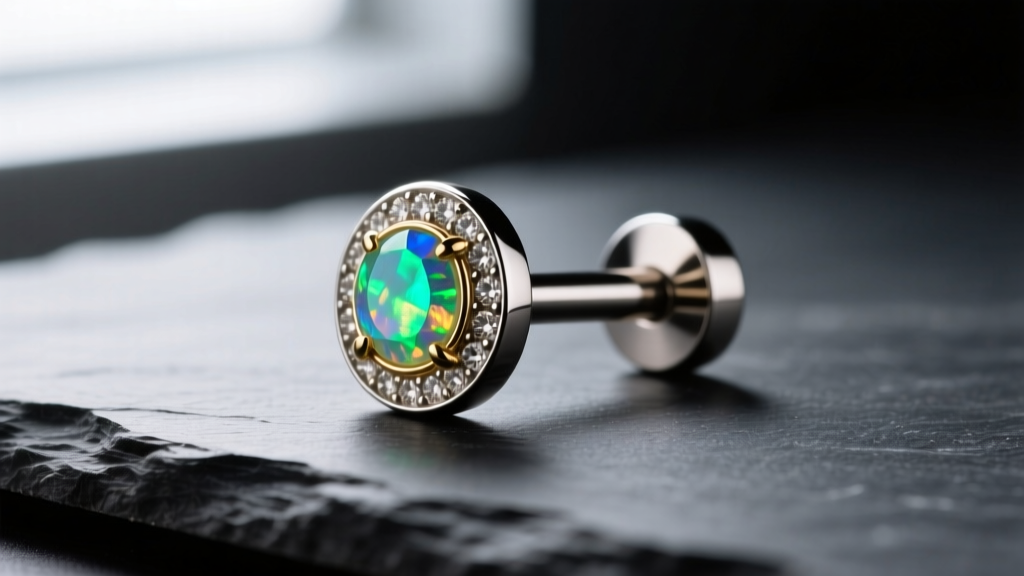
ASTM F136 (Ti-6Al-4V ELI) is the gold standard for sensitive and healing piercings. Unlike commercial pure titanium (ASTM F67), F136 is an alloy that contains absolutely zero nickel. It is lightweight, highly corrosion-resistant, and can be polished to a mirror finish that minimizes bacterial adhesion. In the budget sector, brands like Intrinsic Body and BodyArtForms offer basic F136 titanium flat-back labrets and threaded ends ranging from $12 to $28. This is a massive value proposition compared to the $60+ price tags often seen in high-end piercing studios for the exact same raw material.
Niobium & 14k Gold Vermeil
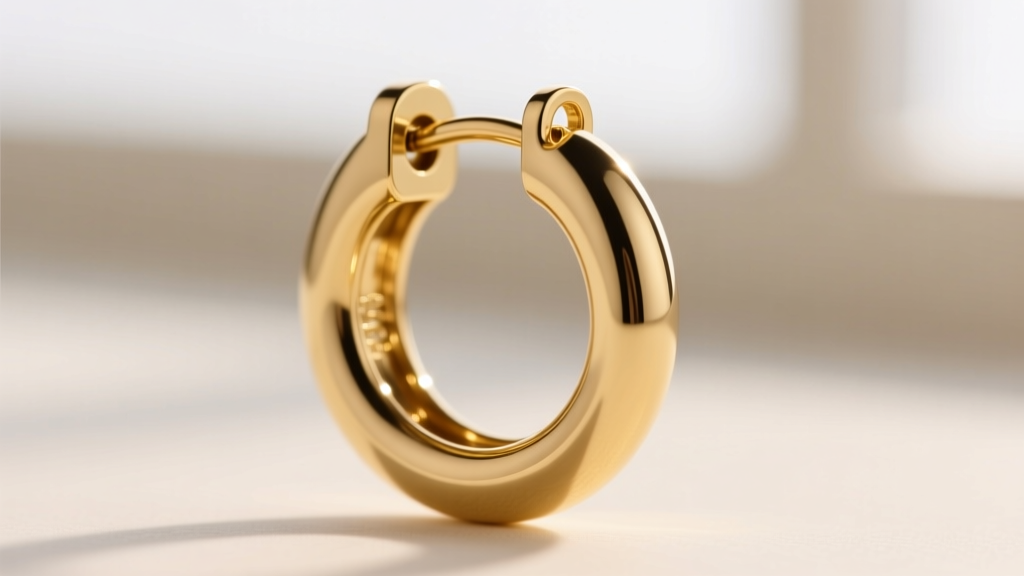
Niobium (Element 41) is an unalloyed, highly biocompatible reactive metal. It is naturally hypoallergenic and can be anodized using electricity to create a spectrum of vibrant colors without the use of toxic paints or platings. Seamless niobium rings are an exceptional budget choice for cartilage and lobe hoops, typically costing between $8 and $15.
If you prefer the look of gold, avoid 'gold-plated' brass or copper bases. Instead, seek out 14k Gold Vermeil. By legal definition, vermeil must consist of a sterling silver base coated with at least 2.5 microns of 10k or higher gold. While not suitable for fresh piercings or 24/7 wear (as the silver base can tarnish when exposed to moisture), vermeil offers a luxurious aesthetic for healed lobes at a fraction of the cost of solid 14k gold.
Value Comparison Chart: Budget Brands vs. Mall Kiosks
To illustrate where your money is best spent, we have compiled a 2026 value assessment comparing specialized budget retailers against traditional brick-and-mortar mall kiosks.
| Retailer / Brand | Primary Material Standard | Price Range (2026) | Best Application | Primary Weakness |
|---|---|---|---|---|
| Intrinsic Body | ASTM F136 Titanium | $12 - $28 | Fresh & healed lobes | Limited decorative end options |
| BodyArtForms | Niobium / F136 | $8 - $22 | Cartilage & lobes | Shipping delays & basic UI |
| Studex (System 75) | Medical Grade Steel | $15 - $30 | Standard healed piercings | Contains trace nickel |
| Mall Kiosk Brands | 316L Steel / Brass Alloy | $10 - $40 | Non-pierced clip-ons only | High nickel leaching risk |
| JAXXON / Mejuri | 14k Gold Vermeil | $35 - $55 | Fashion / Healed only | Plating wears in 6-12 mos |
Expert Insight: The Association of Professional Piercers (APP) explicitly warns against using 316L stainless steel for fresh piercings or highly sensitive tissue due to its nickel content. Always verify that the retailer explicitly states 'ASTM F136' rather than just 'titanium,' as commercial grades may contain trace contaminants.
Gauge Sizing & Post Thickness: Avoiding the 'Cheese Cutter' Effect
One of the most overlooked aspects of budget ear earrings is the wire gauge (thickness). Standard fashion earrings are often manufactured at 22-gauge (0.64mm) or 20-gauge (0.81mm) to save on material costs. While fine for lightweight studs, using 22G or 20G wire for heavy dangles, large hoops, or cartilage jewelry creates a mechanical failure mode known as the 'cheese cutter effect.'
When a thin wire bears excessive weight or experiences frequent snagging, it exerts concentrated pressure on the fistula (the piercing channel). Over time, this pressure causes the jewelry to slowly migrate and slice through the tissue, leading to irreversible scarring and tearing. To prevent this, budget shoppers should prioritize 18-gauge (1.02mm) or 16-gauge (1.29mm) posts for any earring that features a drop element or a hoop diameter larger than 12mm. Spending an extra $4 for a thicker, structurally sound post will save you hundreds of dollars in reconstructive piercing procedures down the line.
Backing Mechanisms & Failure Modes
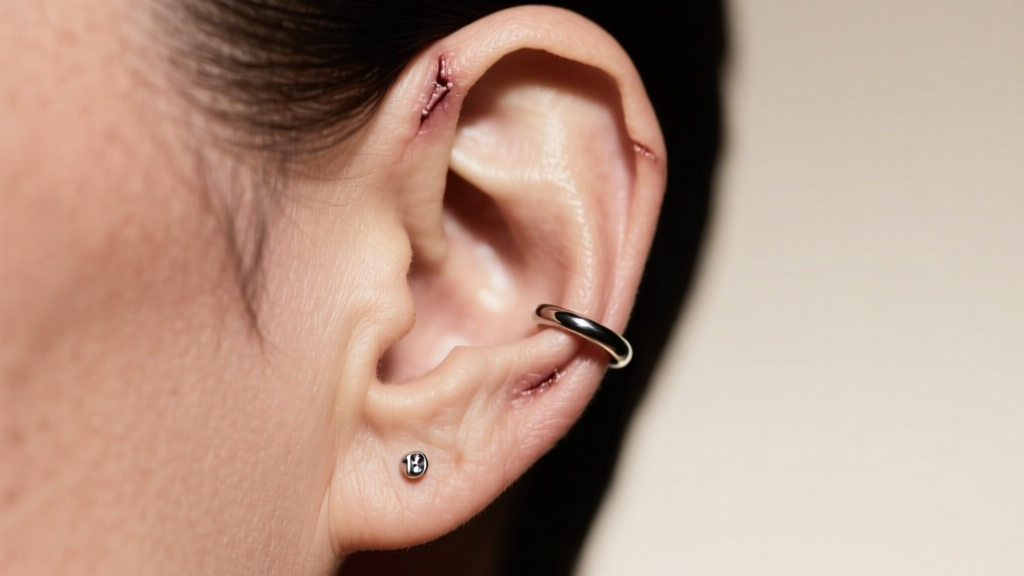
The structural integrity of an earring is only as strong as its backing mechanism. Budget manufacturers overwhelmingly rely on the traditional 'butterfly' or friction back. From a hygienic and mechanical standpoint, friction backs are deeply flawed for sensitive ears.
- Bacterial Traps: The intricate crevices of a butterfly back trap sebum, dead skin cells, and hair products, creating a breeding ground for staphylococcus bacteria directly against the healing exit wound.
- Pressure Necrosis: If pushed on too tightly, the metal wings compress the tissue against the earlobe, restricting blood flow and causing pressure necrosis (tissue death).
- Loss Rate: Friction backs rely on the tension of cheap stamped metal, which fatigues and loosens over time, leading to lost earrings.
The Budget-Friendly Solution: Transition to threadless (press-fit) flat-back labrets. Brands like NeoMetal and Intrinsic Body utilize a mechanism where a slightly bent pin is inserted into a hollow post, creating tension that holds the jewelry securely in place. Not only do they eliminate the bacterial trap of a butterfly back, but the flat disc sits flush against the ear, making them incredibly comfortable for sleeping. A basic titanium threadless setup can be acquired for under $25, offering vastly superior security and hygiene compared to traditional friction-back studs.
Maintenance of PVD and Anodized Finishes
If you are buying budget titanium earrings that feature colored finishes, you will likely encounter PVD (Physical Vapor Deposition) or anodization. PVD is a vacuum-coating process that bonds a microscopic layer of titanium nitride or gold to the base metal. High-quality PVD coatings measure between 0.3 and 1.5 microns thick and are highly resistant to scratching and tarnishing. However, budget manufacturers may use flash-plating (electroplating) instead, which is less than 0.1 microns thick and will wear off within weeks of contact with skin oils.
To maintain anodized niobium or PVD titanium, clean your ear earrings using only sterile saline or a mild, fragrance-free glycerin soap. Avoid alcohol, hydrogen peroxide, and ultrasonic cleaners, as harsh chemicals can strip the oxide layer responsible for the metal's color and compromise the PVD bond.
Final Verdict: Maximizing Your Earring Budget
Achieving a high-quality, hypoallergenic jewelry wardrobe in 2026 does not require a luxury budget. By avoiding fast-fashion alloys, prioritizing ASTM F136 titanium and pure niobium, and upgrading to 18-gauge threadless flat-backs, you can curate a collection of safe, comfortable ear earrings for under $30 per piece. True value in body jewelry is defined by biocompatibility, structural gauge thickness, and secure backing mechanisms—invest in these three pillars, and your piercings will thrive for decades.


