Budget Earring Making Ideas: 2026 Cost & Value Guide
Discover high-ROI earring making ideas for 2026. We break down material costs, gauge sizes, and sourcing strategies to maximize your DIY jewelry value.

The Economics of DIY: Why Material Sourcing Dictates Value
In 2026, the search for profitable and budget-friendly earring making ideas requires a deep understanding of metallurgy and supply chain economics. With precious metal markets experiencing continued volatility, hobbyists and small-scale jewelry designers can no longer rely on traditional sterling silver as a default baseline. The true value of DIY jewelry isn't just in the handmade aesthetic; it is found in the margin between raw material costs and the perceived retail value of the finished piece. To maximize your budget, you must pivot toward alternative reactive metals, gold-filled alloys, and strategic gemstone sourcing.
According to industry benchmarks from Rio Grande, the cost of silver has pushed many entry-level makers toward high-performance alternatives like Argentium silver and niobium. These materials offer superior tarnish resistance and hypoallergenic properties at a fraction of the cost per troy ounce compared to traditional precious metals. When evaluating earring making ideas from a financial perspective, the goal is to minimize the volume of metal used while maximizing the visual footprint and structural integrity of the design.
Base Metals vs. Precious: A 2026 Cost Breakdown
Understanding the exact cost per ounce and the fabrication characteristics of your base wire and sheet metal is the first step in budget assessment. Below is a comparative matrix of the most viable metals for budget-conscious earring fabrication this year.
| Material | Grade / Type | Approx. Cost per Oz (2026) | Tarnish Rate | Best Earring Application |
|---|---|---|---|---|
| Niobium | 99.9% Pure Reactive | $14.00 - $18.00 | None (Anodizes) | Hypoallergenic ear wires, briolette wraps |
| Argentium Silver | 960 / 935 Grade | $42.00 - $48.00 | Extremely Low | High-end fused rings, premium studs |
| Gold-Filled | 14/20 GF (Yellow) | $32.00 - $38.00 | Very Low | Geometric stamped dangles, hoops |
| Enamel-Coated Copper | 24-Gauge Craft Wire | $3.00 - $5.00 | N/A (Coated) | Colorful wire-wrapped cages, coils |
High-ROI Earring Making Ideas for Budget-Conscious Crafters
Not all earring making ideas yield the same return on investment. Complex casting or micro-pave setting requires expensive equipment and high material waste. Instead, the highest ROI comes from cold-connection techniques, wire wrapping, and metal stamping, which require minimal tooling and generate almost zero scrap metal waste.
Idea 1: Niobium Wire-Wrapped Briolettes (Hypoallergenic & Cheap)
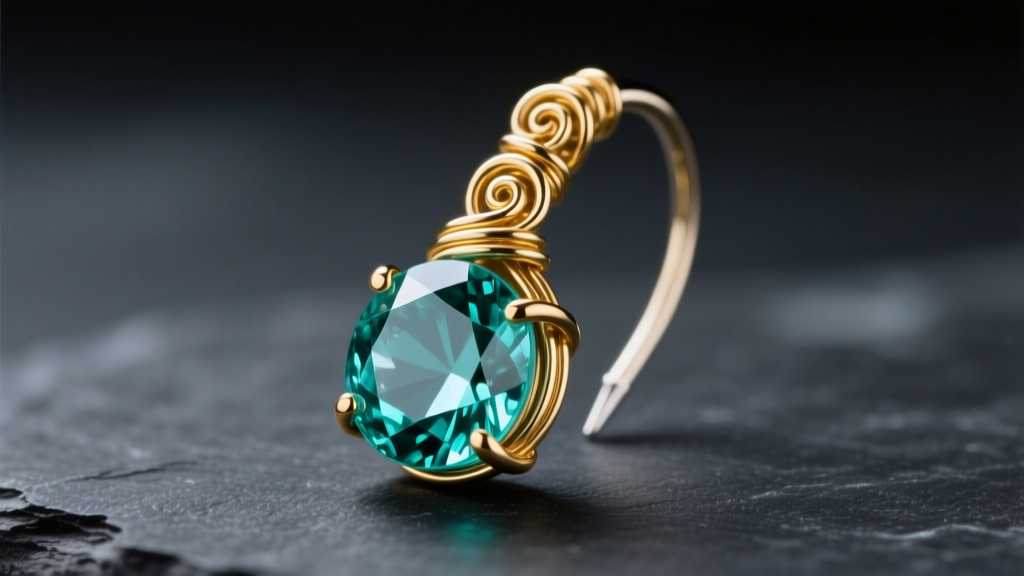
Niobium is a reactive metal that is completely nickel-free and lead-free, making it the ultimate budget solution for customers with sensitive ears. By using 24-gauge (0.51mm) niobium wire to wrap 8mm to 12mm faceted gemstone briolettes, you can create high-end looking dangles for under $4.00 in raw materials per pair. The real value-add—and what allows you to price these at a premium—is anodizing. By applying a simple 9-volt battery and a saltwater bath, you can instantly change the color of the niobium wire to vibrant purples, blues, or golds without using expensive plating solutions. This technique elevates a basic wire wrap into a custom, high-perceived-value art piece.
Idea 2: 14/20 Gold-Filled Geometric Stamped Studs
For makers looking to produce quick, scalable inventory, metal stamping on 24-gauge 14/20 gold-filled sheet metal is incredibly lucrative. A single 6x6 inch sheet of 24-gauge gold-filled metal costs roughly $45 but can yield over 150 pairs of small geometric studs (such as 10mm hexagons or 12mm circles). By utilizing a manual bench shear or a jewelry saw with a 2/0 blade, you minimize waste. The edges can be quickly sanded with 3M radial bristle discs, and a simple stamped mandala or botanical pattern adds the 'handcrafted' premium. Soldering a 20-gauge (0.81mm) gold-filled post to the back using easy solder completes the piece. The material cost per pair hovers around $0.35, while the retail value for gold-filled artisan studs easily commands $35 to $50.
Hidden Costs: Findings, Gauges, and Tool Depreciation
When calculating the budget for your earring making ideas, beginners often forget the compounding cost of findings and tool wear. A comprehensive value assessment must account for the following micro-expenses:
- Friction Backs (Earring Nuts): Standard nickel-plated brass backs cost pennies but cause allergic reactions, devaluing your brand. Upgrading to Titanium or 316L Surgical Steel friction backs costs about $0.40 to $0.80 per pair but drastically reduces return rates and customer complaints.
- Jump Rings: Cutting your own jump rings from 20-gauge wire using a flush cutter saves money, but the tool depreciation is real. A $45 pair of tungsten-carbide tipped flush cutters will last for thousands of cuts on soft copper, but will chip if used on hardened steel or memory wire. Factor in a $15 annual tool replacement cost for heavy producers.
- Head Pins: Pre-made 2-inch, 22-gauge (0.64mm) head pins are convenient but carry a 300% markup compared to buying dead-soft wire in bulk and creating your own paddle ends using a butane torch and a charcoal block.
Retail vs. DIY Value Assessment: When to Make and When to Buy
There is a distinct threshold where DIY earring making loses its financial advantage. According to fabrication insights from Ganoksin, processes that require extensive labor hours or specialized casting equipment often result in a negative ROI for solo artisans.
'The moment a design requires lost-wax casting, 3D resin printing, or intricate prong setting for calibrated stones under 2mm, the solo maker's hourly labor rate destroys the profit margin. Budget earring making ideas should prioritize sheet metal fabrication, cold connections, and wire manipulation.'
If your design relies on a highly specific, mass-produced cast component (like a detailed animal motif or a complex filigree frame), it is more budget-friendly to source wholesale castings from overseas manufacturers and focus your DIY labor on the assembly, stone setting, and patina application. This hybrid approach preserves your handmade authenticity while keeping base material costs rock bottom.
Sourcing Strategy: Maximizing Margins on Gemstone Beads
The focal point of many dangle and drop earring making ideas is the gemstone. Buying single, premium-grade beads from local bead shops is the fastest way to drain your crafting budget. To achieve true value, you must adopt a wholesale parcel-buying strategy.
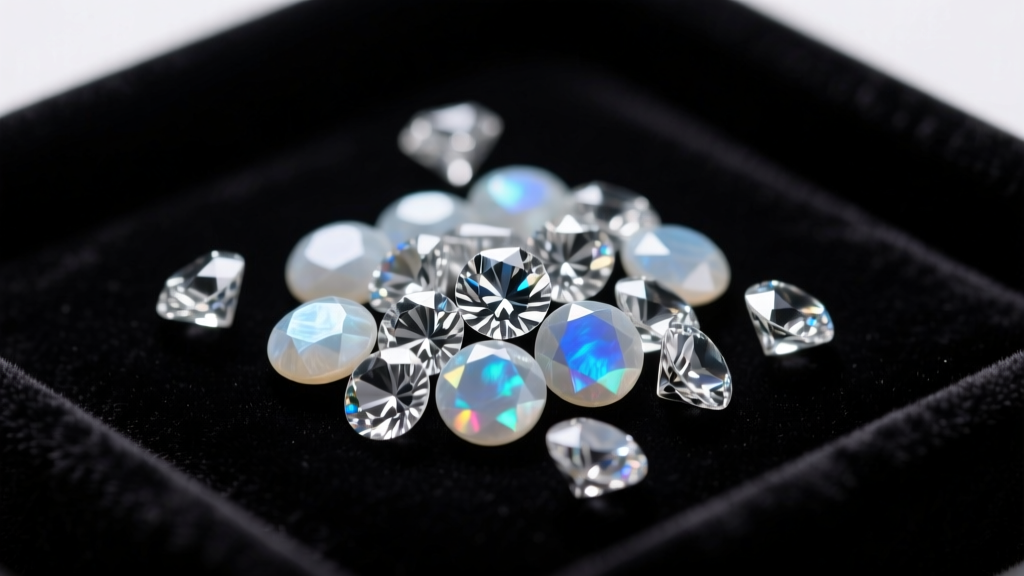
Purchasing 'mixed parcels' or 'pre-form cabochon lots' from verified lapidary suppliers on platforms like Etsy or direct from gem shows in Tucson and Bangkok allows you to acquire stones at 10% to 20% of their retail bead-store price. For example, a parcel of 50 mixed-grade 6mm rainbow moonstone cabochons might cost $60 ($1.20 each), whereas buying them individually yields a cost of $4.00 each. The trade-off is that you must design your wire-wrapping or bezel-setting techniques to accommodate slight size variances (e.g., a 5.8mm to 6.2mm range). Mastering the flexible bezel push or the adjustable wire-wrap cage is a mandatory skill for the budget-conscious maker.
Furthermore, integrating high-quality synthetic stones, such as AAA-grade cubic zirconia or lab-created sapphires, offers flawless clarity and Mohs hardness (8.5-9.0) at a fraction of the cost of earth-mined equivalents. Consumers in 2026 are increasingly eco-conscious and value-driven, making lab-grown stones a highly marketable, budget-friendly choice for your earring lines.
Final Verdict: Building a Profitable DIY Earring Portfolio
Executing successful earring making ideas on a budget is less about finding cheap, low-quality supplies and more about intelligent material substitution and efficient fabrication techniques. By leveraging reactive metals like niobium, utilizing gold-filled sheet for high-visual-impact studs, and sourcing gemstones in wholesale parcels, you can build a robust, high-margin earring portfolio. Always prioritize hypoallergenic findings to protect your brand's reputation, and continuously refine your cold-connection skills to keep overhead low and perceived value exceptionally high.


