The Anatomy of the Single Statement: How to Wear One Earring
Master the asymmetrical trend. Our expert guide on wearing one earring covers gauge limits, weight distribution, and cartilage placement.

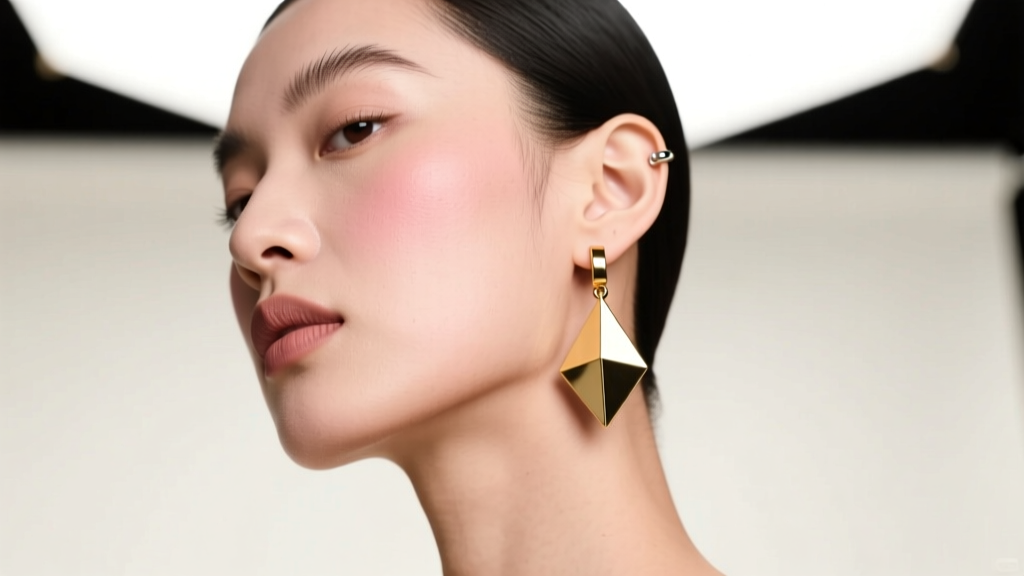
The decision to wear just one earring is rarely an accident; it is a deliberate exercise in visual asymmetry, structural biomechanics, and curated minimalism. As we navigate the 2026 landscape of avant-garde and high-fashion styling, the solitary statement piece has moved beyond a fleeting trend into a permanent fixture of modern jewelry wardrobes. However, stripping away the balancing act of bilateral jewelry means that a single piece must carry the entire visual and physical load of your profile. This requires a profound understanding of fistula torque, material density, and piercing anatomy.
When you remove the counterweight of a matching pair, the physics of how an earring interacts with your tissue changes dramatically. A heavy dangle that feels perfectly balanced when worn as a pair can become a liability when worn solo, leading to tissue fatigue, migration, or the dreaded "cheese-cutter" effect. In this expert deep dive, we deconstruct the technical requirements for safely and stylishly rocking a single earring, from metallurgical choices to precise gauge tolerances.
The Biomechanics of Asymmetry: Why Weight Matters
The primary technical challenge of wearing one earring is managing fistula torque. Torque, in this context, is the rotational force exerted on the piercing channel by the weight and movement of the jewelry. When you wear a pair, your brain and posture subtly adapt to bilateral weight distribution. When wearing a single heavy drop, the asymmetrical pull can cause unconscious postural shifts, but more importantly, it places continuous, unidirectional stress on the inferior edge of the piercing channel.
Standard lobe piercings are typically performed at 20-gauge (0.81mm) or 18-gauge (1.02mm). According to guidelines from the Association of Professional Piercers (APP), applying sustained downward pressure on a 20-gauge wire with a heavy pendant will inevitably cause the jewelry to slice through the tissue over time. If your chosen single earring exceeds 8 grams, you must ensure the post or wire is at least 16-gauge (1.29mm) or 14-gauge (1.60mm) to distribute the kinetic force across a wider surface area of the fistula.
The Pendulum Effect in Dangles
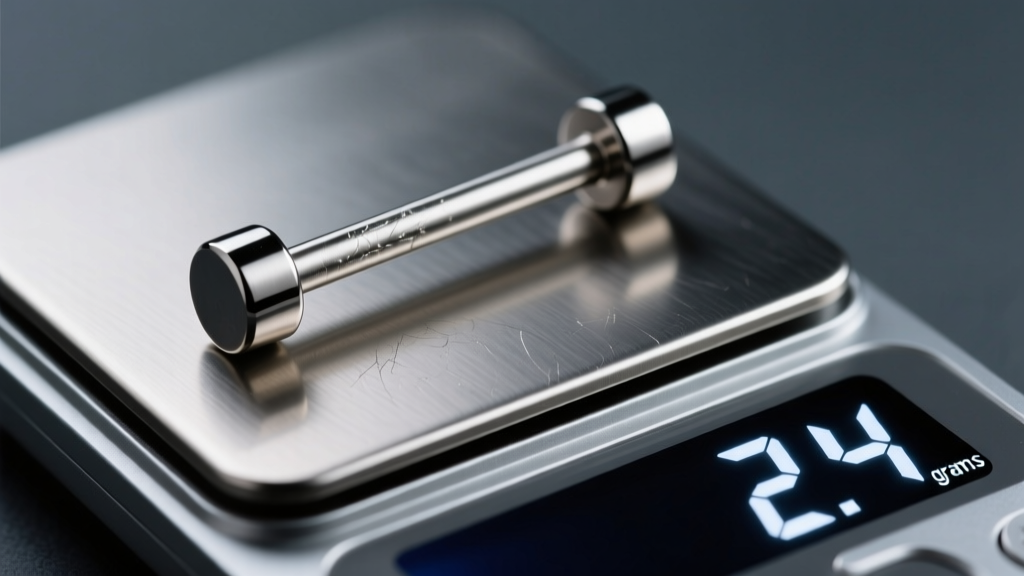
Drop and dangle earrings introduce a secondary physical force: the pendulum effect. As you walk or turn your head, a solo dangle swings, amplifying the kinetic energy transferred to the earlobe. A 10-gram static stud exerts 10 grams of downward force. A 10-gram dangle in motion can exert up to 30 grams of transient peak force on the lobe's lower margin. To mitigate this, opt for single earrings with articulated joints or flexible chains that absorb kinetic energy rather than transferring it directly to the rigid post.
Piercing Placement Matrix for Solo Statement Pieces
Not all piercings are structurally equipped to handle the visual and physical weight of a solitary statement piece. When styling one earring, the placement dictates the maximum volume and mass the tissue can safely support without the need for stretching or reinforcement.
| Piercing Placement | Recommended Gauge for Solo Heavy Wear | Maximum Safe Static Weight | Best Jewelry Style for One Earring |
|---|---|---|---|
| Standard Lobe | 16g - 14g (1.29mm - 1.60mm) | 15 grams | Articulated drops, heavy geometric studs |
| Upper Lobe / Second Hole | 18g - 16g (1.02mm - 1.29mm) | 6 grams | Threadless end clusters, small huggies |
| Flat / Conch | 16g - 14g (1.29mm - 1.60mm) | 12 grams (distributed) | Orbital rings, large rosette studs |
| Helix / Cartilage Rim | 16g (1.29mm) | 4 grams | Cuffs with piercing backing, lightweight chains |
For a truly striking single earring look, the standard lobe remains the most structurally sound canvas for heavy, oversized pieces. However, if you are utilizing a cartilage piercing (like a conch) for your solo piece, you must rely on flat-back labret posts rather than butterfly backs, which can cause severe pressure necrosis against the rigid cartilage of the inner ear when weighted asymmetrically.
Material Density and Ear Lobe Fatigue
When curating a single earring that demands attention, size often correlates with weight. To maximize visual volume while minimizing tissue fatigue, you must understand the specific gravity (density) of the metals used in fine jewelry.
- Grade 23 Titanium (Ti6Al4V ELI): With a specific gravity of 4.43 g/cm³, titanium is the undisputed champion for oversized solo earrings. It is exceptionally lightweight, highly biocompatible, and possesses the tensile strength required to hold complex, large-scale geometric shapes without bending. A 30mm titanium hoop will weigh roughly 60% less than its gold counterpart.
- 18k Yellow Gold: At a dense 15.6 g/cm³, 18k gold is heavy. If your one earring is a solid 18k gold drop, it should be hollowed out (electroformed) or skeletal in design to keep the weight under the 10-gram threshold.
- 14k White Gold: Slightly less dense than yellow gold (approx. 13.5 g/cm³) due to the alloying of zinc and nickel, but still heavy enough to cause lobe stretching over an 8-hour wear period if the design is solid.
- Niobium: Similar to titanium in biocompatibility but slightly denser (8.57 g/cm³). Excellent for anodized, brightly colored single statement pieces where titanium's natural grey hue is undesirable.
By selecting ASTM F136 compliant titanium or electroformed gold, you can achieve the massive, sculptural silhouettes required to make a single earring look intentional rather than forgotten.
Curating the "Empty Ear": Balancing the Unpierced Side
The most common failure in asymmetrical styling is allowing the unpierced side to look accidentally bare rather than intentionally curated. The goal of wearing one earring is to create a focal point, not a void. To achieve high-fashion balance without compromising the tissue of the non-pierced ear, utilize tension-based ear cuffs or magnetic cartilage clips on the opposite side.
"Asymmetry in jewelry is about directing the eye. If you wear a massive, dark-oxidized silver drop on the left lobe, balance the right side by sweeping the hair back and utilizing a subtle, high-polished gold cuff on the right helix. The contrast in metal color and placement creates a diagonal line of tension across the face that is far more dynamic than bilateral symmetry."
— Master Piercer & Jewelry Architect
Furthermore, consider the neckline of your garment. A single earring pairs best with asymmetrical necklines, off-the-shoulder cuts, or deep V-necks that echo the unbalanced geometry of the jewelry. High collars and turtlenecks will visually crowd a single statement drop, causing it to tangle and increasing the risk of accidental snagging and lobe tearing.
Troubleshooting Common Single-Earring Failures
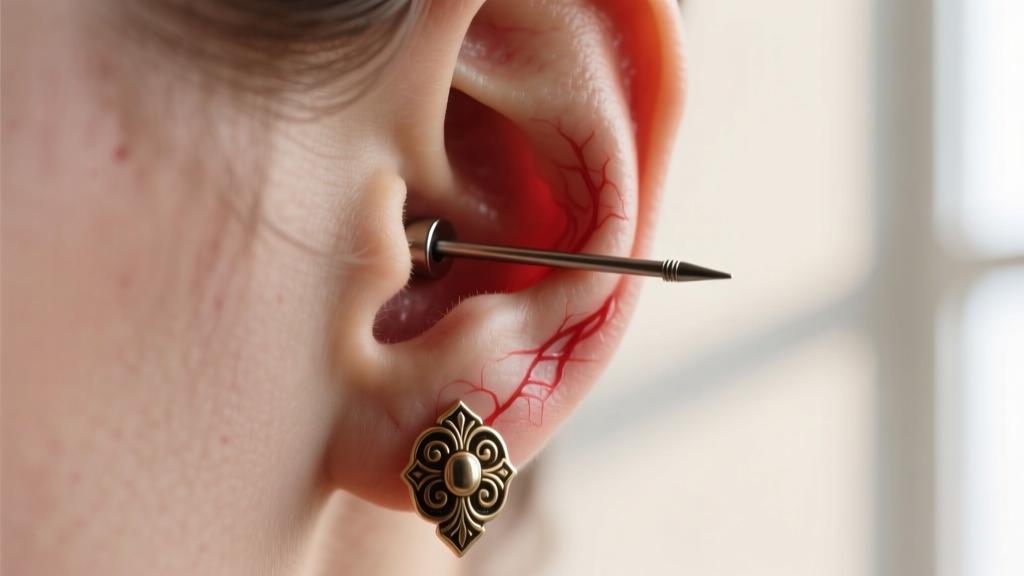
Even with careful planning, wearing a single heavy earring can lead to specific dermatological and structural issues. Here is how to identify and resolve them:
1. The Cheese-Cutter Effect (Tissue Necrosis)
The Problem: The jewelry slowly migrates downward, thinning the tissue between the piercing and the bottom edge of the lobe. The Fix: Immediately remove the piece. Switch to a 14-gauge glass or titanium retainer to allow the fistula to rest and thicken. Never wear heavy drops on standard 20-gauge butterfly-back wires.
2. Contact Dermatitis from Heavy Alloys
The Problem: Heavy fashion jewelry often uses brass or copper bases plated with thin layers of silver or gold. The weight of the single earring causes increased friction, wearing away the plating and exposing the skin to nickel or copper, leading to weeping or scaling. The American Academy of Dermatology frequently notes that nickel allergy is the leading cause of jewelry-induced contact dermatitis. The Fix: Invest in solid, internally threaded, or threadless jewelry made from implant-grade materials. Avoid plated fashion jewelry entirely for heavy, solo-wear pieces.
3. Snagging and Avulsion
The Problem: Large, singular statement pieces act as magnets for hair, scarves, and clothing. A sudden snag on a heavy, rigid earring can result in a complete lobe avulsion (tearing completely through the skin). The Fix: Opt for designs with smooth, continuous contours. Avoid sharp prongs, exposed marquis-cut gemstones, or intricate filigree that can catch on textiles. If you must wear a highly textured piece, ensure the clutch or backing is a secure, flat-back labret screw rather than a friction push-back.
Final Thoughts on Asymmetrical Mastery
Wearing one earring is a bold declaration of personal style, but it demands respect for the anatomy of the ear. By prioritizing proper gauge thickness, understanding the specific gravity of your chosen metals, and carefully curating the negative space around your face, you can elevate the single earring from a simple accessory to a masterclass in structural aesthetics. Treat your piercings as architectural foundations, and your solo statement piece will stand the test of time, gravity, and trend cycles.


