How to Repair and Clean Pearl Chandelier Earrings
Learn expert troubleshooting for pearl chandelier earrings. Discover how to fix bent wires, reattach loose pearls, and safely clean delicate nacre.

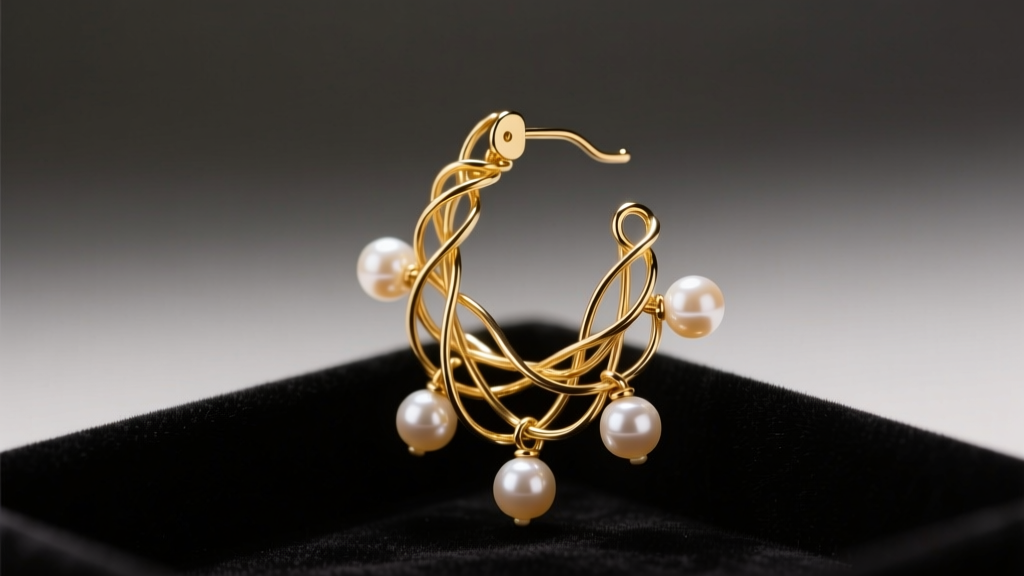
The Anatomy of Fragility: Why Pearl Chandelier Earrings Break
Pearl chandelier earrings are undeniably elegant, but their intricate architecture makes them inherently fragile. Unlike simple studs or cast hoops, chandelier designs rely on a complex network of jump rings, thin wirework, and delicate organic gemstones. The average chandelier earring features between 15 and 30 individual connection points. When you factor in the organic nature of pearls—which rank a mere 2.5 to 4.5 on the Mohs hardness scale—it becomes clear why these pieces require specialized troubleshooting and repair protocols.
The most common failure points in pearl chandelier earrings are not the pearls themselves, but the structural metalwork and the adhesive bonds holding half-drilled pearls to their cup posts. In 2026, with the rise of ultra-lightweight gold-filled and vermeil components, wire deformation and adhesive degradation remain the primary culprits behind damaged statement earrings. Understanding the mechanics of these failures is the first step toward professional-grade restoration.
Diagnostic Matrix: Identifying Your Earring's Failure Point
Before attempting any repair, you must accurately diagnose the issue. Using the wrong tool or adhesive can permanently ruin the nacre or snap work-hardened wire. Consult the troubleshooting matrix below to identify your specific problem and gather the correct materials.
| Symptom | Root Cause | Required Tool / Material |
|---|---|---|
| Pearl spins loosely on its post | Adhesive degradation from skin oils or heat | Jeweler's Epoxy 330, toothpick, isopropyl alcohol |
| Wire components tangled or bent | Improper storage or mechanical stress | Nylon-jaw pliers, brass brush |
| Dull, chalky pearl surface | Chemical etching from perfumes or acids | Microfiber cloth, diluted castile soap |
| Earring falls off ear constantly | Warped French ear wire or stretched loop | Chain-nose pliers, replacement 20g ear wires |
Advanced Repair Protocols
Fixing chandelier earrings requires patience and precision. Never rush the process, as the delicate nature of the components demands a gentle touch and specialized chemistry.
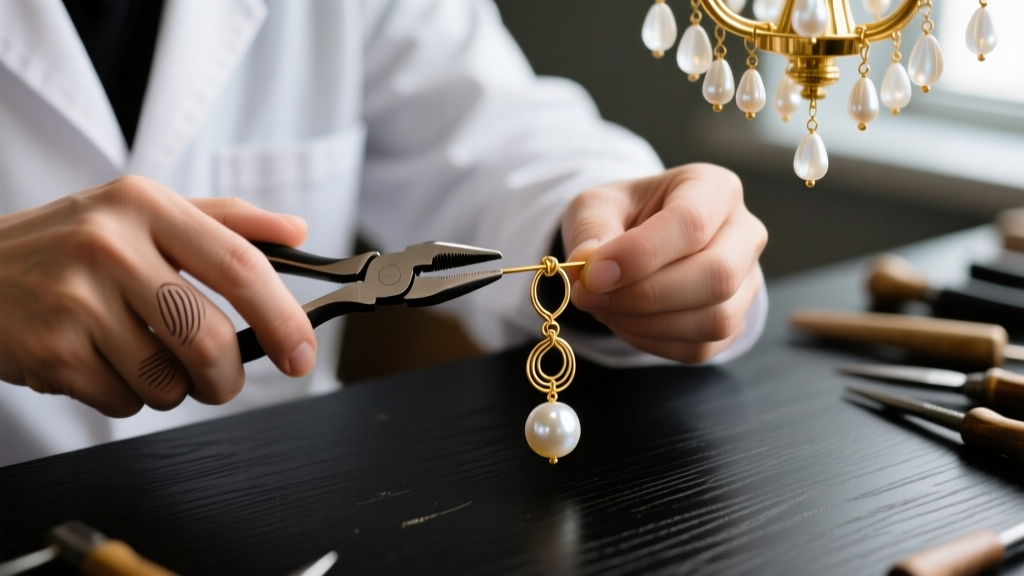
Re-Setting Loose Pearls: The Adhesive Conundrum
Most pearls on chandelier earrings are half-drilled and mounted onto a metal cup post using adhesive. A common and disastrous mistake is using cyanoacrylate (Super Glue). As cyanoacrylate cures, it releases fumes that create a permanent, cloudy white haze over the pearl's delicate nacre. Furthermore, it dries brittle, meaning the pearl will inevitably pop off again upon impact.
The Solution: Use a flexible, two-part jeweler's epoxy, such as Devcon 5 Minute Epoxy or Jewelers' Epoxy 330.
- Carefully twist and pull the loose pearl off the post. If it resists, apply a tiny drop of acetone to the base (avoiding the pearl itself) to soften the old glue.
- Clean the metal post with a cotton swab dipped in 90% isopropyl alcohol to remove all skin oils and old adhesive residue.
- Mix a pinpoint amount of two-part epoxy. Using the tip of a wooden toothpick, apply a microscopic bead of epoxy to the metal post.
- Slide the pearl onto the post, twisting slightly to distribute the epoxy inside the drill hole. Wipe away any squeeze-out immediately with a dry cloth.
- Let the earring rest horizontally in a soft clay block for 24 hours to achieve a full cure.
Untangling and Straightening Work-Hardened Wire
Chandelier components are typically crafted from 24-gauge or 26-gauge wire. When this thin wire is bent repeatedly, it undergoes 'work hardening,' becoming brittle and prone to snapping. Never use standard steel jewelry pliers to untangle these wires; the hardened steel teeth will gouge the gold or silver plating and create stress fractures.
Instead, utilize nylon-jaw pliers. The soft nylon grips the wire firmly without marring the surface. Gently massage the kinks out by applying pressure in small, incremental bends rather than forcing the wire completely straight in one motion. If a segment has become entirely work-hardened and rigid, do not attempt to bend it further; use flush cutters to remove the damaged link and replace it with a new 24-gauge jump ring.
Replacing Broken French Ear Wires
The ear wire takes the brunt of the mechanical stress. If the loop connecting the ear wire to the chandelier body has stretched open, the earring will constantly fall out. To replace it, you must open the connection loop on the chandelier body laterally (twisting it side-to-side like a door hinge), never pull it apart vertically, which will warp the intricate wirework below. Thread on a new 20-gauge French ear wire and close the loop securely, ensuring the two ends meet flush without overlapping.
The Chemistry of Pearl Cleaning: Restoring Luster Safely
Pearls are organic gems composed of aragonite (calcium carbonate) and conchiolin (a complex protein). This composition makes them highly sensitive to pH extremes. Ultrasonic cleaners, which are excellent for diamond and sapphire chandelier earrings, will violently shatter pearls or strip their nacre in seconds. Similarly, steam cleaners will cause the moisture inside the pearl to expand, leading to internal cracking.
According to the Gemological Institute of America (GIA), pearls should only be cleaned using a damp, soft cloth. For heavy buildup of cosmetics or sebum:
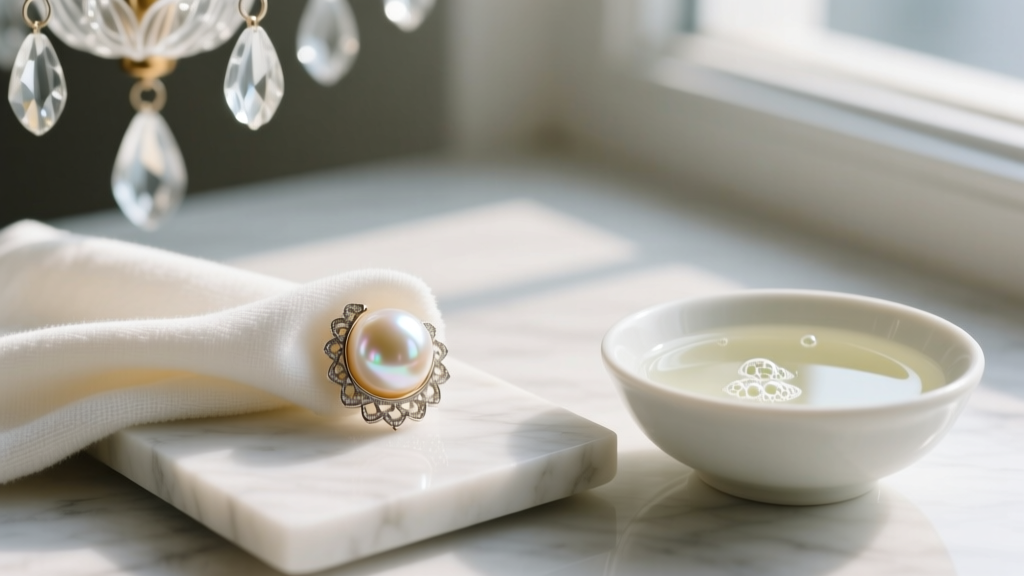
- Mix a few drops of pH-neutral, unscented liquid castile soap into a bowl of distilled water.
- Dampen a microfiber cloth in the solution—do not submerge the earrings, as water can seep into the drill holes and rot the internal adhesive or metal post.
- Gently wipe each pearl individually, supporting the wirework from behind to prevent bending.
- Buff dry immediately with a separate, clean microfiber cloth.
Long-Term Storage and Preventative Maintenance
The majority of troubleshooting scenarios can be avoided with proper storage. Chandelier earrings should never be tossed into a communal jewelry box. The dangling wires will inevitably hook onto jump rings or other chains, creating a tangled nightmare that risks snapping work-hardened metal.
Invest in individual, anti-tarnish flannel pouches for each pair. Store them flat in a drawer rather than hanging them, as gravity can slowly stretch the delicate jump rings over time. Finally, always adhere to the golden rule of organic gemstones: 'Last on, first off.' Put your pearl chandelier earrings on only after your perfume, hairspray, and lotions have fully dried, and remove them the moment you return home to prevent prolonged exposure to acidic skin oils.


