Best Earring Women Can Buy on a Budget: 2026 Value Guide
Discover the best budget earring women can invest in for 2026. We compare titanium, vermeil, and brass to maximize style without compromising ear health.

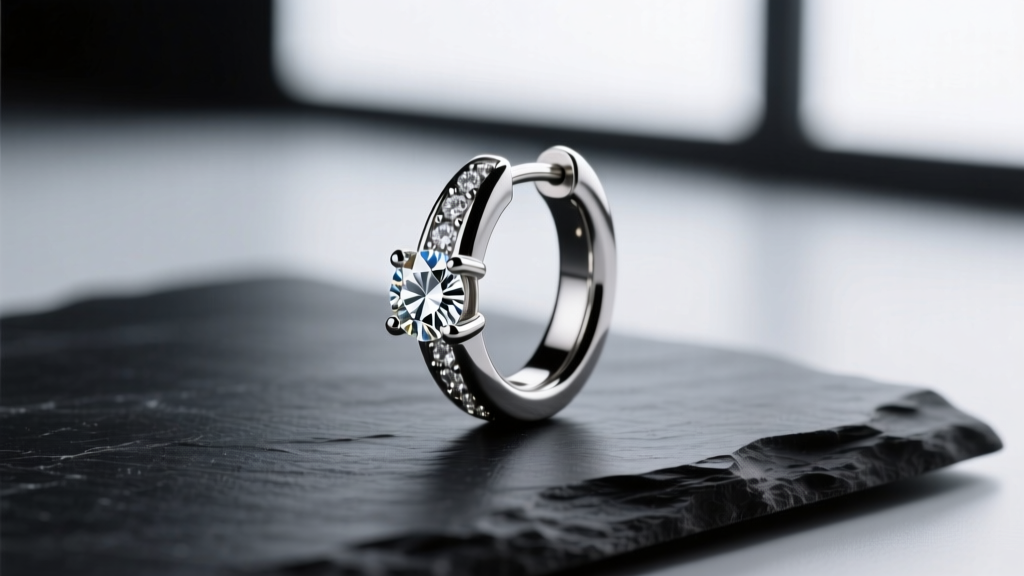
In 2026, the jewelry market is more saturated than ever, making the search for the best budget earring women can wear daily both exciting and overwhelming. Inflation has pushed the baseline prices of fine jewelry upward, but innovative manufacturing techniques and direct-to-consumer brands have simultaneously created a golden era for affordable, high-quality accessories. However, 'budget' should never mean 'disposable.' The true cost of a cheap earring is often paid in ear health, manifesting as contact dermatitis, stretched lobes, or green-stained skin.
This comprehensive value assessment cuts through marketing jargon to evaluate materials, plating technologies, and hardware mechanics. Whether you are shopping for everyday studs, cartilage clickers, or statement hoops, understanding the metallurgy and structural integrity of your jewelry is the key to maximizing your investment.
The Material Hierarchy: What You Are Actually Paying For
The foundation of any earring's value lies in its core material. Budget brands often use deceptive terminology to mask inferior base metals. Here is the objective hierarchy of earring materials from a dermatological and longevity standpoint.
1. ASTM F136 Implant-Grade Titanium (The Holy Grail)
For sensitive ears and fresh piercings, implant-grade titanium is unmatched. According to the Association of Professional Piercers, ASTM F136 titanium is completely nickel-free and biocompatible. While historically reserved for high-end body jewelry, 2026 manufacturing has made titanium huggies and threadless studs accessible in the $20 to $40 range. It will never tarnish, rust, or cause allergic reactions.
2. 316L Surgical Steel (The Reliable Workhorse)
Surgical steel is highly durable and resistant to tarnish. However, it contains trace amounts of nickel. While the nickel is usually bound tightly enough not to leach, those with severe nickel allergies (which affect roughly 18% of women, per the Mayo Clinic) should proceed with caution. For the majority, 316L steel offers the best structural rigidity for budget hoops and dangles.
3. 925 Sterling Silver (The Classic with Caveats)
Sterling silver is 92.5% pure silver and 7.5% copper. The copper provides necessary hardness but is also responsible for tarnishing when exposed to humidity and sulfur. Sterling silver is an excellent budget choice for studs and occasional wear, but it requires regular polishing and is generally too soft for heavy, large-gauge hoops.
4. Brass and Copper Alloys (The Budget Trap)
Often marketed under vague names like 'Tibetan Silver,' 'Alpaca,' or simply 'gold-plated metal,' brass is a copper-zinc alloy. When the microscopic plating wears off, the copper reacts with sweat to create copper chloride, resulting in the dreaded green skin stain. Brass is also a common vector for nickel and lead. From a value perspective, brass earrings are a false economy; their lifespan is measured in weeks, not years.
Plating Technologies: PVD vs. Electroplating
If you are buying gold-toned jewelry on a budget, the plating method dictates how long the color will last. This is where the most significant value discrepancies exist in the 2026 market.
- Electroplating (Standard Gold Plating): Uses an electrical current to deposit a microscopic layer of gold (usually 0.05 to 0.5 microns) onto a base metal. It wears off quickly, often within a few months of daily wear, exposing the base metal beneath.
- Gold Vermeil (The Premium Standard): The Gemological Institute of America (GIA) and FTC guidelines dictate that vermeil must feature a sterling silver base coated with at least 2.5 microns of gold. Vermeil offers the look of solid gold at a fraction of the price, but it is still susceptible to wear from friction and chemicals.
- PVD Coating (Physical Vapor Deposition): The ultimate budget hack. PVD involves vaporizing titanium nitride or real gold in a vacuum chamber, bonding it to 316L steel at a molecular level. PVD coatings are up to 10 times more durable than traditional electroplating, sweat-resistant, and hypoallergenic. A $25 PVD-coated steel hoop will outlast a $60 electroplated brass hoop every time.
2026 Material & Pricing Value Matrix
| Material / Finish | Core Metal | Coating Thickness | Avg. Budget Price | Expected Lifespan (Daily Wear) | Hypoallergenic? |
|---|---|---|---|---|---|
| Solid Titanium | ASTM F136 Ti | N/A (Solid) | $25 - $45 | Lifetime | Yes |
| PVD Gold | 316L Steel | Molecular Bond | $20 - $35 | 2 - 5 Years | Yes (Coated) |
| Gold Vermeil | 925 Silver | 2.5+ Microns | $35 - $65 | 1 - 3 Years | Mostly |
| Standard Plated | Brass / Copper | 0.05 Microns | $10 - $20 | 1 - 3 Months | No |
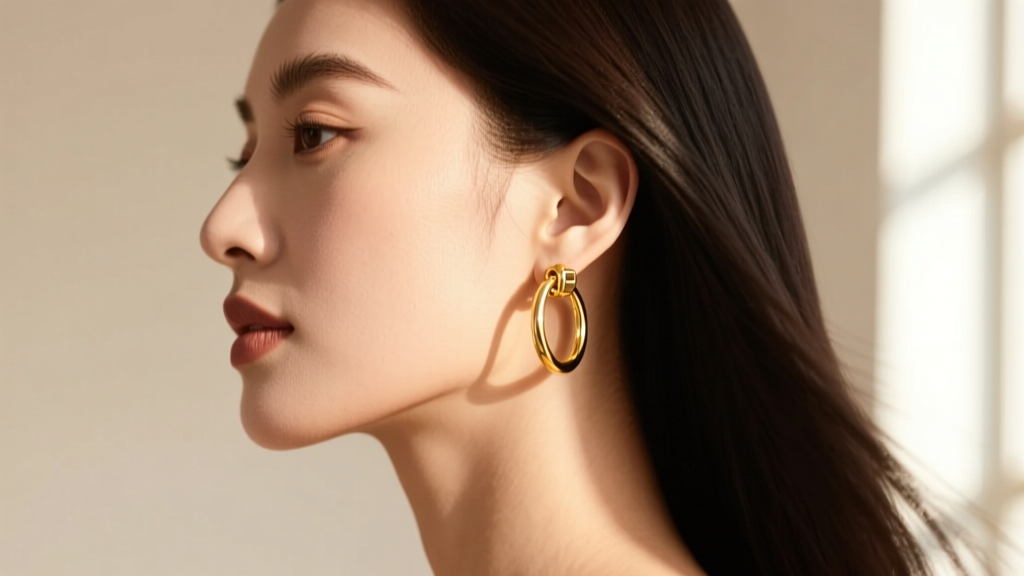
Gauge Sizing and Hardware: The Hidden Markers of Quality
A common failure mode in budget earrings is structural weakness. This is usually tied to the wire gauge (thickness) and the backing mechanism.
The Gauge Problem
Standard earlobe piercings are typically done at 20g (0.81mm) or 18g (1.02mm). Many ultra-cheap earring manufacturers use 22g (0.64mm) wire to save on metal costs. A 22g post is highly malleable; it will bend when you insert it, warp under the weight of a dangle, and eventually snap. When assessing value, always look for a minimum of 18g for standard lobes, and 16g (1.29mm) or 14g (1.63mm) for cartilage pieces like huggies and clickers. The thicker wire provides necessary tension for secure closures and prevents the 'flimsy' feel that plagues budget jewelry.
Backing Mechanisms
The traditional 'butterfly' friction back is cheap to produce but problematic. It traps dead skin and bacteria, and the constant pressure against the back of the earlobe can cause discomfort or embedding if the earring is heavy. For budget shoppers, upgrading to flat-back labret studs (which use a threaded or push-pin post with a flat disc) or seamless clicker hinges for hoops vastly improves both comfort and perceived quality. A $20 titanium clicker hoop with a precision-machined hinge feels infinitely more luxurious than a $50 hollow electroplated hoop with a weak tension clasp.
Marketing Red Flags to Avoid
When hunting for value, be highly skeptical of the following terms often used to inflate the perceived worth of cheap jewelry:
"Nickel-Free Plated Brass"
While the plating itself may be nickel-free, the moment that microscopic layer scratches or wears through, the underlying alloy is exposed. Furthermore, 'nickel-free' does not mean hypoallergenic; copper and zinc can still cause contact dermatitis in sensitive individuals.
- "Gold-Filled" on Complex Shapes: True gold-filled wire requires a thick layer of gold mechanically bonded to a brass core (at least 5% of the total weight). While excellent for simple wire hoops, it cannot be used for cast pieces like intricate charms or huggies. If a brand claims a cast, detailed charm is 'gold-filled,' they are likely lying or misusing the term.
- "Hypoallergenic Alloy": This is an unregulated marketing term. Without specifying the exact metallurgical breakdown (e.g., 316L, ASTM F136, Niobium), 'alloy' is usually a polite synonym for brass or zinc mixtures.
Maintenance Hacks to Extend Budget Earring Lifespan
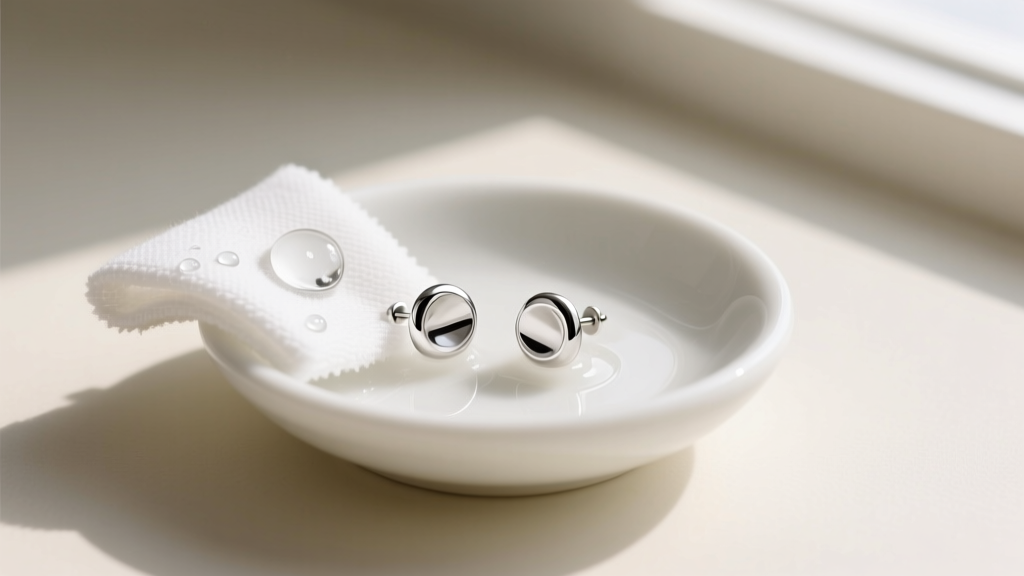
Even the best budget materials require basic care to maximize their ROI. Implementing a simple maintenance routine can double or triple the lifespan of vermeil and PVD pieces.
- The Shower Rule: Never wear vermeil or electroplated earrings in the shower. The combination of heat, humidity, and the sulfates in shampoos accelerates the breakdown of the gold layer. PVD and solid titanium can survive the shower, but soap scum will dull their shine.
- Chemical Avoidance: Apply perfumes, hairsprays, and skincare acids (like AHAs/BHAs) before putting on your earrings. Alcohol-based products can strip thin gold plating almost instantly.
- Proper Storage: Humidity is the enemy of sterling silver and brass. Store your budget earrings in a cool, dark place with silica gel packets or anti-tarnish strips. Avoid leaving them on the bathroom counter where steam accumulates.
- Gentle Cleaning: Skip the harsh chemical dips and ultrasonic cleaners, which can strip plating and fracture porous gemstones like opals or pearls. Instead, use a few drops of mild dish soap in warm water and gently buff with a microfiber cloth.
Final Verdict: Where to Allocate Your Budget
The best earring women can buy on a budget in 2026 prioritizes metallurgical integrity over brand names. If your budget is strictly under $30, abandon the pursuit of gold vermeil and instead invest in solid implant-grade titanium or PVD-coated 316L steel. These materials offer lifetime durability and hypoallergenic security that cheap plating simply cannot match.
If your budget stretches to the $40–$60 range, you can safely explore high-quality 18k gold vermeil over sterling silver, provided you commit to proper maintenance and reserve those pieces for occasional or rotational wear rather than 24/7 use. By understanding the science of metals, plating thickness, and gauge sizing, you can curate a stunning, ear-safe jewelry collection that defies its price tag.


