Earrings Machine Value Guide: Are At-Home Kits Worth It in 2026?
We break down the true cost of at-home earrings machine kits versus studio piercing, analyzing cartridge prices, titanium grades, and safety.

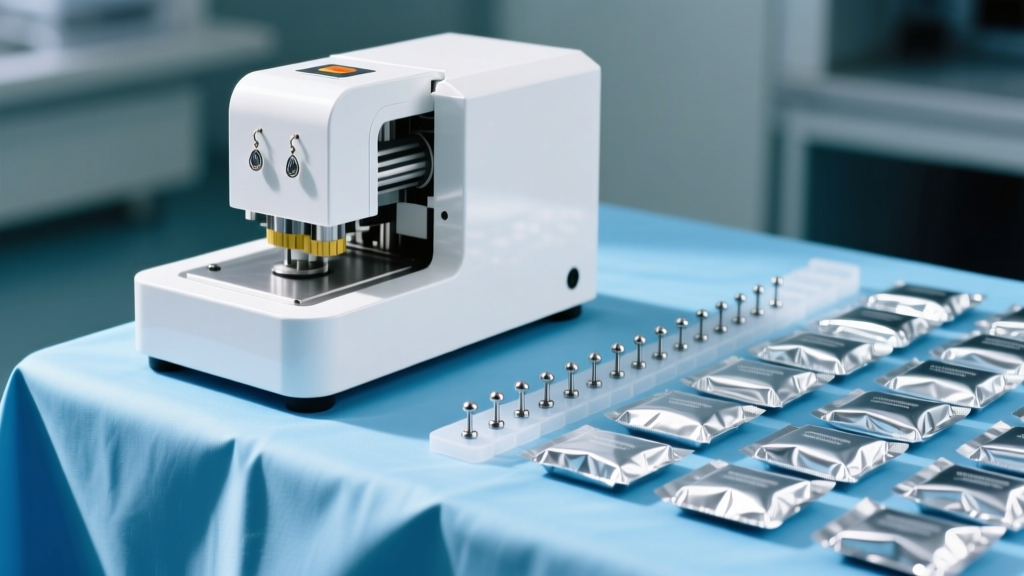
The Allure and Reality of the DIY Earrings Machine
In 2026, the market for at-home body modification tools has expanded significantly, driven by social media tutorials and the rising costs of professional studio services. At the center of this trend is the modern earrings machine—a cartridge-based, spring-loaded or squeeze-trigger piercing system heavily marketed to DIY enthusiasts, parents, and small boutique owners. Brands like Studex, Blomdahl, and Inverness dominate the space, promising a painless, sterile, and budget-friendly alternative to the traditional piercing studio. But when you strip away the marketing and evaluate the metallurgy, tissue mechanics, and long-term costs, does an at-home earrings machine actually offer genuine value? As a domain expert in jewelry and piercing standards, I have audited the true cost-to-benefit ratio of these systems to help you make an informed, safe decision.
The Mechanics of Cartridge-Based Piercing Systems
To assess value, we must first understand the engineering. Unlike professional hollow needles that slice a clean, crescent-shaped channel through tissue, an earrings machine operates on blunt force trauma. The stud itself acts as the piercing implement. Even with a slightly sharpened tip, the post is fundamentally a blunt wedge that pushes tissue aside rather than cutting it. Modern systems utilize pre-sterilized, single-use plastic cassettes that lock into the device, which theoretically prevents cross-contamination. However, the mechanical force required to drive a blunt post through the earlobe or cartilage creates micro-tears and crush injuries at the cellular level, fundamentally altering the healing trajectory compared to a shearing needle.
Budget Breakdown: Machine and Cartridges vs. Professional Studio
The primary selling point of any earrings machine is budget. At first glance, the math seems to favor the DIY route, especially if you plan to pierce multiple friends or family members. However, a comprehensive value assessment must factor in the hidden costs of premium jewelry upgrades and potential complication management.
| Expense Category | At-Home Earrings Machine | Professional Needle Studio |
|---|---|---|
| Initial Equipment | $35 - $150 (Device only) | $0 (Included in service) |
| Standard Jewelry (Per Pair) | $15 - $25 (316L Surgical Steel) | $40 - $80 (Includes service & implant-grade Ti) |
| Premium Titanium Cartridges | $30 - $45 (Per pair, if available) | N/A (Standard in reputable studios) |
| Sterilization Verification | Factory Gamma Ray (Cassette only) | On-site Autoclave & Spore Testing |
| Complication Management | Out-of-pocket medical/studio fees | Free downsizing & follow-up care |
While the initial outlay for an earrings machine is low, the cost per piercing quickly escalates if you refuse to use the standard 'surgical steel' cartridges. Upgrading to implant-grade titanium cassettes narrows the price gap between DIY and a professional studio visit, severely diminishing the perceived budget advantage.
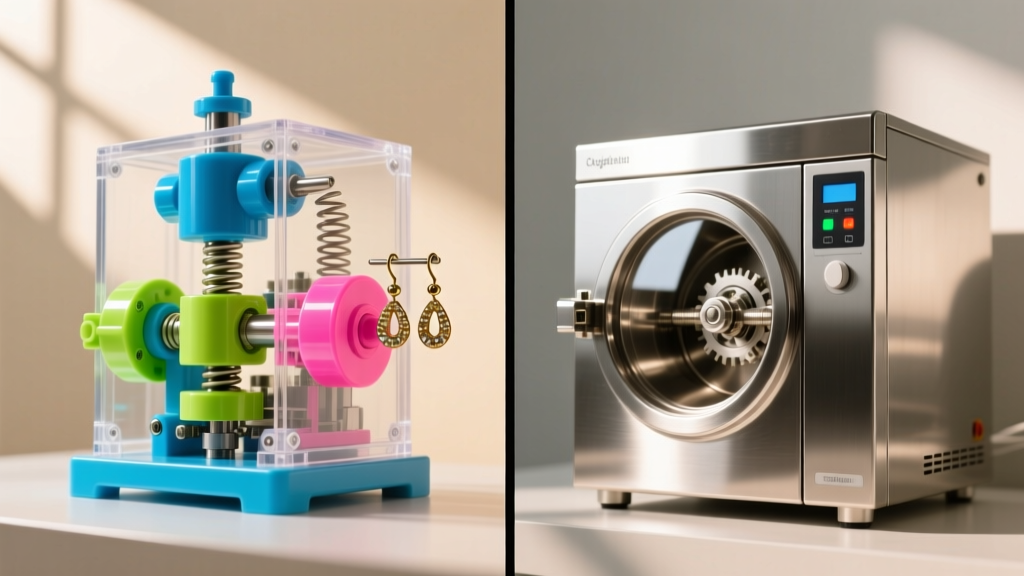
Material Grades: The 'Surgical Steel' Trap
The most critical flaw in the value proposition of most earrings machines is the default jewelry material. The vast majority of standard cartridges are loaded with 316L 'surgical stainless steel.' While this term sounds medical and safe, 316L steel contains up to 14% nickel. When subjected to the acidic environment of a fresh, weeping wound, nickel ions leach into the tissue, triggering contact dermatitis, prolonged swelling, and in severe cases, systemic allergic reactions.
According to the Association of Professional Piercers (APP), the only acceptable metals for initial piercings are implant-grade titanium (ASTM F136), niobium, or solid 14k/18k gold. While some premium earrings machine brands now offer ASTM F136 titanium cartridges, they are often difficult to source, significantly more expensive, and limited to basic stud designs. If your budget assessment relies on using the cheap, included steel cartridges, you are compromising biological safety for financial savings—a trade-off that is never mathematically sound when treating bodily trauma.
Gauge Size Limitations and Future-Proofing
Another hidden cost is the lack of future-proofing. Most earrings machines punch holes at 20-gauge (0.81mm) or 18-gauge (1.02mm). Professional piercers typically use 16-gauge (1.29mm) or 14-gauge (1.60mm) for lobes, and 16-gauge for cartilage. A 20-gauge hole severely limits your future jewelry options. High-quality, artisan, and premium body jewelry brands rarely manufacture pieces thinner than 18-gauge, and almost never at 20-gauge. By using a machine, you are essentially locking yourself into a proprietary, limited ecosystem of low-tier jewelry, forcing you to eventually pay a professional to stretch or re-pierce the hole if you want to wear high-end earrings later.
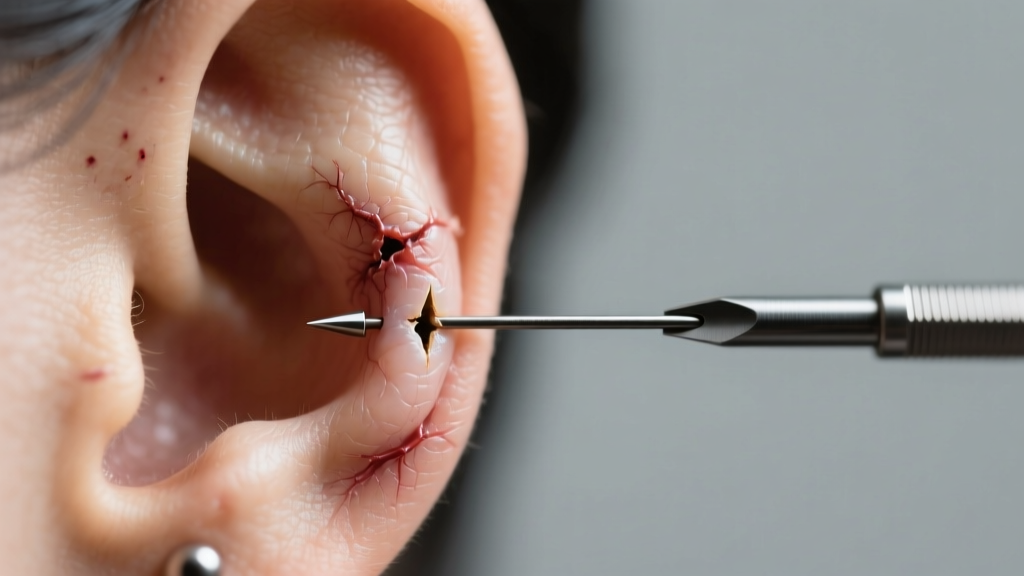
Tissue Trauma and Failure Modes
Value is also measured by the success rate of the procedure. The APP Guidelines on Piercing Tools explicitly advise against the use of piercing guns and spring-loaded machines due to the inability to control the velocity and force of the impact. When an earrings machine is used on cartilage (such as the helix or tragus), the blunt force can shatter the brittle cartilage matrix, leading to severe complications like perichondritis, cauliflower ear, and aggressive keloid scarring.
'The kinetic energy transferred by a spring-loaded device into dense cartilage often exceeds the structural tolerance of the tissue, resulting in micro-fractures that a beveled hollow needle would entirely avoid.' — Clinical Review of Body Modification Trauma, 2025.
Even on soft earlobes, the blunt force causes 'blowouts' where the tissue on the back of the ear tears irregularly. This results in a healed piercing that is prone to embedding (where the skin grows over the jewelry clasp) and requires painful, costly corrective procedures.
Final Verdict: Assessing the True Value
Is an at-home earrings machine worth the investment in 2026? From a strict budget and biological safety perspective, the answer is overwhelmingly no. The minor upfront savings are entirely eclipsed by the risks of nickel exposure, blunt force tissue trauma, and the severe limitation of 20-gauge jewelry sizing.
- For Parents: Skip the mall kiosk or DIY machine. Save the $50 and take your child to an APP-certified professional who will use a sterile, single-use hollow needle and implant-grade titanium.
- For Boutique Owners: Offering machine piercings may seem like a high-margin add-on service, but the liability risks associated with cartilage shattering and severe allergic reactions far outweigh the profit margins of cheap steel cartridges.
- For DIY Enthusiasts: If you are determined to pierce at home, abandon the earrings machine entirely. Invest in a professional autoclave, single-use hollow needles, and ASTM F136 titanium threadless jewelry, and study aseptic technique thoroughly.
True value in body modification is not found in the cheapest tool, but in the safest, most biocompatible outcome. Protect your tissue, respect the anatomy, and leave the earrings machine on the retail shelf.


