Value Guide to Different Earring Backs: Cost & Security
Discover the true cost and security value of different earring backs. Compare pricing, metal grades, and failure rates to protect your jewelry.

The Hidden Economics of Earring Security
When investing in fine jewelry, consumers often allocate 95% of their budget to the gemstone or precious metal, leaving the securing mechanism as an afterthought. Yet, the hardware that keeps a $5,000 diamond stud attached to your earlobe often costs less than a cup of coffee. Understanding the true value of different earring backs requires looking beyond the initial purchase price and evaluating the long-term cost of replacement, material degradation, and the catastrophic financial risk of losing the earring entirely.
From a budget and value assessment perspective, the "cheapest" option is rarely the most economical over a five-year ownership period. A $2 friction back that fails and results in a lost $2,000 diamond represents a devastating negative ROI. This guide breaks down the engineering, material grades, and true market costs of various earring securing mechanisms to help you make financially sound decisions for your jewelry wardrobe.
Breakdown of Earring Backs by Value and Engineering
Butterfly / Push Backs (The Budget Standard)
The ubiquitous butterfly back (or friction back) relies on a metal scroll that grips the notched groove of the earring post. Typically stamped from 20-gauge or 22-gauge sheet metal, these backs are inexpensive to mass-produce.
- Average Cost: $3 to $12 per pair (in 14k gold).
- Primary Failure Mode: Metal fatigue. The scroll loses tension over 12 to 18 months of daily wear, leading to a loose grip. Furthermore, the open design traps sebum and dead skin cells, creating a hygiene issue that accelerates metal tarnishing.
- Value Verdict: Excellent for fashion jewelry or low-value studs under $500. Poor value for high-carat diamonds or heavy gold hoops where the center of gravity pulls the post downward.
Screw Backs (The Security Premium)
Screw backs require the earring post to be threaded (usually with a 0.8mm to 1.0mm pitch), and the back screws onto the post. This mechanical lock prevents the earring from sliding off, even if bumped.
- Average Cost: $25 to $65 per pair (precision machining increases manufacturing costs).
- Primary Failure Mode: Cross-threading and thread stripping. Forcing the back at an angle will permanently ruin the microscopic threads on the post, requiring a jeweler to re-tip or replace the post entirely (a $40-$80 repair).
- Value Verdict: High value for mid-tier diamond studs ($1,000–$3,000) and children's earrings. The upfront premium pays for itself by preventing loss.
La Pousette / Secure Lock Backs (The Luxury Investment)
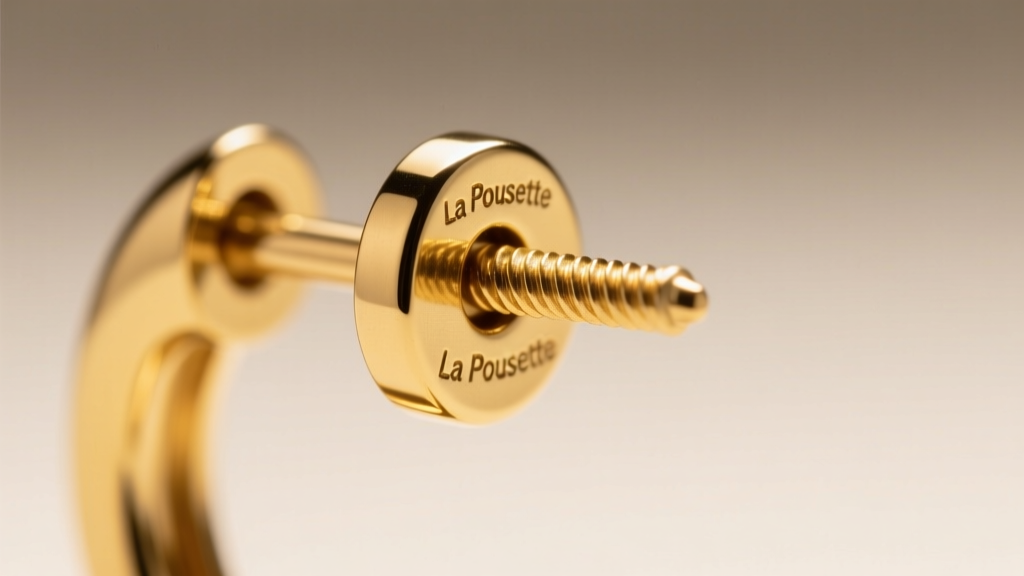
Originally patented in France, the La Pousette mechanism uses a tiny internal spring and cogs to lock onto a notched post. You pull the two side tabs to compress the spring, slide it on, and release to lock.
- Average Cost: $60 to $140 per pair.
- Primary Failure Mode: Internal spring degradation or debris clogging the microscopic mechanism. They require occasional ultrasonic cleaning to function perfectly.
- Value Verdict: The absolute gold standard for high-value assets. If you are wearing $10,000+ diamond or sapphire studs, spending $100 on La Pousette backs is a mandatory insurance policy. According to the Gemological Institute of America (GIA), secure settings and backs are critical to preventing the loss of valuable gemstones during daily activities.
Silicone / Plastic Bullet Backs (The Disposable Alternative)
Often sold as universal replacements, silicone backs rely on pure friction and the elasticity of the polymer.
- Average Cost: $4 to $8 for a pack of 50.
- Primary Failure Mode: UV degradation and oil absorption. Silicone becomes brittle, discolored, and eventually snaps or slides off after 3 to 6 months of continuous wear.
- Value Verdict: Good only as an emergency temporary fix. They offer zero long-term value and look unprofessional on fine jewelry.
Cost vs. Security Matrix
| Back Type | Avg. Cost (14k Gold) | Security (1-10) | Best Application | Lifespan |
|---|---|---|---|---|
| Butterfly / Friction | $8 | 4 | Lightweight studs, fashion jewelry | 1-2 Years |
| Screw Back | $45 | 8 | Mid-value diamonds, active lifestyles | 5+ Years |
| La Pousette Lock | $95 | 10 | High-carat gems, heirloom pieces | 10+ Years |
| Silicone Bullet | $0.15 (per pc) | 3 | Emergency temporary replacements | 3-6 Months |
| Omega Clip (Hoops) | $85 | 7 | Heavy huggies and large hoops | 5+ Years |
Material Grades and the "Allergy Tax"
When assessing the budget for earring backs, you must factor in the metallurgical composition. Base metal backs (brass or copper plated in gold) cost pennies but carry a high hidden cost for sensitive ears. The American Academy of Dermatology notes that nickel is a leading cause of contact dermatitis, which affects up to 10% of the population.
The True Cost of Hypoallergenic Upgrades
If you buy cheap brass butterfly backs and develop an earlobe infection or allergic reaction, the cost of medical creams, downtime, and discarding the backs far exceeds the price of solid precious metals.
- Surgical Steel (316L): Budget-friendly ($5-$10/pair) but contains trace nickel. Not recommended for fresh piercings or severe allergies.
- 14k or 18k Gold: The industry standard for fine jewelry ($15-$100/pair). Ensure it is nickel-free or alloyed with palladium/silver instead of nickel for white gold.
- Implant-Grade Titanium (ASTM F136): The ultimate value for allergy sufferers. While a titanium La Pousette back might cost $40, it guarantees zero allergic reactions, saving you from the "allergy tax" of ruined piercings.
Troubleshooting and Maintenance: Protecting Your Investment
To maximize the lifespan and value of your earring backs, proper maintenance is non-negotiable. Here are expert troubleshooting tips for common mechanical failures:
- Reviving Loose Butterfly Backs: If a friction back feels loose, do not discard it immediately. Use a pair of nylon-jaw pliers to gently squeeze the metal scroll inward, restoring the tension against the post groove.
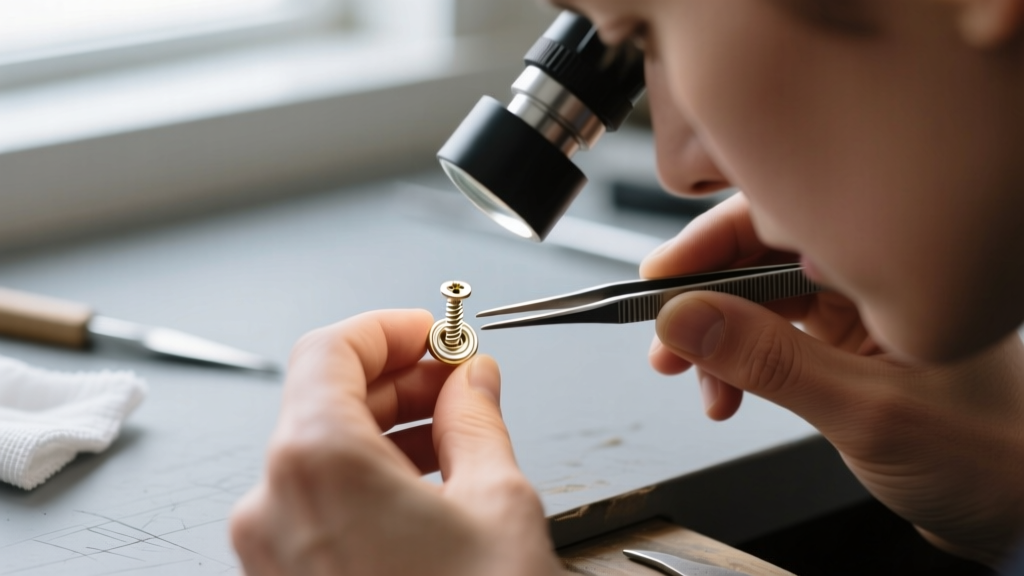
- Cleaning Screw Threads: Sebum and soap scum build up in the threads of screw backs, making them difficult to attach. Soak the backs in warm water with a drop of mild dish soap, then use a soft-bristled baby toothbrush to clear the threads. Never force a screw back; if it resists, you are cross-threading it.
- Lubricating Omega Clips: The hinge mechanism on Omega backs for hoops can become stiff. A microscopic drop of synthetic watch oil applied to the hinge pin with a needle will restore smooth operation and prevent the spring from snapping.
Final Verdict: Allocating Your Jewelry Budget
When evaluating the budget for your jewelry collection, adopt a risk-management mindset. The value of different earring backs is entirely relative to the asset they are protecting.
For everyday gold hoops or lightweight gemstone studs under $500, standard 14k gold butterfly backs offer the best balance of cost and convenience. However, once your earring valuation crosses the $1,000 threshold, upgrading to screw backs or La Pousette locks is not an optional luxury—it is a critical financial safeguard. By investing 2% to 5% of the earring's total value into a high-security, hypoallergenic backing mechanism, you ensure that your jewelry remains safely on your ears, rather than lost in the drain or on the sidewalk.


