The True Cost of Earring Clasp Types: Value & Budget Guide
Discover the true cost and value of popular earring clasp types. Compare repair prices, metal grades, and loss prevention for smart budgets.

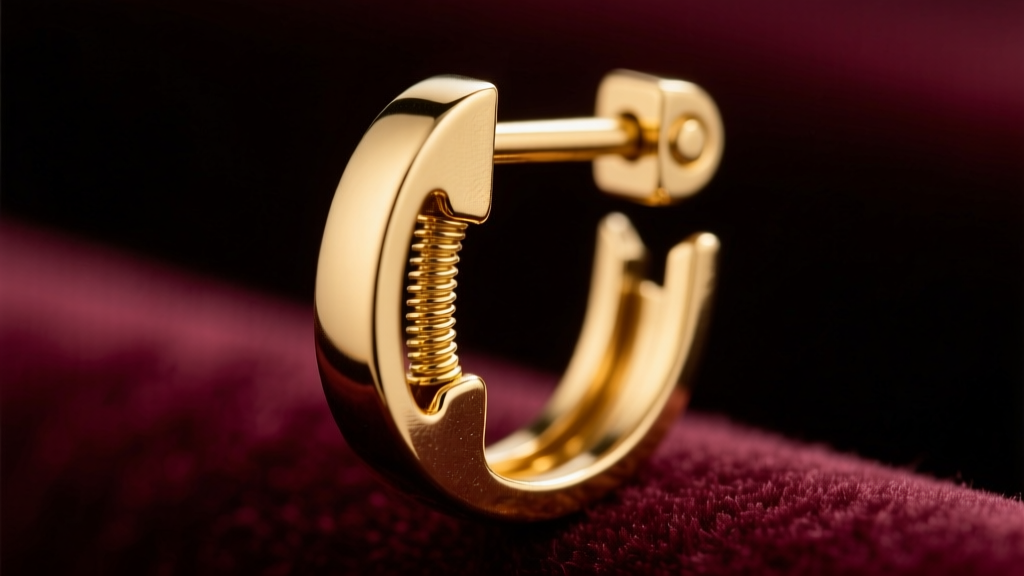
When budgeting for fine jewelry, consumers obsess over carat weight, gold purity, and gemstone origin. Yet, the structural integrity of the entire investment often rests on a component that costs less than a dollar: the clasp. Assessing earring clasp types through a strict budget and value lens reveals a hidden financial drain that plagues even seasoned collectors. A $2,000 diamond stud secured by a $0.15 stamped brass friction back represents a catastrophic risk-to-value ratio. In this comprehensive value assessment, we break down the metallurgical realities, repair costs, and loss-prevention metrics of various earring clasp types to help you maximize your jewelry investment in 2026 and beyond.
The Hidden Financial Drain of Cheap Earring Backs
To understand the true cost of earring hardware, we must introduce the concept of the loss risk multiplier. This metric evaluates the replacement cost of the earring against the mechanical failure rate of its clasp. Standard butterfly friction backs, which dominate the mass-market jewelry sector, rely on the outward tension of two thin metal "scroll" wings pressing against a notched post. According to GIA Gem and Jewelry Care guidelines, regular wear, exposure to cosmetic oils, and the friction of insertion gradually degrade this tension. When a $5 replacement back fails, it frequently takes a $1,500 gemstone with it. Investing in superior clasp mechanisms is not an upsell; it is an essential insurance policy for your fine jewelry portfolio.
Comprehensive Value Breakdown of Earring Clasp Types
The table below outlines the baseline costs, security metrics, and long-term value propositions of the most common earring clasp types found in today's market.
| Clasp Type | Avg. Replacement Cost | Security Rating (1-10) | Optimal Metal Grade | Hidden Cost / Failure Mode |
|---|---|---|---|---|
| Butterfly Friction | $2 - $15 | 4 | 14k Gold / Platinum | Wing fatigue; high loss risk |
| Screw Back | $25 - $60 | 9 | Platinum / 18k Gold | Thread stripping; post snapping |
| Leverback | $35 - $85 | 8 | 14k Gold (Spring steel core) | Hinge barrel crushing; wire bending |
| Latch Back (Hinged) | $30 - $70 | 7 | 14k / 18k Gold | Clasp groove wear; hinge pin loss |
| Omega Clip | $40 - $90 | 6 | 14k Gold / Brass base | Paddle tension loss; earlobe pinching |
Butterfly Friction Backs: The Budget Trap
Friction backs are the undisputed champions of mass production, but they are a long-term budget trap. Most commercial friction backs are cast or stamped from brass and plated with a microscopic layer of rhodium. The posts they slide onto are typically 20-gauge (0.81mm) wire. The primary failure mode is metal fatigue in the scroll wings. After roughly 40 to 60 insertions, the wings bend outward, losing their grip on the post notch. While replacing the back itself is cheap, the hidden cost is the high probability of losing the earring during sleep or while changing clothes. Value Verdict: Only acceptable for fashion jewelry or pieces valued under $200. For fine jewelry, upgrade to silicone O-ring lockers or solid 14k gold friction backs with reinforced, thicker scrolls.
Screw Backs: The Security Investment
Screw backs offer unparalleled security by requiring deliberate rotational force to remove, effectively eliminating accidental snags. However, they demand precision manufacturing. The post must be at least 18-gauge (1.02mm) to support the threaded grooves without becoming brittle and snapping under lateral pressure. 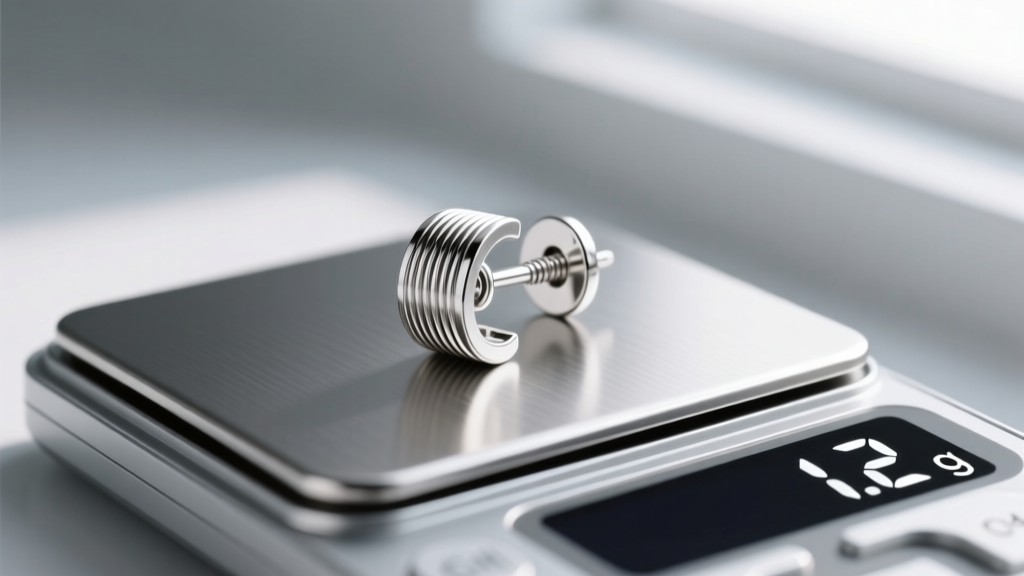 If the threads strip due to cross-threading or debris buildup, a bench jeweler must laser-weld a completely new post onto the earring cup, a repair that typically costs between $25 and $45 per earring. Furthermore, as noted in Blue Nile's Jewelry Metals Guide, platinum is highly favored for screw back posts because its durability ensures the threads will not wear down as quickly as they would in softer, higher-karat golds. Value Verdict: An absolute necessity for diamond studs and high-value heirloom pieces. The initial premium pays for itself by reducing loss risk to near zero.
Leverbacks and Latch Backs: Assessing Hinge Durability
Drop and dangle earrings rely heavily on leverbacks and hinged latch backs. These mechanisms introduce moving parts into the equation, which inherently increases the potential for mechanical failure.
Metal Fatigue and Repair Costs
A leverback consists of a curved wire that snaps into a catch, driven by a tiny tension spring housed within a hollow hinge barrel. The most common point of failure is the curved wire itself. If the wire is crafted from 18k gold (which has a lower Vickers hardness than 14k gold) and is drawn thinner than 22-gauge, it will permanently bend or snap when caught on a sweater or hairbrush. Soldering a snapped leverback wire is a routine repair costing $15 to $30. However, if the hollow hinge barrel itself is crushed or the internal spring fails, the jeweler must order a custom cast replacement head, pushing repair costs to $60 or more.
Latch backs, commonly found on medium-sized hoops, utilize a grooved post that clicks into a hinged receiver. The hidden cost here is groove wear. Over years of opening and closing, the soft gold post wears down, resulting in a loose fit that allows the hoop to slide off the earlobe unexpectedly. Rebuilding the post groove requires specialized laser welding and polishing, usually billed at $35 to $50.
Omega Clips and Clip-Ons: The Vintage Value Proposition
Omega clips feature a hinged, paddle-shaped wire that snaps over a fixed post, distributing pressure across a wider area of the earlobe. They are frequently found on vintage and estate jewelry, particularly heavy gold button earrings from the 1980s and 1990s. 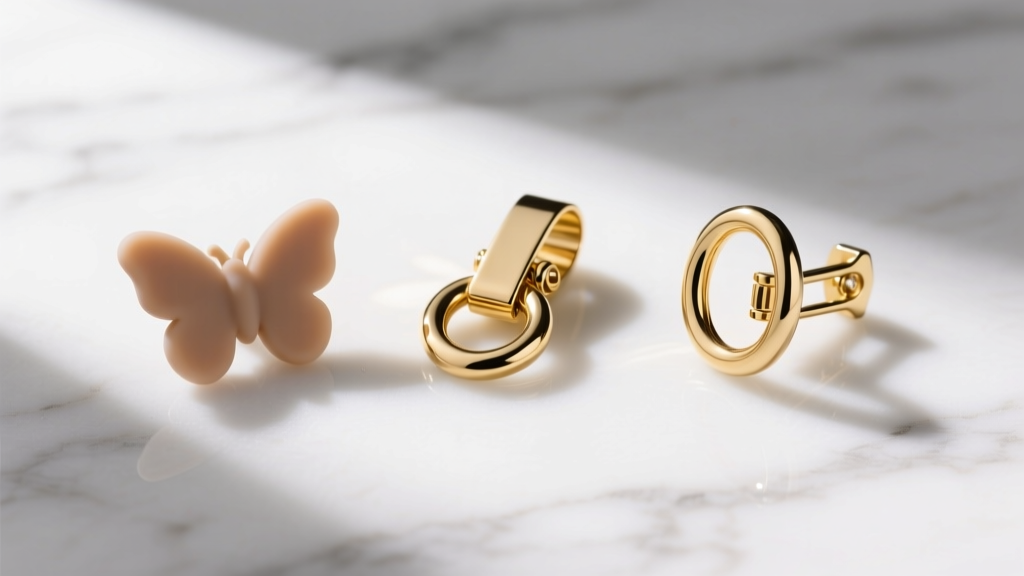 From a budget perspective, acquiring vintage pieces with omega clips can be highly cost-effective, but you must factor in immediate maintenance. The tension of the omega paddle weakens over decades of use. Re-tensioning an omega clip requires a jeweler to use specialized nylon-jaw pliers to gently bend the paddle base without snapping the hinge pin. This service typically costs $20 to $35. If the hinge pin is completely worn through, replacing it requires drilling out the old pin and inserting a new steel or gold rivet, a labor-intensive process that can exceed $75.
Expert Insight: Never attempt to bend or re-tension an omega clip or leverback spring yourself with household pliers. The work-hardening of the metal during manufacture means that uncalibrated bending will almost certainly cause a micro-fracture, leading to a catastrophic snap weeks later.
Material Grades and Their Impact on Clasp Longevity
The metallurgical composition of the clasp dictates its lifespan and repairability. Understanding these material grades is crucial for accurate budget forecasting:
- 14k Gold (58.5% Pure): The industry standard for clasps. The alloy mix (usually copper, silver, and zinc) provides excellent tensile strength and "memory," allowing springs and friction scrolls to maintain their shape over thousands of cycles.
- 18k Gold (75% Pure): Richer in color but significantly softer. It is a poor choice for friction backs or leverback wires unless the wire gauge is increased to compensate for the lack of structural rigidity.
- Platinum (95% Pure): Extremely dense and durable against wear, but surprisingly malleable. Platinum makes exceptional screw-back posts because the threads will not strip easily, but it is terrible for friction backs, as the scrolls will permanently flatten out under pressure.
- Grade 5 Titanium (Ti-6Al-4V): Increasingly popular for hypoallergenic and cartilage jewelry. It possesses an incredible strength-to-weight ratio and will never fatigue or bend. The budget drawback? Titanium cannot be traditionally soldered. If a titanium clasp breaks, it cannot be repaired; the entire component must be replaced.
Final Verdict: Maximizing Your Earring Investment
When evaluating earring clasp types, apply the 5% Rule of Hardware: the cost and quality of the clasp mechanism should represent at least 2% to 5% of the total replacement value of the earring. Spending $40 to upgrade standard friction backs to custom-fitted, solid 14k gold screw backs on a pair of $2,000 diamond studs is not an expense; it is a high-yield investment in asset protection. By prioritizing mechanical security, appropriate metal grades, and proactive hinge maintenance, you ensure that your jewelry budget is spent on acquiring beauty, not repeatedly replacing lost stones and repairing fatigued wires.


