Earring Allergy Guide: Budget Hypoallergenic Metals Ranked
Discover the best budget-friendly metals to prevent earring allergy. We compare titanium, niobium, and surgical steel grades for sensitive ears.

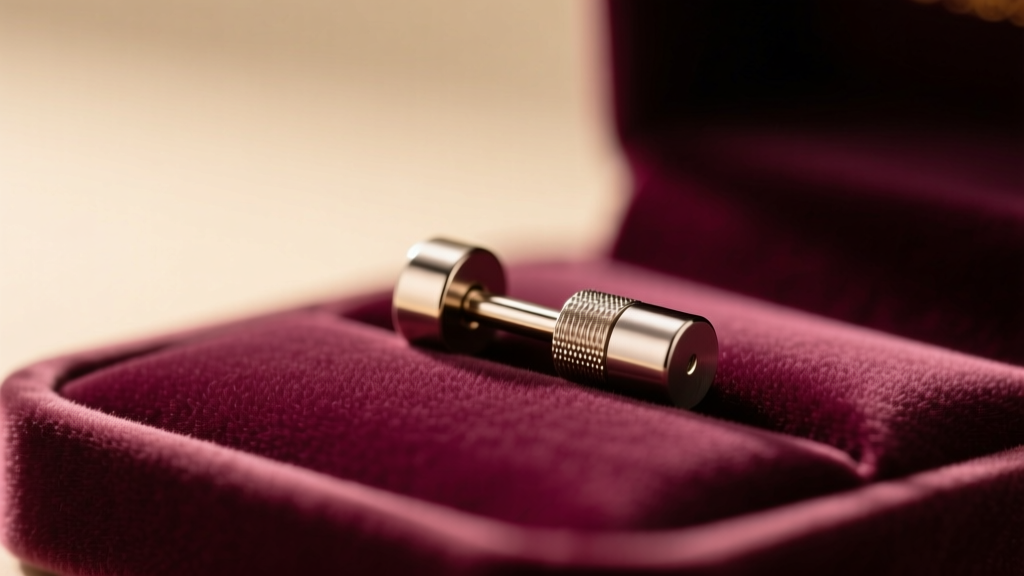
The True Cost of an Earring Allergy: Cheap Alloys vs. Investment Metals
If you have ever experienced itchy, swollen, or weeping earlobes after wearing a new pair of earrings, you are likely dealing with allergic contact dermatitis. An earring allergy is not just a minor inconvenience; it is an immune response most commonly triggered by nickel, a cheap hardening agent used in mass-market jewelry alloys. According to the American Academy of Dermatology, nickel allergy affects roughly 10% to 20% of the general population, and the prevalence is climbing due to prolonged exposure to cheap fashion jewelry.
From a budget and value assessment perspective, the true cost of an earring allergy extends far beyond the price tag of the jewelry itself. Treating chronic contact dermatitis requires topical corticosteroids, antihistamines, and in severe cases, dermatologist visits. Spending $15 on a pair of mystery-metal studs that triggers a medical reaction is a net loss. Conversely, investing $30 to $50 in metallurgically safe, implant-grade alternatives provides long-term value, preserving your piercing health and allowing you to build a versatile, irritation-free collection. In 2026, the market for affordable hypoallergenic jewelry has matured, but navigating misleading marketing terms requires a strict understanding of material grades.
Decoding Metal Grades: What "Hypoallergenic" Actually Means
The term "hypoallergenic" is largely unregulated in the jewelry industry. It simply implies that a metal is less likely to cause an allergic reaction, not that it is completely allergy-proof. To truly avoid an earring allergy on a budget, you must look past the marketing labels and examine the exact metallurgical composition and manufacturing standards of the jewelry.
ASTM F136 Implant-Grade Titanium
This is the undisputed gold standard for sensitive ears and fresh piercings. ASTM F136 (Ti-6Al-4V ELI) is a medical-grade titanium alloy containing zero nickel. Unlike commercial pure titanium (ASTM F67), which can be brittle and difficult to machine into fine jewelry, F136 offers exceptional tensile strength and a mirror-polish finish that resists bacterial adhesion. Budget-friendly F136 titanium flat-back labrets and basic bezel studs typically range from $25 to $45 per pair. The value here is immense: you are getting surgical implant material at a fraction of the cost of precious metals like platinum or high-karat gold.
Niobium (Nb)
Niobium is an elemental metal, meaning it is not alloyed with any other elements. Because it is unalloyed, it is physically impossible for niobium to contain nickel. It is highly malleable, making it an excellent choice for seamless rings, clickers, and ear cuffs. Furthermore, niobium can be anodized—using an electrical current to alter the surface oxide layer—producing vibrant colors without the use of toxic dyes or plating. Basic niobium hoops and huggies can be found in the $15 to $35 range, offering spectacular value for cartilage and lobe styling.
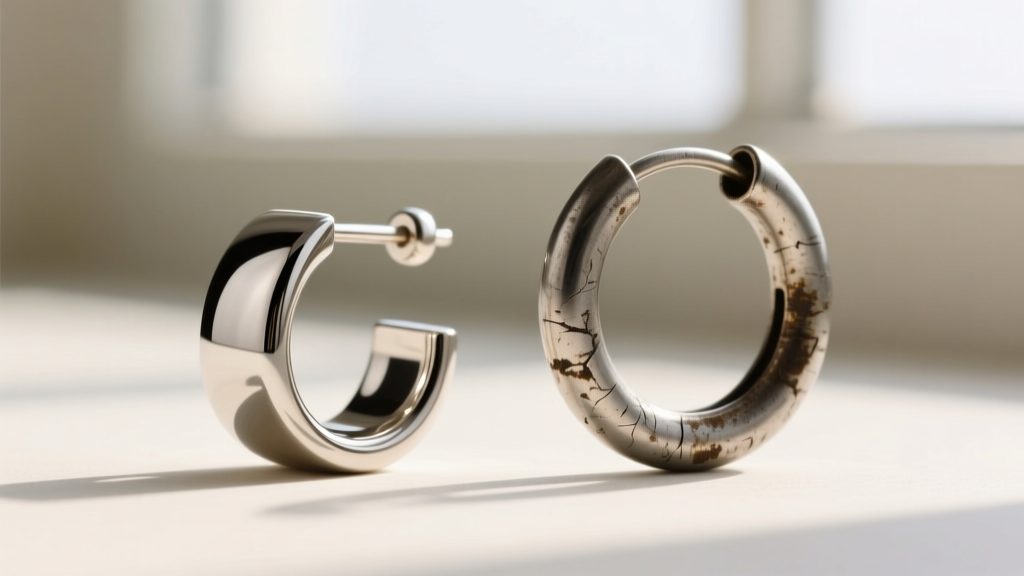
Budget vs. Value: Material Comparison & Price Matrix
To make informed purchasing decisions, it is crucial to weigh the upfront cost against the longevity and biological safety of the metal. The table below breaks down the most common earring materials found in the under-$100 market, evaluating their nickel content, average pricing, and actual value for allergy sufferers.
| Material Grade | Nickel Content | Avg. Price (Basic Studs/Hoops) | Longevity & Tarnish | Allergy Risk Level |
|---|---|---|---|---|
| ASTM F136 Titanium | 0% | $25 - $45 | Lifetime, no tarnish | Zero (Safest) |
| Pure Niobium | 0% | $15 - $35 | Lifetime, no tarnish | Zero (Safest) |
| 316L Surgical Steel | 10% - 14% | $10 - $25 | High, prone to dulling | High (Fails sensitive lobes) |
| Sterling Silver (925) | 0% (usually) | $20 - $50 | Low, tarnishes rapidly | Moderate (Copper alloy irritation) |
| Gold-Plated Brass | Variable (Base metal) | $15 - $40 | Poor, plating flakes off | Extreme (High failure rate) |
The "Surgical Steel" Trap: Why 316L Fails Sensitive Lobes
One of the most pervasive myths in the jewelry market is that "surgical steel" or "stainless steel" is safe for an earring allergy. The most common grade used in budget jewelry is 316L stainless steel. While it is true that 316L is used in some surgical tools, it is not used for long-term internal implants because it contains between 10% and 14% nickel.
The Mayo Clinic notes that prolonged skin contact with nickel-releasing alloys is the primary driver of contact dermatitis. In 316L steel, the nickel is bound within the iron-chromium matrix. However, when exposed to the chlorides in human sweat, the passive oxide layer on the steel can break down, leading to microscopic nickel leaching. If you have a known earring allergy, 316L steel is a poor financial investment; the money spent will inevitably result in unwearable, irritating jewelry.
Safer Budget Alternatives for Cartilage and Lobes
If you are building a curated ear stack on a strict budget, prioritize internally threaded or threadless (push-pin) titanium and niobium components. Externally threaded jewelry—where the screw threads are on the post itself—can cause micro-tears in the fistula (the piercing hole) during insertion. This physical trauma is frequently misdiagnosed by consumers as an earring allergy. By spending a few dollars more on precision-machined, internally threaded titanium, you eliminate mechanical irritation, ensuring that any redness is strictly related to metal biocompatibility.
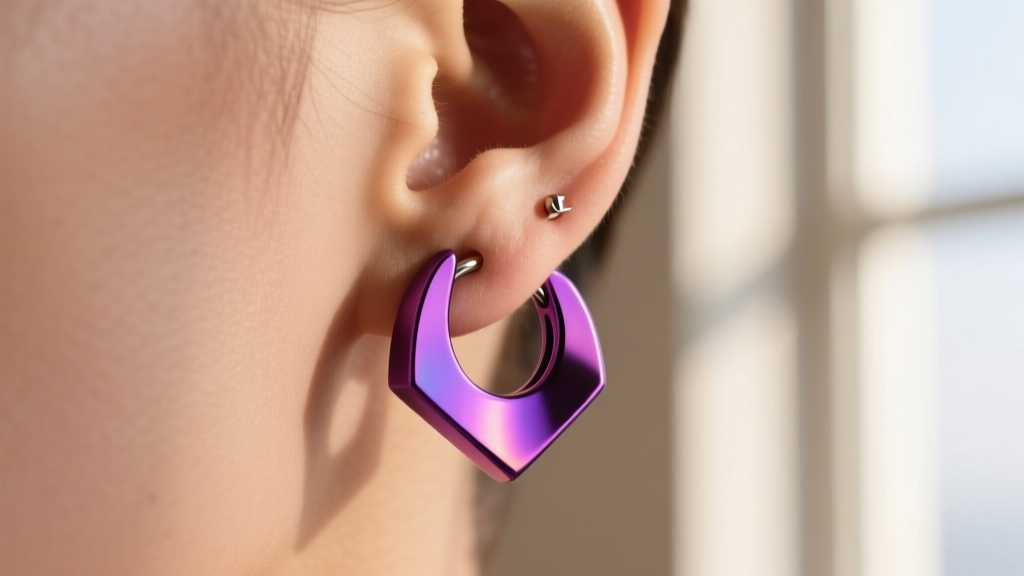
Actionable Buying Framework: Spotting Safe Earrings Under $50
When shopping for budget-friendly, hypoallergenic earrings, use this strict decision framework to avoid marketing traps and protect your piercing health:
- Demand Specificity: If a product description simply says "titanium" or "steel" without citing ASTM F136, ASTM F67, or 316L, assume it is a low-grade commercial alloy. Reputable budget brands (like Intrinsic Body or Neometal) proudly display their metallurgical certifications.
- Beware the Plating Trap: Gold-plated or rhodium-plated brass and copper alloys are the leading cause of delayed earring allergy reactions. The plating is measured in microns; once it wears away from friction and skin acids, the base metal is exposed directly to your tissue. Avoid all plated jewelry for everyday wear.
- Check the Earring Backing: A titanium post is useless if secured with a cheap, nickel-heavy "butterfly" clutch. The backing presses directly against the back of your earlobe, trapping sweat and metal ions against the skin. Always budget for flat-back titanium labrets or secure, O-ring backed titanium friction fittings.
- Understand Gauge and Friction: Standard lobe piercings are usually 20g or 18g. Inserting a thick 16g titanium post into a tight 20g hole will cause pressure necrosis and inflammation, which mimics an allergic reaction. Always verify the gauge (thickness) of the post before purchasing to ensure a seamless, pressure-free fit.
Expert Verdict: Maximizing Your Hypoallergenic Budget
Overcoming an earring allergy does not require spending hundreds of dollars on solid 18k gold or platinum. The modern body jewelry market offers exceptional value through medical-grade titanium and pure niobium. By shifting your budget away from mass-produced, plated fashion alloys and redirecting it toward ASTM-certified implant metals, you secure a lifetime of comfortable, irritation-free wear. The initial investment of $30 to $50 per piece yields a vastly superior cost-per-wear ratio, safeguarding both your wallet and your tissue health against the hidden costs of contact dermatitis.


