Budget Nautical Earrings: 2026 Value & Quality Guide
Discover how to evaluate budget nautical earrings in 2026. Compare materials, gauge sizes, and clasp types to find coastal jewelry that lasts.

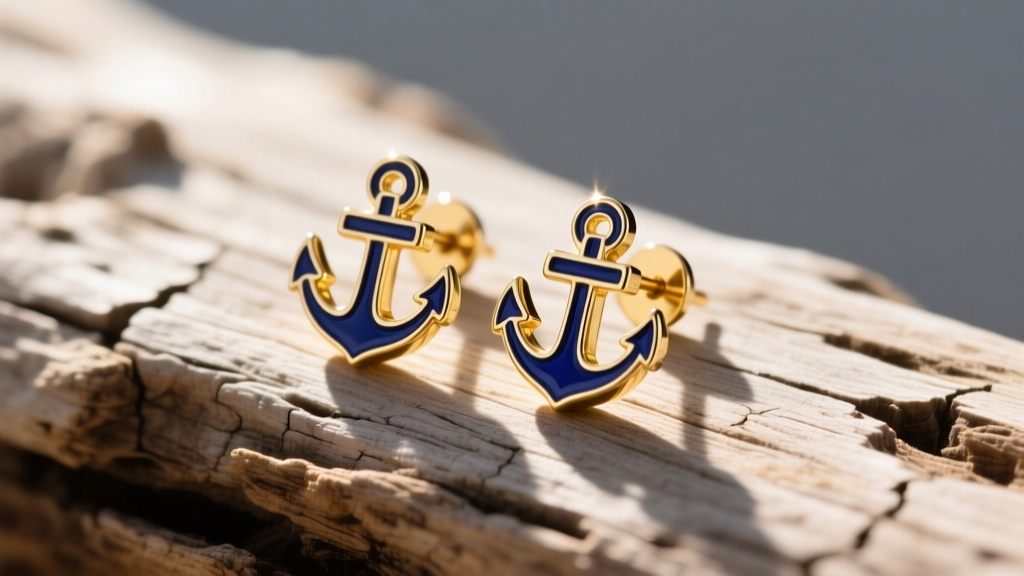
The True Cost of Coastal-Core Jewelry
The nautical aesthetic—characterized by anchors, compass roses, ship wheels, and sailor knots—remains a dominant force in jewelry trends well into 2026. However, the market is heavily saturated with sub-$15 'costume' pieces that promise maritime charm but deliver rapid tarnishing, broken posts, and green earlobes. When evaluating nautical earrings on a budget, the goal is not simply to find the lowest price tag, but to calculate the true cost-per-wear. A $12 pair of zinc-alloy anchor studs that degrades after three wears costs $4 per wear. A $45 pair of 316L marine-grade stainless steel dangles that lasts five years costs fractions of a penny per wear.
This guide provides a rigorous, data-driven framework for assessing the value of nautical earrings, breaking down material grades, structural anatomy, and the hidden red flags of budget jewelry manufacturing.
The Material Hierarchy: What You Are Actually Paying For
The foundation of any earring's value is its base metal. Nautical jewelry frequently incorporates intricate detailing, which means the metal must be capable of holding fine castings while resisting the corrosive effects of sweat, saltwater, and humidity. Here is how the most common budget materials stack up in 2026.
316L Marine-Grade Stainless Steel: The Value Champion
Originally developed for surgical implants and marine hardware, 316L stainless steel contains molybdenum, which drastically increases its resistance to pitting corrosion from chlorides (like salt water and sweat). For nautical earrings, this is the ultimate mid-tier budget material. It is highly hypoallergenic, exceptionally durable, and typically priced between $20 and $45. According to ASTM International standards, 316L is certified for long-term bodily contact, making it a safe bet for sensitive ears.
14k Gold-Filled: The Premium Budget Alternative
Do not confuse 'gold-filled' with 'gold-plated'. The Federal Trade Commission (FTC) strictly regulates the term 'gold-filled', requiring that the gold layer constitutes at least 5% (or 1/20th) of the total weight of the item. This thick layer of 14k gold is mechanically bonded to a brass core, meaning it will not flake off or reveal base metal for decades with proper care. Expect to pay $40 to $85 for high-quality gold-filled nautical pieces.
Zinc Alloy and Brass: The False Economy
Priced between $5 and $18, these base metals are usually coated in a microscopic 'flash plating' of silver or gold. Once the plating wears off—often within weeks—the underlying brass reacts with skin acids to create copper chloride, resulting in the dreaded green skin stain. Furthermore, the American Academy of Dermatology warns that cheap alloys frequently contain hidden nickel, a primary trigger for contact dermatitis.
| Material Grade | Avg. Price (2026) | Tarnish Resistance | Hypoallergenic | Best Nautical Application |
|---|---|---|---|---|
| Zinc Alloy / Brass | $5 - $18 | Poor (1-3 months) | No (High Nickel Risk) | Occasional wear statement pieces |
| 316L Surgical Steel | $20 - $45 | Excellent | Yes | Everyday ship wheel dangles & hoops |
| 14k Gold-Filled | $40 - $85 | Very High | Yes | Heirloom-quality anchor studs |
| Solid 10k / 14k Gold | $150+ | Permanent | Yes | Cartilage piercings & fine knots |
Anatomy of a High-Value Nautical Earring
Beyond the raw metal, the structural engineering of the earring dictates its lifespan. Nautical designs are notoriously prone to snagging due to their complex geometries (e.g., the flukes of an anchor or the spokes of a ship's wheel).
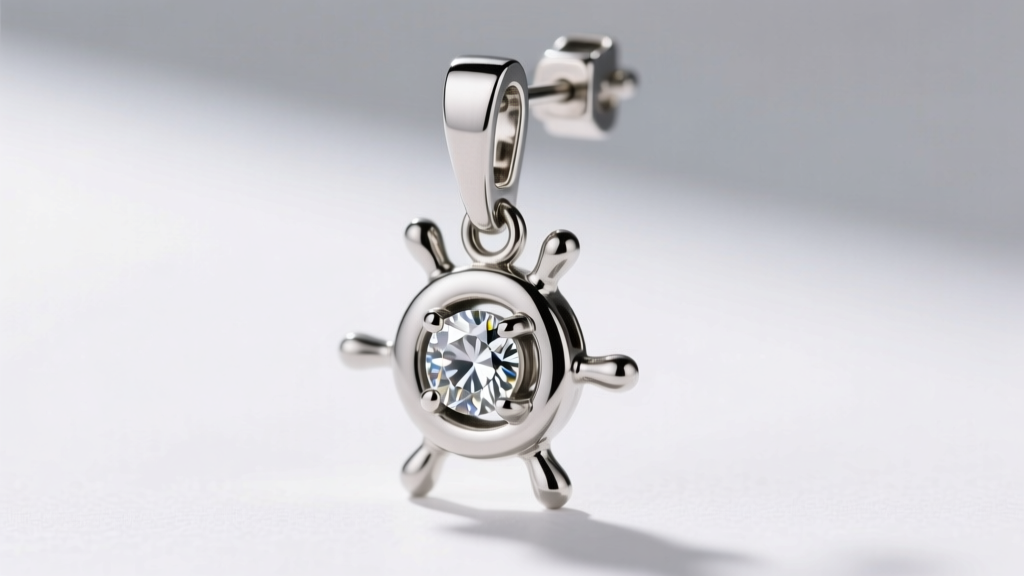
Gauge Thickness and Weight Distribution
The 'gauge' refers to the thickness of the post or wire that passes through your piercing. Standard lobe earrings are typically 20-gauge (0.81mm). However, nautical dangle earrings—especially solid metal compass roses or ship wheels—carry significant downward momentum. If a heavy dangle is hung on a thin 20g wire, the constant swinging will slowly stretch and tear the earlobe over time. For any nautical drop earring exceeding 4 grams in weight, insist on an 18-gauge (1.02mm) or 16-gauge (1.29mm) wire for structural integrity and lobe health.
Clasp Mechanics: Leverback vs. Friction Post
Friction posts (the standard 'butterfly' back) are inadequate for nautical dangles. The complex shapes of anchors and knots easily catch on hair, scarves, and turtleneck collars, easily pulling a friction back off and losing the earring. High-value budget dangles will utilize a hinged leverback clasp or a secure lock-back. A leverback features a spring-loaded hinge that completely encloses the ear wire, ensuring that even if the earring snags on a cable-knit sweater, it remains securely attached to your ear.
Price vs. Value Matrix: Where to Spend and Where to Save
Building a coastal-core jewelry collection on a budget requires strategic allocation of funds. Not every nautical motif requires premium materials. Use this matrix to guide your purchasing decisions:
- Anchor Studs (Save on Metal, Spend on Enamel): Because studs are small and lightweight, you can save money by opting for high-quality 316L steel instead of solid gold. However, spend extra for 'kiln-fired vitreous enamel' rather than 'cold enamel' (epoxy resin). Cold enamel will yellow and chip within a year, while vitreous enamel is essentially colored glass fused to the metal, lasting a lifetime.
- Mariner Knot Hoops (Spend on Construction): Knot designs require seamless soldering. Cheap hoops will feature visible seams or weak points where the wire crosses over itself. Invest in laser-welded 14k gold-filled hoops to ensure the knot never pulls apart under tension.
- Ear Cuffs & Cartilage Pieces (Spend on Adjustability): Nautical ear cuffs (like tiny wrapping ropes or starfish) rely on tension to stay on the ear. Cheap base metals suffer from 'metal fatigue' and will snap if adjusted more than a few times. Look for cuffs made from annealed sterling silver or flexible gold-filled wire that can be gently molded to your specific cartilage ridge without breaking.
Red Flags in Sub-$20 Nautical Jewelry
When browsing online marketplaces or boutique clearance racks, be highly skeptical of the following marketing terms, which are often used to disguise poor-quality manufacturing:
Expert Warning: Beware of the term 'Tibetan Silver' or 'Antique Silver' in budget nautical jewelry. These are rarely silver at all; they are typically a pot metal alloy of copper, zinc, and nickel, artificially darkened with chemical patinas to look 'weathered' or 'vintage'. They are a primary culprit for severe allergic reactions and rapid structural degradation.
Additionally, inspect how any cubic zirconia (CZ) or faux-pearls are attached to the metal. In high-value pieces, stones are prong-set or bezel-set. In budget pieces, they are glued into shallow metal cups. Saltwater, sweat, and even standard hand-washing will dissolve cheap jewelry adhesives within months, leaving you with an empty anchor missing its center stone.
Care and Maintenance to Maximize ROI
Even the best budget materials require maintenance to preserve their resale value and aesthetic appeal. Nautical jewelry is often worn in coastal environments, exposing it to salt spray, sunscreen, and humidity.
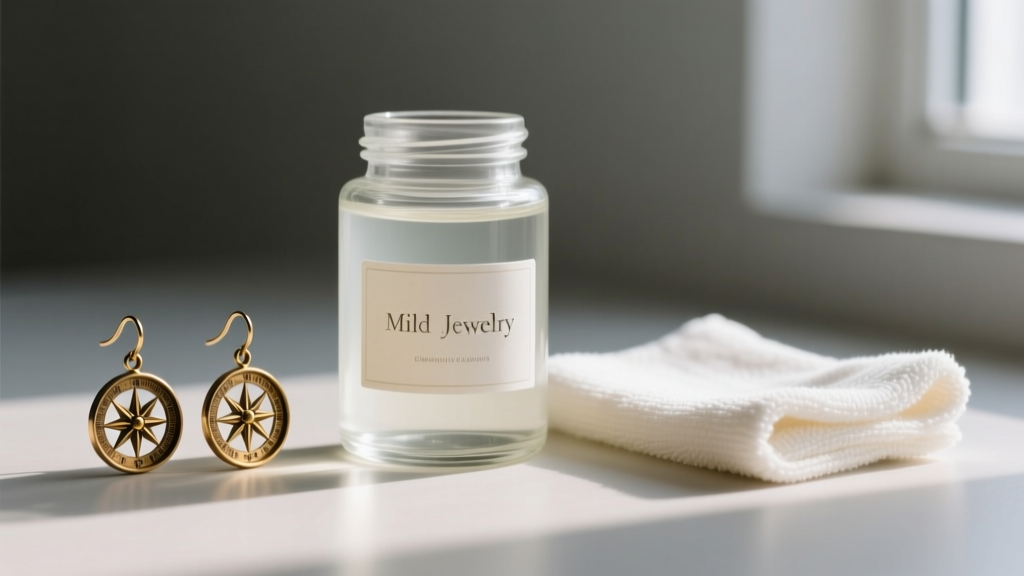
To protect your investment, adopt a strict post-wear protocol. After a day at the beach or a heavy workout, rinse your 316L steel or gold-filled earrings in lukewarm distilled water to remove salt and chloride buildup. Dry them immediately with a microfiber cloth. Never use harsh chemical silver dips or ultrasonic cleaners on pieces featuring cold enamel, glued stones, or oxidized (darkened) detailing, as these processes will strip the finish and ruin the nautical antiquing.
Final Verdict on Nautical Value
The nautical trend is enduring, but your jewelry should be too. By shifting your focus from the initial price tag to the material composition, gauge thickness, and clasp security, you can curate a collection of nautical earrings that look luxurious and perform flawlessly. In 2026, 316L marine-grade stainless steel and 14k gold-filled wire remain the undisputed champions of the budget category, offering the perfect intersection of maritime durability, hypoallergenic safety, and accessible pricing.


