What Is a Drop Earring? An Expert Anatomy & Sizing Guide
Discover what a drop earring is through an expert lens. Explore anatomy, weight distribution, gauge sizes, and metal fatigue prevention.

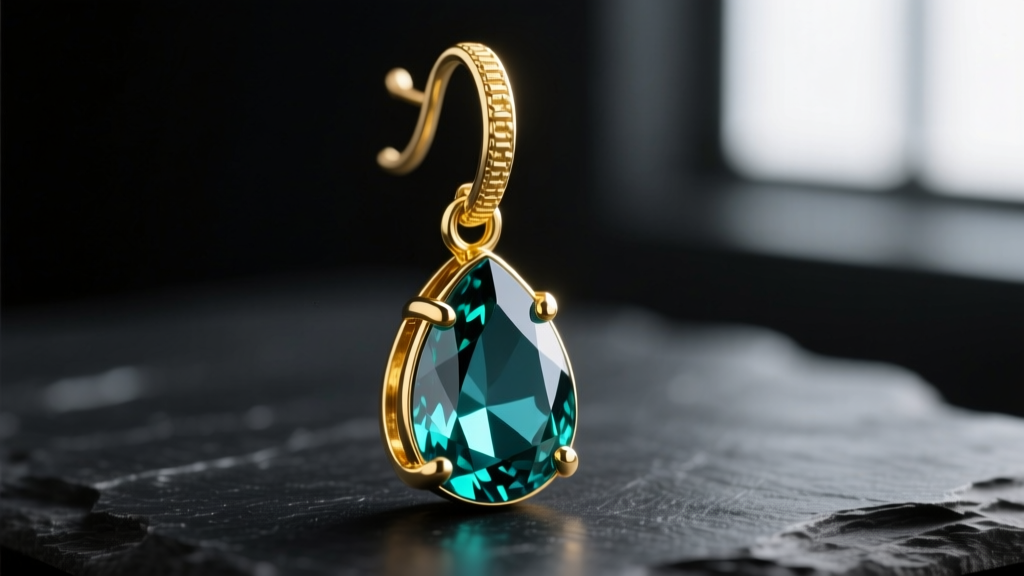
When consumers and retail shoppers ask, "what is a drop earring," the standard industry answer is often overly simplistic: an earring that hangs just below the earlobe. However, from a metallurgical, structural, and gemological perspective, a drop earring is a highly specific category of ear adornment defined by its rigid articulation and single-axis movement. Understanding the exact mechanics of a drop earring is crucial for jewelry designers, bench jewelers, and collectors who want to avoid structural failure, lobe migration, and metal fatigue.
In this expert deep dive, we deconstruct the anatomy of the drop earring, analyze the engineering tolerances required for different metal gauges, and explore the material science that keeps these pieces secure and comfortable for long-term wear.
Defining the Drop: Single-Axis Articulation vs. Multi-Axis Dangles
To truly understand what a drop earring is, one must first distinguish it from its closest relative: the dangle earring. While the terms are frequently used interchangeably in fast-fashion retail, fine jewelry manufacturing treats them as distinct structural categories.
- The Drop Earring: Moves as a single, rigid unit. It typically features one point of articulation (a jump ring or a soldered loop) located immediately beneath the earlobe or the primary stud component. Once it swings forward or backward, the body of the earring remains entirely rigid.
- The Dangle Earring: Features multiple articulation points (chains, interconnected links, or hinged segments). A dangle moves fluidly in multiple directions, behaving more like a kinetic sculpture than a rigid pendulum.
Because a drop earring moves as a single solid mass, the physics of its swing places concentrated cyclical stress on its single point of attachment. This mechanical reality dictates how the earring must be engineered at the bench.
The Anatomy of a Drop Earring
A structurally sound drop earring consists of four critical components. According to manufacturing standards outlined by the Gemological Institute of America (GIA), the failure to properly execute any of these four elements will result in a compromised piece of jewelry.
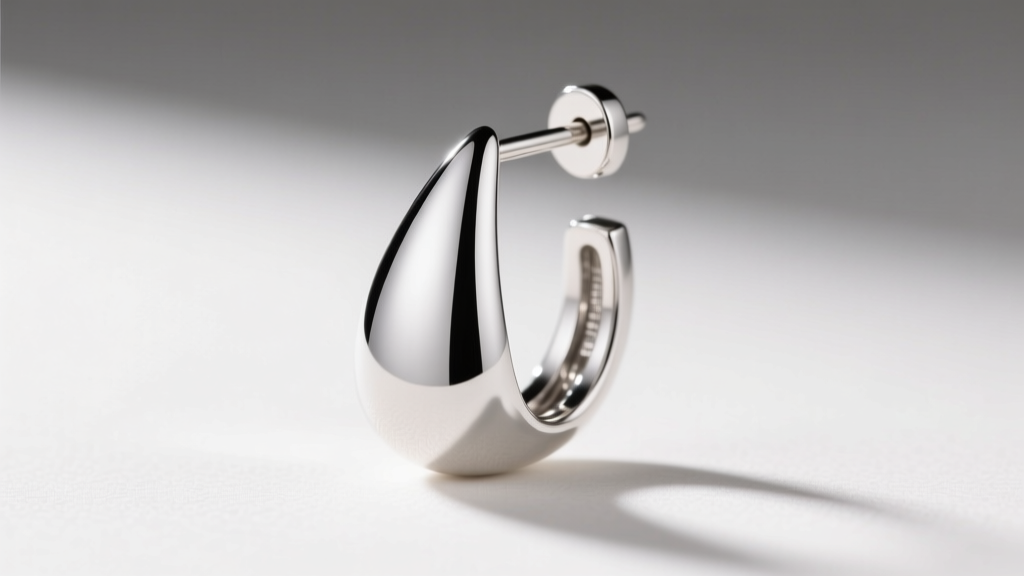
1. The Post and Friction Notch
The post is the wire that passes through the ear piercing. In high-quality drop earrings, the post is drawn rather than cast. Drawing the wire through a draw plate aligns the metal's crystalline structure, vastly increasing its tensile strength and resistance to bending under the weight of the drop.
2. The Articulation Joint (Jump Ring vs. Soldered Loop)
This is the hinge of the earring. A traditional jump ring is a loop of wire with a single saw cut. In premium drop earrings, this cut is either laser-welded or soldered shut to prevent the rigid drop body from twisting the ring open and escaping.
3. The Rigid Body (The Drop)
The main visual element of the earring. Whether it is a solid cast teardrop, a bezel-set gemstone, or a forged geometric shape, the body must have a high enough moment of inertia to swing gracefully without flipping upside down and tangling.
4. The Backing Mechanism
Because drops carry their weight further from the earlobe, standard butterfly friction backs are often insufficient. We will explore specialized backings in the ergonomics section below.
Engineering Weight Distribution and Gauge Tolerances
The most common failure mode in drop earrings is not the metal breaking, but the earring physically migrating through the earlobe tissue—a phenomenon bench jewelers call the "cheese-cutter effect." When a thin wire supports a heavy, swinging mass, the kinetic energy concentrates on a microscopic surface area of the skin, slowly slicing through the lobe over months of wear.
To combat this, the gauge (thickness) of the post must be scaled to the total gram weight of the drop. Below is a technical framework for matching wire gauge to drop earring weights, based on data from jewelry supply authorities like Rio Grande.
| Wire Gauge | Diameter (mm) | Max Recommended Drop Weight | Best Use Case |
|---|---|---|---|
| 22-Gauge | 0.64 mm | 1.5 grams | Ultra-lightweight hollow drops, delicate pearl drops. |
| 20-Gauge | 0.81 mm | 3.5 grams | Standard fine jewelry drops, small bezel-set gemstones. |
| 18-Gauge | 1.02 mm | 6.0 grams | Heavy solid gold drops, large cabochons, statement pieces. |
| 16-Gauge | 1.29 mm | 10.0+ grams | Oversized sculptural drops, heavy platinum designs. |
Expert Insight: If a designer wishes to create a visually large drop earring that exceeds the weight limit of an 18-gauge post, they must utilize electroforming or 3D-printed resin cores to reduce the overall mass while maintaining the visual volume.
Material Science: Combating Metal Fatigue at the Articulation Point
Because a drop earring swings on a single axis, the articulation joint undergoes continuous cyclical loading. Every time the wearer walks, turns their head, or takes off a sweater, the jump ring flexes microscopically. Over time, this causes work hardening and eventual metal fatigue, leading to a microscopic crack that snaps the earring.
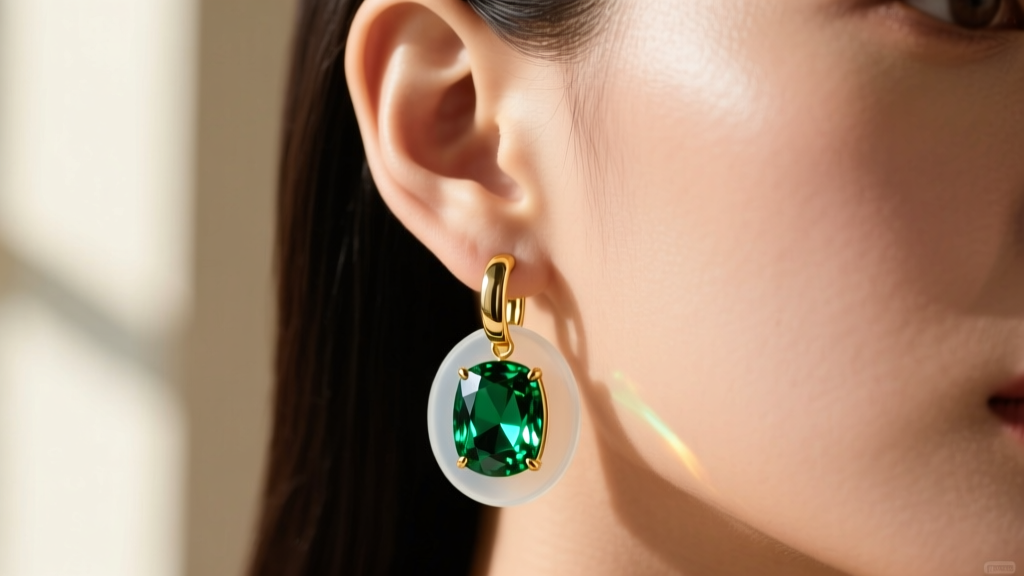
Alloy Selection and Yield Strength
The choice of metal heavily influences how the drop earring will age:
- 14k Gold: Contains a higher percentage of alloy metals (like copper and zinc) than 18k gold. This gives 14k gold a higher yield strength, making it highly resistant to the bending and metal fatigue associated with heavy drop articulation points.
- 18k Gold: Softer and more malleable. If used for a heavy drop earring, the jump ring must be made from a thicker wire gauge or hardened via specialized heat treatments to prevent the loop from stretching into an oval shape over time.
- Platinum: Extremely dense and heavy. A platinum drop earring will naturally weigh more than its gold counterpart, requiring the designer to use a 16-gauge post and laser-welded articulation loops to ensure structural integrity.
- Grade 5 Titanium (Ti-6Al-4V): An aerospace-grade alloy that offers an exceptional strength-to-weight ratio. It is increasingly popular in 2026 for oversized, avant-garde drop earrings that would be unwearable in solid gold or platinum.
Ergonomics and Backing Mechanisms for Heavy Drops
Answering "what is a drop earring" also requires addressing how it stays on the ear. A heavy drop earring will pull the top of the post downward, causing the earring to droop and the decorative element to face the floor rather than sitting flush against the face.
To counteract this leverage, experts recommend abandoning standard push-backs in favor of the following mechanisms:
- Omega Backs: These feature a hinged, curved wire that snaps into a catch, combined with a wide, flat pad that rests against the back of the earlobe. The wide surface area distributes the leverage of the drop across the entire lobe, preventing drooping.
- Screw Backs: The post is threaded, and the back screws on. This prevents the earring from sliding backward on the post, ensuring the drop remains perfectly positioned at the base of the lobe.
- Silicone Stabilizer Discs: For existing drop earrings with standard posts, aftermarket silicone discs (often sold under brand names like BlingWraps) slide onto the post behind the earlobe. These act as a wide, cushioned flange that absorbs the kinetic shock of the swinging drop and keeps the earring upright.
Expert Sourcing and Care Framework
When sourcing or maintaining drop earrings, inspect the articulation point with a 10x jeweler's loupe. If you see a visible seam on a jump ring, ask the jeweler if it has been laser-welded. For cleaning, avoid ultrasonic cleaners for drop earrings featuring delicate gemstone settings at the articulation point, as the high-frequency vibrations can loosen the tension of the jump ring over time. Instead, use a soft-bristled brush and a mild, ammonia-free jewelry cleaning solution to preserve both the metal's temper and the stone's security.


