Best Metals & Materials for Poinsettia Earrings: A Durability Guide
Compare the best materials for poinsettia earrings. Discover durability, weight, and hypoallergenic properties of enamel, gold, and resin designs.

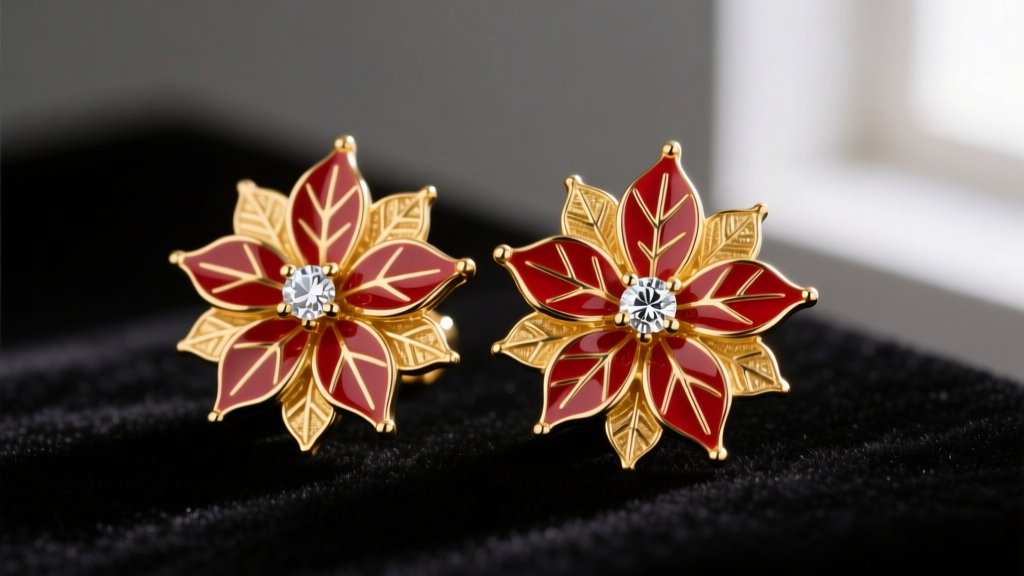
The poinsettia is a botanical masterpiece, characterized by its striking crimson bracts and intricate central cyathia. When translated into jewelry, poinsettia earrings capture this festive elegance, but their complex, multi-layered petal structures present unique challenges for jewelers and wearers alike. Unlike simple geometric studs, floral motifs require materials that can hold microscopic detail, support varying weight distributions, and resist the inevitable friction of daily wear.
As we move through 2026, advancements in metallurgical alloys and UV-stabilized resins have expanded the options for botanical jewelry. However, not all materials are created equal. Whether you are investing in heirloom-quality gold or opting for lightweight acrylics, understanding the physical properties of your jewelry is essential. This comprehensive guide breaks down the best materials for poinsettia earrings, comparing their durability, hypoallergenic profiles, and long-term maintenance requirements.
The Anatomy of Floral Jewelry: Why Material Matters
A well-crafted poinsettia earring typically features three to five overlapping layers of petals (bracts) radiating from a textured center. This three-dimensional architecture means the material must possess high tensile strength to prevent the outer petals from bending or warping when caught on clothing. Furthermore, the material dictates the level of detail a jeweler can achieve. Soft metals will blur at the edges of the petal veins, while harder alloys and glass-based enamels can retain crisp, lifelike textures. Weight is another critical factor; large dangle poinsettia earrings made from dense metals can cause earlobe fatigue or tearing over time, necessitating a careful balance between structural integrity and mass.
Precious Metals: Gold, Silver, and Platinum Alloys
Precious metals remain the gold standard for fine poinsettia earrings, but the specific alloy grade drastically alters the earring's performance.
14K vs. 18K Gold for Intricate Petals
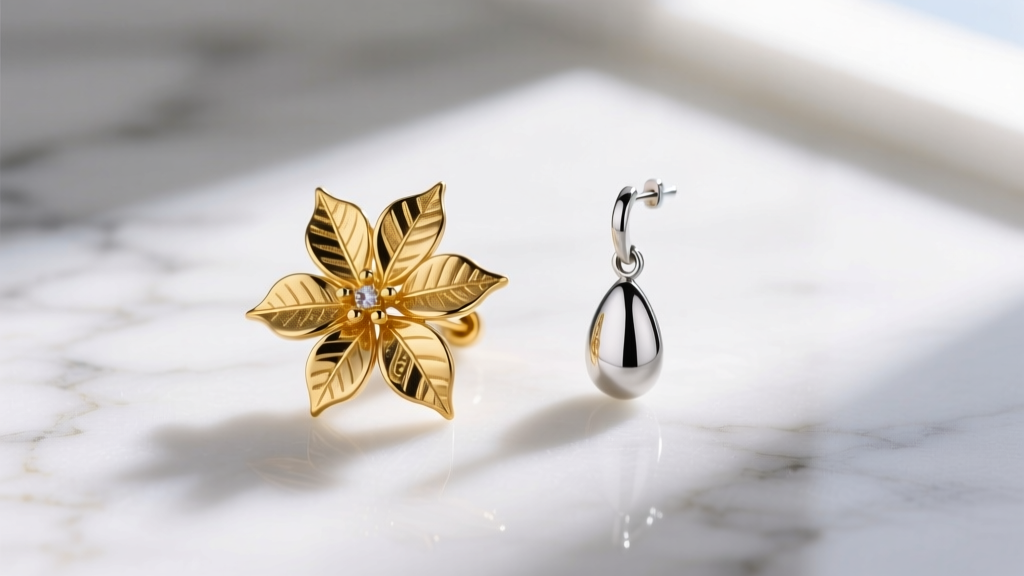
While 18K gold (75% pure gold) offers a richer, warmer yellow hue, it is relatively soft, registering around 120 on the Vickers Hardness (HV) scale. For large, sweeping poinsettia dangles, 18K gold petals are prone to bending. Conversely, 14K gold (58.5% pure gold) is alloyed with higher amounts of copper, silver, or zinc, pushing its hardness to approximately 140-150 HV. According to The London Assay Office, this increased durability makes 14K gold vastly superior for the thin, tapered edges of floral jewelry, ensuring the petals retain their shape for decades.
Sterling Silver and Rhodium Plating
Sterling silver (925) is a popular, cost-effective choice for winter botanical jewelry. However, silver is highly susceptible to tarnishing when exposed to sulfur compounds in the air and skin oils. To combat this, modern silver poinsettia earrings are frequently plated with rhodium. A high-quality rhodium flash should be between 0.75 and 1.0 microns thick. Anything less will wear through the high-friction points of the earring post within months, exposing the tarnish-prone silver beneath.
Enamel and Resin: Achieving the Signature Crimson
The defining feature of the poinsettia is its vibrant red color. Jewelers achieve this through either vitreous enamel or cold enamel (epoxy resin). The choice between the two dictates the earring's lifespan, weight, and care requirements.
| Property | Vitreous Enamel | Cold Enamel (Epoxy Resin) |
|---|---|---|
| Composition | Fused glass powder | Synthetic polymer resin |
| Application Temp | 1400°F - 1500°F (Kiln fired) | Room temperature or low heat cure |
| Durability | Highly scratch-resistant; chips if dropped | Prone to micro-scratches; shatter-resistant |
| Color Fastness | Permanent (will never fade) | May yellow after 3-5 years of UV exposure |
| Weight | Heavier, requires sturdy metal backing | Lightweight, ideal for large statement pieces |
For heirloom-quality poinsettia earrings, vitreous enamel is unmatched. The Gemological Institute of America (GIA) notes that properly fired enamel becomes a permanent part of the metal substrate, offering a glass-like luster that outlasts the wearer. However, for oversized holiday statement pieces where weight is a concern, modern UV-stabilized epoxy resins provide a vibrant, lightweight alternative that won't shatter if dropped on a tile floor.
Hypoallergenic Requirements for Heavy Statement Pieces
Floral dangles exert continuous downward pressure on the earlobe piercing. This tension, combined with friction, can compromise the skin barrier, making the wearer highly susceptible to contact dermatitis if the metal contains nickel. The American Academy of Dermatology identifies nickel as the leading cause of allergic contact dermatitis, which is prevalent in cheap, mass-produced brass or nickel-silver alloys often used in seasonal jewelry.
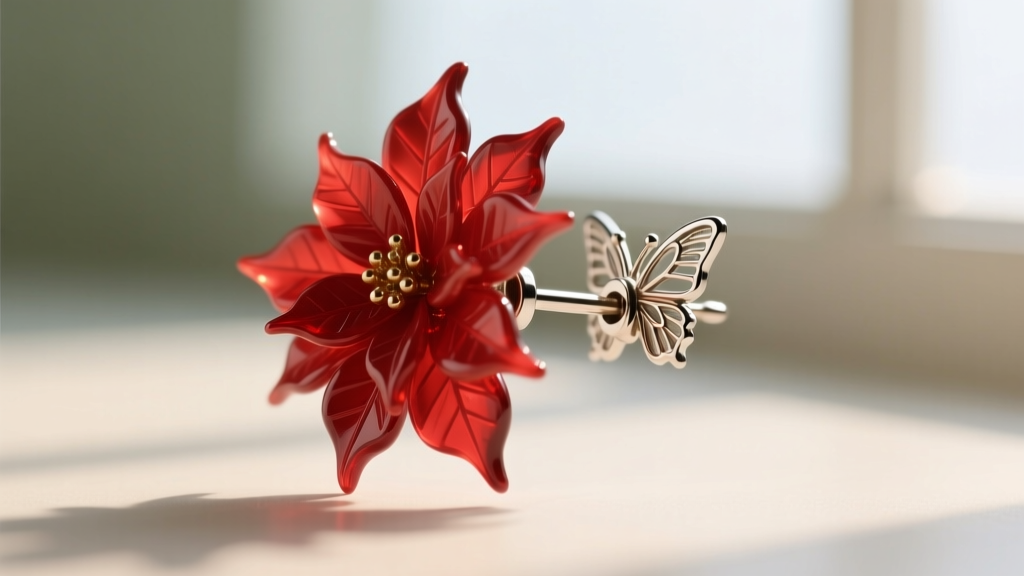
To mitigate allergic reactions and physical tearing, pay strict attention to the earring post gauge and material:
- Gauge Size: Standard lobe piercings are 20G (0.8mm) or 18G (1.0mm). For heavy poinsettia dangles, insist on an 18G or even 16G (1.2mm) post. A thicker wire distributes the weight over a larger surface area inside the fistula, preventing the "cheese-cutter effect" that elongates the piercing hole.
- Safe Metals: If you have sensitive skin, bypass sterling silver and standard gold alloys. Opt for ASTM F-136 compliant implant-grade titanium or 950 platinum for the earring posts. These metals are entirely nickel-free and biologically inert.
- Backing Support: For heavy resin or enamel poinsettias, replace standard butterfly clutches with flat silicone friction backs or locking screw-backs to provide a wider surface area of support behind the earlobe.
Care and Maintenance by Material Type
Improper cleaning is the fastest way to destroy the intricate details of botanical jewelry. Follow these material-specific protocols to maintain your poinsettia earrings:
- Ultrasonic Cleaners: Never use ultrasonic cleaners on enamel or resin poinsettias. The high-frequency vibrations will cause vitreous enamel to crack away from the metal backing and will cloud the surface of epoxy resins. Ultrasonics are only safe for solid, un-enameled gold or platinum pieces.
- Chemical Dips: Avoid commercial silver dip solutions on rhodium-plated sterling silver. The harsh thiourea chemicals will strip the rhodium plating, leaving the silver porous and highly susceptible to rapid tarnishing.
- Manual Cleaning: For enameled and resin pieces, use a few drops of mild, phosphate-free dish soap in lukewarm water. Gently agitate with a baby-hair toothbrush to remove sebum and dead skin cells trapped between the overlapping metal petals. Dry immediately with a microfiber cloth to prevent water spots on the enamel.
Final Verdict: Choosing Your Poinsettia Earrings
Selecting the right pair of poinsettia earrings requires balancing your aesthetic preferences with practical material science. If you are seeking a lightweight, vibrant piece for occasional seasonal wear, UV-stabilized cold enamel set in 18G sterling silver offers the best cost-to-weight ratio. However, for a timeless, generational piece that can be worn year-round without fear of fading or allergic reactions, invest in 14K gold with kiln-fired vitreous enamel and implant-grade titanium posts. By prioritizing material integrity over fast-fashion trends, your botanical jewelry will remain as striking as the day it was crafted.


