Pierced Earring Storage: Budget vs. Value Assessment Guide
Discover the best pierced earring storage options by budget. We assess value, anti-tarnish materials, and durability to protect your fine jewelry collection.

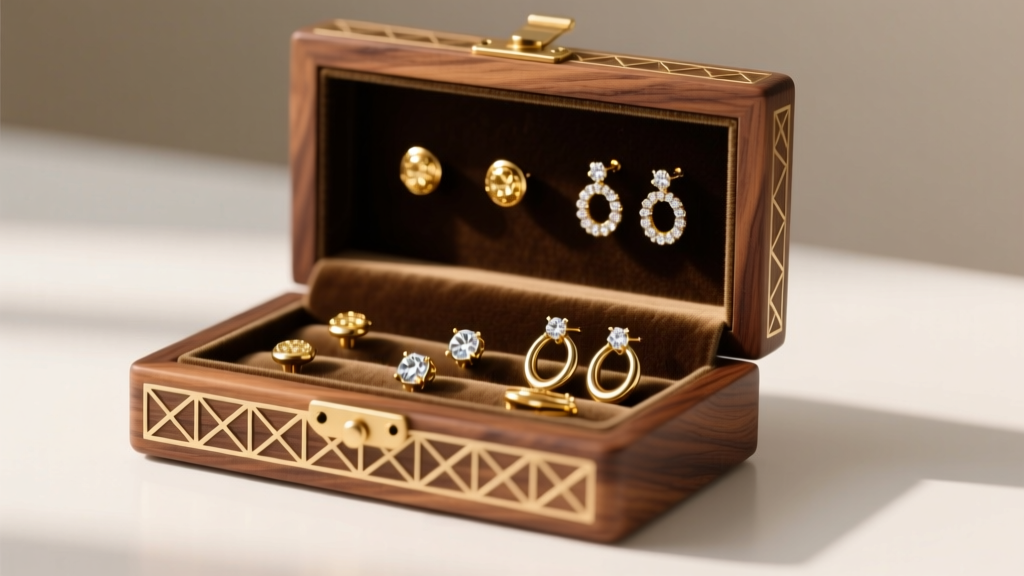
When building a fine jewelry collection, the focus is almost exclusively on the pieces themselves—carat weights, gold purity, and gemstone cuts. However, the long-term value of your earrings is inextricably linked to how they are stored. A poorly chosen organizer can bend delicate posts, accelerate silver oxidation, and cause micro-scratches on polished gold. In this comprehensive budget and value assessment, we evaluate the true cost of pierced earring storage solutions, breaking down material science, mechanical stress points, and long-term return on investment (ROI) to help you protect your assets.
The Hidden Costs of Cheap Pierced Earring Storage
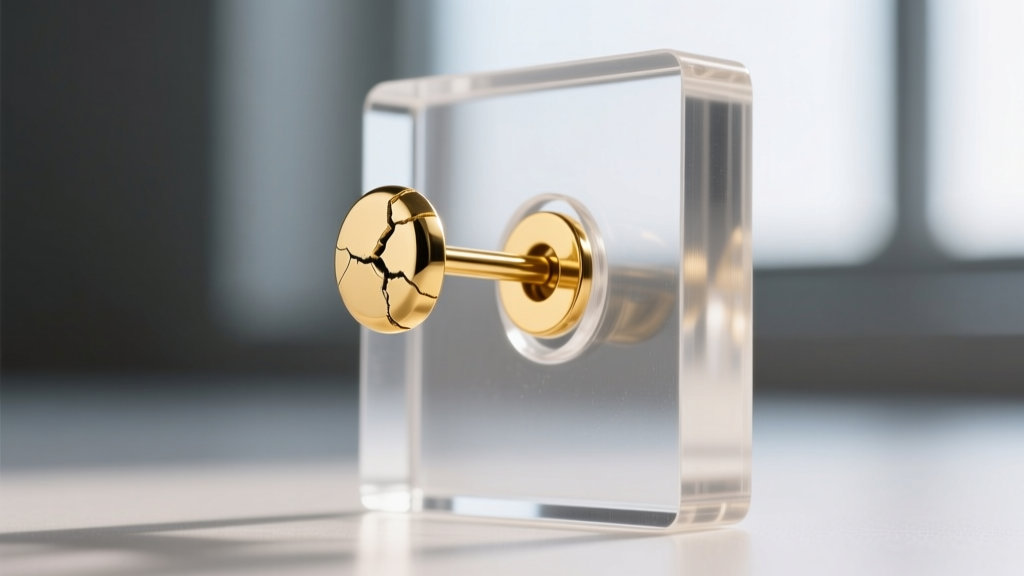
The market is flooded with sub-$15 acrylic and faux-leather earring organizers that look visually appealing but fail structurally and chemically. The primary issue lies in the standardized hole sizing. Standard lobe earring posts are typically 20-gauge (0.81mm) or 18-gauge (1.0mm), while cartilage studs and labrets often use thicker 16-gauge (1.29mm) or 14-gauge (1.6mm) posts. Cheap plastic organizers often feature uniform 1mm holes. Forcing a 14-gauge titanium cartilage stud into a rigid acrylic slot will permanently bend the post, ruining the threading and compromising the structural integrity of the jewelry.
Chemically, inexpensive velvet and untreated cotton linings trap moisture and ambient sulfur, accelerating the formation of silver sulfide (tarnish). According to The Silver Institute, silver tarnishes when exposed to sulfur compounds in the air. Storing sterling silver earrings in non-hermetic, untreated fabric organizers guarantees you will spend more time and money on polishing compounds and professional ultrasonic cleaning than you would have spent on a proper anti-tarnish storage solution initially.
Material Breakdown: What Actually Protects Your Posts?
To assess true value, we must look past the exterior aesthetic and evaluate the interior materials that physically interact with your jewelry. Here is how the most common materials perform under long-term use.
Anti-Tarnish Fabrics vs. Standard Velvet
Standard velvet is a lint trap. The microscopic fibers can snag on prong settings, loosening the grip on pavé diamonds over time. Furthermore, standard velvet offers zero chemical protection. Premium organizers utilize zinc-infused cotton or proprietary materials like Pacific Silvercloth. These fabrics embed microscopic silver or zinc particles that act as sacrificial anodes, absorbing sulfur and hydrogen sulfide before they can reach your actual jewelry. While a standard velvet insert costs manufacturers roughly $1.50 to produce, a genuine anti-tarnish fabric insert costs upwards of $8.00, a cost that is passed to the consumer but easily justified by the preservation of high-end pieces.
EVA Foam vs. Acrylic Inserts
Acrylic slots look clean and modern, but they are unforgiving. They offer zero shock absorption and can snap delicate hinge mechanisms on huggie hoops if forced shut. EVA (Ethylene-Vinyl Acetate) foam, commonly used in mid-tier travel cases, is much gentler. However, not all EVA foam is created equal. Low-density EVA foam degrades and tears after repeated insertion of sharp earring posts, leaving ugly craters and eventually failing to hold the earrings securely. High-density, closed-cell EVA foam is the gold standard for travel, as it resists tearing and prevents moisture ingress.
Budget vs. Value: The Pricing Tier Matrix
Understanding where your money goes helps separate marketing gimmicks from genuine horological and jewelry-grade protection. Below is our assessment matrix based on current market pricing and material quality.
| Tier | Price Range | Common Materials | Best Use Case | Value Rating |
|---|---|---|---|---|
| Budget | $10 - $25 | Clear acrylic, untreated velvet, thin PU leather | Costume jewelry, temporary display, high-turnover retail | Low (High risk of post bending and tarnish) |
| Mid-Tier | $30 - $65 | High-density EVA foam, microfiber lining, MDF wood | Frequent travel, everyday lobe studs, moderate collections | High (Excellent mechanical protection, decent chemical) |
| Premium | $80 - $150+ | Pacific Silvercloth, solid walnut, brass hardware, suede | Fine jewelry, heirloom pieces, long-term stationary storage | Exceptional (Complete chemical and mechanical preservation) |
Travel vs. Stationary Storage Dynamics
The value proposition of your pierced earring storage changes drastically depending on whether it sits on a vanity or lives in a carry-on bag. Stationary storage prioritizes visibility and chemical protection. A heavy, multi-tiered wooden box with anti-tarnish strips is ideal here. The weight prevents it from being knocked over, and the enclosed environment allows the anti-tarnish agents to reach saturation, effectively halting oxidation.
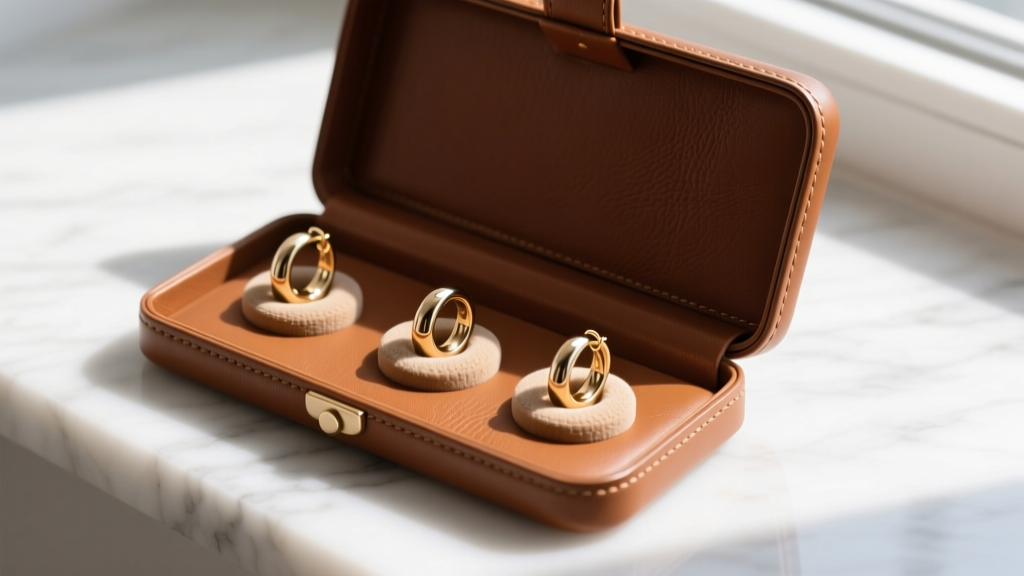
Travel storage, conversely, must prioritize mechanical retention and shock absorption. A common failure mode in travel is the 'loose back' scenario, where an earring post slips through a fabric slit, but the friction back falls off during transit, resulting in a lost earring. High-value travel organizers solve this by utilizing silicone grip pads or threaded screw-top compartments. While a basic fabric roll might cost $18, a specialized travel case with individual silicone-grip zones costs around $45. The ROI is realized the very first time a $500 diamond stud is prevented from falling out of its pouch in a hotel drawer.
Failure Modes: Why Your Current Organizer is Ruining Your Studs
Even well-intentioned jewelry lovers often unknowingly damage their collections through improper storage mechanics. Be on the lookout for these specific failure modes:
- The Velcro Snag: Organizers that use cheap Velcro straps to secure travel flaps are a massive liability. The hook side of the Velcro will inevitably catch on delicate chains, filigree work, or halo settings, pulling prongs away from their stones.
- The Hinge Snap: For hoop earrings and huggies, repeatedly forcing the hinged post into a tight, unyielding plastic slot will weaken the microscopic solder joint at the hinge. Over time, the hoop will snap open on its own.
- The Thread Strip: For internally threaded cartilage jewelry, pushing the decorative end into a dense foam pad while twisting can cross-thread or strip the delicate 16G or 14G internal threading, rendering the piece unwearable without professional re-tapping.
Proper jewelry care extends far beyond cleaning; it requires a controlled micro-environment. Storing fine pieces in abrasive or chemically reactive materials accelerates wear and diminishes the intrinsic value of the metal and gemstones over time.
— Guidelines adapted from Jewelers of America
The Verdict: Maximizing ROI on Your Jewelry Organization
When conducting a budget and value assessment for pierced earring storage, the cheapest option is rarely the most economical in the long run. If your collection consists primarily of fashion jewelry or plated brass, a $15 acrylic organizer is perfectly adequate. However, if you own solid 14k/18k gold, platinum, or sterling silver pieces, investing in a $50 to $120 organizer featuring high-density EVA foam for travel or zinc-infused anti-tarnish fabrics for stationary storage is a mandatory insurance policy. By preventing bent posts, stripped threads, and deep silver oxidation, a premium storage solution pays for itself the first time it saves you a trip to the jeweler's bench.


