The Best 6mm Stud Earrings 2026: Budget & Value Guide
Discover the true cost and value of 6mm stud earrings in 2026. We break down materials, pricing tiers, and where to invest your jewelry budget.

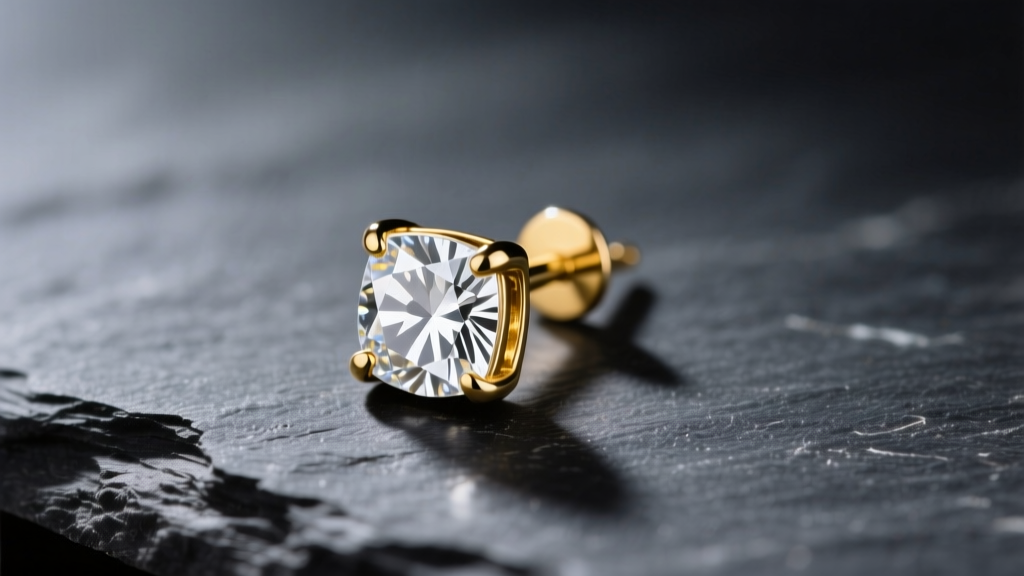
When building a curated ear stack or selecting a reliable daily-wear accessory, the 6mm stud earring occupies a critical sweet spot in modern jewelry design. Measuring approximately 0.23 inches in diameter, a 6mm face provides enough visual weight to serve as a standalone statement piece in a primary lobe piercing, while remaining compact enough to function as a foundational anchor in upper-cartilage arrangements. However, as precious metal markets fluctuate and manufacturing techniques evolve in 2026, the price gap between seemingly identical 6mm studs has widened dramatically. A quick market search reveals prices ranging from $8 to over $400 for the exact same silhouette. This guide cuts through the marketing jargon to assess the true budget and value of 6mm stud earrings, breaking down material grades, gauge economics, and hidden failure modes so you can allocate your jewelry budget with absolute precision.
The Anatomy of a 6mm Stud: Face Size vs. Post Gauge
To accurately assess value, we must first separate the face diameter from the post gauge. When jewelers refer to a "6mm stud," they are describing the width of the decorative front (the setting and stone). In gemological terms, a 6mm round brilliant-cut stone equates to roughly an 0.80-carat diamond equivalent. This is a substantial size that requires robust structural support.
The hidden cost driver is the post gauge—the thickness of the metal wire that actually passes through your piercing. Standard lobe earrings are typically manufactured at 20-gauge (0.81mm) or 18-gauge (1.02mm). However, if you intend to wear your 6mm stud in a cartilage piercing (like a helix or tragus), professional piercers strongly recommend a 16-gauge (1.29mm) post to prevent the "cheese-cutter effect," where a thin wire slowly migrates through the tissue under the weight of a 6mm stone. Machining a 16-gauge post requires significantly more precious metal and specialized threading equipment, inherently raising the base manufacturing cost of the earring by 15% to 25% compared to its 20-gauge counterpart.
Placement Strategy: Lobe vs. Cartilage Economics
Where you plan to wear the earring dictates the engineering required, which directly impacts your budget. For standard earlobe placements, a 6mm face with a standard 6mm post length and a simple friction back is perfectly adequate. You can safely explore mid-tier demi-fine options here without risking severe complications.
Conversely, cartilage placements demand higher-end materials. A 6mm stud destined for a flat helix or conch requires a longer post (often 8mm to accommodate initial swelling) and a secure, threadless (press-fit) or internally threaded backing. Budgeting for cartilage jewelry means paying a premium for ASTM F136 implant-grade titanium or solid 14k/18k gold, as porous or plated metals can trap bacteria in cartilage tissue, leading to prolonged healing and hypertrophic scarring.
Material Grades & Pricing Tiers: What Are You Actually Paying For?
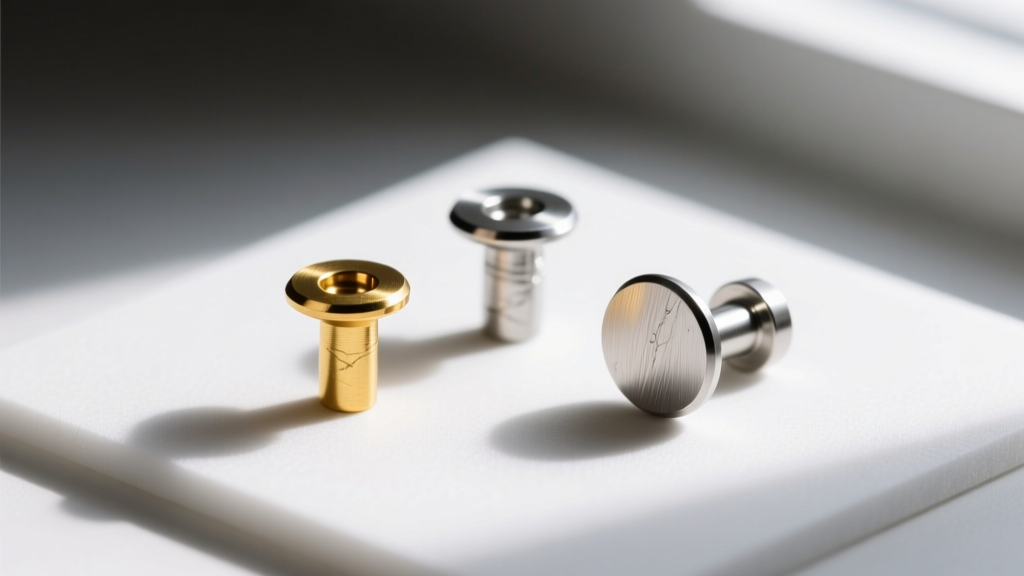
Tier 1: Fashion Plating ($8 - $25)
At the bottom of the market, 6mm studs are typically crafted from brass or copper alloys and flash-plated with microscopic layers of gold or rhodium. While the upfront cost is negligible, the value proposition is poor for daily wear. The plating is usually less than 0.5 microns thick, meaning the friction of a 6mm stone's weight against the earlobe will wear through the finish within weeks, exposing the reactive base metal. This frequently results in contact dermatitis and green oxidation. Value Verdict: Only viable for occasional, short-term wear.
Tier 2: Demi-Fine & Gold Vermeil ($35 - $90)
The mid-tier market is dominated by gold vermeil. According to the Federal Trade Commission (FTC) Guides for the Jewelry Industry, true vermeil must consist of a sterling silver (925) base coated with a minimum of 2.5 microns of 10k, 14k, or 18k gold. A well-crafted 6mm CZ vermeil stud offers excellent visual appeal and decent longevity for healed lobe piercings. However, sterling silver contains copper, which can still cause reactions in sensitive or unhealed cartilage piercings. Value Verdict: The best balance of aesthetics and affordability for healed lobes.
Tier 3: Solid Gold & Implant-Grade Titanium ($120 - $400+)
At the apex of the market are 6mm studs machined from solid 14k/18k gold or ASTM F136 implant-grade titanium. These pieces are biocompatible, impervious to water, and will not degrade over decades of continuous wear. In this tier, you are also paying for superior lapidary work; the 6mm cubic zirconia or lab-grown diamonds are often hand-set in precision bezels or low-profile prongs that won't snag on hair or clothing. Value Verdict: The highest cost-per-wear value for lifetime daily wear and fresh cartilage piercings.
2026 Value Comparison Matrix
| Material Category | Base Metal | Plating / Purity | Expected Lifespan | Avg. Price (6mm CZ) |
|---|---|---|---|---|
| Fashion Plate | Brass / Copper | < 0.5 microns | 1 - 3 Months | $8 - $25 |
| Gold Vermeil | Sterling Silver (925) | ≥ 2.5 microns Gold | 1 - 3 Years | $35 - $90 |
| Solid 14k Gold | Gold Alloy (58.5%) | Solid throughout | Lifetime | $140 - $280 |
| Implant-Grade Ti | ASTM F136 Titanium | Anodized / PVD | Lifetime | $45 - $120 |
Hidden Costs: Backings, Settings, and Failure Modes
When budgeting for 6mm stud earrings, amateur buyers focus entirely on the front setting, ignoring the mechanical components that secure it. A 6mm stone is relatively heavy; if the backing fails, you lose the entire investment.
- Butterfly Friction Backs: Standard on budget and mid-tier earrings. The metal wings lose tension over time, and the grooved post traps dead skin and sebum. Replacing them with high-quality silicone O-rings ($5 for a pack of 50) is a mandatory maintenance cost to prevent losing your earring.
- Threadless (Press-Fit) Systems: Standard on high-end titanium and solid gold body jewelry. The post features a slight bend that locks into the hollow backing via tension. While the initial engineering cost adds roughly $15 to $25 to the retail price, it virtually eliminates the risk of the 6mm stud falling out during sleep or hair brushing.
- Bezel vs. Prong Settings: A 6mm prong-set stone maximizes light return but acts as a microscopic grappling hook, catching on knit sweaters and hair. A bezel setting (where a metal rim encircles the 6mm stone) sacrifices about 15% of the stone's visible surface area but offers vastly superior structural integrity, reducing the long-term cost of stone replacements.
Expert Verdict: Maximizing Your Jewelry Budget
"Do not compromise on the metal grade for cartilage placements, and do not overspend on solid gold for secondary lobe piercings that you plan to swap out seasonally. Match the metallurgical durability to the anatomical location."
To extract the maximum value from your jewelry budget in 2026, adopt a tiered purchasing strategy. Allocate the majority of your funds ($120+) toward a single pair of high-quality, solid 14k gold or implant-grade titanium 6mm bezel-set studs for your primary, never-take-out lobe or cartilage piercings. For secondary upper-lobe placements where you prefer to rotate styles based on current trends, invest in FTC-compliant gold vermeil options ($40-$60). Avoid flash-plated fashion alloys entirely; the subsequent cost of treating contact dermatitis and replacing tarnished pieces entirely negates the initial savings. By understanding the intersection of gauge thickness, setting mechanics, and metal purity, you can build a 6mm stud collection that is both economically rational and anatomically sound.


