Clean Earrings Value Guide: Budgeting for Minimalist Styles
Discover the true value of clean earrings. We break down pricing tiers, material grades, and cost-per-wear for minimalist studs, hoops, and huggies.

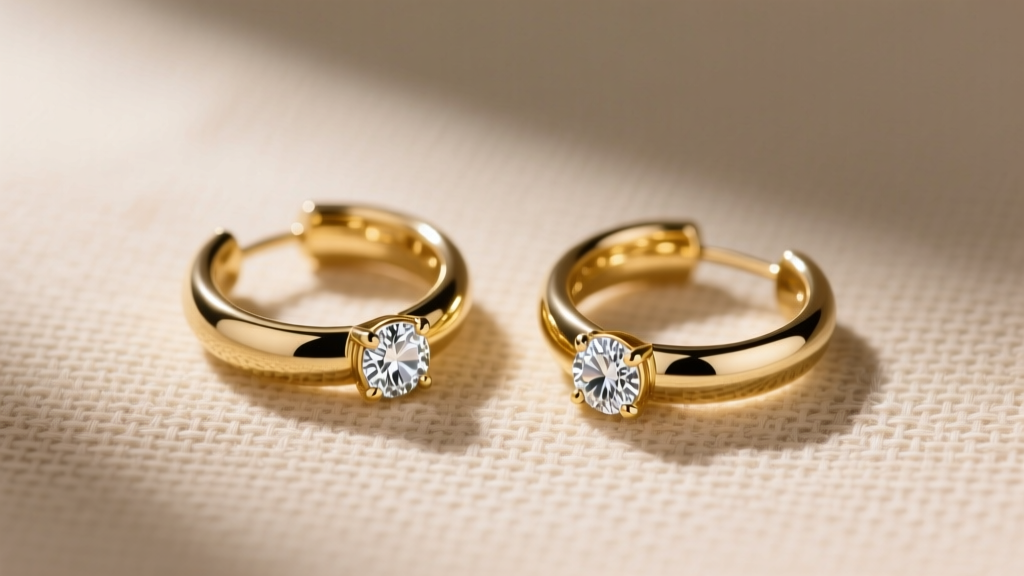
The shift toward capsule wardrobes has fundamentally changed how we invest in jewelry. At the forefront of this movement are clean earrings—unembellished, geometric, and sleek designs that prioritize architectural silhouettes over ornate gemstone clusters. Whether it is a pair of continuous seamless hoops, flat-back bezel studs, or unadorned huggies, the 'clean' aesthetic is ubiquitous. But when a minimalist 14k gold hoop costs $280 and a visually identical gold-plated version costs $35, how do you assess the true value?
As a budget and value assessment guide, this article strips away the marketing fluff. We will analyze the metallurgy, construction mechanics, and cost-per-wear metrics of clean earrings to help you allocate your jewelry budget with precision.
The 'Clean' Aesthetic: Defining Minimalist Earwear
In jewelry design, 'clean' refers to pieces that rely on form, proportion, and metal finish rather than decorative embellishments. The value proposition of clean earrings lies in their extreme versatility and high cost-per-wear ratio. Because they lack trend-driven elements (like colored enamel or novelty shapes), they resist looking dated. However, because the eye is drawn entirely to the metal's surface and silhouette, any flaw in material quality or construction becomes immediately obvious. This makes material selection the most critical factor in your budget assessment.
Material Grades & Pricing: Where Your Money Actually Goes
When shopping for minimalist earwear, brands often use ambiguous terminology to justify premium pricing. Understanding the exact material grades is essential for determining true value.
Tier 1: Flash Plated & Brass (The Budget Trap)
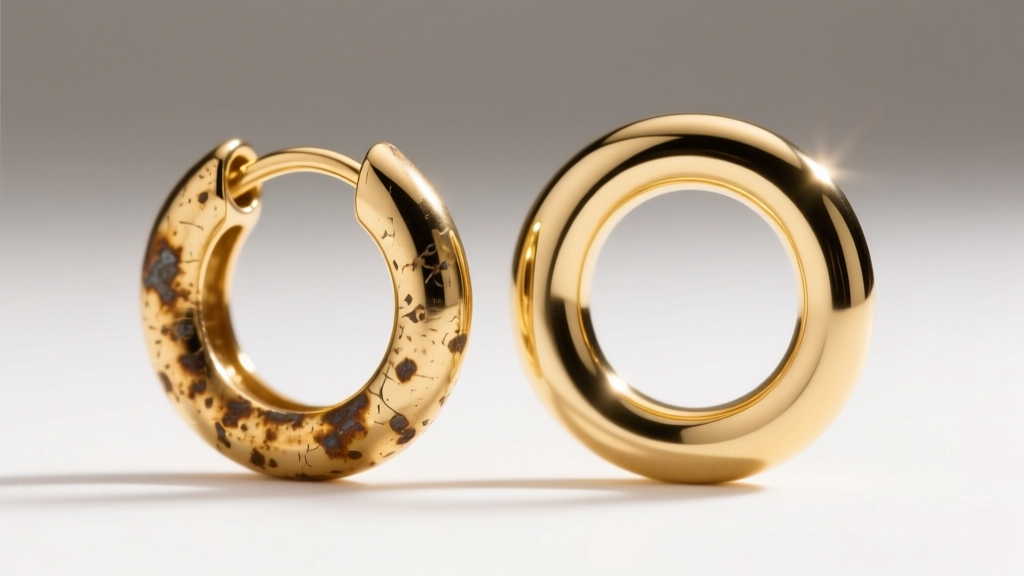
Priced between $15 and $40, these earrings typically feature a brass or copper base with a 'flash' gold plating of less than 0.5 microns. While they offer the clean aesthetic on day one, the friction of daily wear will expose the base metal within months. For a minimalist piece where the metal is the design, tarnish and flaking ruin the aesthetic entirely. Value verdict: Poor long-term value; high replacement cost.
Tier 2: Gold Vermeil (The Sweet Spot)
Priced between $60 and $120, true gold vermeil must meet strict Federal Trade Commission (FTC) guidelines. It requires a sterling silver base and a gold layer of at least 2.5 microns. Many 'budget' brands sell 1-micron gold-plated silver and mislabel it as vermeil. When properly manufactured, vermeil clean earrings offer an excellent balance of luxury appearance and budget-friendly pricing, lasting 2 to 4 years with daily wear before requiring re-plating.
Tier 3: Solid 14k/18k Gold & Implant-Grade Titanium (The Investment)
Priced from $150 to $500+, solid gold and ASTM F136 implant-grade titanium represent the pinnacle of value for everyday minimalist wear. Titanium is exceptionally lightweight, hypoallergenic, and costs significantly less than gold, making it a brilliant budget hack for clean, modern ear stacks. Solid gold, while carrying a high upfront cost, will never tarnish, flake, or degrade, effectively making it a lifetime purchase.
Hardware & Backings: The Hidden Cost of Clean Earrings
The clean aesthetic extends beyond the visible front of the earring; it also encompasses the mechanics of the backing. Cheap friction backs (butterfly clasps) are notorious for trapping dead skin cells, sebum, and bacteria, leading to contact dermatitis and foul odors—a stark contrast to the 'clean' ethos.
- Friction Backs (Standard): High failure rate, prone to bending the post. Found on sub-$50 earrings.
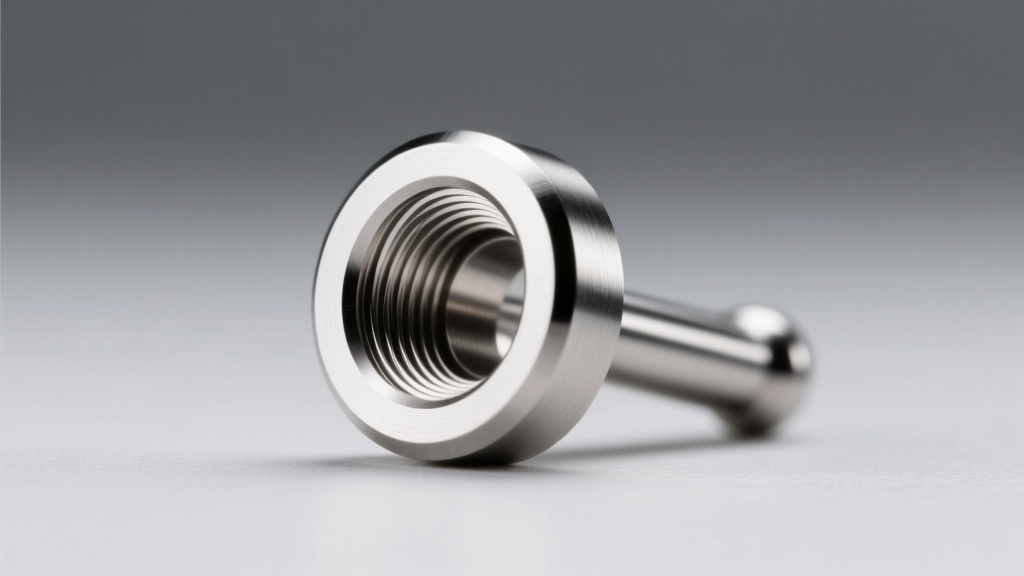
- Threaded Labret Flat-Backs: The gold standard for clean, comfortable wear. The internally threaded post screws into a flat disc that sits flush against the ear. Common in mid-tier to high-end titanium and solid gold pieces ($80 - $250).
- Continuous Seamless Hoops: No hinges or clasps to break. The thin wire snaps into the hollow tubing. Structurally superior to hinged 'clickers' which often fail at the hinge after 1-2 years of daily use.
Cost-Per-Wear Analysis: Clean Earrings vs. Statement Pieces
To accurately assess budget, we must look at the Cost-Per-Wear (CPW). Clean earrings are designed for daily, 24/7 wear (including showering and sleeping, if the hardware allows). Below is a comparative CPW analysis based on a 3-year daily wear scenario (1,095 wears).
| Material / Construction | Avg. Upfront Cost | Expected Lifespan | Cost-Per-Wear (3 Yrs) |
|---|---|---|---|
| Brass / Flash Plated Huggies | $35 | 6 Months | $0.19 (Requires 6 replacements) |
| Sterling Silver / Vermeil Hoops | $85 | 2.5 Years | $0.07 |
| ASTM F136 Titanium Flat-Back Studs | $60 | Lifetime | $0.05 |
| Solid 14k Gold Seamless Hoops | $280 | Lifetime | $0.25 (Drops to $0.01 over 50 yrs) |
As the data illustrates, investing in ASTM F136 titanium offers the absolute best budget-to-value ratio for the clean aesthetic, providing lifetime durability at a fraction of the cost of solid gold.
Sizing & Gauge Specifications for Sleek Profiles
The visual weight of a clean earring is dictated by its gauge (wire thickness) and diameter. A common budgeting mistake is buying hoops that are too thin, which easily bend out of their perfect circular shape, ruining the minimalist look.
- 20-Gauge (0.8mm): Standard for basic lobe piercings. Too fragile for seamless hoops; best reserved for delicate, lightweight wire studs.
- 18-Gauge (1.0mm): The ideal middle-ground for clean huggies and small hoops. Offers structural integrity without looking bulky.
- 16-Gauge (1.2mm): Standard for cartilage (helix, conch). In the lobe, a 16g continuous hoop provides a bold, architectural, and highly intentional 'clean' profile that resists bending.
When budgeting, ensure the brand explicitly lists the gauge. Brands that hide this specification are often using ultra-thin 22g wire to save on precious metal costs, resulting in a flimsy product that fails to deliver the premium minimalist aesthetic.
Final Verdict: How to Allocate Your Earring Budget
Building a collection of clean earrings requires a strategic approach to your budget. Avoid the 'middle market' trap of overpriced gold-plated brass. Instead, bifurcate your spending:
- Allocate 70% of your budget to foundational pieces: Invest in solid 14k gold or ASTM F136 titanium for your primary everyday hoops and flat-back studs. These are the workhorses of your ear stack.
- Allocate 30% to trend-adjacent vermeil: If you want to experiment with slightly larger, sculptural clean shapes (like abstract molten-gold drops) that you may only wear seasonally, high-quality 2.5-micron vermeil is a financially sound choice.
By prioritizing metallurgy and mechanical construction over brand names, you can curate a flawless, minimalist ear stack that maintains its pristine aesthetic for decades, proving that true style is always a sound investment.


