How to Build a Capsule Earring Kit for Everyday Wear
Learn how to build a versatile capsule earring kit. Discover essential studs, hoops, and drops tailored to your face shape and lifestyle.

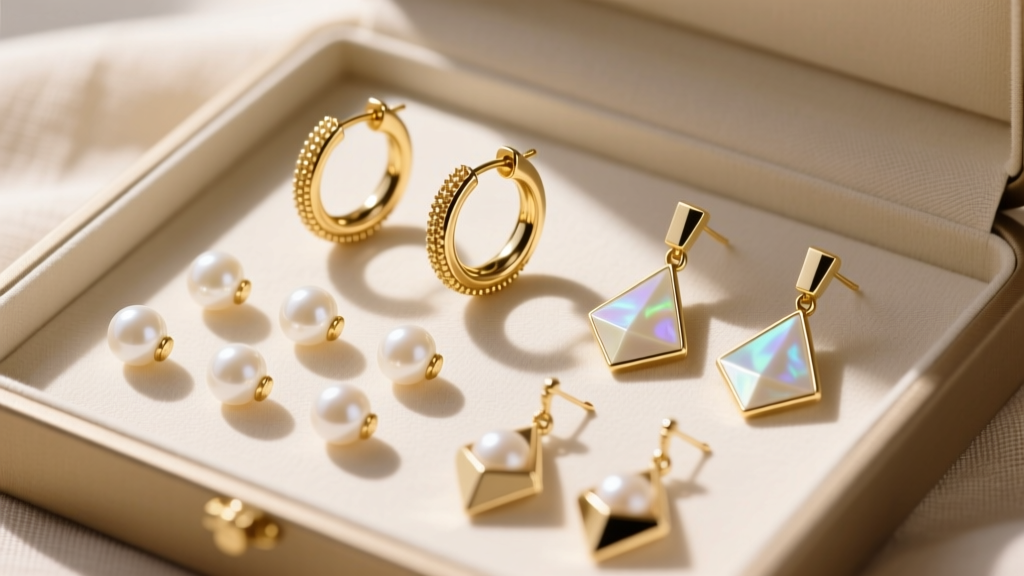
The Rise of the Capsule Earring Kit
The concept of a capsule wardrobe has officially migrated to the jewelry box. In 2026, the trend of hyper-consumerism is being replaced by intentional curation, and the earring kit is at the forefront of this movement. Rather than owning dozens of unworn, low-quality pairs, style enthusiasts are investing in a curated "capsule earring kit"—a collection of five to seven high-quality, interchangeable pieces designed to mix, match, and suit any occasion.
Building a functional kit requires more than just buying matching sets. It demands an understanding of facial proportions, metal biocompatibility, and piercing gauges. Whether you are styling a single lobe piercing or a fully curated ear party, this step-by-step guide will help you construct a versatile, timeless, and hypoallergenic earring kit tailored to your exact needs.
The 5-Piece Framework: Anatomy of a Perfect Kit
A true capsule earring kit relies on a balance of scale, texture, and silhouette. Here are the five foundational categories every kit must include, complete with exact dimensional recommendations.
1. The Everyday Stud (The Anchor)
Your anchor stud should be small enough to sleep in but brilliant enough to catch the light. Opt for a 3mm to 5mm gemstone or a classic 4mm Akoya pearl. For standard lobe piercings, a 18-gauge (1.0mm) or 16-gauge (1.2mm) post is ideal. Threadless or internally threaded posts are mandatory to prevent tissue irritation during insertion.
2. The Seamless Hoop (The Workhorse)
A medium-sized hoop bridges the gap between casual and professional. Look for a 15mm to 20mm diameter. If you plan to wear this in your cartilage (like a helix or tragus), ensure the wire thickness is exactly 16-gauge (1.2mm) to match standard cartilage piercing needles. Seamless or continuous ring closures prevent the snagging associated with traditional latch-backs.
3. The Huggie (The Texture Element)
Huggies sit flush against the earlobe, providing a modern, minimalist aesthetic. A 10mm to 12mm inner diameter with a hinged clicker closure offers the best security. In 2026, textured huggies—such as twisted rope or hammered metal finishes—are highly sought after for adding visual weight without dangling.
4. The Statement Drop (The Evening Element)
For formal events or elevated daywear, you need a drop earring that elongates the neck. Aim for a 30mm to 40mm total drop length. To prevent earlobe stretching over time, prioritize hollow metal designs or lightweight gemstone cuts (like rose-cut diamonds or carved quartz) that keep the overall weight under 4 grams per earring.
5. The Ear Cuff (The Non-Committed Accent)
Not every piece in your earring kit requires a piercing. A well-crafted ear cuff allows you to experiment with upper-ear curation without the commitment of a needle. Look for cuffs with an adjustable tension band made of dead-soft metal so you can mold it precisely to your helix or conch ridge.
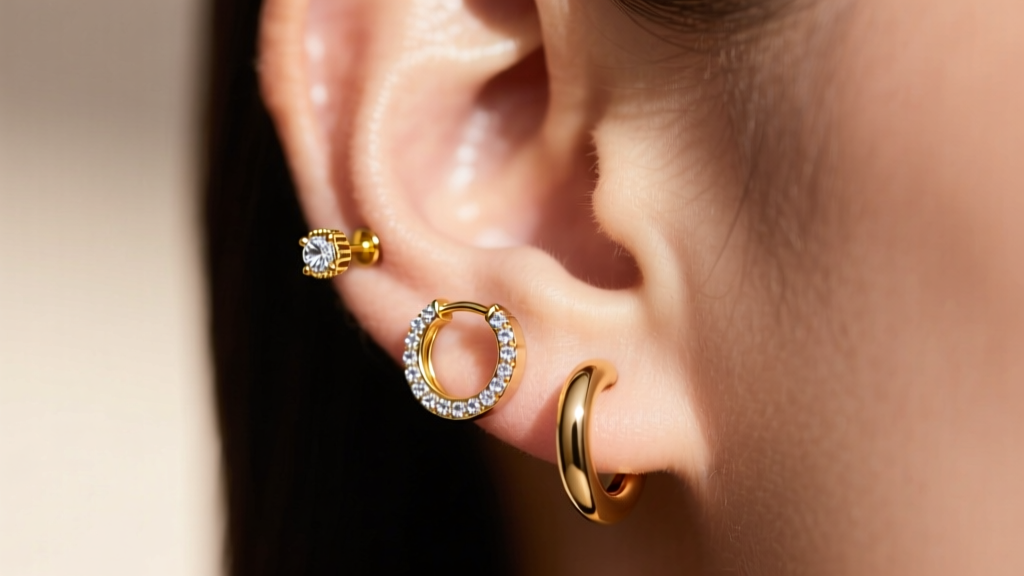
Mapping Your Kit to Your Face Shape
The most common mistake when building an earring kit is ignoring facial geometry. Earrings should balance and complement your natural bone structure. Use the data table below to select the precise dimensions for your foundational pieces.
| Face Shape | Ideal Stud Size | Best Hoop Diameter | Recommended Drop Length |
|---|---|---|---|
| Round | 4-6mm geometric | 15mm angular/box hoops | 35-45mm linear drops |
| Oval | 3-5mm classic round | 20mm medium circular | 25-40mm any silhouette |
| Square | 5-7mm soft/curved | 18mm rounded hoops | 30mm teardrop/oval |
| Heart | 4mm bottom-heavy | 12mm wide huggies | 40mm chandelier |
Material Science: What the Pros Recommend
When investing in a high-end earring kit, material biocompatibility is non-negotiable. Cheap alloys cause contact dermatitis and can lead to piercing rejection. According to the Association of Professional Piercers (APP), only specific grades of metal are considered safe for long-term wear in healed piercings.
- ASTM F-136 Implant-Grade Titanium: The gold standard for sensitive ears. It contains zero nickel and is lightweight, making it perfect for heavy statement drops.
- Solid 14k or 18k Gold: Ensure it is nickel-free and alloyed with silver or copper. Avoid gold-plated or gold vermeil for your everyday studs, as the friction of daily wear will eventually expose the base metal.
- Niobium: An excellent, highly reactive metal that can be anodized to produce vibrant colors without the use of toxic dyes or plating.
For gemstone elements, always verify authenticity. The Gemological Institute of America (GIA) provides extensive guidelines on identifying treated pearls and synthetic stones, ensuring your capsule kit retains its intrinsic value over time.
The 2026 Trend: Modular and Convertible Pieces
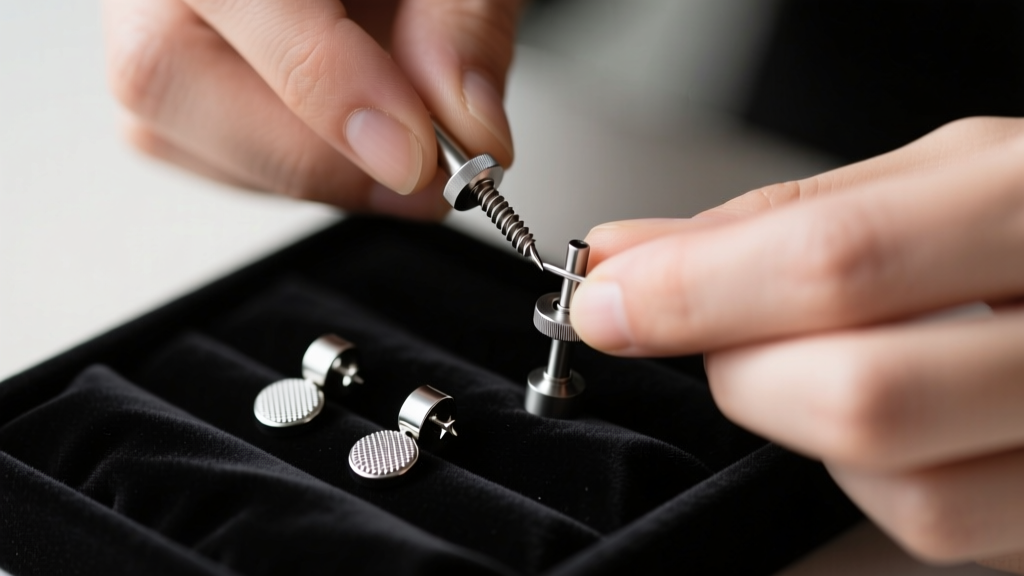
The most significant innovation in the modern earring kit is modularity. Brands like BVLA and Neometal have popularized threadless jewelry, where a solid gold or gemstone "end" features a slightly bent pin that slides into a hollow titanium "post." The tension holds the pieces together securely without any screw threads to strip or harbor bacteria.
By purchasing three or four 16-gauge titanium posts and a variety of threadless ends (a pearl, a prong-set diamond, a geometric gold shape), you effectively multiply the utility of your earring kit without buying entirely new earrings.
Step-by-Step: Curating Your Kit on a Budget
Building a premium earring kit is an investment. Rather than buying everything at once, use this phased approach to build your collection sustainably.
Phase 1: The Biocompatible Foundation ($100 - $200)
Start with your everyday wear. Purchase a pair of ASTM F-136 titanium labret posts with 14k solid gold bezel-set ends (3mm or 4mm). Add a pair of 15mm continuous titanium or niobium hoops. This ensures your piercings remain healthy and irritation-free while you save for statement pieces.
Phase 2: The Texture & Scale Expansion ($250 - $450)
Next, introduce your huggies and drop earrings. This is where you can experiment with mixed metals. A major trend for 2026 is combining yellow gold huggies with white gold or platinum drops to create a deliberate, curated contrast. Look for recycled gold options to align with sustainable jewelry practices.
Phase 3: The Custom & Vintage Accents ($300+)
Finally, source unique ear cuffs, vintage clips, or custom-commissioned threadless ends. This phase is about injecting your personal signature into the kit, ensuring no one else has the exact same combination.
"A well-curated earring kit isn't about having a piece for every single outfit; it's about having a cohesive set of pieces that elevate every outfit you already own."
Care and Maintenance of Your Capsule Kit
To protect your investment, proper maintenance is critical. Never use harsh chemical dips or ultrasonic cleaners on porous gemstones like pearls, opals, or turquoise, as the vibrations and chemicals will destroy their nacre and internal structure. Instead, use a soft, lint-free microfiber cloth for daily polishing.
For solid gold and diamond pieces, a simple soak in warm water with a few drops of mild, phosphate-free dish soap, followed by gentle brushing with a baby-soft toothbrush, will restore brilliance. Store your earring kit in a lined jewelry box with individual compartments to prevent the diamond of one earring from scratching the gold of another. By treating your capsule earring kit with intention and care, it will serve as your ultimate styling arsenal for years to come.


