Burgundy and Gold Earrings: Troubleshooting & Care Guide
Discover expert troubleshooting for burgundy and gold earrings. Learn how to fix enamel chips, prevent gold tarnish, and solve lobe droop issues.

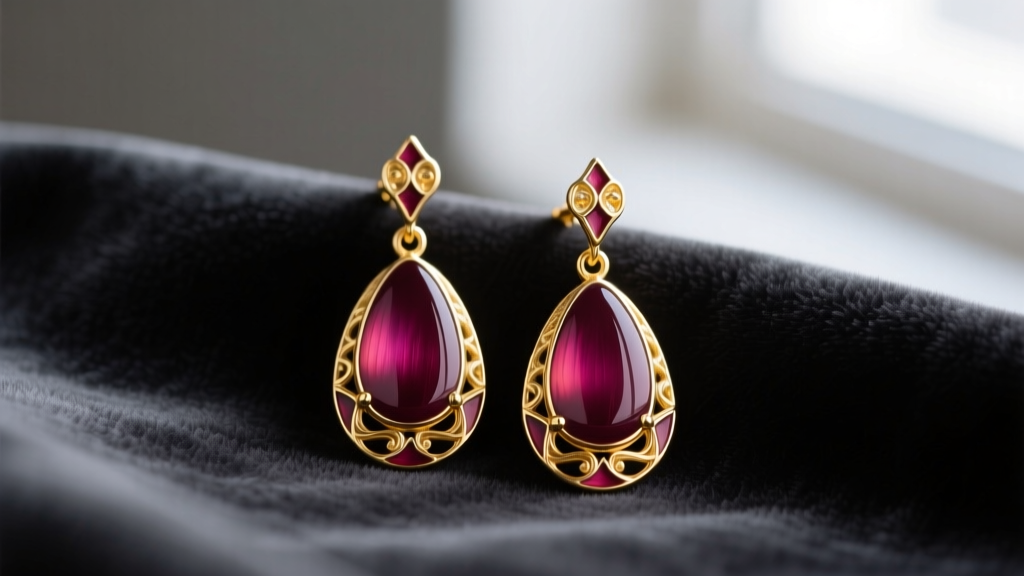
The pairing of deep, wine-red hues with warm metallics creates a timeless aesthetic, but maintaining burgundy and gold earrings requires specific material knowledge. Whether you are wearing vintage champlevé enamel drops, modern resin-cast hoops, or faceted Mozambique garnet studs, this high-contrast colorway is prone to unique failure modes. From enamel micro-fractures to gold vermeil degradation, understanding the structural vulnerabilities of your jewelry is the first step toward preserving its regal appearance.
In this comprehensive troubleshooting guide, we break down the exact material science behind burgundy and gold jewelry, offering actionable solutions for the most common issues collectors and daily wearers face.
Decoding the Burgundy: Enamel vs. Resin vs. Gemstone
Before you can troubleshoot a damaged earring, you must correctly identify the burgundy material. The deep red color in jewelry is typically achieved through one of three methods, each with distinct structural properties:
- Vitreous Enamel: Finely ground glass fused to a gold or silver base at temperatures exceeding 1,400°F. It is highly durable, scratch-resistant, and maintains its color indefinitely, but it is brittle and can shatter upon impact.
- Cold Enamel (Epoxy Resin):strong> A two-part synthetic resin poured into metal settings. It is impact-resistant but highly susceptible to UV degradation, chemical solvents, and micro-scratches.
- Gemstones (Garnet, Ruby, or Dyed Quartz): Natural Mozambique garnets offer a natural burgundy hue with high hardness (7-7.5 on the Mohs scale), while dyed stones can bleed color when exposed to alcohol-based cleaners.
Troubleshooting Enamel Chips and Resin Yellowing
The most frequent complaint with burgundy and gold drop earrings is surface degradation. If your burgundy inlay is chipping or changing color, the repair protocol depends entirely on the material.
Fixing Chipped Vitreous Enamel
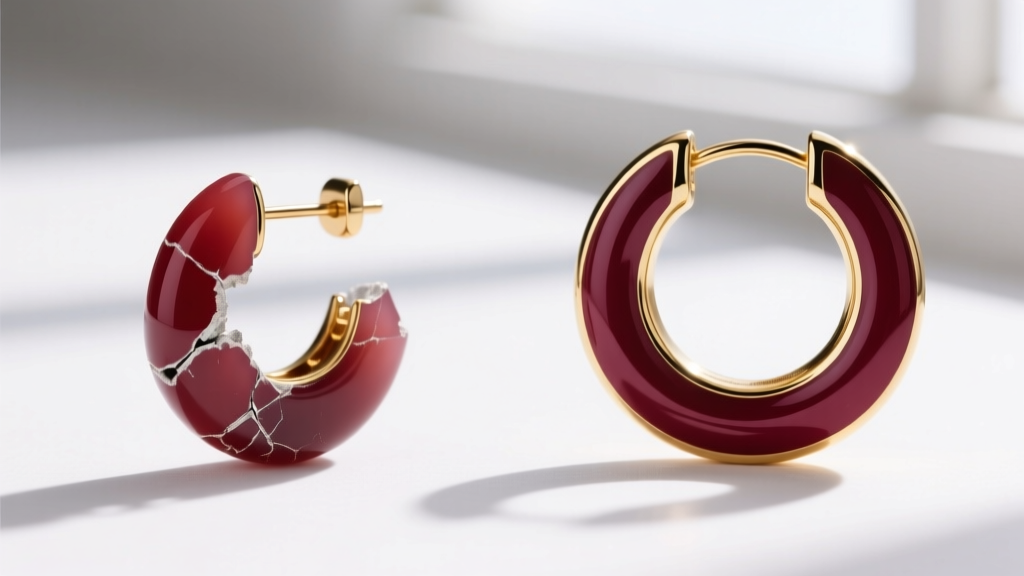
True vitreous enamel cannot be melted and re-fused at home without risking the structural integrity of the gold setting. If a chip occurs, do not attempt to fill it with superglue, which will yellow and ruin the refraction of the surrounding glass. Instead, seek a professional enamelist who can perform a 'cold fill' using a color-matched, jewelry-grade optical epoxy, or carefully re-fire the piece if the gold base is thick enough to withstand a second kiln cycle.
Reversing Cold Enamel (Resin) Yellowing
If your burgundy resin earrings have developed a brownish, muddy tint, they are suffering from UV-induced photodegradation. Unfortunately, once the chemical bonds in the epoxy have broken down, the color cannot be reversed. To prevent this, store resin jewelry in opaque, lined boxes and avoid wearing them during prolonged direct sunlight exposure. For minor surface scratches on resin, a micro-mesh polishing pad (starting at 1500 grit and moving to 12000 grit) can restore the glass-like finish without stripping the color.
The Gold Plating Dilemma: Vermeil vs. Flash Plating
The gold component of your earrings is just as vulnerable as the burgundy inlay. Many mid-tier burgundy and gold earrings utilize gold plating over a brass or copper base. When the plating wears away, the underlying base metal reacts with your skin's pH and oxygen, resulting in a green or black tarnish that transfers to your earlobes.
According to the Jewelers of America, true gold vermeil must consist of a sterling silver base plated with at least 10k gold that is a minimum of 2.5 microns thick. If your earrings are 'flash plated' (typically less than 0.5 microns), the gold layer on the friction points—such as the earring post, the clutch, and the hinge of a huggie hoop—will wear off within weeks of daily use.
Troubleshooting Gold Tarnish
If your gold settings are tarnishing, it indicates the presence of copper in the alloy or the base metal bleeding through. Clean the gold components using a mild, phosphate-free dish soap and a soft baby toothbrush. Avoid commercial jewelry dips, as the harsh thiourea chemicals can strip the remaining gold plating and permanently cloud any adjacent burgundy glass or porous gemstones.
Material Failure Modes & Troubleshooting Matrix
| Material Combination | Common Failure Mode | Primary Cause | Actionable Solution |
|---|---|---|---|
| Vitreous Enamel & 14k Gold | Micro-fractures / Crazing | Thermal shock or blunt impact | Professional re-firing or optical epoxy stabilization |
| Cold Resin & Gold Plated Brass | Resin pulling away from metal | Adhesive breakdown from skin oils | Degrease with isopropyl alcohol; re-seat with E6000 |
| Mozambique Garnet & Solid Gold | Dullness / Cloudiness | Lotion buildup on the pavilion (back) | Ultrasonic cleaning (if no fractures) or steam cleaning |
| Dyed Quartz & Gold Vermeil | Color bleeding onto the gold | Exposure to alcohol or perfume | Wipe gold with a polishing cloth; seal stone with clear wax |
Solving the 'Lobe Droop' in Heavy Burgundy Drops
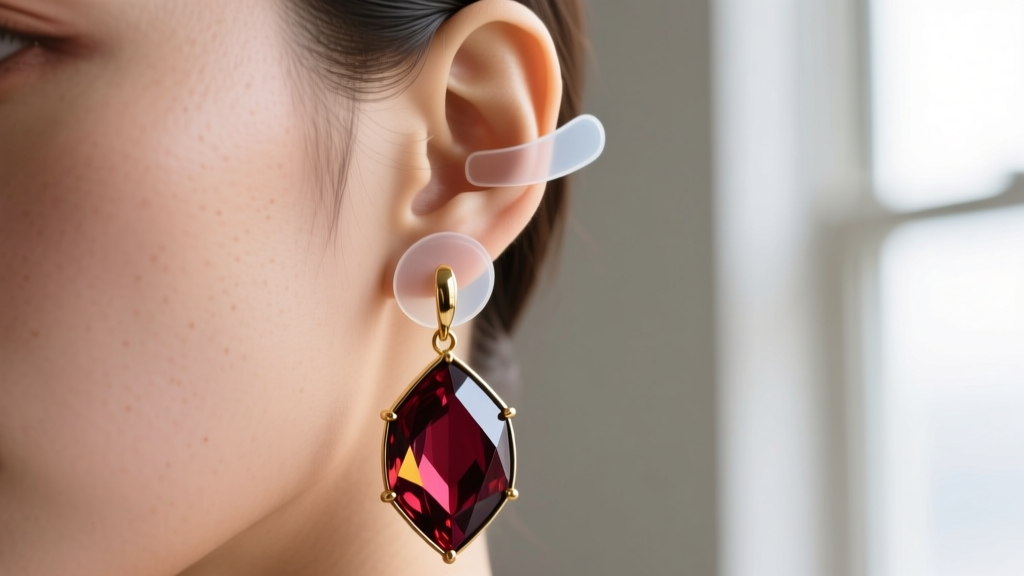
Burgundy and gold dangle earrings often feature large, faceted glass teardrops or substantial clusters of garnets to maximize the visual impact of the deep red color. This creates a significant weight distribution problem. When an earring exceeds 12 grams, the center of gravity pulls the earlobe forward, causing the earring to face downward rather than catching the light, while simultaneously stretching the piercing fistula over time.
Weight Distribution Fixes
- Silicone Support Patches: Adhesive silicone petals applied to the back of the earlobe provide a wider surface area, distributing the weight of heavy gold and glass drops and keeping the earring upright.
- O-Ring Stabilizers: Replacing standard butterfly clutches with flat, disc-shaped silicone O-rings prevents the heavy earring post from tilting downward.
- Wire Wrapping Adjustments: If you are crafting or modifying your own earrings, adding a small, 4mm gold-filled jump ring between the ear wire and the burgundy drop lowers the center of gravity, allowing the earring to swing freely without dragging the lobe.
Safe Cleaning Protocols by Material Type
Improper cleaning is the leading cause of irreversible damage to multi-material jewelry. The Gemological Institute of America (GIA) warns that while hard gemstones can withstand rigorous cleaning, the settings and secondary materials often cannot.
- For Garnet and Solid Gold: Use an ultrasonic cleaner for 3 minutes in a warm, mild detergent solution. Inspect the stones first; if the garnet has surface-reaching fractures, the high-frequency vibrations will shatter the stone.
- For Enamel and Gold Vermeil: Never use ultrasonic or steam cleaners. The heat and vibrations will cause the enamel to pop out of the gold bezel and will strip the vermeil plating. Use a damp microfiber cloth to gently buff the gold and wipe the enamel.
- For Resin and Plated Brass: Avoid all chemical solvents, including rubbing alcohol and ammonia, which will melt the resin's topcoat and accelerate the oxidation of the brass beneath the gold plating.
Final Thoughts on Maintenance
Owning a pair of high-quality burgundy and gold earrings is an investment in a deeply versatile, historically rich color palette. By correctly identifying your materials, respecting the limits of gold plating, and utilizing proper weight-support techniques for heavier drops, you can ensure your jewelry remains vibrant and structurally sound for decades. Always prioritize preventative storage—keeping pieces in anti-tarnish pouches away from direct UV light—to minimize the need for corrective troubleshooting.


