The Butterfly Back Earring: 2026 Style & Trend Analysis
Discover how the butterfly back earring evolved into a 2026 fine jewelry staple. Explore material grades, locking mechanisms, and styling trends.

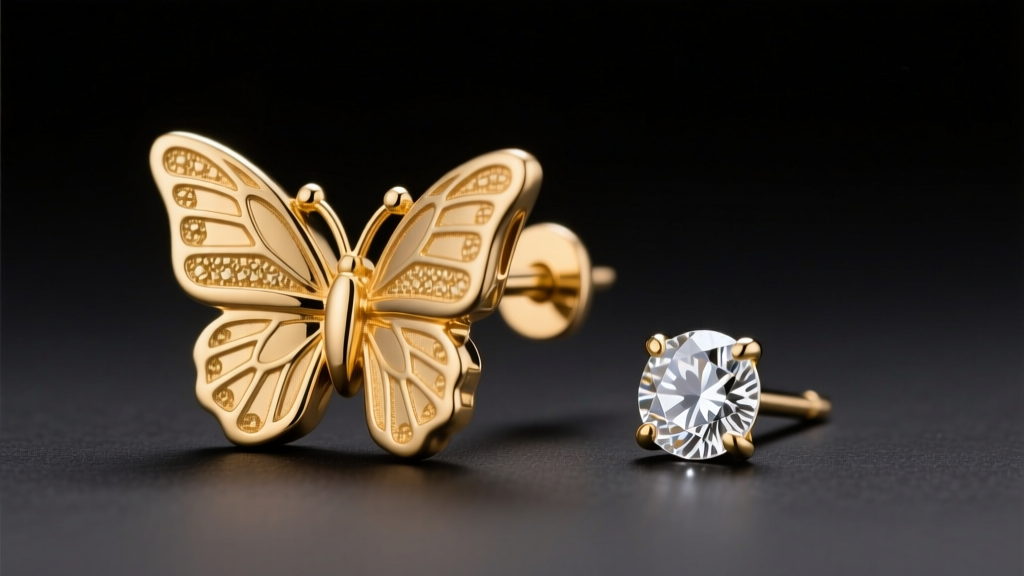
For decades, the butterfly back earring was treated as a mere functional afterthought—a stamped piece of base metal tasked with keeping a valuable diamond or gemstone secured to the earlobe. However, as we navigate the jewelry landscape of 2026, this humble fastening mechanism has undergone a radical metamorphosis. Driven by consumer demand for hypoallergenic materials, advanced security, and behind-the-ear aesthetics, the butterfly back has transitioned from a cheap necessity to a focal point of fine jewelry engineering and style.
In this comprehensive trend analysis, we dissect the metallurgical upgrades, structural innovations, and styling movements that are redefining the butterfly back earring for the modern collector.
The Engineering Shift: From Stamped Brass to CNC Precision
Historically, friction backs were mass-produced via stamping, resulting in inconsistent tension and a high failure rate. The loops of the "butterfly" wings would bend outward over time, causing the back to slide off the post groove and leading to devastating gemstone losses.
In 2026, luxury jewelers and specialized findings manufacturers have adopted CNC (Computer Numerical Control) machining for premium butterfly backs. This allows for micro-tolerances on the internal scrollwork, ensuring a precise "click" when the back passes over the post groove. Furthermore, the industry has largely standardized around two primary gauge sizes for these engineered backs:
- 20-Gauge (0.81mm): The standard for lightweight diamond studs and delicate gold hoops. CNC-machined 20G backs provide a snug fit without requiring excessive force that could bend a delicate post.
- 18-Gauge (1.02mm): Increasingly popular for heavier gemstone studs and modern earlobe piercings. The thicker post requires a wider internal channel in the butterfly back, offering superior structural integrity and resistance to bending.
Metallurgy also plays a critical role in tension retention. While 18k gold is prized for its rich color and high purity, its softer nature makes it prone to tension loss over years of wear. Consequently, industry experts at JCK Online note that 14k gold and platinum alloys are now the preferred materials for high-end friction backs, as their increased hardness maintains the necessary spring tension for decades.
2026 Market Data: Security vs. Aesthetics
As the market for fine ear jewelry expands, consumers are presented with multiple iterations of the butterfly back mechanism. Below is a comparative analysis of the three dominant fastening systems available in the 2026 market.
| Mechanism Type | Security Level | Average Price Range (Pair) | Best Use Case | Material Availability |
|---|---|---|---|---|
| Standard Friction Back | Moderate | $15 – $45 | Everyday lightweight studs | 14k Gold, Platinum, Titanium |
| Locking Butterfly Back | High | $60 – $120 | High-value diamonds, active lifestyles | 14k/18k Gold, Platinum |
| Screw Back | Maximum | $40 – $90 | Children's jewelry, heavy drops | 14k Gold, Surgical Steel |
The locking butterfly back has emerged as the breakout trend of 2026. This mechanism features a secondary internal sleeve or spring-loaded latch that physically locks the back into the post groove, requiring a specific pinch-and-pull motion to release. It offers the aesthetic familiarity of the traditional butterfly back while delivering the security of a screw back, without the tedious threading process.
The Hypoallergenic Imperative: Material Grades Decoded
One of the most significant drivers of the butterfly back earring's evolution is the heightened consumer awareness regarding contact dermatitis and nickel allergies. The earlobe's backside is highly susceptible to moisture trapping and friction, making the backing material just as critical as the front-facing ornament.
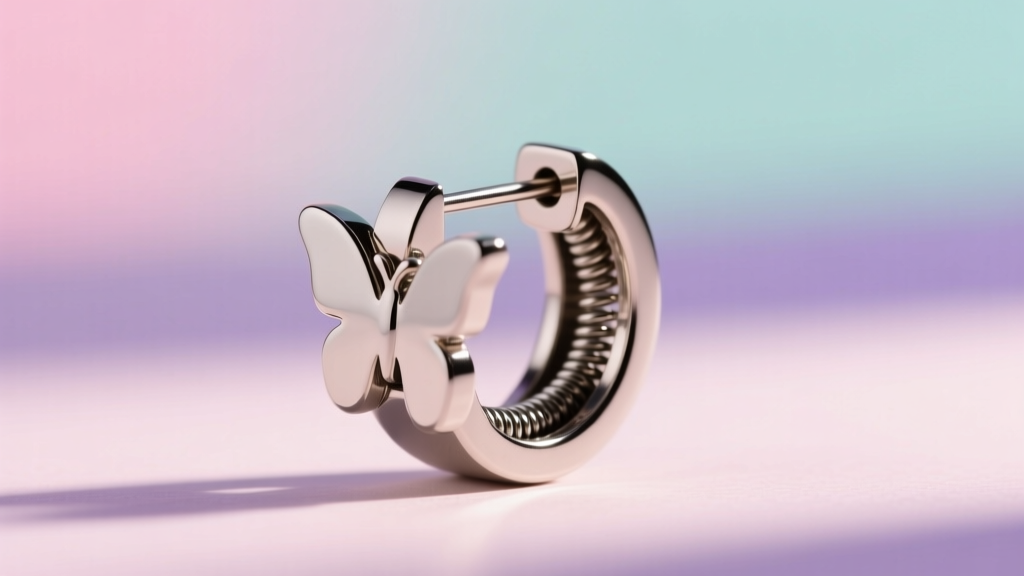
ASTM F136 Titanium vs. 316L Surgical Steel
Many commercial brands still market "surgical steel" butterfly backs as hypoallergenic. However, 316L stainless steel contains up to 10-14% nickel, which can leach when exposed to the slightly acidic pH of human skin and trapped sweat. According to guidelines referenced by the Gemological Institute of America (GIA) regarding skin sensitivities in jewelry wearers, true biocompatibility requires implant-grade materials.
In 2026, the gold standard for sensitive ears is ASTM F136 Implant-Grade Titanium. This specific alloy contains zero nickel and is polished to a mirror finish that prevents bacterial biofilm buildup. Premium brands are now offering ASTM F136 titanium butterfly backs anodized in subtle hues—such as champagne, rose, and deep violet—allowing wearers to match their hypoallergenic findings to their front-facing gemstones seamlessly.
The "Exposed Back" Styling Trend of 2026
From a purely aesthetic standpoint, the butterfly back earring is no longer meant to be hidden. The rise of the "curated ear" and the prevalence of up-swept, minimalist hairstyles have drawn attention to the space behind the earlobe. Designers are capitalizing on this by transforming the functional back into a secondary decorative element.
Pearl-Tipped and Diamond-Accented Findings
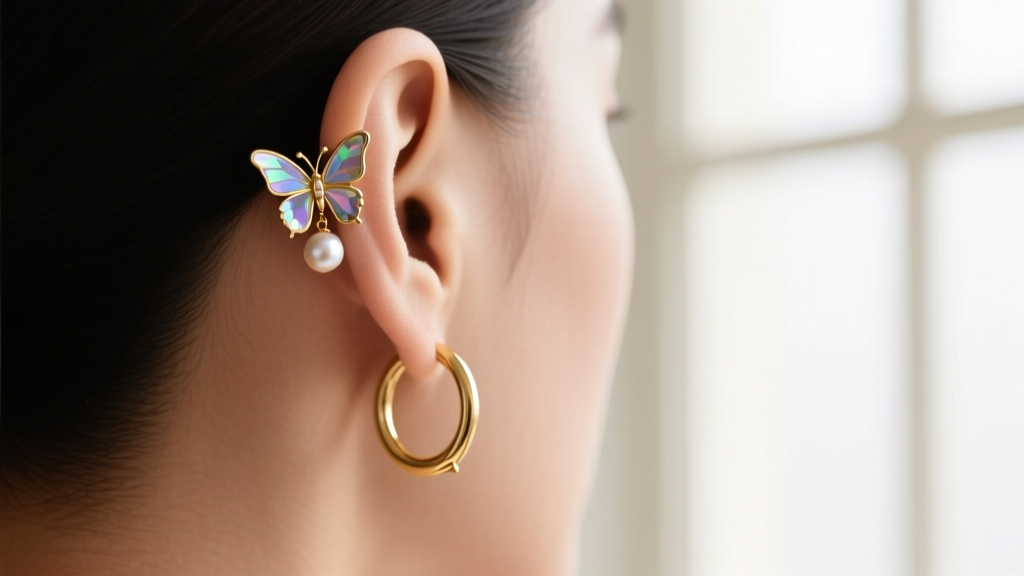
Leading fine jewelry houses are now pairing classic diamond studs with butterfly backs that feature a bezel-set diamond or a perfectly matched Akoya pearl on the visible exterior of the friction nut. When the wearer turns their head or tucks their hair behind their ear, the back of the earring catches the light, creating a striking, multi-dimensional look. This trend has also sparked a surge in "convertible" earring sets, where a single 18G post can be fitted with a standard gold back for daytime wear, or swapped for a heavy, pearl-tipped butterfly back for evening events.
Troubleshooting and Tension Calibration
Even the most advanced CNC-machined butterfly back earring requires occasional maintenance. The most common failure mode is not the breaking of the metal, but the gradual widening of the butterfly loops, which reduces the friction grip on the post.
Pro-Tip for Jewelers and Collectors: Never use standard steel pliers directly on a 14k or 18k gold butterfly back, as the hardened steel teeth will mar the precious metal. Instead, use nylon-jawed pliers or wrap the tips of your flat-nose pliers in painter's tape. Gently squeeze the two outer loops of the butterfly back toward the center to restore the internal spring tension.
Cleaning Protocols
Because the butterfly back features tight scrolls and crevices, it is a magnet for sebum, dead skin cells, and hair product residue. This buildup not only creates a hygiene issue but also acts as a lubricant, causing the back to slide off the post groove prematurely.
- Weekly Maintenance: Soak the backs in a solution of warm water and a few drops of mild, phosphate-free dish soap. Use a soft-bristled baby toothbrush to gently agitate the internal scrolls.
- Deep Cleaning: For solid gold or platinum backs (never for pearl-accented or porous gemstone backs), a 3-minute cycle in an ultrasonic jewelry cleaner will dislodge microscopic debris. Follow with a rinse in 90% isopropyl alcohol to ensure rapid drying and sterilization.
Conclusion: The New Standard of Ear Jewelry
The narrative surrounding the butterfly back earring has fundamentally shifted. No longer just a cheap piece of stamped metal included in a jewelry box, the modern friction back is a marvel of micro-engineering, material science, and avant-garde styling. Whether you are investing in an ASTM F136 titanium locking mechanism for active security, or opting for a pearl-tipped 14k gold nut to complete your curated ear aesthetic, paying attention to the back of your earring is now just as important as the gemstone on the front. As 2026 progresses, expect to see even more integration of smart-tension technologies and sustainable, recycled precious metals in the world of fine jewelry findings.


