1/3 Carat Diamond Earrings: 2026 Trend & Sizing Guide
Discover the 2026 style trends for 1/3 carat diamond earrings. Compare bezel vs. prong settings, lab-grown pricing, and exact millimeter sizing guides.

The 2026 Shift: Why 1/3 Carat Diamond Earrings Are Dominating
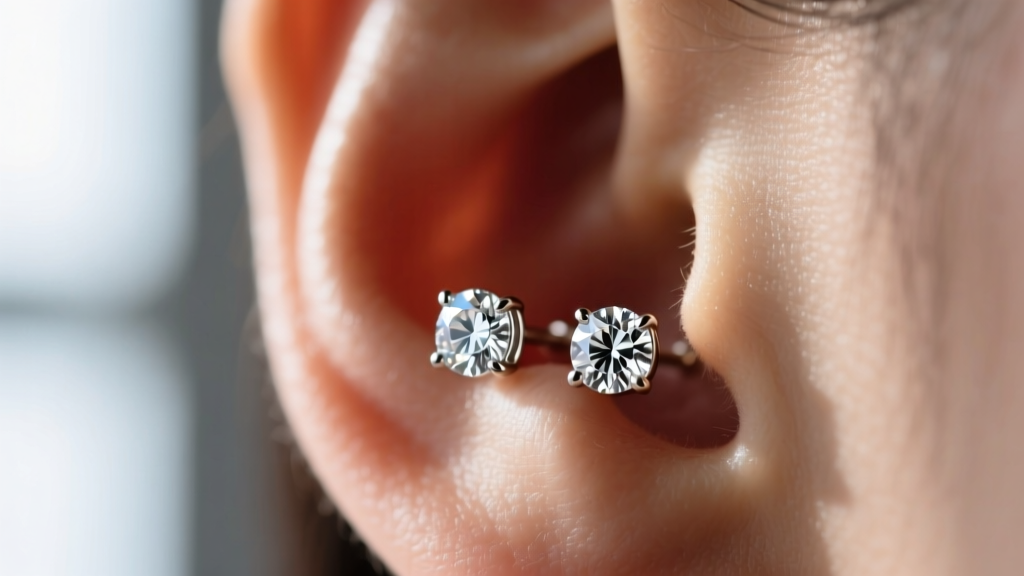
In the landscape of fine jewelry, the pendulum has officially swung away from the ostentatious, oversized lab-grown stones of the early 2020s toward refined, intentional minimalism. As we navigate 2026, 1/3 carat diamond earrings have emerged as the undisputed 'Goldilocks' staple of the modern ear stack. They offer substantial light return and presence without the anxiety of wearing high-value assets during daily commutes, workouts, or travel. But the trend is not just about size; it is about architectural settings, precise millimeter proportions, and the strategic use of lab-grown diamonds to maximize cut quality over sheer carat weight. For the style-conscious collector, understanding the exact anatomy of a 0.33-carat stone is the difference between a dated department-store purchase and a curated, high-end aesthetic.
Decoding the Weight: 0.33ctw vs. 0.33ct Each
The most common pitfall when shopping for this specific weight class is the deceptive nature of retailer terminology. The phrase '1/3 carat diamond earrings' is frequently used to describe two entirely different products. According to the American Gem Society, total carat weight (ctw) and individual carat weight are distinct metrics that drastically alter the physical footprint of the earring on your lobe.
- 0.33ctw (Total Weight): This means the combined weight of both earrings is 1/3 carat. Each ear wears a 0.16ct stone, measuring approximately 3.4mm to 3.5mm in diameter. This is a micro-stud, ideal for secondary cartilage piercings or ultra-petite lobes.
- 0.33ct Each (0.66ctw): This means each ear wears a 1/3 carat stone, totaling 0.66 carats for the pair. Each stone measures approximately 4.4mm to 4.5mm. This is the true 'everyday' stud size that provides visible sparkle from across a table.
| Weight Metric | Per-Ear Carat | Avg. Millimeter Size | Visual Impact & Placement |
|---|---|---|---|
| 0.33ctw (Total) | 0.16ct | 3.4mm - 3.5mm | Subtle; best for helix, tragus, or second lobe holes |
| 0.33ct Each | 0.33ct | 4.4mm - 4.5mm | Prominent; ideal for primary lobe piercings |
| 0.50ct Each | 0.50ct | 5.0mm - 5.2mm | Bold; requires larger lobe real estate |
Setting Trends: Martini, Bezel, and the Micro-Halo
How a 4.5mm stone is secured dictates its entire visual profile. In 2026, traditional four-prong basket settings are being rapidly replaced by designs that either maximize light exposure or offer sleek, architectural protection.
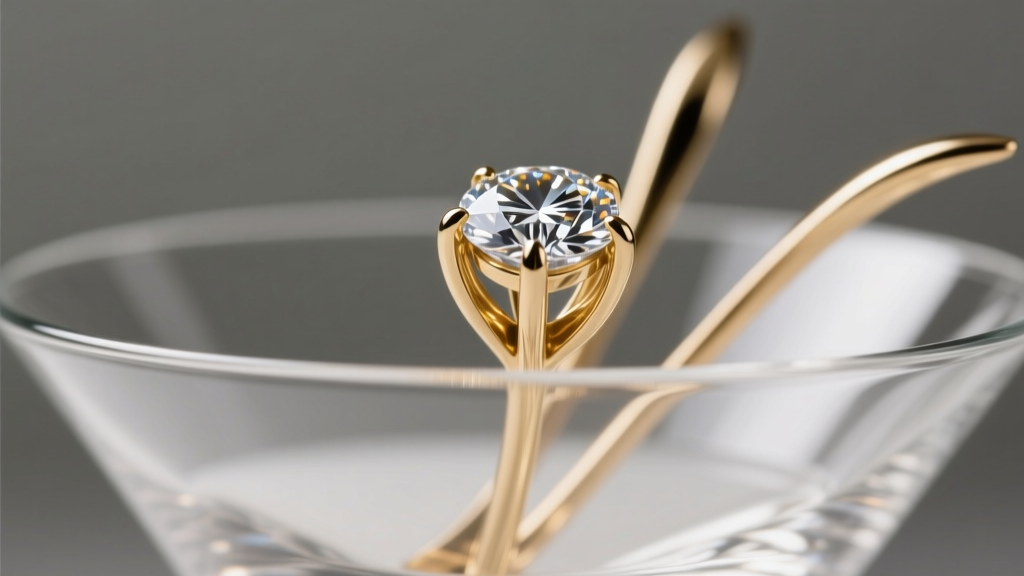
The 3-Prong Martini
The martini setting uses three prongs, creating a V-shaped basket that minimizes metal visibility and allows maximum light to enter the pavilion of the diamond. However, there is a mechanical flaw to watch for: because the center of gravity sits slightly forward, a 4.5mm stone can cause the earring to 'droop' or tilt downward on the lobe. To counteract this, ensure the earring post is notched (featuring a small groove to lock the backing in place) and opt for an 18-gauge (1.0mm) post rather than a flimsy 20-gauge (0.8mm) post to provide adequate structural rigidity.
The Modern Bezel
Bezel settings have dominated the 2026 trend cycle. A thin, precision-milled platinum or 18k white gold rim surrounds the girdle of the diamond. Not only does this offer superior protection against snagging on silk or knitwear, but it also creates an optical illusion. A 1mm metal border around a 4.5mm stone pushes the total visual diameter to roughly 5.5mm, giving the appearance of a much larger carat weight while maintaining a low, flush profile against the earlobe.
Ear Lobe Anatomy: Gauge Sizes and Post Mechanics
An often-overlooked element of earring styling is the intersection of jewelry mechanics and human anatomy. A 0.33-carat diamond weighs roughly 0.066 grams. While this seems negligible, the leverage exerted on the earlobe over a 16-hour wear day requires proper hardware. Standard friction backs (butterfly clasps) are sufficient for this weight, provided the post thickness is correct. If your piercings were done with a standard 20g (0.81mm) needle, an 18g post might feel tight or cause irritation. Conversely, if you have stretched or older piercings, a 20g post will move excessively, causing the 4.5mm stone to rotate and sparkle unevenly. For primary lobe piercings housing 1/3 carat stones, silicone O-ring backs or secure-lock screw backs are highly recommended to prevent the loss of the asset during sleep or wardrobe changes.
Lab-Grown vs. Natural: 2026 Pricing Realities
The pricing landscape for 1/3 carat diamond earrings has bifurcated sharply. Lab-grown diamonds have completely saturated the sub-one-carat market, driving prices down while simultaneously elevating the baseline quality of cut and clarity. Based on current 2026 market data for a pair of 0.33ct Each (0.66ctw) round brilliant studs in G color and VS2 clarity:
- Natural Earth-Mined: $1,200 to $1,800 per pair. You are paying a premium for geological rarity, though the visual difference at 4.5mm is entirely imperceptible to the naked eye compared to a lab equivalent.
- Lab-Grown (CVD/HPHT): $300 to $550 per pair. The savings here are substantial. Savvy buyers are using the lab-grown discount to upgrade the metal setting (e.g., moving from 14k gold to platinum) or investing in a superior 'Hearts and Arrows' ideal cut.
For authoritative verification of a diamond's origin and grading, always demand a grading report from the GIA Diamond 4Cs laboratory, which now provides comprehensive digital dossiers for both natural and lab-grown stones.
The 4Cs Compromise: What to Prioritize at 0.33 Carats
When dealing with a 4.5mm canvas, you cannot optimize all four Cs without wasting capital. Here is the exact decision framework for 1/3 carat stones:
- Cut (Non-Negotiable): Demand 'Excellent' or 'Ideal'. At 0.33 carats, light return is the only way the stone commands attention. A poorly cut 0.33ct stone looks like a dull 0.25ct stone.
- Color (The Sweet Spot): G or H. Because the stone is relatively small, the faint warmth of an I or J color is easily masked by a white gold or platinum setting. Do not pay the premium for D or E color; the face-up difference at 4.5mm is virtually zero.
- Clarity (The Budget Saver): VS2 or SI1. Inclusions in a 0.33-carat stone are microscopic. As long as the stone is 'eye-clean' (verified by high-resolution video or a jeweler's loupe), an SI1 stone will look identical to a VVS1 stone once set in an earring post, saving you up to 30% on the final price.
'The biggest mistake consumers make with sub-half-carat studs is over-indexing on clarity. A 4.5mm diamond does not have the table surface area to showcase VVS perfection. Redirect those funds toward an exceptional cut grade and a high-quality, notched 18-gauge post.' — Master Gemologist Appraiser
Final Styling Verdict
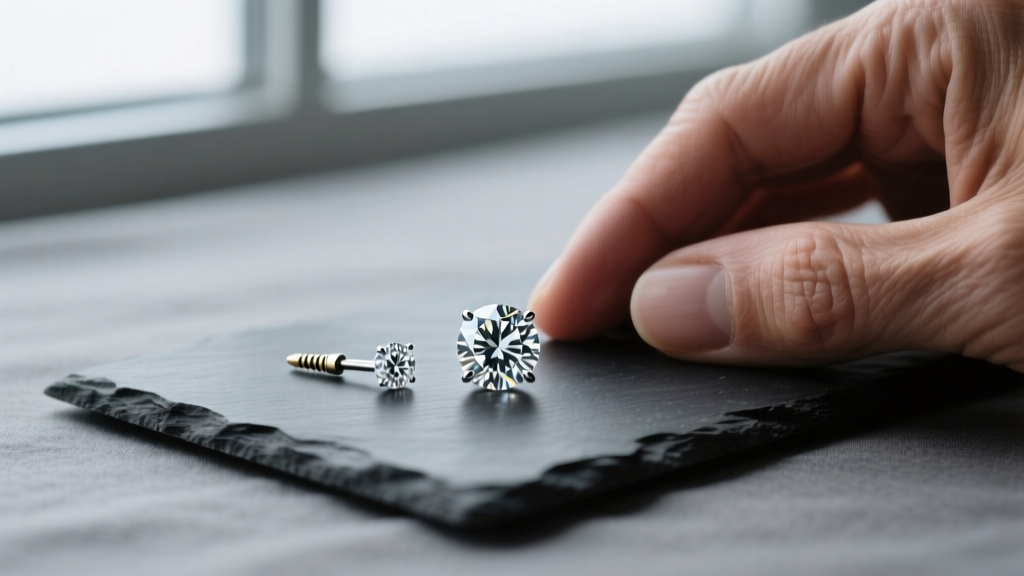
The 1/3 carat diamond earring (specifically the 0.33ct each / 4.5mm variant) is the ultimate anchor piece for the 2026 ear curation. It is substantial enough to serve as a standalone statement for professional environments, yet perfectly scaled to act as the primary lobe anchor in a multi-piercing stack featuring huggies and ear cuffs. By prioritizing an Ideal cut, opting for a modern bezel or reinforced martini setting, and leveraging the value of lab-grown stones, you secure a timeless, high-performance accessory that bridges the gap between everyday utility and fine jewelry luxury.


