Alhambra Collection Earrings: Technical & Material Deep Dive
Explore the technical specs, gemstone grading, and authentication markers of Alhambra collection earrings in this expert deep dive.

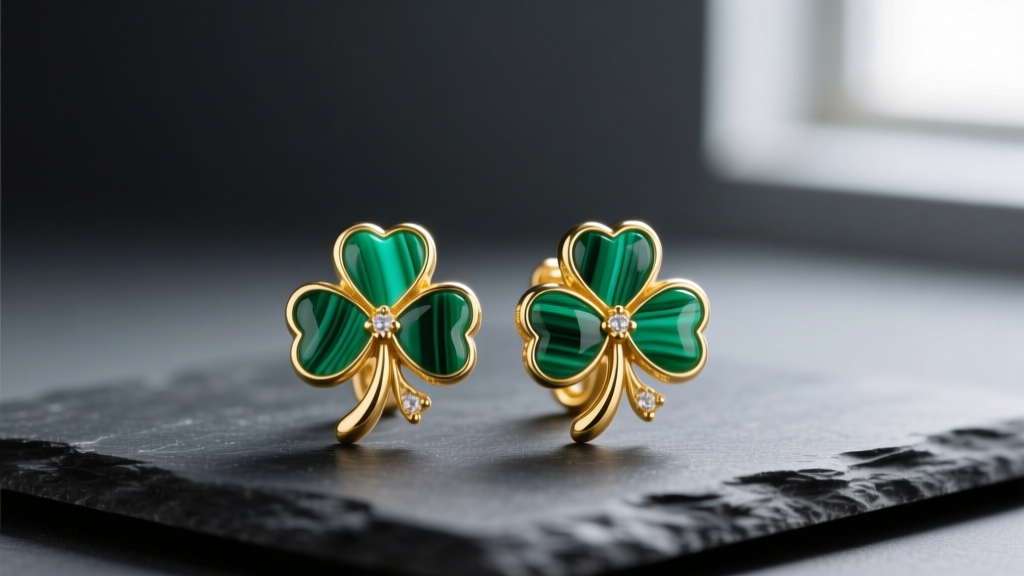
The Van Cleef & Arpels Alhambra collection is arguably the most recognizable motif in modern fine jewelry. However, beneath the iconic clover silhouette lies a complex framework of metallurgical precision, strict gemological grading, and proprietary structural engineering. For collectors, authenticators, and serious buyers, understanding the technical specifications of Alhambra collection earrings is critical. This expert deep dive bypasses the marketing lore to examine the exact material grades, dimensional tolerances, and authentication markers that define genuine pieces in the 2026 market.
The Architecture of the Clover: Dimensional Specs
The Alhambra motif is not a single, uniform size. The collection is segmented into distinct architectural tiers, each with precise millimeter tolerances that dictate the earring's weight, post gauge, and backing system. Understanding these dimensions is the first step in identifying mislabeled or counterfeit pieces.
- Vintage Alhambra: The standard and most popular size. The motif measures exactly 15mm x 15mm. Due to the surface area, the bezel requires substantial gold weight, making the earrings notably substantial on the lobe.
- Sweet Alhambra: A scaled-down iteration measuring 9mm x 9mm. Often used in multi-motif drop earrings or subtle studs, requiring a finer 0.8mm post gauge.
- Magic Alhambra: Featuring asymmetrical or oversized clovers, often exceeding 20mm. These are rarely used for standard studs due to lobe-drag, but appear in elaborate ear cuffs and dangles.
The defining structural feature across all sizes is the milgrain beading that borders the gold bezel. On genuine pieces, this beading is hand-applied using a milgrain wheel after the stone is set. Counterfeits often cast the beading directly into the mold, resulting in flattened, merged, or uneven beads that lack the crisp, tactile definition of hand-finished gold.
Gemological Grading: Malachite, Onyx, and MOP
Van Cleef & Arpels maintains rigorous, often uncompromising standards for the ornamental stones used in the Alhambra collection. The cabochons are not merely cut and polished; they are selected for specific optical and structural properties.
Malachite: The Banding Imperative
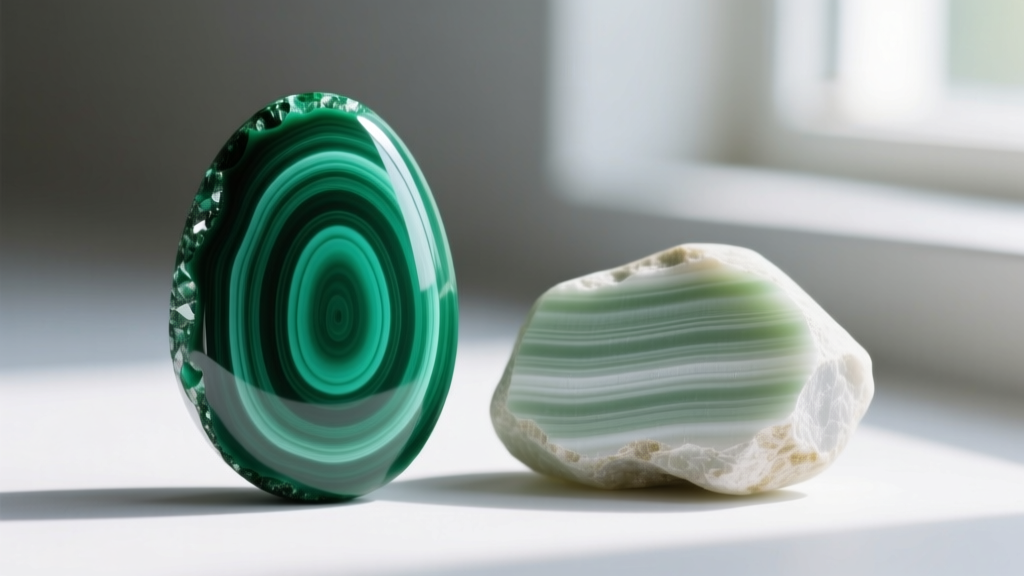
Malachite (copper carbonate hydroxide) is the most sought-after stone in the collection. According to the Gemological Institute of America (GIA), malachite is highly susceptible to heat, acids, and ultrasonic vibrations. VCA sources primarily from the Democratic Republic of Congo, selecting only stones with tight, parallel, or concentric banding. Chalky white inclusions, uneven color blocks, or "dead" spots without banding are rejected. Because malachite sits at a mere 3.5 to 4 on the Mohs hardness scale, the 18k gold bezel must be engineered to sit perfectly flush, protecting the vulnerable edges from micro-chipping.
Onyx and Mother of Pearl (MOP)
The black onyx used in the Alhambra collection is typically Brazilian chalcedony that has undergone a traditional sugar-carbon dyeing process to achieve a uniform, opaque black. Unlike natural black agate, which may show gray banding under strong fiber-optic illumination, VCA's onyx is selected for absolute opacity. Mother of Pearl (MOP), primarily sourced from Australian and Indonesian Pinctada maxima oysters, is graded on its orient (the iridescent play of color) and nacre thickness. VCA rejects MOP that shows dull, chalky patches or excessive translucency, ensuring a bright, reflective white surface that contrasts sharply with the yellow or rose gold bezel.
Metallurgy and Findings: 18k Gold and Backing Systems
The metallurgical composition of the gold used in Alhambra collection earrings is a closely guarded proprietary alloy. While standard 18k yellow gold is 75% pure gold alloyed with a mix of copper and silver, VCA utilizes a specific ratio (typically 15% copper and 10% silver) to achieve a warm, rich hue that avoids the greenish tint of high-silver alloys or the reddish tint of high-copper alloys. This specific alloy provides the necessary tensile strength to support the heavy stone cabochons without the prongs warping over time.
Friction vs. Omega Backs
For standard Vintage Alhambra studs, VCA utilizes a proprietary friction back (often called an Alpha back). These backs are stamped with the VCA logo on the interior curve. The post thickness is precisely 0.95mm, ensuring a snug fit that prevents the heavy 15mm motif from drooping forward on the earlobe. For heavier drop variations or non-pierced options, the brand employs Omega clip-backs with adjustable tension screws, a mechanical necessity for supporting the kinetic movement of dangling clovers without stretching the piercing.
Authentication Matrix: Hallmarks and Serials
As the secondary market for fine jewelry expands, so does the sophistication of "superfakes." Authenticating Alhambra collection earrings requires a multi-point inspection that goes far beyond a visual assessment of the clover shape. Below is a technical checklist used by estate appraisers and gemologists.
| Authentication Marker | Genuine VCA Specification | Common Superfake Flaw |
|---|---|---|
| French Hallmark | Eagle Head (Tête d'Aigle) stamped on the post or bezel edge, guaranteeing 750/1000 gold. | Generic '750' stamp, missing hallmark, or poorly defined eagle with blurred feathers. |
| Serial Number | Unique alphanumeric code (e.g., JE followed by digits) laser-engraved or hand-stamped, matching the certificate. | Reused serial numbers across multiple pieces, incorrect font weight, or shallow laser etching. |
| Milgrain Edging | Hand-applied, uniform gold beading with distinct separation between each bead. | Cast-in-place beading that appears melted, uneven, or merged into a solid ridge. |
| Maker's Mark | VCA stamp inside a lozenge (diamond) shape, often accompanied by the JE (Joaillerie) stamp. | Stamp applied in the wrong location, incorrect lozenge proportions, or missing JE mark. |

Expert Insight: "The most reliable authentication test for vintage Alhambra pieces from the 1980s and 1990s is examining the solder joints where the post meets the motif. Genuine VCA pieces use laser or precision torch soldering that leaves a clean, almost invisible seam. Fakes often show excess solder flux or pitting around the post base." — Senior Estate Jewelry Appraiser
Care Protocols and Failure Modes
Owning Alhambra collection earrings requires strict adherence to material-specific care protocols. The most common failure modes are entirely preventable but frequently occur due to improper maintenance.
- Ultrasonic Destruction: Never place malachite, onyx, or MOP Alhambra earrings in an ultrasonic cleaner. The high-frequency vibrations will cause micro-fractures in the malachite and can detach the stone from the shell backing in MOP pieces.
- Chemical Exposure: Malachite is highly reactive to acids and ammonia. Exposure to perfumes, hairspray, or commercial jewelry dips will strip the polish, leaving a dull, chalky finish that requires professional lapidary repolishing to fix.
- Prong Catching: While the bezel is secure, the milgrain edging can catch on knitwear. Over time, this tension can pull the gold wire away from the stone, creating a gap where moisture and skin oils can accumulate, eventually degrading porous stones like turquoise or coral.
2026 Market Valuation and Sourcing
As of 2026, the retail pricing for a standard pair of Vintage Alhambra malachite earrings hovers between $7,500 and $8,800 USD, reflecting annual luxury price indexing. However, the secondary market tells a more nuanced story. Discontinued ornamental stones, particularly lapis lazuli and red coral, command a 30% to 50% premium over current retail due to stringent CITES regulations and ethical sourcing restrictions that prevent VCA from producing them in large volumes today.
For buyers navigating the Van Cleef & Arpels Official Archive or the secondary estate market, prioritizing pieces with original certificates, intact Alpha backs, and unpolished milgrain details ensures both structural longevity and long-term value retention. The Alhambra earring is not just a symbol of luck; it is a masterclass in precision jewelry engineering.


