Butterfly Earring Back Care: Cleaning, Maintenance, and Fit Tips
Discover expert tips to clean, sanitize, and maintain butterfly earring backs. Learn how to remove sebum buildup, adjust tension, and prevent lost studs.

The Hidden Biofilm: Why Butterfly Earring Backs Require Special Care
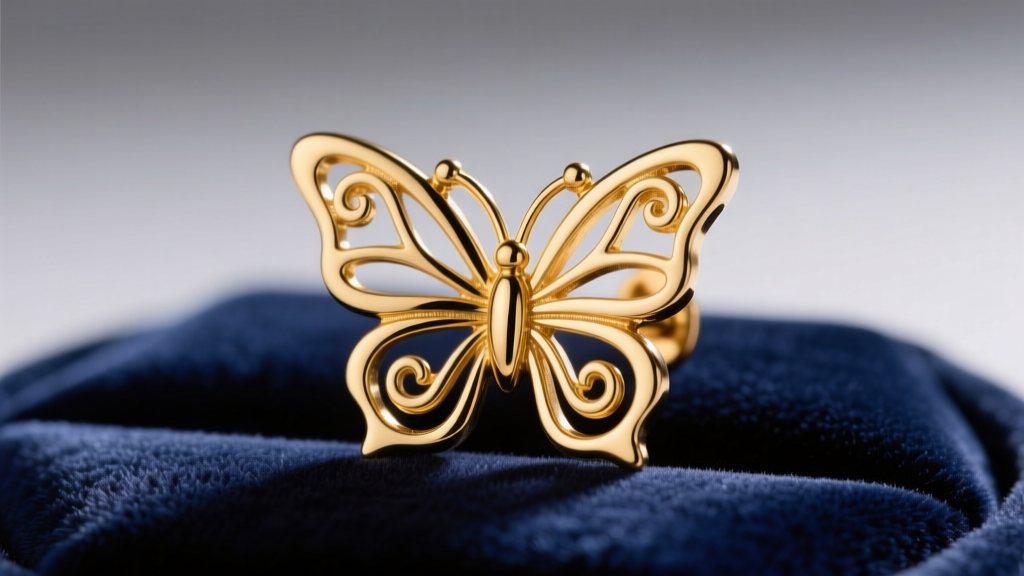
The traditional butterfly earring back—technically known as a friction clutch or scroll back—is a marvel of miniature metallurgy, yet it is inherently flawed from a hygiene perspective. The dual-loop metal scroll creates microscopic crevices that trap sebum, dead keratinocytes, hair spray, and environmental dust. Over time, this organic matter forms a resilient biofilm that standard wiping cannot remove.
According to the American Academy of Dermatology, accumulated debris on earring backings is a primary culprit for localized contact dermatitis and secondary bacterial infections, particularly from Staphylococcus aureus. Furthermore, lower-grade metals like 304L surgical steel can undergo micro-pitting when exposed to the acidic pH of human sweat, creating even deeper harbors for bacteria. Proper care requires a targeted approach that addresses both hygiene and mechanical tension.
Step-by-Step Deep Cleaning Protocol
Rinsing your studs under tap water is insufficient for breaking down lipid-heavy sebum buildup. To properly sanitize and restore your butterfly earring clutches, follow this four-step protocol recommended by professional jewelers.
1. Dry Agitation
Before introducing moisture, use a clean, dry interdental brush or a soft-bristled baby toothbrush to mechanically dislodge dried debris from the scroll loops and the post groove. Wetting the debris first often turns it into a paste that gets pushed deeper into the metal folds.
2. Surfactant Soak
Prepare a warm bath of distilled water and a few drops of a high-quality degreasing dish soap (such as Dawn). Submerge the butterfly backs and earring posts for 10 to 15 minutes. The anionic surfactants will break the surface tension of the oils, lifting the biofilm away from the metal.
3. Ultrasonic Agitation (Metal Only)
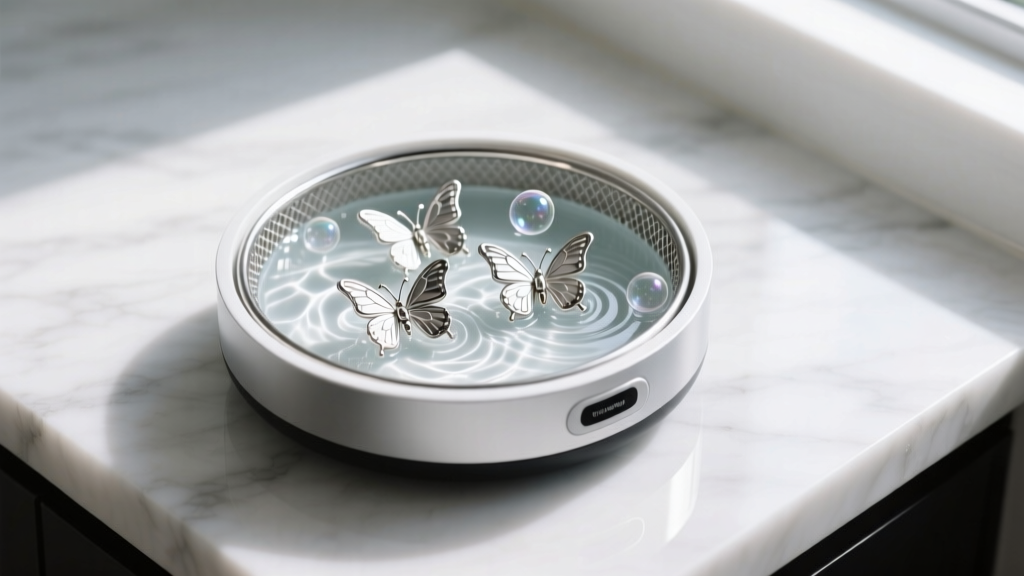
For solid gold (14k or 18k), platinum, and implant-grade titanium (ASTM F136) earring posts and backs, an ultrasonic jewelry cleaner operating at 40-45 kHz is highly effective. The cavitation bubbles implode against the metal, blasting away invisible grime. Warning: Never use ultrasonic cleaners if your earring posts are permanently attached to soft, porous gemstones like pearls, opals, or emeralds, as the vibrations can cause micro-fractures. For gemstone studs, clean the butterfly back separately from the post.
4. Chemical Sanitization
After rinsing with distilled water, submerge the metal clutches and posts in 70% isopropyl alcohol for exactly 5 minutes. The Gemological Institute of America (GIA) notes that 70% alcohol is vastly superior to 90%+ concentrations for sanitizing, as the water content slows evaporation, allowing enough contact time to denature bacterial cell walls. Pat dry with a lint-free microfiber cloth.
Material-Specific Care and Compatibility Chart
Not all butterfly earring backs are created equal. The metallurgical composition dictates which cleaning agents are safe. Using the wrong chemical can strip platings or oxidize alloys.
| Material Grade | Safe Cleaners | Strictly Avoid | Drying Method |
|---|---|---|---|
| 14k / 18k Solid Gold | Mild dish soap, Ultrasonic, 70% IPA | Chlorine bleach, Iodine | Microfiber cloth |
| 925 Sterling Silver | Mild dish soap, Silver dip (briefly) | Ultrasonic (if oxidized), Salt water | Air dry or microfiber |
| Implant-Grade Titanium (F136) | Soap, IPA, Ultrasonic, Saline | Hydrofluoric acid (never used in home care) | Lint-free wipe |
| Gold-Plated Brass/Silver | Mild soap, Warm water only | Ultrasonic, Alcohol, Polishing cloths | Air dry gently |
Tension Maintenance: The Mechanics of the Scroll
A butterfly earring back relies on the inward pressure of its metal loops against the notched groove of a standard 20-gauge (0.81mm) or 22-gauge (0.64mm) earring post. Over months of insertion and removal, the metal experiences fatigue and plastic deformation, causing the loops to flare outward. This loss of tension is the leading cause of lost diamond and gold studs.
How to Restore Clutch Tension
You do not always need to replace a loose butterfly back; you can often recalibrate it. Using a pair of nylon-jaw pliers (never steel-tipped jewelry pliers, which will gouge the metal), gently squeeze the two outer loops of the butterfly back toward the center hole. Apply pressure in small increments, testing the friction on a spare 20G post after each squeeze. You should feel a distinct 'click' or resistance when the clutch passes over the post's safety groove.
When to Replace Your Clutches
If the metal scroll shows visible pitting, if the gold plating is flaking off (exposing base metals that cause nickel allergies), or if the center hole has become oval-shaped rather than perfectly round, the structural integrity is compromised. Discard them immediately.
Troubleshooting: The Embedded Butterfly Back
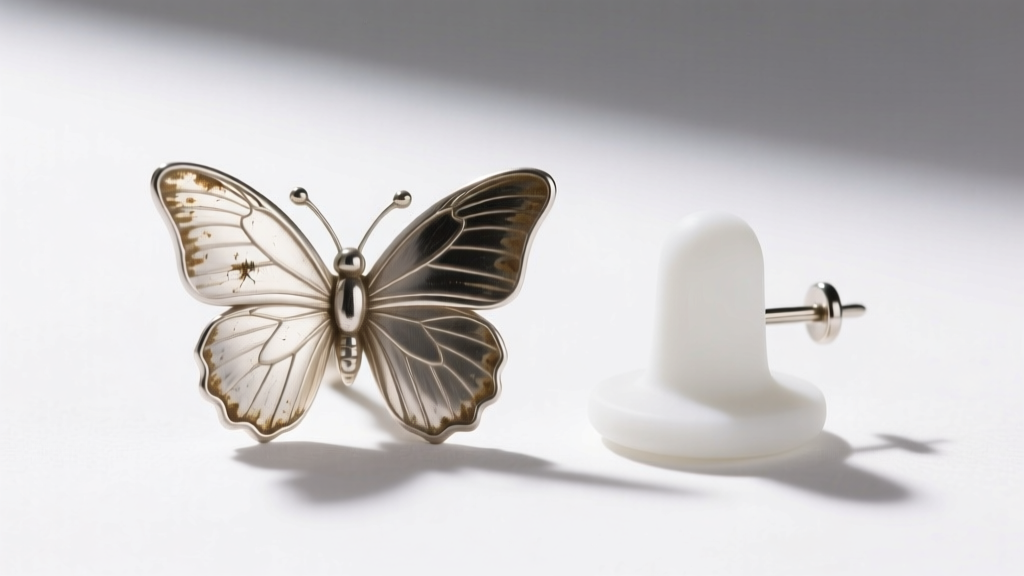
A common and painful failure mode occurs when a butterfly earring back is pushed too tightly against the earlobe. If the lobe swells due to trauma, allergies, or sleeping on the earring, the tissue can expand into the metal scroll, effectively locking the clutch in place.
Expert Protocol for Swollen Lobes: Never use brute force or metal tools to pry an embedded clutch off the ear. Instead, soak a sterile gauze pad in warm, sterile 0.9% sodium chloride (saline) solution and hold it against the back of the earlobe for 10 minutes. The warmth increases local blood flow to reduce edema, while the saline gently softens any dried exudate binding the metal to the skin. Once the swelling subsides, gently twist the post while pulling the clutch straight back.
Upgrading from Traditional Butterfly Backs
While the butterfly clutch is the industry standard for friction backs, modern jewelry maintenance often involves upgrading to more secure, hygienic alternatives. Consider these options for high-value earrings:
- Silicone O-Rings / Stoppers: Hypoallergenic, easy to clean, and provide immense friction. However, they degrade with exposure to UV light and skin oils, requiring replacement every 6 to 12 months.
- La Pousette Locking Backs: These feature a mechanical locking mechanism with tiny internal springs that grip the post groove. They are highly secure and easier to keep clean than the complex folds of a traditional butterfly scroll.
- Screw-Back Posts: These require a threaded post and a matching threaded backing. While they eliminate the tension-fatigue issue entirely, the threads can strip if cross-threaded, and they require meticulous cleaning to remove debris from the microscopic screw grooves.
By treating your butterfly earring backs not as disposable afterthoughts, but as precision mechanical components, you extend the life of your jewelry, protect your earlobe health, and ensure your most cherished studs remain securely in place.


