How to Choose and Style Your First Indian Earring
Discover how to choose, style, and comfortably wear your first Indian earring. Learn about jhumkas, chandbalis, metals, and weight distribution.

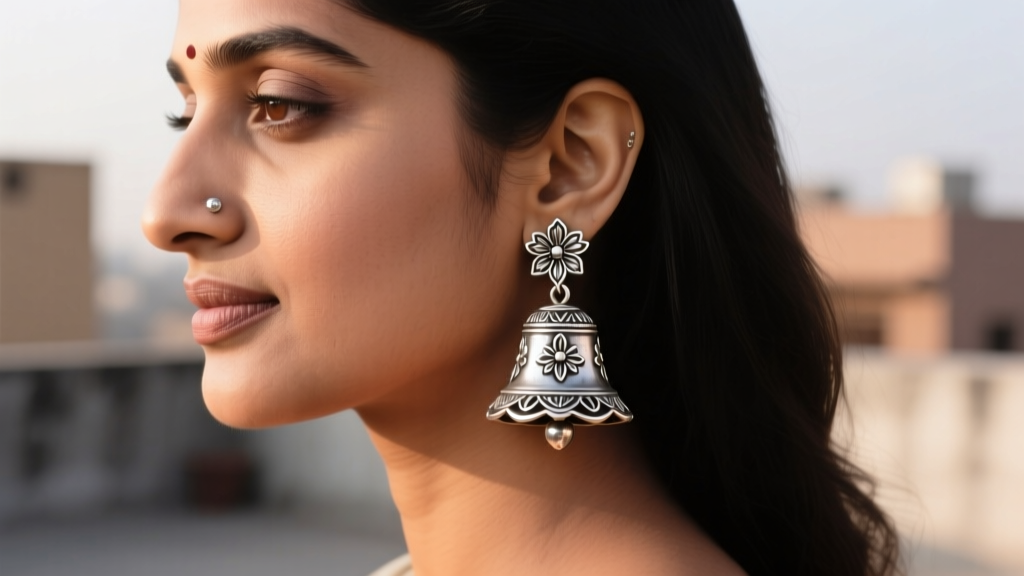
Stepping into the world of traditional South Asian jewelry can feel overwhelming for a beginner. Between the intricate craftsmanship, the rich cultural history, and the sheer variety of silhouettes, finding the perfect piece requires a bit of guidance. If you are looking to invest in your first Indian earring, you are not just buying an accessory; you are acquiring a wearable piece of art. However, navigating the nuances of weight, metal purity, and structural support is crucial to ensuring your purchase is both beautiful and comfortable.
In this comprehensive guide, we will break down the anatomy of traditional Indian earrings, decode the materials used by master artisans, and provide actionable biomechanical tips for wearing heavier statement pieces without stretching your earlobes.
Understanding the Core Silhouettes
Before you make a purchase, it is essential to understand the foundational shapes that define Indian ear jewelry. While contemporary designers constantly push boundaries, three historical silhouettes remain the bedrock of any collection.
The Jhumka: A Masterclass in Movement
The jhumka is arguably the most recognizable Indian earring style. Characterized by its distinctive bell-shaped dome, the jhumka is designed to move fluidly with the wearer. Historically, the hollow dome was crafted to hold tiny seed pearls or metallic beads that create a soft, rhythmic chiming sound when the wearer walks. For beginners, a medium-sized jhumka (roughly 1.5 to 2 inches in drop length) is the ideal entry point. It provides traditional elegance without the extreme weight of bridal-tier pieces.
The Chandbali: Crescent Moon Elegance
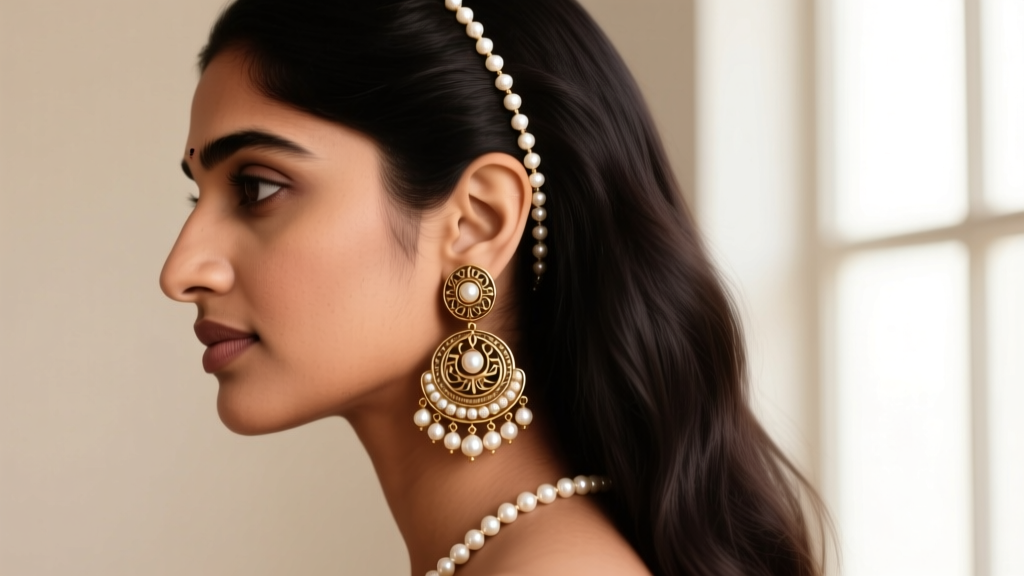
Translating to 'moon earring,' the chandbali features a crescent-shaped frame often heavily encrusted with gemstones, pearls, or enamel work. Originating from the royal courts of Hyderabad and Rajasthan, the chandbali frames the jawline beautifully. Because the weight is distributed across a wider surface area of the lobe compared to a concentrated drop earring, chandbalis often feel more secure, provided the post is adequately thick.
Ear Cuffs and Bahubali Styles
For those without multiple cartilage piercings, the Bahubali-style ear cuff is a revelation. These pieces chain from the lobe to the upper ear, mimicking the look of multiple helix and tragus piercings. They rely on tension and adjustable screws rather than piercing needles, making them a beginner-friendly way to achieve a dramatic, maximalist look.
Decoding Materials: Beyond the Glitter
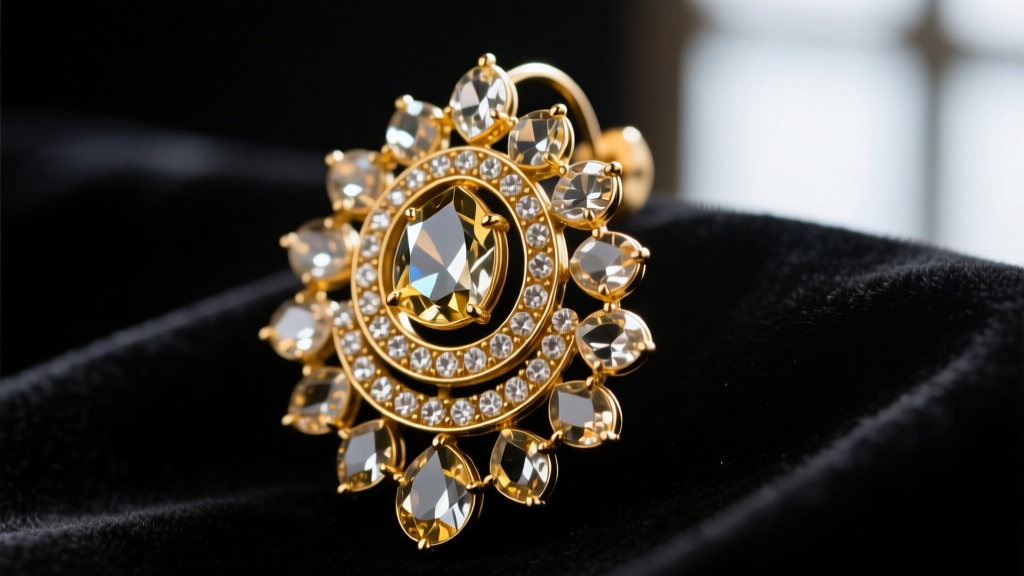
One of the most common mistakes beginners make is misunderstanding the materials used in traditional Indian jewelry. The terminology used by artisans often differs from Western metallurgical standards. According to the Gemological Institute of America (GIA), understanding gold alloys and plating techniques is vital for assessing value and longevity.
| Material / Technique | Composition & Reality | Pros & Cons | Average Price Range (USD) |
|---|---|---|---|
| Oxidized Silver | Usually brass or copper alloy plated with silver, then treated with liver of sulfur to create a blackened, antique patina. | Pros: Affordable, lightweight, bohemian aesthetic. Cons: Can cause green skin discoloration if the base metal is exposed to sweat. |
$15 - $60 |
| Kundan | Highly refined 24k gold foil used to set uncut gemstones or glass into a lac (resin) base. Not solid gold. | Pros: Royal appearance, vibrant colors, lightweight. Cons: Extremely fragile; water or perfume will destroy the lac base and lift the foil. |
$80 - $300+ |
| Polki | Similar to Kundan, but uses uncut, naturally mined diamonds instead of glass or quartz, set in gold foil. | Pros: Investment-grade, brilliant natural sparkle. Cons: Expensive, requires professional cleaning. |
$500 - $5,000+ |
| Meenakari | The art of enameling metal (usually gold or silver) with vibrant, fused glass pigments. | Pros: Stunning pops of color on the reverse side of the earring. Cons: Enamel can chip if dropped on hard surfaces. |
$50 - $400 |
The Biomechanics of Heavy Earrings: Saving Your Lobes
The most frequent complaint from first-time buyers of Indian jewelry is the sheer weight of the pieces. A standard Western stud earring weighs less than 2 grams. A bridal jhumka can easily exceed 35 grams per ear. Wearing heavy drops on a standard 20-gauge (0.8mm) piercing hole is a recipe for lobe tearing and permanent stretching.
To wear heavy Indian earrings safely, you must employ structural support strategies:
- Upgrade Your Post Gauge: If you are commissioning a piece or buying from a high-end artisan, request an 18-gauge (1.0mm) or 16-gauge (1.2mm) post. The thicker metal distributes the downward torque across a wider surface area of the piercing channel, reducing the 'cheese-cutter' effect that leads to torn lobes.
- Use Silicone O-Rings: Ditch the standard metal butterfly backs. They slip easily under heavy weight. Instead, use thick silicone O-rings or jumbo friction backs. The high-friction rubber grips the post securely and provides a wider cushion against the back of the earlobe.
- The Sahara Chain (Support Chain): This is the ultimate secret weapon for heavy chandbalis and jhumkas. A sahara is a delicate chain that hooks onto the earring post, drapes behind the ear, and anchors into the hair using a small comb or tick-tack clip. This transfers up to 70% of the earring's weight from the fleshy lobe to the scalp.
Face Shape Pairing Framework
Traditional Indian earrings are bold, and selecting the right silhouette for your facial geometry ensures the piece enhances rather than overwhelms your features. Use this quick-reference framework when shopping:
Stylist Tip: 'When wearing heavily embellished jhumkas, keep the neckline of your outfit relatively clean. Let the earring be the undisputed focal point of the upper half of your body.' — Archival styling notes from The Metropolitan Museum of Art's South Asian textile and jewelry exhibitions.
- Round Faces: Avoid short, wide chandbalis that add horizontal volume. Opt for elongated, teardrop-shaped jhumkas or long chain earrings (matka patti) that draw the eye downward and create the illusion of a longer jawline.
- Square Faces: Soften strong jawlines with circular or crescent-shaped chandbalis. The curved lines of the crescent moon contrast beautifully with angular facial structures. Avoid geometric, blocky studs.
- Heart-Shaped Faces: Your cheekbones are the star. Choose bottom-heavy jhumkas that are narrow at the top and flare out at the bottom. This balances a narrower chin and draws attention to the neck.
- Oval Faces: You have the versatility to pull off almost any style. Experiment with oversized, dramatic Bahubali ear cuffs or wide, shoulder-grazing statement pieces.
Care and Maintenance: Preserving the Patina
Indian earrings require specific care routines that differ vastly from standard diamond or platinum jewelry. The techniques used to create them are often organic and highly sensitive to modern chemicals.
Caring for Oxidized Silver
The blackened crevices of oxidized silver are created using liver of sulfur. If you use standard silver polish or dip your earrings in chemical cleaning baths, you will strip away the intentional oxidation, leaving you with a flat, shiny, and uneven brass-colored earring. Clean oxidized pieces only with a dry, soft microfiber cloth. Store them in anti-tarnish ziplock bags with silica gel packets to prevent moisture-induced rusting of the base metal.
Protecting Kundan and Meenakari
Kundan jewelry is set using a natural tree resin (lac). This resin is highly reactive to moisture, perfumes, and hairsprays. Always put your Kundan earrings on after you have applied all cosmetics and fragrances. Never wash them in water. If a stone becomes loose, do not attempt to glue it back in with cyanoacrylate (Super Glue), as the fumes will cloud the glass and the heat will melt the lac. Take it to a professional setter who specializes in traditional Indian techniques.
Final Thoughts for the Beginner
Investing in your first Indian earring is a beautiful way to connect with centuries of artisanal heritage. By prioritizing structural support, understanding the true nature of materials like Kundan and oxidized alloys, and selecting a silhouette that complements your unique geometry, you ensure your jewelry remains a source of joy rather than discomfort. Start with a versatile, mid-weight oxidized jhumka to test your comfort level, and gradually work your way up to the breathtaking, gem-encrusted chandbalis that define the pinnacle of South Asian adornment.


