Why Do Earrings Smell? Causes, Material Fixes, and Cleaning
Discover why do earrings smell, the science behind sebum buildup, and expert troubleshooting steps to eliminate odor from studs, hoops, and cartilage.

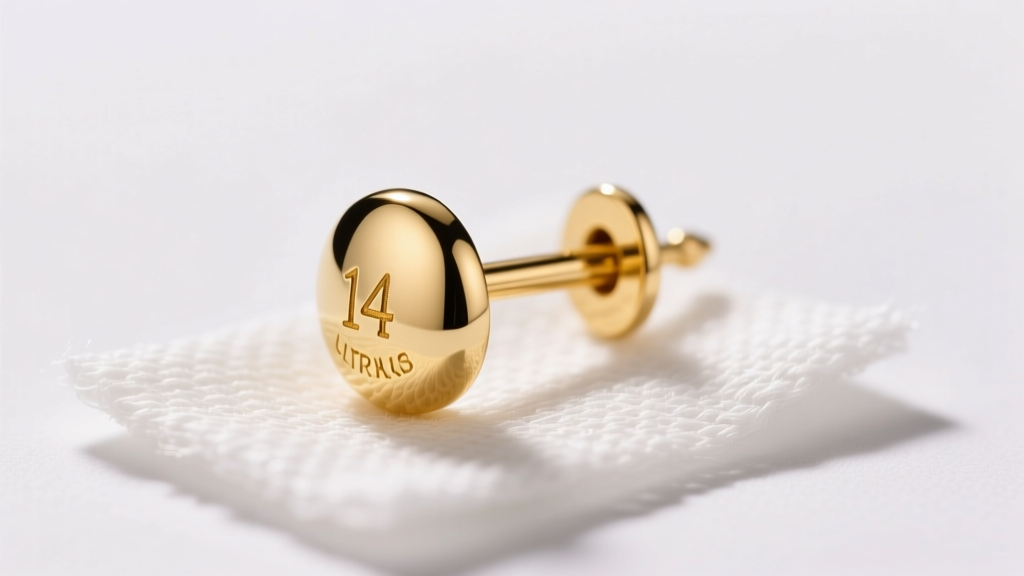
If you have ever taken out a pair of stud earrings or hoops and been hit by an unpleasant, cheesy odor, you are not alone. The question of why do earrings smell is one of the most common inquiries in dermatology and professional piercing studios. While often dismissed as a mere nuisance, this odor is the result of a specific biological and metallurgical interaction between your skin’s natural microbiome and the jewelry you wear. Understanding the root cause is the first step toward permanent troubleshooting and odor elimination.
The Biology of Ear Odor: Sebum, Keratin, and Bacteria
To solve the problem, we must first look at the anatomy of the earlobe and cartilage. Your skin is coated in sebaceous glands, which secrete sebum—an oily substance designed to lubricate and waterproof the skin. The earlobe, in particular, has a high concentration of these glands. When you wear earrings, the post or wire creates a enclosed microenvironment within the piercing fistula (the healed tunnel of skin).
Inside this tunnel, sebum mixes with dead skin cells (keratinocytes) and environmental debris. This mixture, colloquially known in the piercing community as 'ear cheese,' is entirely normal. However, it becomes malodorous when it interacts with the natural bacteria living on your skin, specifically Corynebacterium and Staphylococcus hominis. According to research published by the National Center for Biotechnology Information (NCBI) regarding skin flora, these bacteria break down the lipids in sebum, releasing isovaleric acid. This specific acid is the exact same compound responsible for the smell of certain pungent cheeses and foot odor.
Material Culprits: Why Cheap Alloys Accelerate Odor
While biology provides the fuel, your jewelry material provides the breeding ground. The porosity and oxidation rate of your earrings dictate how much bacteria and sebum can cling to the post. Cheap fashion jewelry often utilizes brass, copper, or nickel-plated alloys. These metals are highly reactive and microscopically porous.
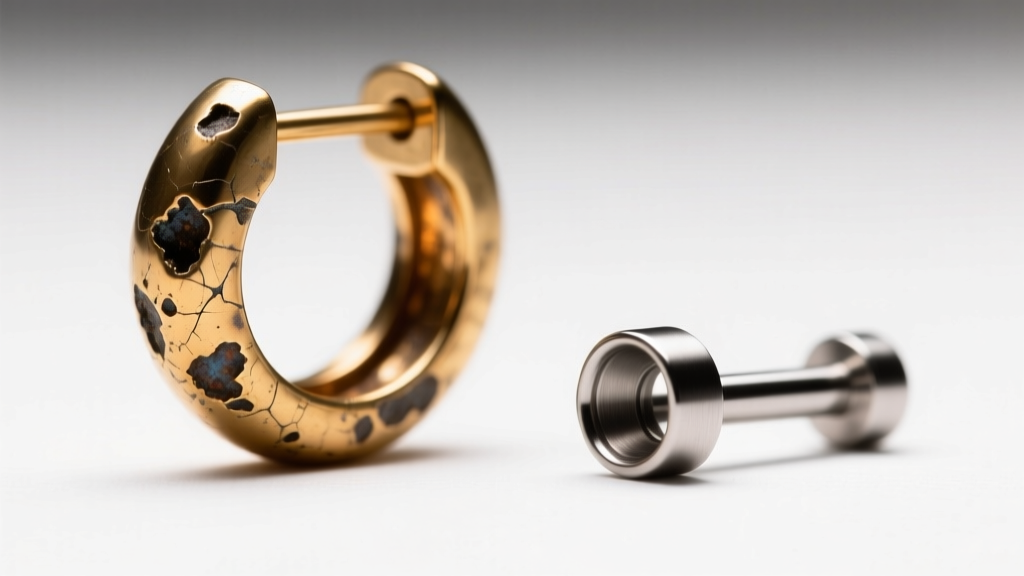
When base metals oxidize, they create microscopic pits and grooves on the surface of the earring post. These grooves trap sebum and bacteria, making them nearly impossible to clean with a simple wipe. Furthermore, nickel and copper can cause low-grade contact dermatitis, which triggers the skin to produce more sebum and shed skin cells faster as a defense mechanism, compounding the odor problem.
| Material Grade | Porosity & Oxidation | Odor Retention Risk | Best Use Case |
|---|---|---|---|
| Implant-Grade Titanium (ASTM F136) | Non-porous, zero oxidation | Very Low | Healing piercings, daily wear, sensitive skin |
| 14k / 18k Solid Gold | Non-porous, highly stable | Low | Healed lobes, cartilage, fine jewelry |
| Surgical Steel (316L) | Low porosity, contains nickel | Medium | Healed piercings (avoid if nickel allergic) |
| Sterling Silver (925) | High porosity, oxidizes (tarnishes) | High | Occasional wear in fully healed lobes only |
| Plated Brass / Nickel Alloys | Highly porous, rapid oxidation | Very High | Avoid entirely for pierced ears |
Troubleshooting by Piercing Type and Gauge
The mechanics of your earring also play a massive role in odor retention. Different piercing locations and gauge sizes require specific troubleshooting approaches to maintain hygiene.
Standard Lobe Piercings (20G - 18G)
Most commercial lobe earrings are 20-gauge or 18-gauge and utilize a 'butterfly' friction back. The butterfly back is a notorious trap for sebum. The tiny metal loops and grooves collect dead skin and soap residue, hardening into a cement-like paste. The Fix: Discard butterfly backs entirely. Switch to flat-back titanium labret studs or use medical-grade silicone O-rings to secure your posts. Flat backs eliminate the crevices where bacteria hide and allow the back of the earlobe to breathe.
Cartilage and Helix Piercings (16G - 14G)
Cartilage piercings are typically 16-gauge or 14-gauge. Because the fistula is tighter and the skin is thinner, there is less airflow to naturally dry out sebum. Wearing tight-fitting huggies or continuous hoops can cause the jewelry to rotate, dragging outside bacteria and hair products into the piercing channel. The Fix: Opt for internally threaded or threadless flat-back labrets that sit flush against the cartilage. If you prefer hoops, ensure the inner diameter is large enough (typically 8mm or 10mm) so the jewelry does not press tightly against the fistula, allowing for proper saline flushing.
The Deep-Clean Protocol for Odor Elimination
Wiping your earrings with a tissue is insufficient for breaking down isovaleric acid and lipid bonds. To truly troubleshoot smelly earrings, you need a chemical and mechanical cleaning protocol.
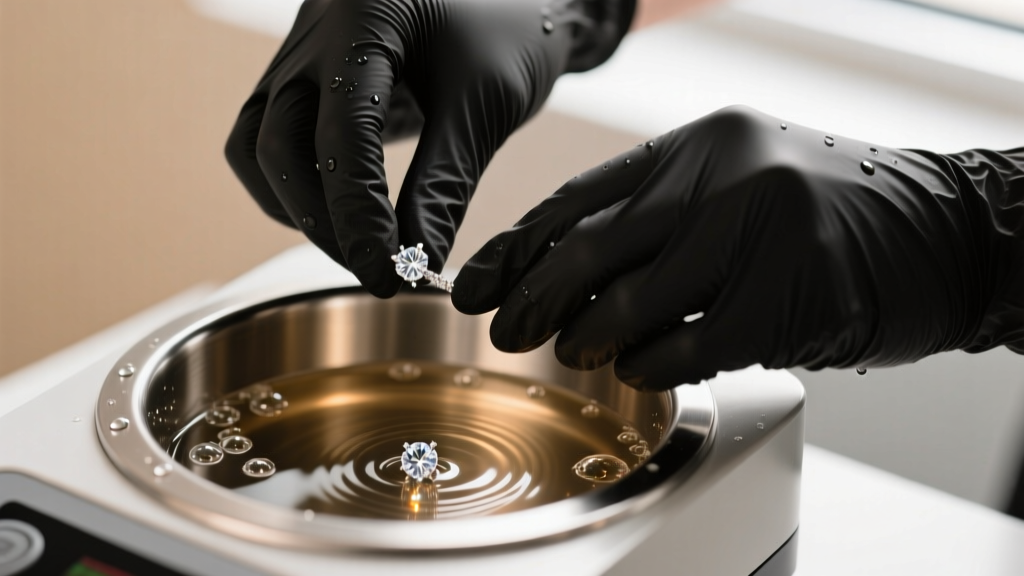
- Ultrasonic Cleaning (The Gold Standard): Invest in a 40kHz to 45kHz ultrasonic jewelry cleaner. Fill it with warm water and a few drops of mild, fragrance-free dish soap. The high-frequency sound waves create microscopic cavitation bubbles that implode, literally blasting sebum and bacteria out of the microscopic pores of your earrings and the crevices of gemstone settings.
- Enzymatic Soaks: For stubborn buildup on body jewelry, soak the pieces in an enzymatic contact lens cleaner or a specialized jewelry cleaning solution designed to break down proteins and lipids for 15 minutes before ultrasonic cleaning.
- Piercing Hygiene: Clean the earlobe itself. During your daily shower, gently massage a mild, non-antibacterial liquid soap (like Cetaphil or Castile soap) around the piercing hole to wash away excess sebum. Avoid harsh antibacterial soaps or rubbing alcohol, which strip the skin’s moisture barrier and trigger rebound sebum overproduction.
- Dry Thoroughly: Bacteria thrive in moisture. After showering, use a hairdryer on the cool setting to completely dry the front and back of your earlobes and cartilage.
When to See a Professional: Infection vs. Normal Odor
While sebum buildup smells unpleasant, it is not dangerous. However, it is vital to differentiate between normal 'ear cheese' and a bacterial infection. According to the Association of Professional Piercers (APP), normal sebum odor is accompanied by a grayish-white, paste-like substance that wipes away easily and leaves the skin intact.
'An infected piercing will not just smell; it will present with localized heat, throbbing pain, swelling, and a yellow or green purulent discharge that may crust heavily. If you experience these symptoms alongside the odor, remove the jewelry only if advised by a medical professional, and seek clinical treatment.' — APP Aftercare Guidelines
By upgrading to non-porous metals like ASTM F136 titanium, abandoning butterfly earring backs, and utilizing ultrasonic cleaning technology, you can completely eliminate the biological fuel source for odor. Troubleshooting smelly earrings is not about masking the scent with perfumes; it is about managing the microenvironment of your piercing through superior metallurgy and targeted hygiene.


