How to Choose Earrings for Short Hair: A Troubleshooting Guide
Troubleshoot proportion, weight, and snagging issues with our expert guide to choosing the perfect earrings for short hair, pixie cuts, and bobs.

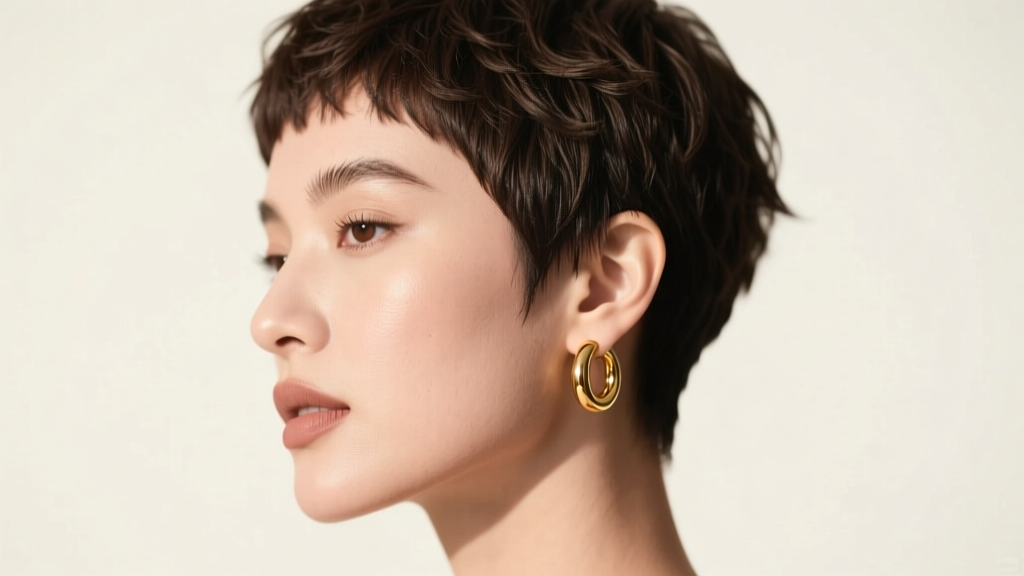
Transitioning to short hair—whether a cropped pixie, a sharp blunt bob, or a close buzz cut—fundamentally alters the visual physics of your jewelry. When your hair is long, earrings act as hidden surprises, occasionally catching the light when you tuck a strand behind your ear. With short hair, your ears, neck, and jawline are fully exposed. Your earrings are no longer just accessories; they are primary architectural elements of your facial framing.
However, this total exposure brings a unique set of styling and physical challenges. Proportions that worked with long hair can suddenly look overwhelming or disproportionately tiny. Heavy drops can cause visible lobe sagging that hair can no longer conceal, and intricate settings can become magnets for hair snagging. In this comprehensive troubleshooting guide, we will solve the most common dilemmas faced when selecting earrings for short hair, providing exact measurements, material grades, and structural fixes to ensure your jewelry complements your cut flawlessly.
The Core Dilemma: Visual Weight and the 'Naked Ear'
The most immediate issue when cutting your hair short is the 'naked ear' effect. Without the visual buffer of hair, the eye is drawn directly to the ear's cartilage and lobe. A common mistake is assuming that because the ear is exposed, it needs a massive statement piece to balance the new look. In reality, oversized hoops (over 40mm in diameter) can easily overwhelm a petite ear and clash with the sharp, clean lines of a pixie cut.
The troubleshooting fix relies on the One-Third to Two-Thirds Rule. Your earring should ideally cover no more than one-third to two-thirds of your total ear length (measured from the top of the helix to the bottom of the lobe). This maintains facial harmony without turning the ear into a visual anchor that drags the face downward.
Troubleshooting Proportion: The Ear-to-Earring Ratio
To solve the proportion dilemma, you must first measure your ear. Use a soft measuring tape to find the vertical length of your ear in millimeters. Use the diagnostic chart below to find your ideal earring diameters and stud sizes.
| Ear Length Category | Measurement (mm) | Ideal Huggie/Hoop Diameter | Ideal Stud Width | Drop Earring Length Limit |
|---|---|---|---|---|
| Petite / Small | Under 60mm | 10mm - 15mm | 5mm - 7mm | Max 25mm |
| Medium / Average | 60mm - 70mm | 15mm - 25mm | 7mm - 9mm | Max 40mm |
| Large / Prominent | Over 70mm | 25mm - 35mm | 9mm - 12mm | Max 55mm |
Expert Tip: If you have prominent ears that stick out further from the head (a common concern with buzz cuts), avoid wide, flat disc studs. They will act like magnifying glasses for ear protrusion. Instead, opt for elongated vertical drops or huggies that wrap tightly around the lobe, drawing the eye downward rather than outward.
The Snag Factor: Navigating Pixie Cuts and Blunt Bobs
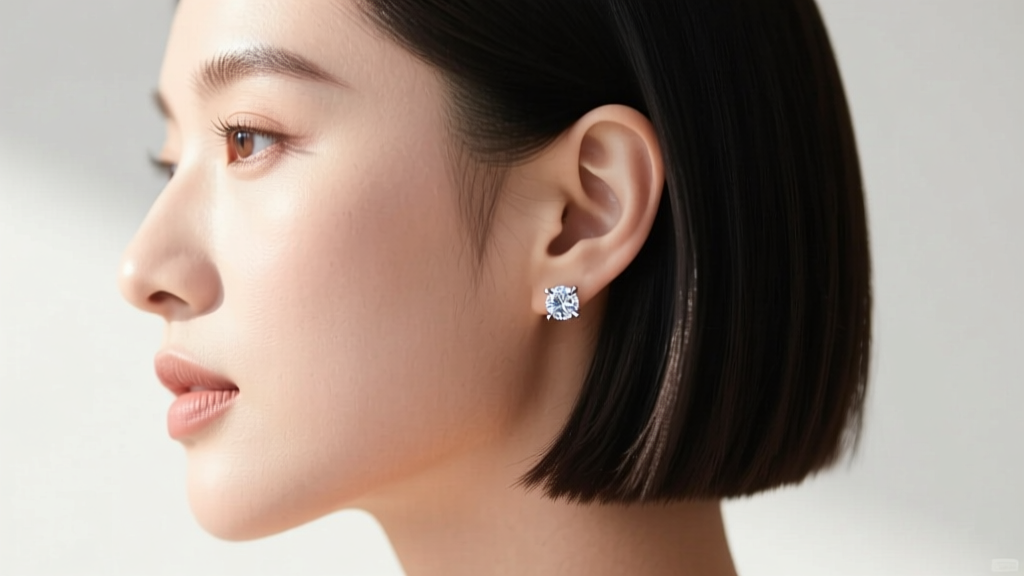
Short haircuts often feature tight fades at the nape of the neck or sharp, blunt ends that swing against the jawline. This creates a high-friction 'danger zone' for earrings. Traditional prong-set gemstones act like tiny grappling hooks, catching on individual hair strands, causing breakage, and potentially loosening the gemstone over time.
Bezel vs. Prong Settings
The ultimate troubleshooting fix for hair snagging is switching to bezel settings. A bezel setting encircles the gemstone with a custom-fitted rim of metal, creating a completely smooth, flush profile. Not only does this eliminate snagging on short bobs and pixie fringes, but it also offers superior protection for the stone. Brands like Maria Tada and Mejuri specialize in low-profile bezel designs that sit flush against the lobe, retailing between $150 and $400 for solid 14k gold options.
Rethinking Earring Backings
Standard 'butterfly' push-backs are notorious for tangling in the short, fine hairs at the nape of the neck. The sharp metal prongs of the backing can scratch the skin and trap hair, leading to painful tangles.
- La Pousette (Locking) Backs: These feature a mechanical locking mechanism with smooth, rounded edges that glide through short hair without catching.
- Screw-Backs: Ideal for sleepers and those with very short fades, screw-backs offer a completely smooth, cylindrical profile that hair cannot wrap around.
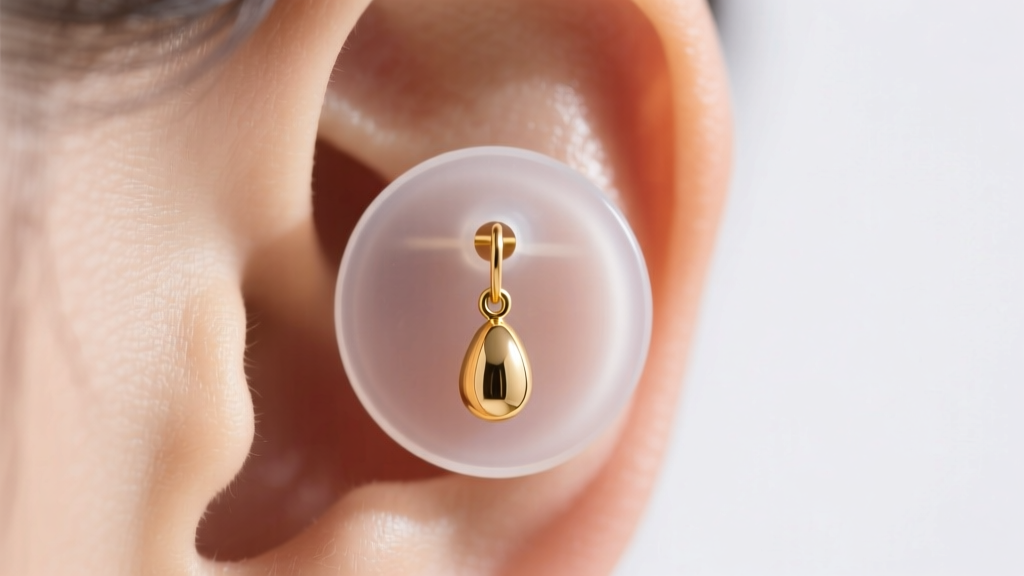
- Silicone Discs: A cheap, highly effective alternative. A 10mm flat silicone disc provides a smooth barrier between the metal post and your neck hair.
Solving the Sag: Weight Distribution for Exposed Lobes
When your hair is long, it provides a visual curtain that hides the mechanical stress placed on your earlobes. With short hair, any lobe stretching or sagging caused by heavy earrings is immediately visible. The average earlobe can comfortably support about 4 to 6 grams of weight before chronic stretching begins. Many fashion drop earrings easily exceed 10 to 15 grams.
The Troubleshooting Protocol for Heavy Drops:
- Upgrade the Post Gauge: Most standard earrings use a 20-gauge (0.8mm) post. For exposed lobes wearing drops over 5 grams, seek out earrings with an 18-gauge (1.0mm) or 16-gauge (1.2mm) post. The thicker metal distributes the shear force across a wider area of the piercing channel, preventing the 'cheese-cutter' effect.
- Use Support Pads: Invest in 10mm to 12mm silicone earring support pads (brands like Blomdahl or generic medical-grade silicone discs). These sit behind the lobe and increase the surface area of weight distribution by up to 400%, effectively neutralizing the downward drag of heavier pieces.
- Hollow vs. Solid Metal: If you love the look of large, chunky hoops for your bob cut, ensure they are hollow-tube constructed rather than solid cast. A 30mm hollow tube hoop might weigh just 3 grams, whereas a solid cast version could weigh over 12 grams.
Material Visibility: Hiding (and Preventing) Irritation
Contact dermatitis and metal allergies present as red, flaky, or irritated skin around the piercing site. With long hair, this irritation is easily hidden. With short hair, inflamed earlobes are front and center, disrupting the clean aesthetic of your haircut. The Mayo Clinic identifies nickel as the primary culprit for jewelry-related contact dermatitis, a metal frequently found in cheap alloy bases and even some lower-karat gold solders.
'When your ears are fully exposed, you cannot afford to compromise on metal purity. The skin on the earlobe is thin, and chronic exposure to reactive alloys will result in visible hyperpigmentation and textural changes that take months to heal.'
To troubleshoot and prevent visible irritation, strictly adhere to these material grades:
- ASTM F136 Implant-Grade Titanium: The gold standard for sensitive ears. It contains zero nickel and is highly biocompatible. According to the Association of Professional Piercers (APP), this specific grade is safe for even the most reactive skin types. Expect to pay $40-$80 for high-quality titanium studs.
- 14k or 18k Solid Gold (Nickel-Free): Ensure the gold is alloyed with silver or copper, not nickel. White gold is particularly risky, as it is often alloyed with nickel and plated with rhodium. Once the rhodium wears off on an exposed ear, the nickel contact causes immediate visible redness. Opt for yellow or rose gold instead.
- Avoid Gold-Plated Brass: The brass base will eventually oxidize and turn exposed skin green or black, a highly visible flaw when wearing a sharp, short cut.
Summary: Your Short Hair Earring Checklist
Choosing the right earrings for short hair requires shifting your focus from mere aesthetics to structural mechanics and precise proportions. By measuring your ear to select the correct hoop diameter, switching to bezel settings to eliminate snagging on blunt bobs, upgrading to thicker 18-gauge posts with silicone support pads to prevent visible lobe sag, and strictly wearing ASTM F136 titanium or solid nickel-free gold, you transform your exposed ears into a polished, intentional focal point. Short hair demands precision; ensure your jewelry meets the standard.


