How to Buy Authentic Antique Opal Earrings: A Guide
Discover how to identify, price, and care for authentic antique opal earrings. Learn to spot doublets, read hallmarks, and protect fragile gems.
The Allure and Danger of Antique Opal Earrings
Antique opal earrings are among the most captivating pieces of estate jewelry you can collect. Their iridescent play-of-color, paired with the rich patina of century-old precious metals, offers a romantic aesthetic that modern mass-production simply cannot replicate. However, the market for antique opal jewelry is riddled with misidentified eras, synthetic composites, and modern stones disguised as historical artifacts. For a beginner, distinguishing between a genuine Victorian-era solid opal and a 1970s doublet requires a specific set of gemological and historical skills.
This guide breaks down the exact markers of authenticity, the structural nuances of antique earring posts, and the critical red flags you must avoid when investing in antique opal earrings.
Historical Eras: What Are You Actually Buying?
To be classified as "antique," a piece of jewelry must be at least 100 years old. This places genuine antique opal earrings squarely in three distinct historical periods, each with unique design characteristics:
The Victorian Era (1837–1901)
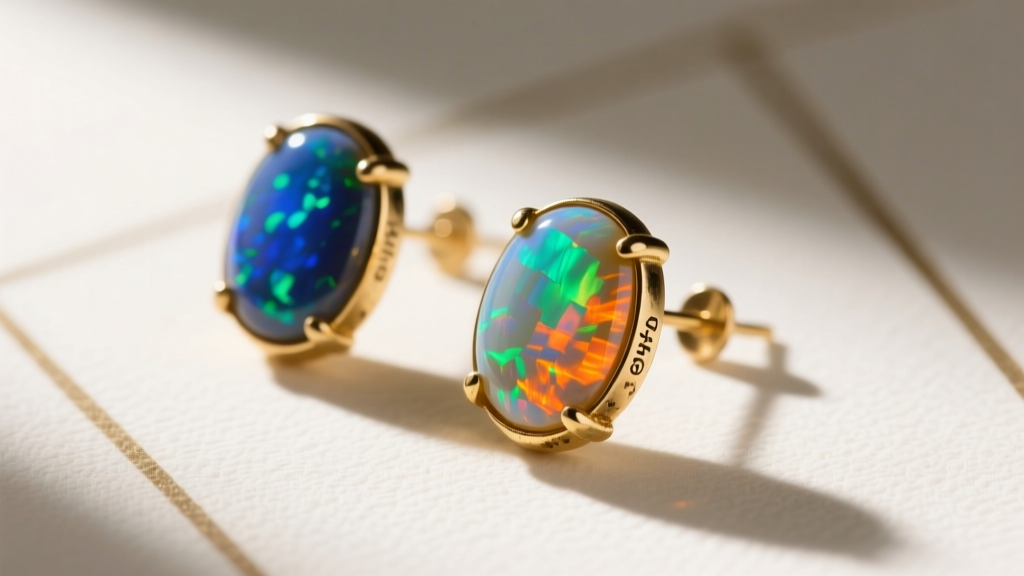
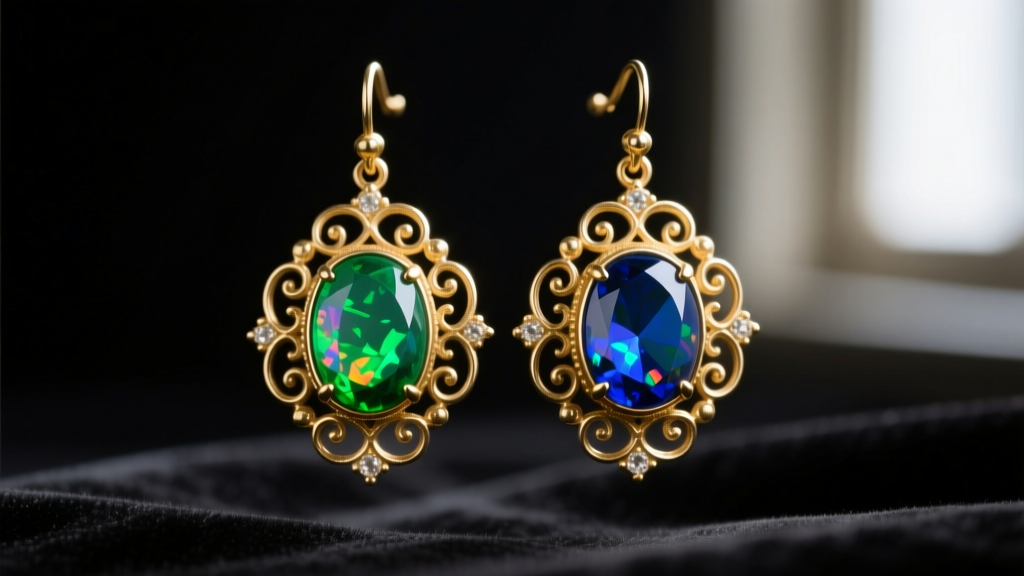
Victorian opal earrings heavily feature yellow gold (often 15k or 18k) and romantic, nature-inspired motifs. Opals were typically cut into smooth cabochons and set in simple bezel or early prong settings. Queen Victoria’s love for opals sparked a massive surge in their popularity during the late 19th century, making this the most common era for authentic antique opal studs and drops.
Art Nouveau (1890–1910)
Art Nouveau pieces are incredibly rare and highly prized. Earrings from this era often combine opals with plique-à-jour enamel, depicting organic forms like dragonflies, orchids, and flowing female figures. The opals used were often irregularly shaped to fit the fluid, asymmetrical designs.
Art Deco (1920–1935)
Art Deco introduced sharp geometry and high contrast. Platinum became the metal of choice. If you find Art Deco antique opal earrings, expect to see calibré-cut opals (custom-cut to fit exact geometric channels) surrounded by stark white diamonds or black onyx inlays.
The Biggest Beginner Trap: Solid vs. Composite Opals
The most common mistake beginners make is purchasing composite opals (doublets or triplets) believing them to be solid antique stones. While doublets have been used in jewelry since the late 19th century, they hold a fraction of the value of solid opals and require entirely different care.
| Feature | Solid Opal | Doublet | Triplet |
|---|---|---|---|
| Composition | 100% natural opal | Thin opal slice glued to dark potch/glass backing | Quartz cap + thin opal slice + dark backing |
| Value | High (Collector grade) | Low (Decorative) | Lowest (Costume grade) |
| Identification | Natural color variations on the back and sides | Visible glue line when viewed in side-profile | Domed quartz cap magnifies the color; glue lines visible |
| Water Exposure | Generally safe for brief periods | Dangerous (water dissolves the adhesive) | Dangerous (water dissolves the adhesive) |
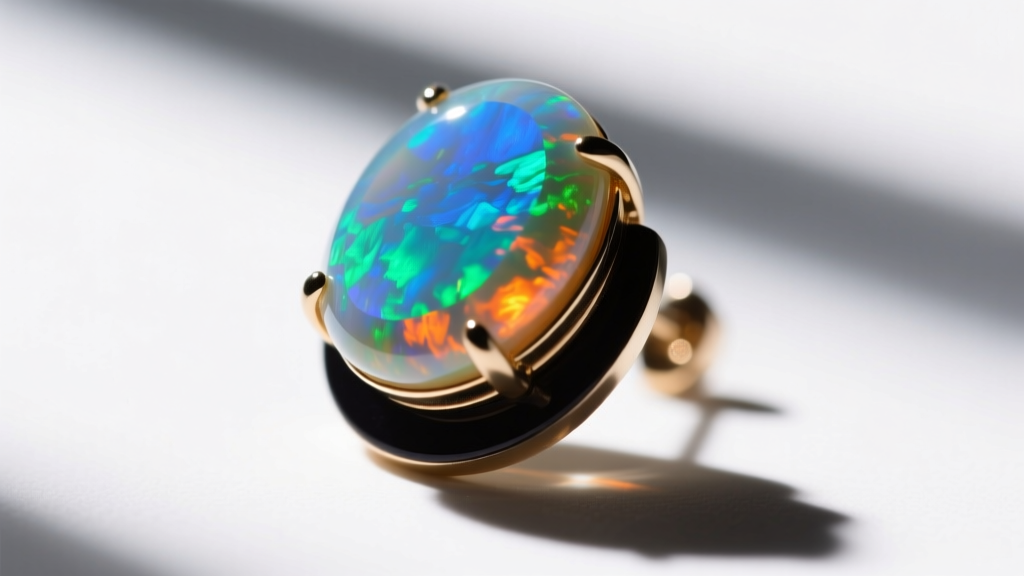
Expert Tip: Always ask for a side-profile macro photograph of the earring. According to the Gemological Institute of America (GIA), a perfectly straight, unnatural line separating the colorful top from a dark, uniform bottom is the definitive hallmark of a doublet. Furthermore, if the back of the stone is completely flat and black with no natural sandstone or potch matrix, it is almost certainly a composite.
The Ethiopian Opal Scam: A Modern Red Flag
Here is a vital piece of gemological trivia that will save you from being scammed: Ethiopian Welo opals did not exist in the antique market. The Welo deposit was not discovered until 2008. If a seller lists "Antique Victorian Ethiopian Opal Earrings," they are either lying, mistaken, or selling a modern stone placed in an antique setting. Genuine antique opals are almost exclusively Australian (from Lightning Ridge or Coober Pedy) or Mexican fire opals.
Decoding Antique Settings, Metals, and Ear Posts
Authenticating the stone is only half the battle. The metalwork and earring mechanisms provide crucial forensic evidence of a piece's true age.
Hallmarks and Metal Purity
British hallmarks are your best friend when dating Victorian and Edwardian earrings. Look for the "15ct" stamp. The UK used 15k gold as a standard until 1932, when it was officially replaced by 14k gold. If an earring is stamped 15ct, it is a strong indicator of a pre-1932 origin. French antique pieces will often bear the Eagle Head hallmark, indicating 18k gold, or the Dog Head mark for platinum.
Post Gauges and Clasps
Modern earring posts are typically 20-gauge or 21-gauge. Antique earring posts and ear wires are noticeably thicker, usually ranging from 17-gauge to 19-gauge. Additionally, true antique drop earrings will not use modern "butterfly" friction backs. Instead, look for:
- C-Clasps: Early Victorian hooks that simply curve into a 'C' shape without a locking mechanism.
- Threaded Screw-Backs: Popularized in the 1890s for non-pierced ears, featuring a flat paddle that screws down against the earlobe.
- Early Leverbacks: Hinged wires that snap shut, common in the 1920s and 30s.
Prong vs. Bezel: Why It Matters for Fragile Gems
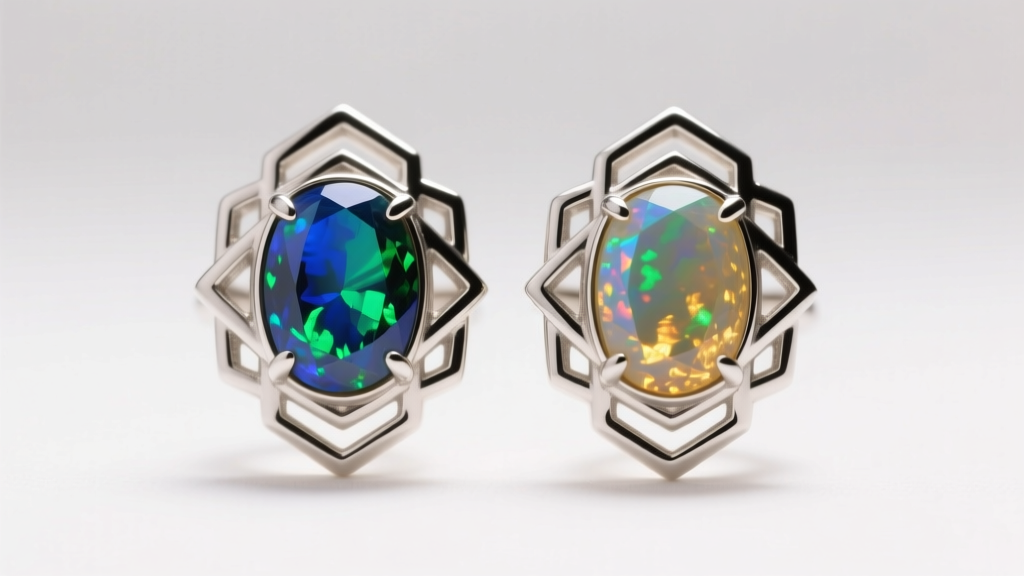
Opals rank between 5.5 and 6.5 on the Mohs hardness scale, making them highly susceptible to chipping. Expert antique jewelers knew this. While prong settings are common, the most valuable and well-preserved antique opal earrings feature bezel settings or rub-over settings, where a rim of gold completely encircles the opal's girdle, protecting the fragile edges from impact. As noted by estate jewelry experts at Lang Antiques, a bezel setting not only protects the stone but also helps retain moisture, preventing the opal from drying out.
Pricing Guide: What Should You Actually Pay?
Pricing antique opal earrings requires evaluating the metal weight, the era, and the quality of the opal's play-of-color (the brightness and spectrum of the flashes). Here is a realistic 2026 market baseline for authenticated pieces:
- Victorian 15k Gold Cabochon Studs (Solid White Opal): $600 – $1,400
- Art Deco Platinum & Diamond Opal Drops: $2,500 – $6,000+
- Victorian Doublet Earrings (Decorative, not investment grade): $150 – $350
- Mexican Fire Opal Ear Wires (18k Gold, 1920s): $800 – $1,800
Essential Care: Preventing "Crazing"
Opals contain up to 20% water trapped within their silica structure. When antique opals are exposed to extreme heat, low humidity, or sudden temperature changes, they lose this water and develop a network of fine cracks known as crazing. Crazing destroys both the structural integrity and the monetary value of the earring.
Never use an ultrasonic cleaner on antique opal earrings. The high-frequency vibrations will shatter the stone, and the heat will induce immediate crazing. Clean them only with a soft, damp microfiber cloth and store them in a sealed plastic bag with a slightly damp cotton ball to maintain ambient humidity.
Your Pre-Purchase Checklist
Before transferring funds for any pair of antique opal earrings, ensure the seller has provided: 1) A side-profile photo to rule out doublets, 2) Clear photos of the hallmarks and ear wire mechanisms, 3) A guarantee that the opals are Australian or Mexican (not Ethiopian), and 4) A detailed condition report noting any crazing or chipped girdles. Armed with these specifics, you can confidently build a historically significant and visually stunning antique earring collection.


