Restoring Sandra Embossed Gold Stud Earrings: Fix Guide
Learn how to clean, repair, and restore your Sandra embossed gold stud earrings. Expert troubleshooting for tarnish, bent posts, and worn details.

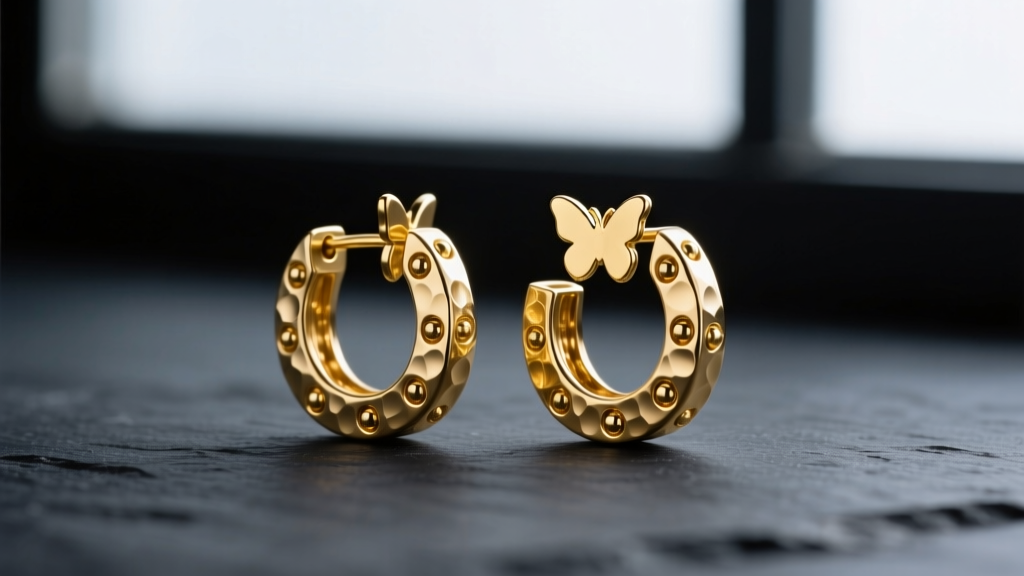
The Anatomy of Embossed Gold Studs: Why the Sandra Style is Prone to Damage
The Sandra embossed gold stud earrings are celebrated for their vintage-inspired, hammered textures and intricate dimensional detailing. However, the very manufacturing process that gives these studs their signature look—hydraulic pressing and hand-stamping—also creates unique vulnerabilities. Embossing work-hardens the gold, making the face of the earring durable, but it simultaneously creates microscopic crevices that trap sebum, cosmetic residues, and environmental pollutants.
Furthermore, the weight distribution of embossed studs is heavily front-loaded. Unlike smooth, lightweight domes, the dense metallic ridges of the Sandra design place disproportionate leverage on the earring post. When paired with standard 20-gauge (0.81mm) friction backs, this structural imbalance frequently leads to bent posts, stretched piercing holes, and lost earrings. Understanding the metallurgy and mechanics of your specific pair is the first step in effective troubleshooting.
Troubleshooting Tarnish and Discoloration in Embossed Crevices
Gold itself does not tarnish, but the alloy metals mixed with it (like copper and silver in 14k gold) or the base metals in gold vermeil can oxidize. If your Sandra embossed gold stud earrings are crafted from gold vermeil (a sterling silver base plated with at least 2.5 microns of gold), the embossed valleys are the first places where the plating wears thin, exposing the silver to sulfur and moisture.
The Danger of Ultrasonic Cleaners
Never place gold-plated or vermeil embossed earrings in an ultrasonic cleaner. The high-frequency cavitation bubbles will aggressively strip the micron-thin gold layer from the raised ridges of the embossing, leaving you with a two-toned, patchy earring. According to the Gemological Institute of America (GIA), mechanical cleaning methods should be strictly avoided for any gold jewelry that relies on surface plating or delicate surface textures.
Safe Cleaning Protocol for Textured Gold
- The Solution: Mix three drops of phosphate-free mild dish soap (like Dawn) into a bowl of lukewarm distilled water. Avoid tap water, as chlorine and hard minerals can leave deposits in the embossed grooves.
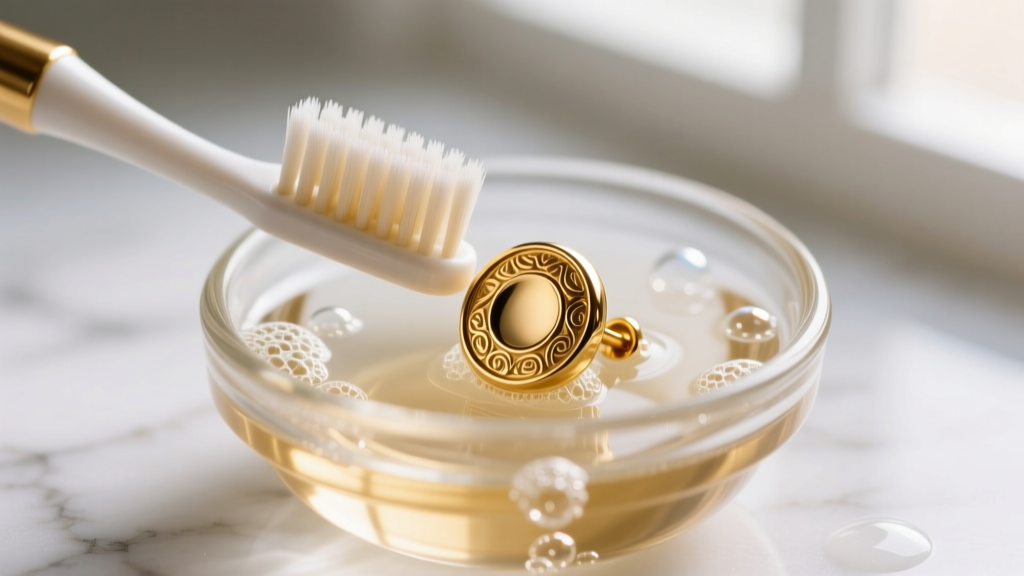
- The Tool: Use an extra-soft baby toothbrush. Standard adult toothbrush bristles are too stiff and can cause micro-scratches on high-polish gold accents.
- The Technique: Submerge the earrings for 5 minutes to loosen oils. Gently brush in circular motions, focusing exclusively on the recessed crevices. Rinse with distilled water and pat dry with a lint-free microfiber cloth.
Fixing Loose Friction Backs and Bent Posts on Textured Studs
Because the Sandra embossed face is relatively heavy, standard butterfly friction backs often fail. The metal loops on cheap backs lose their tension over time, and the heavy stud face causes the earring to droop, bending the post downward.
Straightening a Bent Post Safely
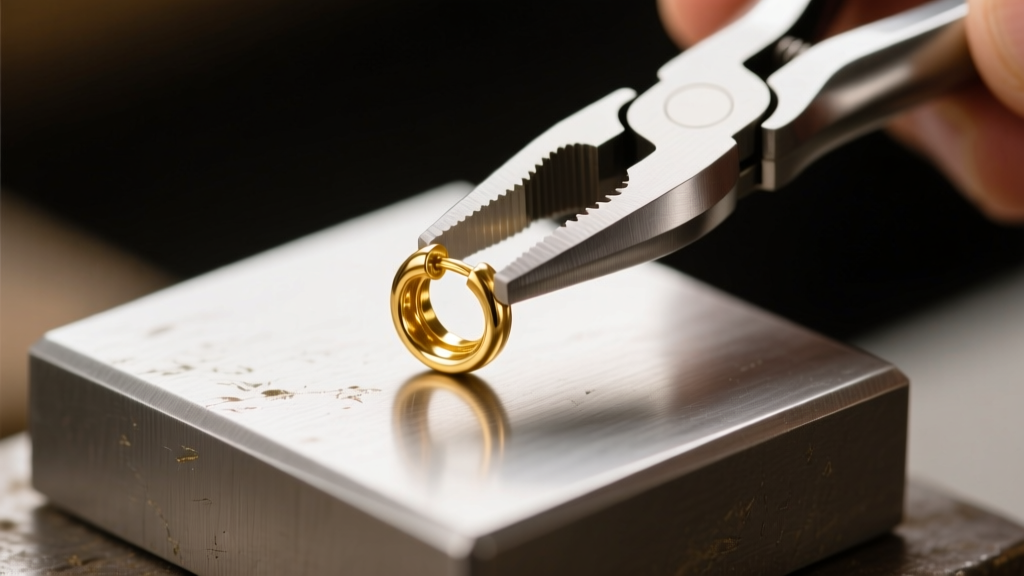
If your 20G or 18G post is bent, do not use standard steel pliers, which will gouge the gold and create weak points where the post can snap. Instead, use nylon-jaw jewelry pliers. Grip the post at the base (closest to the earring face) and apply gentle, steady pressure to bend it back to a 90-degree angle. If the post is severely kinked, the metal has been work-hardened and weakened; it must be replaced by a professional jeweler to prevent it from snapping inside your earlobe.
Upgrading Your Earring Backs
To counteract the front-heavy nature of embossed studs, you must increase the surface area and grip of the earring back. Below is a troubleshooting matrix for selecting the correct backing based on your post gauge and wear habits.
| Backing Type | Best For Gauge | Tension & Support Level | Troubleshooting Use Case |
|---|---|---|---|
| Standard Butterfly (Metal) | 20G (0.81mm) | Low / Poor weight distribution | Not recommended for heavy embossed studs; causes drooping. |
| Silicone Disc Backs | 20G - 18G | Medium / Excellent support | Prevents drooping by distributing weight across a wider lobe area. |
| La Pousette (Locking) | 18G (1.02mm) | High / Secure mechanical lock | Best for expensive solid gold Sandra studs to prevent loss. |
| Screw Backs | 18G (Threaded) | Maximum / Permanent grip | Ideal for active wearers; requires threaded post modification. |
Restoring Faded Embossed Details Without Polishing Away the Gold
Over time, the high points of the embossed texture can lose their luster or, in the case of vermeil, lose their gold plating entirely due to friction from hair and handling. A common mistake is using abrasive jeweler's rouge or silver polishing cloths to restore the shine. These compounds are mildly abrasive and will accelerate the removal of gold plating.
For solid 14k or 18k gold Sandra studs, you can safely use a treated gold polishing cloth (impregnated with non-abrasive anti-tarnish agents) to gently buff only the raised ridges. This restores the high-contrast, two-tone look between the shiny ridges and the matte, recessed valleys. If your gold vermeil earrings have completely worn through to the sterling silver base on the high points, you have two options: embrace the antique-style patina, or take them to a jeweler for a professional electroplating bath to restore the 2.5-micron gold layer.
Preventing Contact Dermatitis and Allergic Reactions
The deep textures of embossed earrings can harbor nickel salts and bacterial buildup, which are primary triggers for contact dermatitis. The Mayo Clinic notes that prolonged exposure to trapped allergens and moisture in jewelry crevices is a leading cause of localized earlobe eczema. If you experience itching or redness specifically when wearing your Sandra studs, the issue may not be the gold itself, but the trapped debris in the embossing.
Preventative Protocol: Wipe the back of the earring face and the post with an alcohol prep pad after every wear. This removes acidic sweat and skin cells before they can calcify in the textured grooves. Store the earrings in an airtight polybag with an anti-tarnish silica strip to prevent environmental oxidation between wears.
When to Seek Professional Jeweler Intervention
While routine cleaning and backing upgrades can be done at home, certain structural failures require a professional bench jeweler. If the solder joint connecting the post to the embossed face shows a visible hairline crack, stop wearing the earring immediately. The heat and pressure of daily wear will cause the heavy textured face to snap off entirely. A jeweler can re-solder the joint using a laser welder, which focuses heat precisely without melting or warping the delicate embossed details on the front of the earring.


