Stickman Earrings: Metallurgy, Gauge, and Structural Design
Explore the technical design of stickman earrings. We analyze casting methods, wire gauges, metal alloys, and ergonomic wearability for line-art jewelry.

The Anatomy of Line-Art Jewelry: Cast vs. Wire-Formed
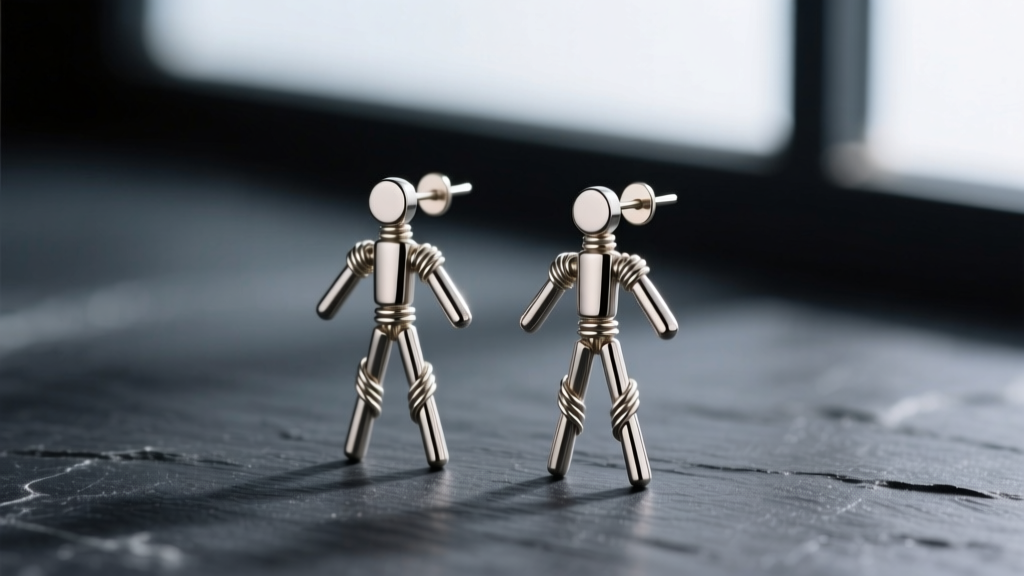
When evaluating novelty or minimalist line-art jewelry, specifically stickman earrings, most consumers focus purely on the whimsical silhouette. However, from a jewelry engineering perspective, the stickman figure presents a unique structural challenge. The design inherently relies on elongated, thin appendages—arms and legs—that act as cantilevered beams extending from a central torso. How these extremities are manufactured dictates the piece's longevity, weight, and structural integrity.
Lost-Wax Investment Casting Limitations
The majority of mass-produced stickman earrings are created via lost-wax investment casting. While excellent for complex, three-dimensional volumes, casting struggles with thin, elongated geometries. If the 'limbs' of a cast stickman earring are designed to be under 1.2mm in diameter, the molten metal (often 925 sterling silver) cools too rapidly before fully filling the mold cavity. This results in micro-porosity and incomplete fills, known as 'short shots.' Furthermore, cast silver is inherently brittle; a cast stickman leg that is 1mm thick will easily snap if subjected to lateral torsion.
Wire-Forming and Work-Hardening
Superior stickman earrings are wire-formed. Using precision-drawn wire, jewelers bend and solder the appendages, or utilize continuous wire-bending techniques to eliminate solder joints entirely. The critical technical step here is work-hardening. Raw wire is annealed (soft) to allow for bending. Once the stickman shape is achieved, the piece must be work-hardened—either through mechanical tumbling with steel shot or precise hammering—to align the metal's crystalline grain structure, increasing its yield strength and preventing the limbs from bending out of shape during daily wear.
Metallurgical Requirements for Elongated Silhouettes
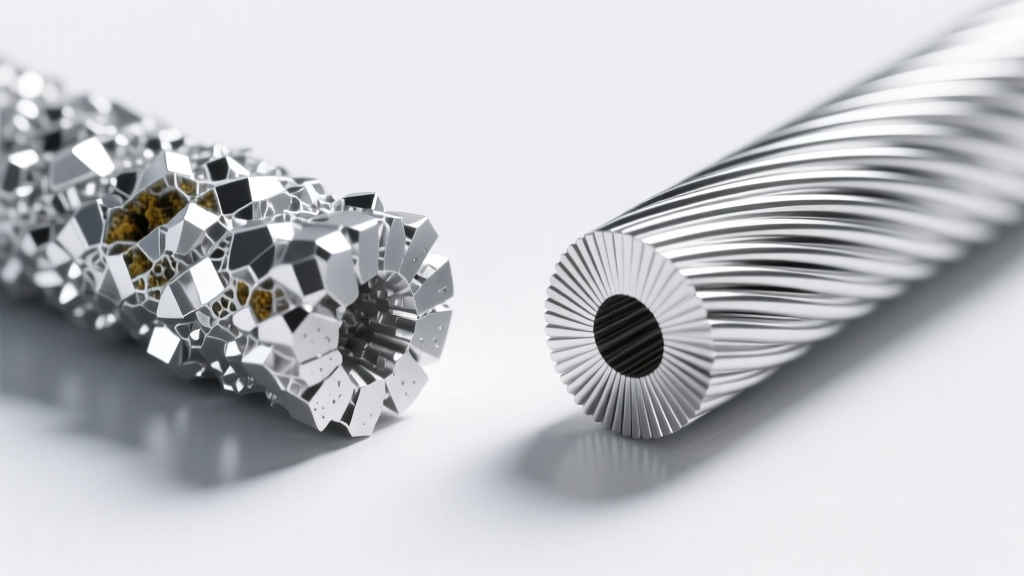
The material chosen for stickman earrings must balance malleability during manufacturing with rigidity during wear. Because the design features high-surface-area, low-volume extremities, the metal's Vickers Hardness (HV) and tensile strength are paramount. Below is a technical comparison of the most common alloys used in line-art ear jewelry.
| Material Grade | Vickers Hardness (HV) | Tarnish Resistance | Best Manufacturing Method | Structural Verdict |
|---|---|---|---|---|
| 925 Sterling Silver | 60-70 (Annealed) | Poor | Heavy-gauge casting | Prone to bending; requires thick limbs (>1.5mm) |
| 935 Argentium Silver | 130-150 (Work-Hardened) | Excellent | Wire-forming & heat treating | Ideal for wire-bent stickmen; high spring-back |
| Ti-6Al-4V (ASTM F136) | 330-360 | Perfect | CNC or precision wire-bending | Superior strength-to-weight; allows for ultra-thin 0.8mm limbs |
| 14k Yellow Gold | 120-140 | Good | Die-striking or casting | Dense and heavy; risks lobe stretching on large dangles |
For high-end, hypoallergenic stickman earrings, implant-grade titanium (ASTM F136) is the gold standard. Its immense yield strength allows designers to create incredibly delicate, thin stickman limbs that will never permanently bend, while remaining feather-light on the ear. For those preferring precious metals, 935 Argentium silver is vastly superior to standard 925 sterling due to its germanium content, which allows for thermal hardening, locking the wire's shape permanently.
Gauge Sizing and Ear Biomechanics
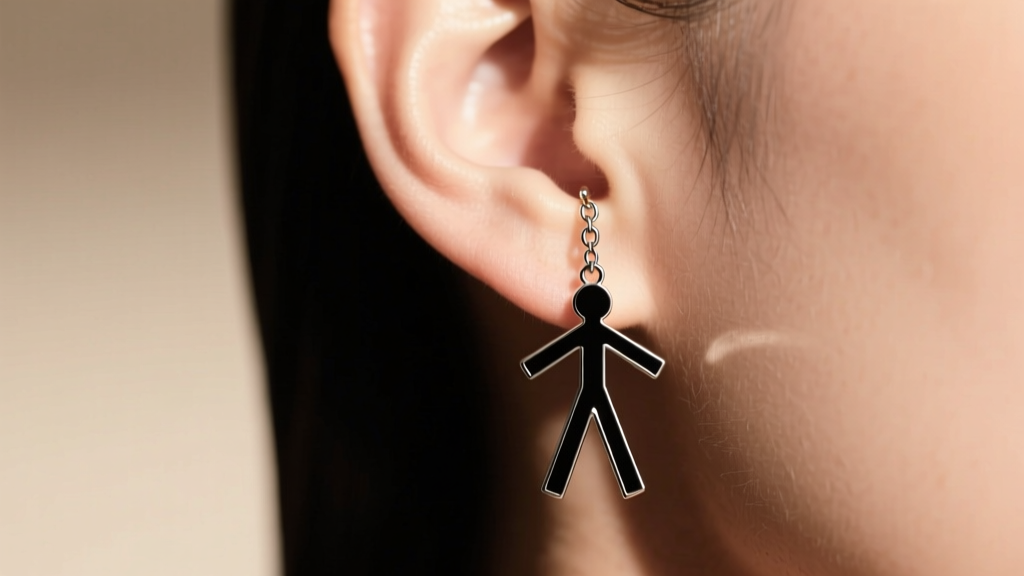
The physics of a stickman dangle earring cannot be ignored. A stickman silhouette with long legs acts as a physical pendulum. With every turn of the head, the kinetic energy transfers to the earring post and, subsequently, the earlobe piercing. Selecting the correct wire gauge for the post is critical to prevent the 'cheese-cutter effect,' where a thin post slowly migrates through the earlobe tissue due to pendulum momentum.
Lobe vs. Cartilage Placement
For standard earlobe piercings, stickman dangles should never utilize a post thinner than 18-gauge (1.02mm). If the stickman design is particularly large (exceeding 2 inches in total drop length), a 16-gauge (1.29mm) post is mandatory to distribute the kinetic load across a wider surface area of the fistula.
For cartilage placements, such as the flat or helix, stickman earrings are typically designed as threadless or internally threaded ends. In these scenarios, the pin must be 18-gauge or 16-gauge to match standard cartilage piercing jewelry. Because cartilage lacks the elasticity of the lobe, a heavy cast stickman end can cause undue pressure on the rigid tissue, leading to irritation bumps. Therefore, hollow-cast or wire-formed titanium ends are strictly recommended for cartilage applications to minimize the static load.
Pricing Tiers and Manufacturing Origins
Understanding the pricing of stickman earrings requires looking at the labor intensity of the manufacturing method. Mass-market pieces typically fall into the $15 to $35 range. These are almost exclusively cast from brass or low-grade sterling silver, often exhibiting visible porosity on the torso and weak, soldered joints at the shoulders and hips that fail within months.
Mid-tier pieces ($40 to $85) are usually die-struck or wire-formed from standard 925 silver. The joints are cleaner, and the metal is work-hardened, offering decent longevity. The apex of this niche, however, lies in the $90 to $250+ range. At this price point, you are paying for precision wire-bending in 935 Argentium or ASTM F136 titanium, laser-welded joints (which leave no visible solder seams), and hand-finished matte or brushed textures that highlight the minimalist line-art aesthetic. When sourcing, look for brands that explicitly state their wire-hardening processes and alloy certifications, as verified by gemological and metallurgical authorities like the GIA Gem Encyclopedia.
Maintenance and Tarnish Prevention
The high surface-area-to-volume ratio of stickman earrings makes them particularly susceptible to environmental oxidation and physical snagging. Proper maintenance requires a departure from standard jewelry cleaning protocols.
- Avoid Ultrasonic Cleaners: The high-frequency vibrations in ultrasonic baths can easily fracture the micro-solder joints at the 'knees' and 'elbows' of cast or soldered stickman earrings. Never use ultrasonics for line-art jewelry.
- Snag Mitigation: The protruding arms of stickman designs are notorious for catching on knitwear and hair. Always put stickman earrings in after dressing and styling your hair to prevent lateral torque on the post.
- Chemical Polishing: For intricate wire joints where a polishing cloth cannot reach, use a mild, ammonia-free silver dip for no more than 10 seconds, followed by an immediate distilled water rinse. Ammonia-based cleaners can degrade the structural integrity of copper alloys over time.
- Storage Geometry: Store stickman dangles hanging from a jewelry tree or laid completely flat in a velvet-lined box. Tossing them into a standard jewelry box guarantees the limbs will become tangled and bent under the weight of heavier pieces.
Conclusion
Stickman earrings are far more than a novelty accessory; they are an exercise in structural jewelry design. By prioritizing wire-formed manufacturing over traditional casting, selecting high-yield alloys like Argentium or implant-grade titanium, and respecting the biomechanics of earlobe pendulum physics, collectors can enjoy line-art silhouettes that are as durable as they are expressive. When evaluating your next purchase, look past the whimsical shape and scrutinize the gauge, the grain structure, and the joint integrity to ensure your jewelry stands the test of time.


