Buying Black Earrings: A Material & Safety Guide
Discover what to look for when buying black earrings. Compare black titanium, ceramic, and oxidized silver for sensitive ears and cartilage.

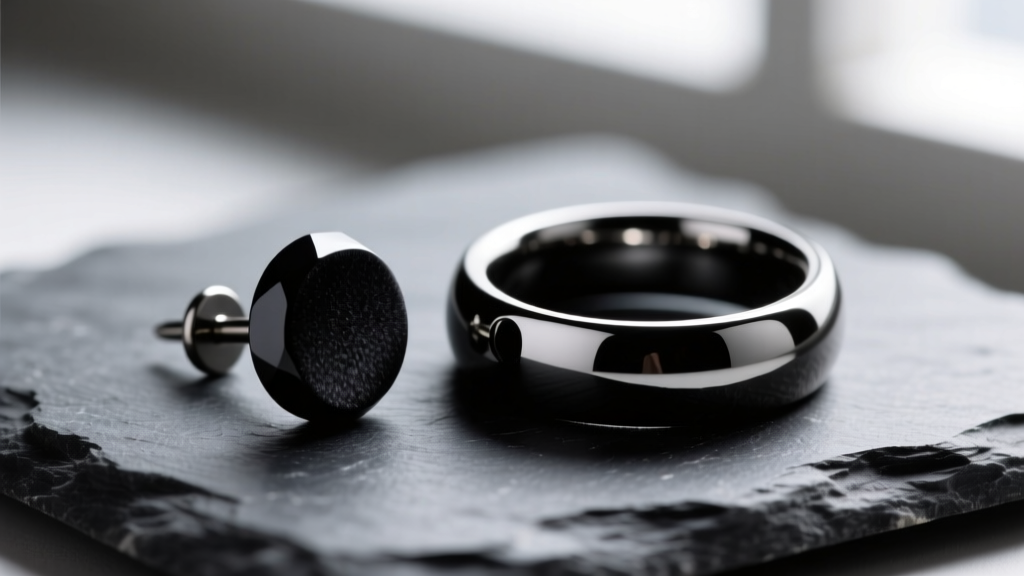
The Allure and Risk of Black Ear Jewelry
The demand for black earrings has surged, driven by minimalist monochrome aesthetics, dark academia trends, and the desire for understated elegance in professional environments. However, buying black jewelry for piercings is fundamentally different from buying traditional gold or silver. The dark color in jewelry is rarely a natural metal state; it is almost always the result of a surface treatment, an oxidation process, or a specialized ceramic firing. If you do not understand the metallurgy behind these finishes, you risk purchasing pieces that will trigger contact dermatitis, degrade rapidly in unhealed fistulas, or snap under the pressure of daily wear.
As we navigate the jewelry market in 2026, manufacturing technologies for dark finishes have improved, but cheap, mass-produced alternatives still flood the market. This comprehensive buying guide will decode the materials used to create black earrings, provide exact gauge sizing frameworks for different piercings, and help you make biocompatible choices that protect your skin and your investment.
Decoding Black Earring Materials
When shopping for black earrings, the material composition is the single most critical factor. The Association of Professional Piercers strictly regulates which materials are safe for initial piercings, and understanding these standards is vital for long-term ear health.
Black Zirconia Ceramic (The Hypoallergenic Standard)
Black zirconia ceramic (ZrO2) is a premier choice for individuals with severe metal allergies. Unlike traditional ceramics, zirconia is engineered for extreme toughness and biocompatibility. It is completely metal-free, meaning it will never leach nickel or copper into your skin, and it is entirely safe for MRI scans. On the Mohs hardness scale, zirconia ranks around 8.5, making it highly resistant to scratching from daily friction.
The Catch: While incredibly hard, ceramic is brittle. It possesses low shear strength. If you drop a ceramic earring on a tile floor, or if you sleep on a tight ceramic barbell that bends under the weight of your head, it can snap cleanly in half. Ceramic is best suited for studs, short barbells, and rigid hoops where bending forces are minimal.
PVD Coated Black Titanium (The Durability King)
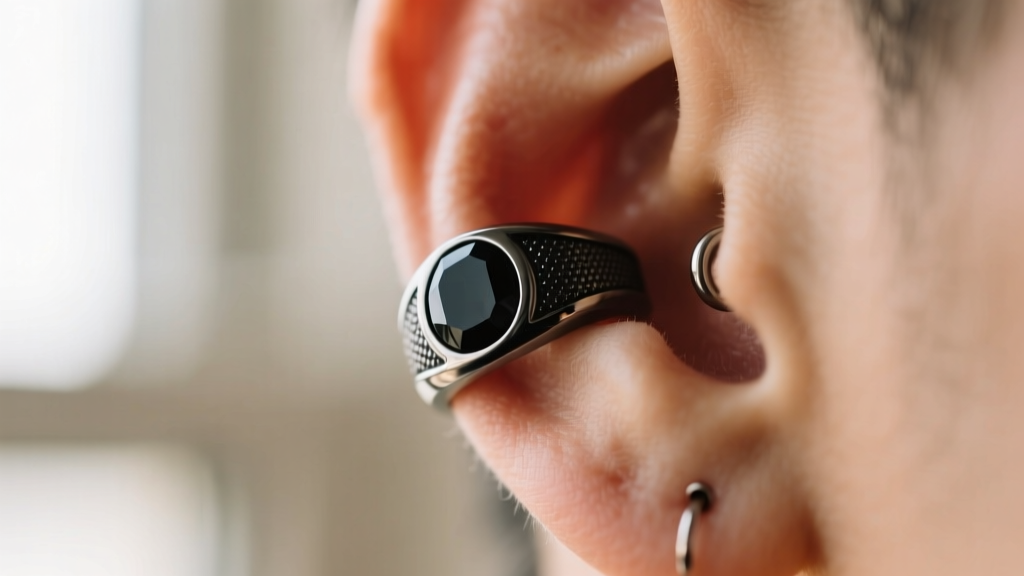
Physical Vapor Deposition (PVD) is a vacuum-coating process that vaporizes titanium and bonds it to an ASTM F136 compliant titanium base at a molecular level. The result is a sleek, gunmetal or pitch-black finish that is vastly superior to traditional electroplating. PVD coatings are incredibly hard, biocompatible, and do not flake or peel under normal circumstances. For cartilage piercings like the helix, conch, or daith, PVD black titanium clickers and captive bead rings are the gold standard in 2026.
The Catch: PVD is a surface treatment. Over a period of 5 to 10 years of continuous wear, the friction from hair, clothing, and cleaning can eventually wear the coating down to the raw silver-grey titanium beneath. Furthermore, cheap manufacturers sometimes apply PVD over low-grade surgical steel rather than pure titanium, which can cause reactions if the coating micro-fractures.
Oxidized Sterling Silver & Black Rhodium (The Aesthetic Choice)
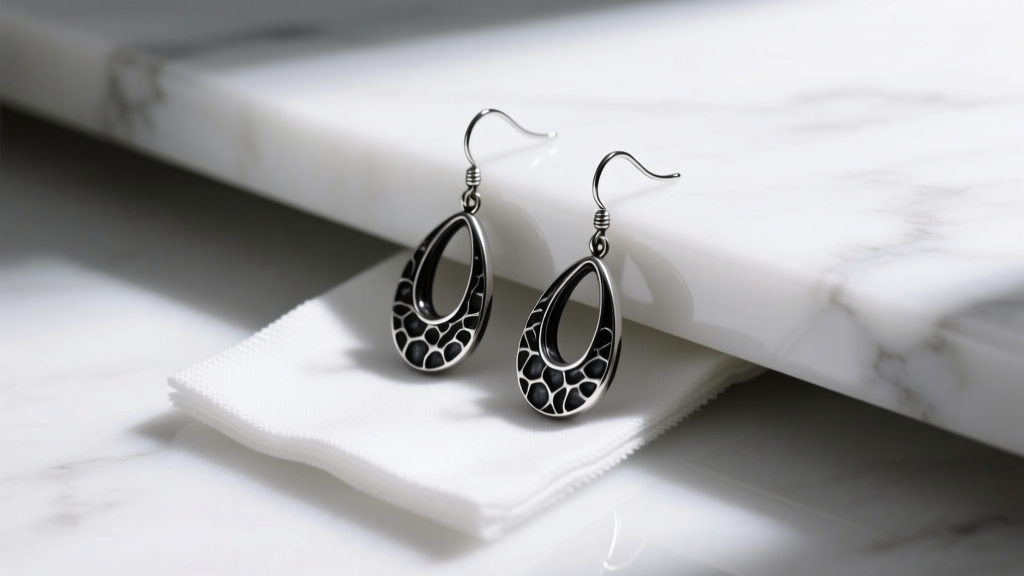
Oxidized silver is created by exposing sterling silver to sulfur compounds (like liver of sulfur), which intentionally tarnishes the metal to create a dark, antiqued patina. Black rhodium plating is another method used to give gold or silver a dark, reflective finish. These materials offer intricate, high-fashion designs that ceramic and titanium cannot replicate.
The Catch: Neither oxidized silver nor black rhodium is suitable for unhealed piercings or long-term 24/7 wear in the ear canal. The oxidation is essentially controlled tarnish, and prolonged exposure to the body's natural moisture and sebum will strip the dark finish, leaving you with patchy, greyish earrings. Additionally, the American Academy of Dermatology warns that sterling silver often contains trace copper or nickel alloys that can trigger severe contact dermatitis in sensitive, enclosed piercing channels.
2026 Material Comparison Chart
Use this decision matrix to select the right black earring material based on your piercing status and lifestyle.
| Material | Biocompatibility | Durability | Price Range (2026) | Best Piercing Type |
|---|---|---|---|---|
| Black Zirconia Ceramic | Exceptional (Metal-Free) | High Scratch / Low Impact | $15 - $45 | Standard Lobes, Tragus, Initial Piercings |
| PVD Black Titanium | Excellent (ASTM F136) | Very High (Impact & Scratch) | $30 - $85 | Helix, Conch, Daith, Rook, Septum |
| Oxidized Sterling Silver | Poor (Reactive) | Moderate (Patina Fades) | $40 - $150+ | Healed Lobes Only (Occasional Wear) |
| Black Rhodium Plated | Moderate (Depends on Base) | Low (Plating Wears Quickly) | $60 - $200+ | Healed Lobes (Special Events Only) |
Gauge Sizing, Weight, and Piercing Placement
Beyond material, the physical dimensions of your black earrings dictate their comfort and safety. Wearing the wrong gauge or weight can lead to migration, tearing, and the dreaded 'cheese-cutter effect'.
- Standard Earlobe (20g to 18g / 0.8mm to 1.0mm): Most commercial black earring studs and dangles are made in 20g or 18g. If you are buying heavy black onyx or obsidian drop earrings, ensure the wire is at least 18g. A 20g wire supporting a heavy stone will slowly slice through the bottom of your earlobe over time.
- Cartilage & Helix (16g to 14g / 1.2mm to 1.6mm): Cartilage piercings require thicker jewelry to prevent migration and rejection. When buying black hoops or clickers for the helix or conch, strictly look for 16g (1.2mm) options. Attempting to force a standard 20g lobe hoop into a cartilage piercing will cause severe irritation bumps and potential tissue damage.
- Tragus & Forward Helix (16g / 1.2mm): These piercings have very short channels. When buying black titanium or ceramic labret studs for these areas, you must pay attention to the post length (the bar). Standard posts are 6mm to 8mm. If your tragus is thick, an 8mm post is required; a 6mm post will embed into the tissue as it swells.
Maintenance: Preserving the Dark Finish
Darker finishes require specialized care routines to prevent premature fading or structural damage. Treating all your earrings the same way is a recipe for ruined jewelry.
Ultrasonic Cleaners: Ultrasonic cleaners are fantastic for removing sebum and dead skin cells from the intricate threading of PVD black titanium and solid black zirconia ceramic. However, you must never place oxidized silver or black rhodium-plated earrings in an ultrasonic cleaner. The high-frequency vibrations and heat will strip the chemical patina and plating right off the base metal, leaving you with a dull, patchy grey earring.
Chemical Exposure: Chlorine in swimming pools and harsh sulfates in anti-dandruff shampoos are highly reactive. They will rapidly degrade oxidized silver and can cause micro-pitting in lower-quality PVD coatings. Always remove black silver earrings before swimming or showering. For PVD titanium and ceramic, simple washing with sterile saline or a mild, fragrance-free glycerin soap is all that is required to maintain the deep black luster.
Final Buying Framework
When you are ready to purchase black earrings, run the piece through this final checklist: First, verify the base material. If the description simply says 'black metal' without specifying PVD titanium or surgical steel, walk away. Second, check the gauge size against your specific piercing placement to avoid tissue damage. Finally, match the material to your lifestyle. If you want a set-it-and-forget-it earring for a cartilage piercing that you can sleep in and wear to the gym, invest in PVD black titanium. If you need absolute hypoallergenic safety for a brand-new piercing, choose black zirconia ceramic. By prioritizing metallurgical integrity over fleeting fashion trends, you ensure your piercings remain healthy, comfortable, and strikingly beautiful for years to come.


