The Ultimate Guide to Buying Black and Gold Drop Earrings
Discover what to look for when buying black and gold drop earrings. Learn about material grades, gemstone types, and pricing in our expert guide.

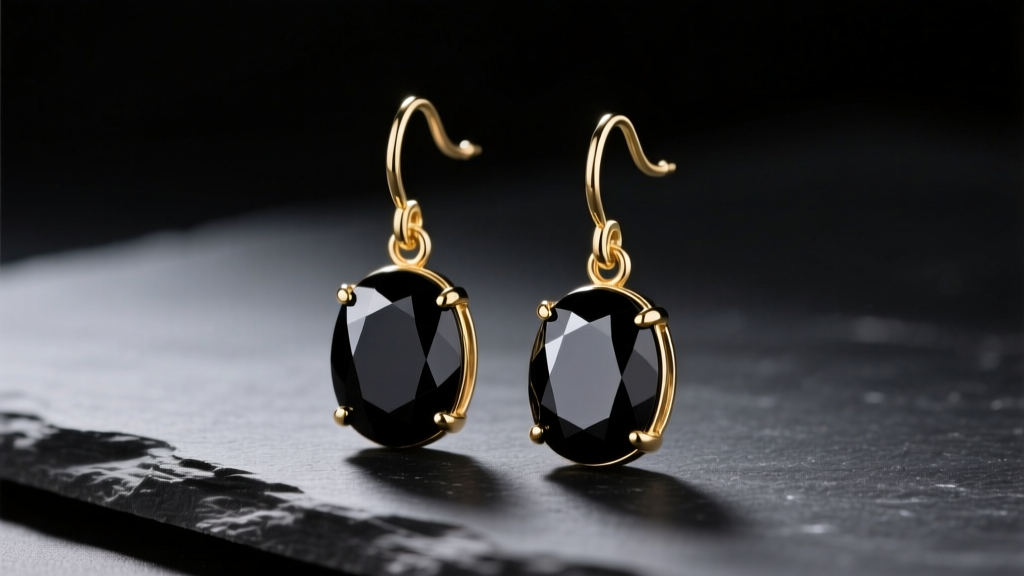
The combination of deep, light-absorbing black and luminous gold creates a striking contrast that has dominated jewelry trends well into 2026. When shopping for black and gold drop earrings, the visual appeal is only the starting point. As a buyer, you must navigate a minefield of misleading material descriptions, inadequate structural supports, and poor gemstone setting techniques. This comprehensive buying guide strips away the marketing fluff and focuses on the exact specifications, material grades, and ergonomic factors you need to evaluate before making a purchase.
Material Grades: The Foundation of Longevity
The longevity of your earrings depends entirely on the metallurgical and gemological choices made by the manufacturer. Understanding these grades is non-negotiable for fine jewelry buyers.
Gold Standards: 14k vs. 18k vs. Vermeil
For drop earrings, structural integrity is paramount. According to the Gemological Institute of America (GIA), pure 24k gold is far too soft for jewelry that experiences kinetic movement.
- 14k Gold (58.5% purity): The optimal choice for the structural wires, hooks, and bezels of drop earrings. The higher alloy content (usually copper and silver) provides the tensile strength needed to prevent the earring from bending under the weight of a black gemstone.
- 18k Gold (75% purity): Offers a richer, warmer yellow hue but is noticeably softer. If you choose 18k, ensure the structural components are thickened to compensate for the softer alloy.
- Gold Vermeil: By FTC guidelines, vermeil must be sterling silver plated with at least 2.5 microns of 10k+ gold. Avoid standard 'gold plated' brass, as the friction from earring backs will wear through the thin plating within months, exposing the reactive brass underneath.
Black Elements: Gemstones vs. Enamel
The 'black' component in black and gold drop earrings typically comes from gemstones or enamel. Each requires different care and offers different durability profiles.
- Black Onyx: A dyed variety of chalcedony with a Mohs hardness of 7. It takes a high polish but can scratch if stored loosely with diamonds. The GIA notes that onyx is relatively tough, making it excellent for faceted teardrops.
- Black Spinel: A superior, naturally black alternative to onyx with a Mohs hardness of 8. It offers higher refractive brilliance and is more resistant to abrasion.
- Black Enamel: Look for guilloché or vitreous enamel, which is fired at high temperatures and fused to the gold. Avoid 'cold enamel' (epoxy resin), which will yellow and chip within a year of regular wear.
Anatomy and Ergonomics: Weight, Gauge, and Backings
A beautiful pair of black and gold drop earrings is useless if it causes earlobe fatigue or tears the piercing. The physics of a drop earring—where the center of gravity sits below the piercing hole—creates a lever effect that multiplies the perceived weight.
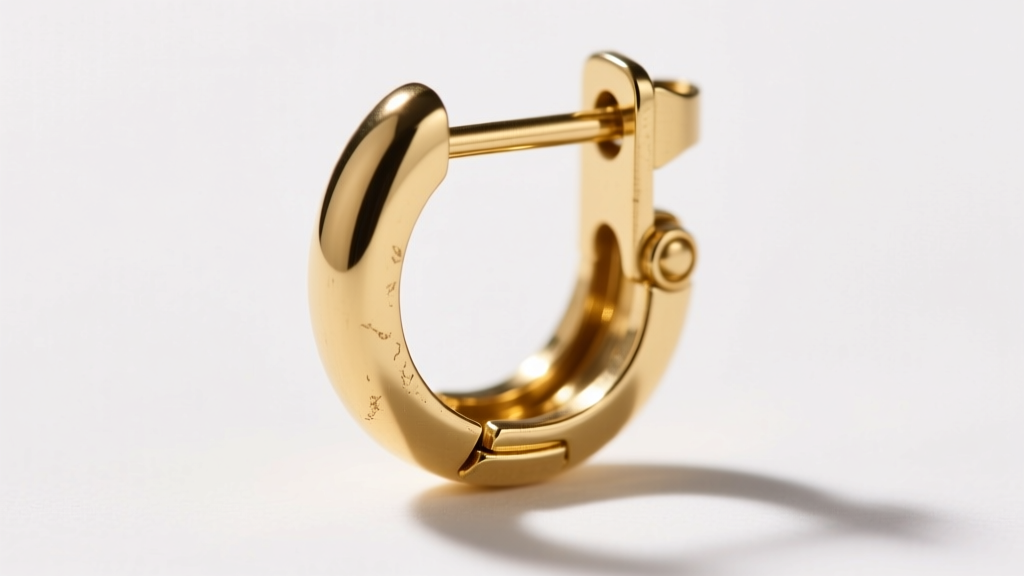
The Gauge and Weight Matrix
Standard ear piercings are typically done at 20-gauge (0.81mm) or 18-gauge (1.02mm). However, the wire thickness of the earring must be matched to its total weight to prevent the 'cheese-cutter effect,' where a thin wire slowly slices through the earlobe tissue.
| Earring Weight | Recommended Wire Gauge | Required Backing Type | Best Black Stone Choice |
|---|---|---|---|
| Under 3 grams | 20G (0.81mm) | Standard Push Back | Solid Onyx or Enamel |
| 3 to 6 grams | 18G (1.02mm) | La Pousette (Locking) | Hollowed Spinel / Onyx |
| Over 6 grams | 16G (1.29mm) | Leverback or Ear Wire | Sliced Onyx / Enamel |
Pro Tip: If you find a heavy drop earring with a standard 20G wire, take it to a local bench jeweler to have the posts swapped for thicker 18G or 16G wires before wearing them. This minor investment will save your earlobes from permanent stretching.
Pricing Tiers: What You Should Actually Pay
The market for black and gold drop earrings is heavily segmented. Use this framework to ensure you are paying a fair market price based on the actual materials used, rather than brand markup.
- Fashion Tier ($30 - $80): Expect brass or stainless steel with flash gold plating and black glass or acrylic stones. The black coating will eventually wear off at the high-friction points.
- Demi-Fine Tier ($120 - $350): The sweet spot for everyday luxury. You should expect solid 14k gold or heavy 2.5-micron vermeil over sterling silver, paired with genuine black onyx or high-quality cold enamel.
- Fine Jewelry Tier ($600 - $2,500+): Solid 18k gold, vitreous enamel, and potentially black diamonds or black sapphires. At this price point, demand prong or bezel settings; never accept glued stones.
Common Failure Modes & Inspection Checklist
When evaluating black and gold drop earrings in person or reviewing high-resolution macro photos online, look for these specific failure points:
- Adhesive vs. Mechanical Settings: Many mid-tier brands glue black onyx cabochons into gold bezels. Over time, skin oils and temperature changes degrade the jeweler's epoxy. Always look for mechanical settings (prongs, folded bezels, or channel settings).
- Enamel Edge Chipping: If the black enamel extends all the way to the sharp outer edge of the gold frame, it will chip upon impact. High-end manufacturers leave a tiny 'gold lip' or border to protect the enamel edge.
- Jump Ring Integrity: The jump ring connecting the drop to the ear wire is a major stress point. Ensure the jump ring is soldered closed. If it is merely twisted shut, the kinetic swinging of the drop will eventually work it open, and you will lose the earring.
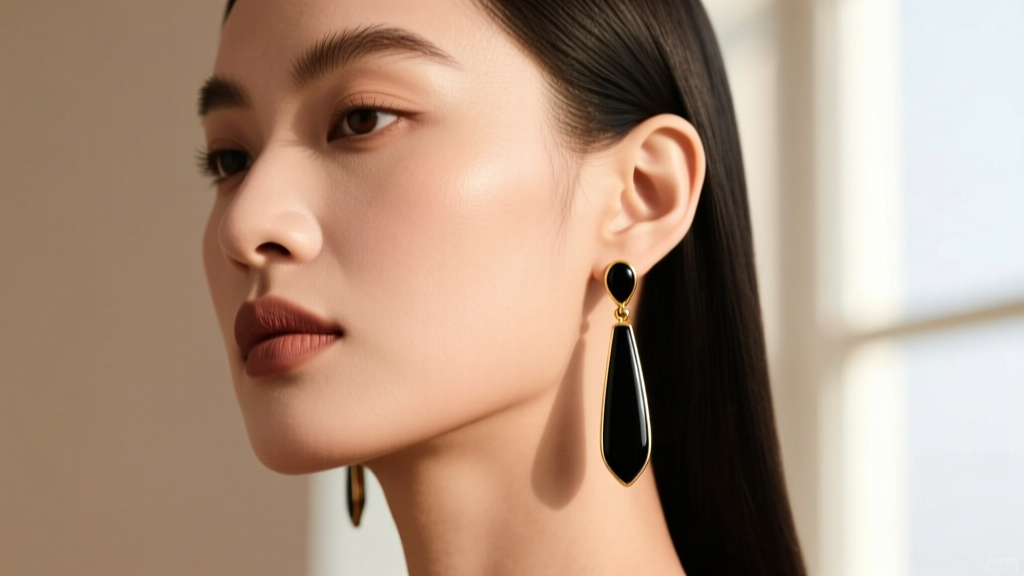
Styling Drop Lengths for Face Shapes
Beyond the materials, the physical dimensions of the drop dictate how the earring interacts with your facial geometry.
- Round Faces: Opt for long, linear black and gold drop earrings (2.5 inches or 65mm and longer). The vertical lines elongate the face and draw the eye downward, creating a slimming illusion.
- Square Faces: Choose drops with curved, organic shapes—like a smooth black onyx teardrop in a rounded gold bezel. Avoid harsh geometric angles, which will exaggerate a strong jawline.
- Heart-Shaped Faces: Look for drops that are wider at the bottom than at the top (like a chandelier or inverted triangle drop). This adds visual weight to the narrower lower half of the face.
- Oval Faces: You have the most versatility. Experiment with bold, oversized black enamel and gold geometric drops that sit right at the jawline to highlight your natural symmetry.
Final Verdict: Building Your Collection
Investing in black and gold drop earrings is about balancing striking aesthetics with uncompromising structural engineering. Prioritize 14k gold for durability, demand mechanical stone settings over glue, and always match the wire gauge to the total weight of the drop. By applying these rigorous standards, you will curate a collection that not only turns heads but stands the test of time without damaging your piercings or deteriorating in quality.


